From couch surfing to running a KC art festival, Quez found freedom | Williams
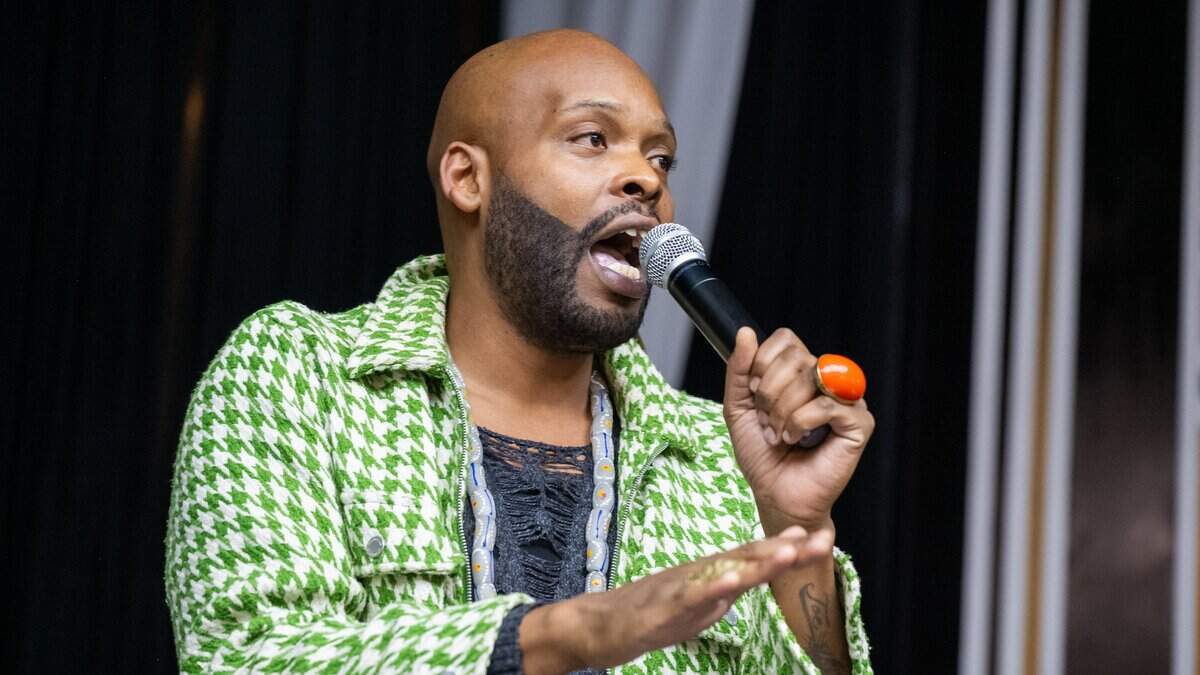
If you have lived in Kansas City for any length of time and attended any of the many Black cultural events in town, you have probably met or at least seen Marquez Beasley making an entrance, directing entertainment or doing his thing in one of his favorite places: up front running the show.
Beasley, better known as Quez, seems to be everywhere these days, fighting for the rights of local artists, presenting fashion shows for local designers as master of ceremonies for civic and community events, and organizing the city’s annual 18th & Vine Arts Festival — scheduled Sept. 25- 27 in the city’s historic jazz district. He’s a busy man, and he wouldn’t have it any other way.
If Beasley, founder of the 18th & Vine Art Festival Foundation, doesn’t have his hand in brainstorming, planning or organizing a cultural event in Kansas City, you can bet he’s privy to exactly whose hands are in it. And here’s the beautiful part: He’ll be the first one applauding the work others are doing to highlight and celebrate arts and culture in the city.
As Kansas City continues to boom — what, with hosting World Cup soccer matches this summer, having one of the nation’s best teams on the gridiron for several years running, having an architectural wonder in the Kauffman Center for Performing Arts, the National WWI Museum, the nation’s Negro Leagues Museum and the best barbecue, among other things — having people like Beasley promoting and launching the happenings, in the Black community and elsewhere, has become ever more important. Thanks, Quez.
I caught up with Beasley recently by telephone, because he’s hard to pin down, and during an hourlong interview, learned a lot about his upbringing in Kansas and his journey to becoming a well-recognized figure here, especially in the Black community.
When I told him I wanted to write about his life and how he came to spend so much time helping to plan events that promote excellence in Kansas City’s Black community, he seemed shocked — surprised that anyone thought that what he does for arts and culture here is all that special. I certainly think it is — especially because he’s homegrown and back home giving back to his city. He’s a prime example of why city’s like Kansas City have to continue investing in their young people. It pays off.
Growing up in Kansas City
A Kansas City native, Beasley — who grew up in a two-parent household with four siblings, two brothers and two sisters — attended Paseo Academy of Fine and Performing Arts. He graduated from Lee’s Summit North High School, where he played defensive end for the Broncos for three years.
Beasley — who some might say is a bit flamboyant, certainly colorful — has always been that guy who wanted to be seen and heard in the room — at school and at church. It was at the Triumphant Westminster Baptist Church in Kansas City that Beasley got his first tug toward performance.
Like a lot of young kids, he took piano lessons and sang in church. But since there’s nothing ordinary about Beasley, it wasn’t long before he was leading the church choir as its director. But not just at his own church. “I was working at four churches at one time,” Beasley said, chuckling at how packed his schedule was at that time. “And I had a gospel group, Quez and Kingdom Culture.”
Even then, Beasley told me, he was still searching for his place. He knew he was an entertainer, a singer. He got it from his grandma. “She was a gospel singer from Arkansas, back in the day,” Beasley said. His ability to command attention in a crowded room, well, he was born with that, too. “I have always been the life of the party,” he said. “I just knew the world would know me.”
It was when his talent took him and his choral group to Ghana, performing for a month in 2012, that it became clear to this young man that he would be forever associated with art, culture and creatives. “While everyone else was in college, I was traveling the world. It was the experience of my life,” Beasley said.
When he came home to Kansas City, singing at churches just wasn’t enough. He was looking to make a little more money, so Beasley went to work for the Aldo store, selling trendy fast-fashion shoes on the Country Club Plaza.
And as you might imagine, Beasley wasn’t your ordinary shoe salesman and convinced the company to let him turn the store into a site for what he called A-list after-hours parties, selling shoes while serving up food, drinks, and music. The idea was a hit, and a few years later, Beasley was on his way to replicate the concept at the Mall of America in suburban Minneapolis, where he was sent to manage an Aldo
Eventually, he came home again wanting to do something big in Kansas City. He was earning money planning events for churches, businesses, clubs and individuals. But mostly, he said, he was making money for other people.” He held a local fashion show highlighting local designers, and an Aretha Franklin tribute event. Both drew lines of attendees wrapped around the street corner. That was done using what Beasley called “guerrilla marketing,” using flyers, cold calls and word of mouth.
Beasley had some magic that was more than just his hard work. “I knew every singer, every musician, every model, but I didn’t know what to do with it,” Beasley said.
Not until he met Cedric Williams, his marketing chief, who showed Beasley how to use his personality and knowledge to create a popular persona. “I didn’t have a name,” Beasley said. So he came up with “Quez Presents,” and it stuck.
By the time Beasley presented the first That’s Dope Hair Show and competition at Kansas City’s Hy-Vee Arena, he was well on his way. Hundreds of hairstylists and product vendors paid $500 apiece for a booth at the show.
Calls rolled in for Beasley to be the master of ceremonies at events all over Kansas City. In 2019, Beasley landed a job at the American Jazz Museum, and worked there as a program and events coordinator until 2022.
‘Quez Presents’
With his own brand pretty solidly formed, Beasley started hosting Saturday Brunch, a kind of talk show, dance party at Soiree restaurant, an event that went viral on social media. That’s where I first saw Beasley. I made it my mission to make his acquaintance. When I finally did, meet the man, he walked into the room wearing a red plaid suit. I spotted him right away. I’m pretty sure that’s always the point.
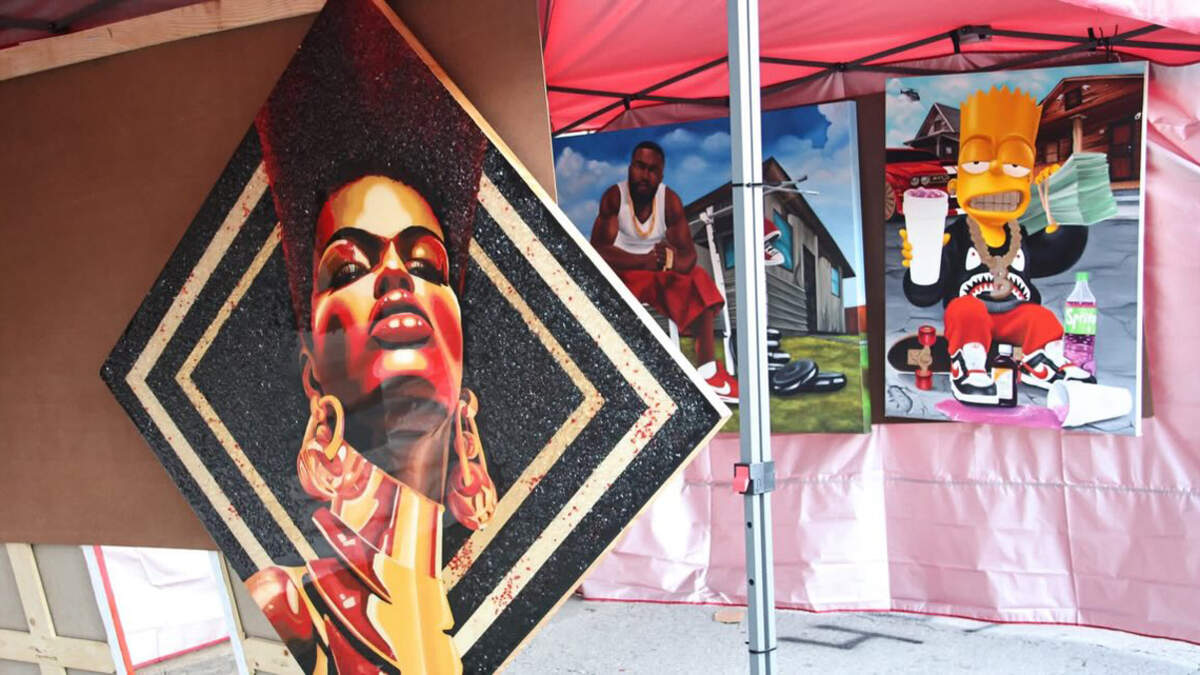
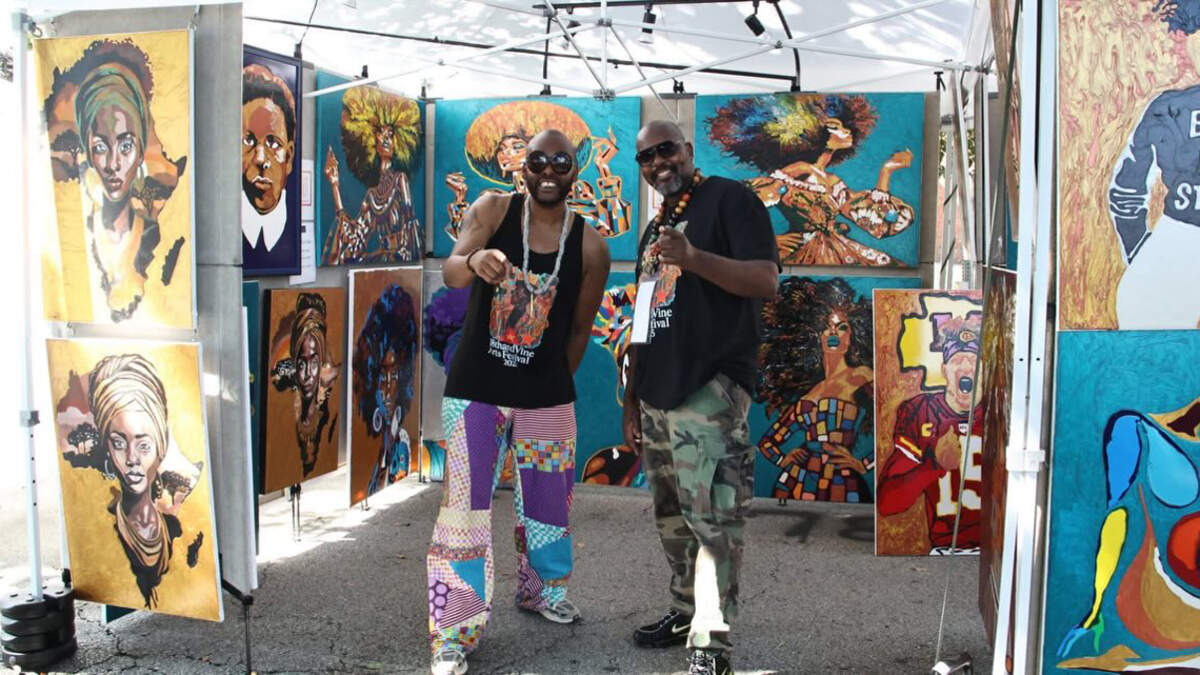
Beasley has always been looking for the next big thing, or perhaps it is the next big thing that seems to find him. He was walking through the Plaza one afternoon, and it dawned on him that there was a lot of art in stores and restaurants on the Plaza, but none of it came from Black and brown Kansas City artists. That’s when he got the idea for the 18th & Vine Arts Festival, where vendor booths are free and all the money artists make selling their work goes in their pockets. It was funded in part by philanthropists and grants. In 2022, the first year for the festival, Beasley had 50 artists participate. Last year there were 118, and this year he expects 150 or more.
The foundation has expanded to hosting First Saturdays events for artists to have a regular spot to showcase their wares and learn the business aspects of selling their work. The foundation also makes space at the Gregg Center in the historic 18th and Vine Jazz District for young artists to learn from seasoned artists.
I love stories like the one Beasley tells, because he’s so honest about how he had to really hustle to make a name for himself in Kansas City. It’s that hustle that made him so against any idea of charging artists for booth space at the festival. “I know what it feels like having to sleep on someone’s couch with a hope and a dream,” Beasley said. “But there was never a moment when I thought my dreams were not going to come true.”
I’m just glad he never gave up and is still dreaming and hoping, not just for his own continued success but for other artists and performers in Kansas City. Today, Beasley said he feels “happy. I’m free, and I want people to know they can do it too.”
Yes, I think Beasley is on to something. He believes in the concept of “Each one teach one.” That’s how we grow, Kansas City.