Kansas City’s ‘Hellhole on Holmes’ is testing Waldo residents’ patience | Hudnall
“Watch your step,” Samantha Wagner said. “That’s feces.”
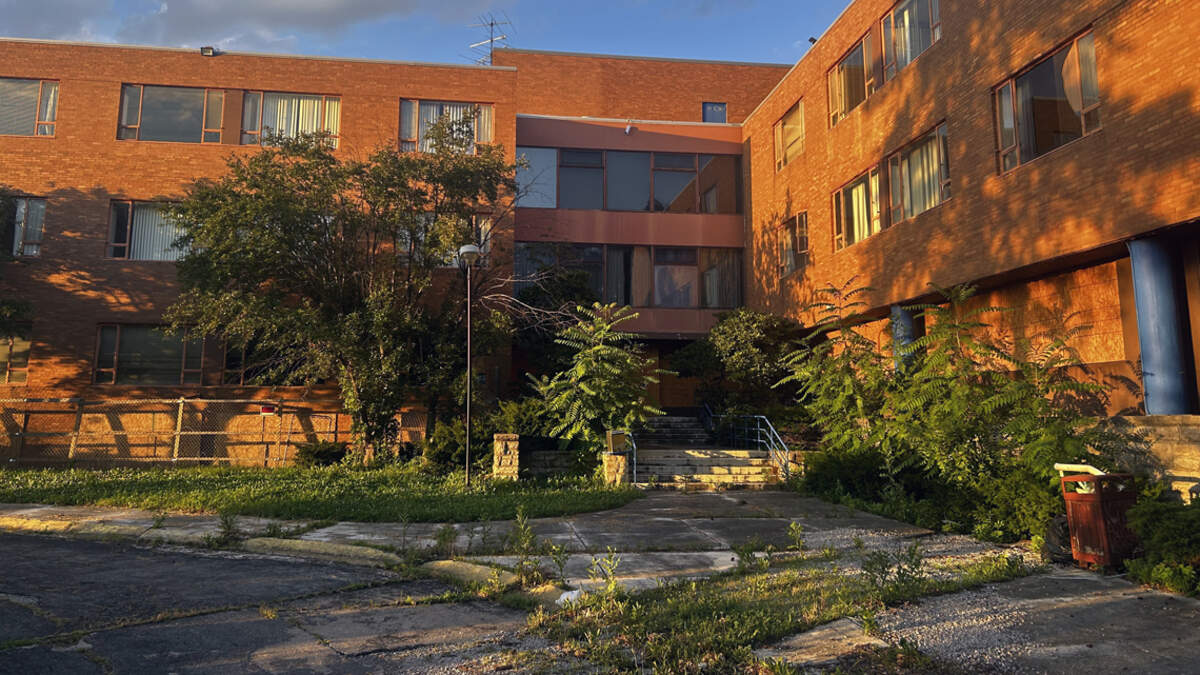
We were walking toward the sagging chain-link fence surrounding the former Shalom Geriatric Center at 7801 Holmes, just southeast of Waldo. On the street and in the grass outside the fence were tiny liquor bottles, discarded trash and, sure enough, human waste. Beyond it were broken windows, fallen trees, piles of limbs and tire tracks leading deep onto the property.
“This is where people go in,” Wagner said, pointing to a cut section of fence. “Or they just lift it up and crawl underneath.”
Wagner lives across the street, in what’s otherwise a fairly nice neighborhood. She bought the house last month.
Her Ring camera notifications go off all night, starting around 10 p.m. Sometimes she walks out onto her screened-in porch to watch for herself as loose characters drift toward the property, linger outside, then disappear into the darkness of the campus. Some emerge hours later carrying bags of scavenged materials from inside the building’s rapidly decaying carcass. The junk often ends up scattered around the neighborhood. Other people seem to be living inside.
“I call 311. I call the police,” Wagner said. “Nobody does anything. I saw a cop watch two crackheads go through the fence and walk straight onto the property the other night. He didn’t do a damn thing. We don’t know what’s going inside there — if they have weapons, if they’re dealing drugs. It’s gotten completely out of control.”
The old nursing home has sat mostly vacant since the 2000s, but it wasn’t always like this. Under previous owner David Ferron, neighbors say, the grounds were mowed and the lights stayed on at night. Residents treated the campus almost like a neighborhood park, walking their dogs on the paths and tossing frisbees in the grass.
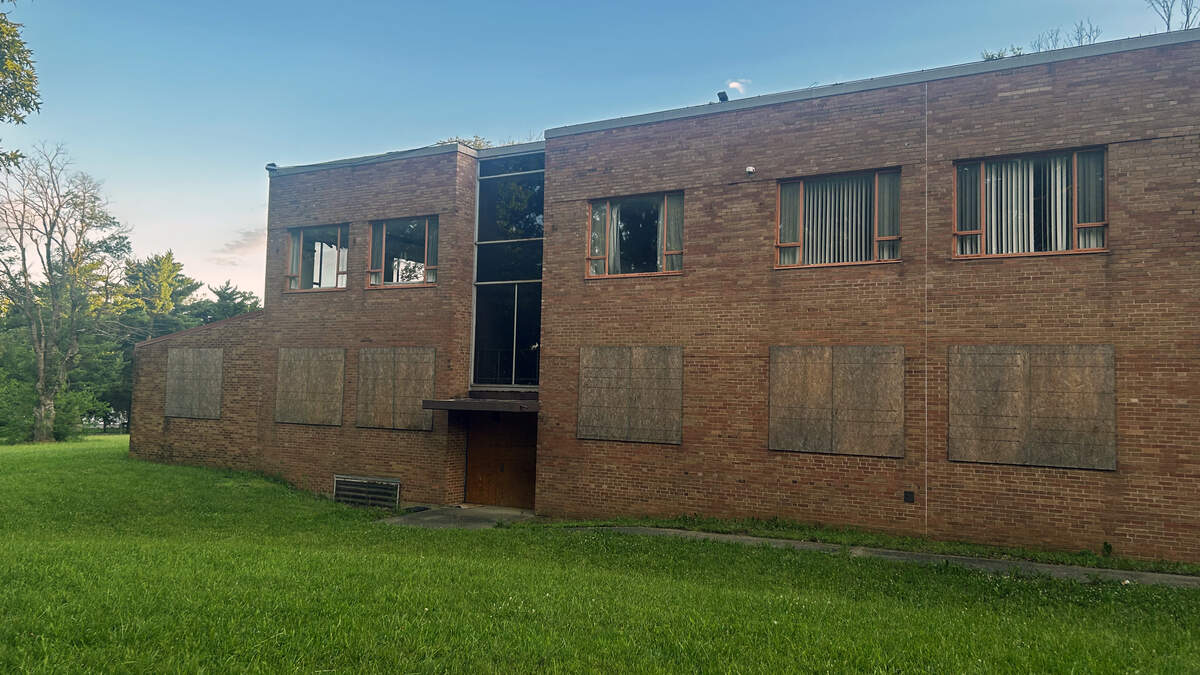
Then Ferron sold the property two years ago to an LLC called Flint Hills Freedom. The new owners — according to business filings, Ashish Jain and Nikolay Shulgin, who did not respond to a request for comment — have cut the lights, boarded up windows and erected a fence that is achieving the opposite of what fences are built to do.
“It just screams ‘abandoned building,’” Janet Ross, who also lives across the street, told me. “You look at it and see all these broken windows and tall grass and unsecured boards on the building. So people sneak in and steal stuff. Aluminum, copper, whatever. I woke up the other day and somebody had piled a bunch of copper on top of my wildflowers. They just left it there, like they were storing it in my yard.”
Ross has been trying to elevate the issue at the property for some time. She’s been workshopping names for it in hopes one might stick and prompt sharper action by the city. The leading candidate so far is “The Hellhole on Holmes.” It does have a certain ring to it.
Nuisances, dangerous buildings, receivership
The city is aware of the problem, and to its credit, convened a public meeting Monday night at the church across Holmes from the property. Roughly 50 residents gathered hoping someone from City Hall could explain how the situation had been allowed to fester.
Several officials were there: 6th District Council members Johnathan Duncan and Andrea Bough; Assistant City Manager Diane Binckley; Neighborhood Preservation Division Manager Tamara Mills; Neighborhood Services Director Forest Decker; and Darius Diamond, general counsel in Mayor Quinton Lucas’ office.
In a lot of ways, the discussion was less about one particular hellhole than it was about the limits of what Kansas City can do when a privately owned building falls into neglect.
Various officials walked residents through the city’s toolbox for problem properties. Code inspectors can cite the property for nuisance violations, and once those deadlines expire the city can mow the grounds, remove brush, board up openings and bill those costs back through a lien on the property.
The catch is that the city may not recover that money until the property sells, which can take decades.
“So we end up essentially carrying the note,” Duncan said, “for an absentee landlord in perpetuity.”
And, as Tiffany Moore, a crowd member who is also running for Bough’s council seat next year, noted, “The fines and fees these owners pay aren’t painful enough to make a difference. The bottom line is that Kansas City is a cushy, comfortable environment for (absentee) owners.”
The property is also being evaluated under the city’s dangerous buildings code, a designation that could open the door to stronger enforcement action or, eventually, demolition. But that process, like the others, requires notices, deadlines, court hearings and the owner’s opportunity to respond at each step.
This legal framework has produced years of complaints and little visible change at 7801 Holmes. The city keeps escalating, and the building keeps getting worse.
The discussion eventually turned to receivership, one of the few remaining tools that could fundamentally alter the property’s trajectory. Under Missouri law, a court can appoint a receiver to rehabilitate, manage or sell a chronically blighted property when an owner refuses to act. Once a petition is filed, the owner has 60 days to either contest it or begin making changes.
The city has pursued receivership in a handful of recent cases, including the old Federal Reserve building downtown and the Paul Robeson Middle School just up the street at 8201 Holmes Road. Diamond described receivership as a way to “force a dialogue” between absentee owners and the community. Duncan said he expects the city to begin laying the groundwork for that process here if the current enforcement effort stalls.
State limitations
The meeting took place against the backdrop of nine people being shot two weeks prior at an unlicensed after-hours club a few blocks away at 79th and Troost.
Different problem, different property, but a similar failure of enforcement and the same neighborhood paying the price.
“This is a neighborhood where significant investments are being made,” Janet Ross told me. “I’ve dumped $30,000 into my house in the last five years. I know others who’ve spent more than $100,000. But things like this drive down the value of the homes. If the city doesn’t care about us, they should at least care about the tax revenues they’ll lose from that.”
Some officials read the room better than others. Mills and Diamond, the mayor’s counsel, talked bloodlessly about process — notices, deadlines, statutes. Bough spoke of creating “a scenario in which our staff and KCPD can all work together to get to a point where we can address these problems sooner.”
But the crowd wasn’t there to hear technical explanations or vague aspirations of civic kumbayas. They were there to vent, yell and hopefully leave with some kind of promise or solution.
Problem is, Missouri state law imposes a dispiriting number of constraints on what a city can actually do.
Kansas City is preempted by the state legislature from enacting a vacancy tax. The Hancock Amendment limits the city’s ability to create new fee structures that might make it financially painful for negligent owners to sit on blighted properties. And unlike most major American cities, Kansas City does not control its own police department — the force answers to a state-appointed Board of Police Commissioners, leaving elected officials unable to direct how or whether officers respond to nuisance properties.
“We live in a state that doesn’t allow us to do a lot,” Duncan said. “It’s probably one of the most frustrating things about this job.”
Some investors and property owners, he argued, have learned to exploit that, sitting on blighted properties while neighborhoods deteriorate. “They’re using the law against us. We have to get creative in how we fight back.”
A court hearing on the property is scheduled for June 24, and residents who want to address the police response can speak at the Board of Police Commissioners meeting the day before, on June 23 at 9:30 a.m. at KCPD headquarters.
In the meantime, Duncan said as the meeting disbanded, “We are very available. If there continue to be issues, don’t hesitate to reach out. We will respond.”
It was a promise. It was also, for now, about all he had to offer.