
Thank Sen. Josh Hawley for fighting against child sexual exploitation | Opinion
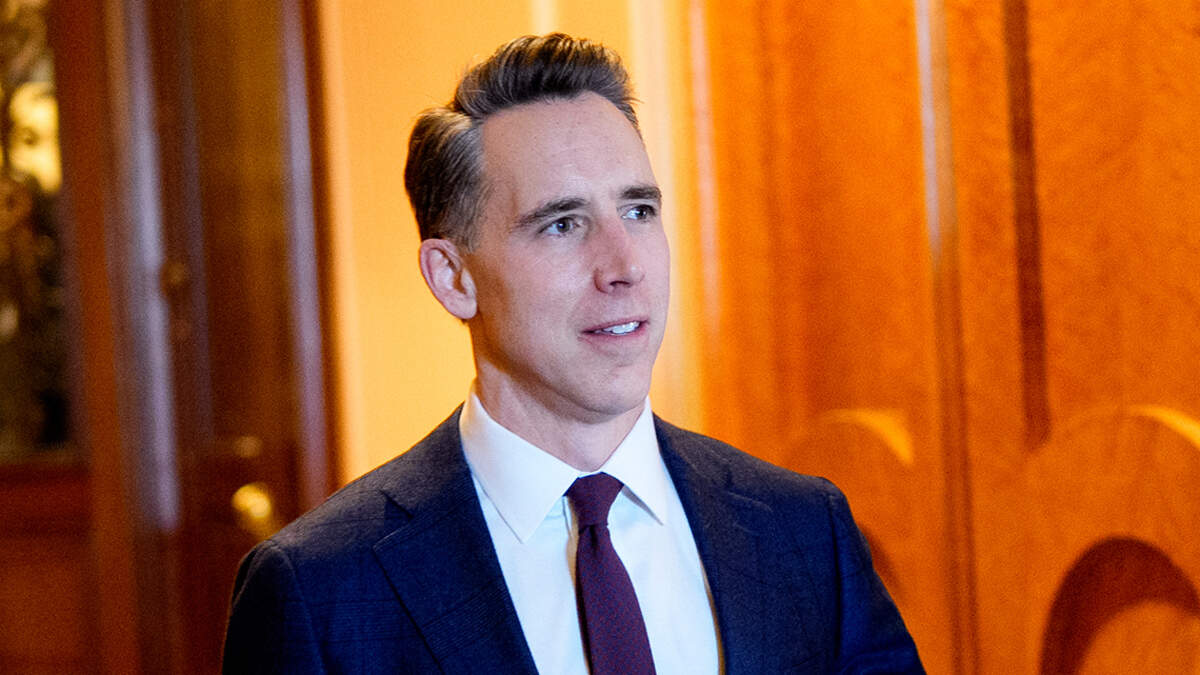
Congress recently had an opportunity to take an unambiguous stand on behalf of America’s children. Instead, we witnessed a familiar, frustrating Washington ritual: a vote that split entirely down party lines, leaving a critical $108.5 million surge for child-exploitation investigations caught directly in the crossfire of a broader budget war.
The funding, authored by Missouri Sen. Josh Hawley as a provision in the Department of Homeland Security reconciliation bill, was designed to do what everyone agrees is urgently necessary — rescue victims and expand the capacity of law enforcement. Right now, DHS’s Homeland Security Investigations employs just seven full-time specialists nationwide tasked with identifying these victims. Hawley’s measure would fix this by adding 200 new child exploitation investigators and forensic analysts. Yet, because the provision was embedded in a broader budget package, every Senate Democrat voted against it.
Capitol Hill insiders will argue this wasn’t a “clean,” standalone vote on child safety. The funding was tucked inside a massive, contentious reconciliation package. In modern Washington, this is how business is done: Vital, universally supported measures are attached to sweeping partisan bills loaded with controversial provisions. Under this broken system, lawmakers are forced to vote on the entire package. Opposing the broader bill means voting against the critical child safety funding hidden inside it.
But hiding behind procedural excuses is no longer acceptable. The vote itself still matters. When anti-child exploitation funding is treated as a chess piece in a partisan budget fight, it sends a dangerous signal that the safety of minors is negotiable. So it’s gratifying to see Hawley’s measure ended up in the final bill signed by the president this week.
This gridlock is happening when we can least afford it. I spent years studying human trafficking in Ohio as part of the U.S. Commission on Civil Rights’ state advisory committee. I listened to victims describe how exploitation begins — not with dramatic abductions, but with the slow, insidious erosion of boundaries. Adults normalize the inappropriate. They blur the line between childhood and adult sexuality. They create confusion where absolute clarity should exist.
That devastating pattern is what compelled me to write my novel “The Trafficker,” because statistics alone cannot convey the human cost of a society that fails to aggressively defend its most vulnerable.
During our investigation, law enforcement repeatedly emphasized that exploitation begins with grooming — testing limits and eroding a child’s sense of safety. When politicians allow funding for the investigators who stop these predators to get swallowed by partisan bickering, they are, intentionally or not, participating in that erosion.
When child safety is run as standalone legislation, we see what is possible. Recent bipartisan successes to combat online sexual exploitation and abuse of children — such as 2024’s REPORT Act — prove that when political games are stripped away, both parties can agree to hold tech companies accountable. But those moments of clarity are becoming the exception, not the rule.
Equipping investigators to confront modern exploitation — where predators use encrypted platforms and artificial intelligence-generated abuse material — is a foundational duty of government. In “The Trafficker,” I wrote that “right now, some little girl is being dropped off in the parking lot of a motel.” That line was not fiction. It was a direct reflection of what victims told us on the ground.
Missourians deserve leaders who will protect children without hesitation, without qualification, and without letting a broken legislative process stand in the way. Sen. Hawley should be commended for his leadership on this issue.
Scott Douglas Gerber is the author of the award-winning novel “The Trafficker,” and served on the Ohio advisory committee to the U.S. Commission on Civil Rights from 2008 to April 2026. He was born in Kansas City.