A decade of lawsuits, feuds and neglect lie behind fire at KC’s Green Duck | Opinion
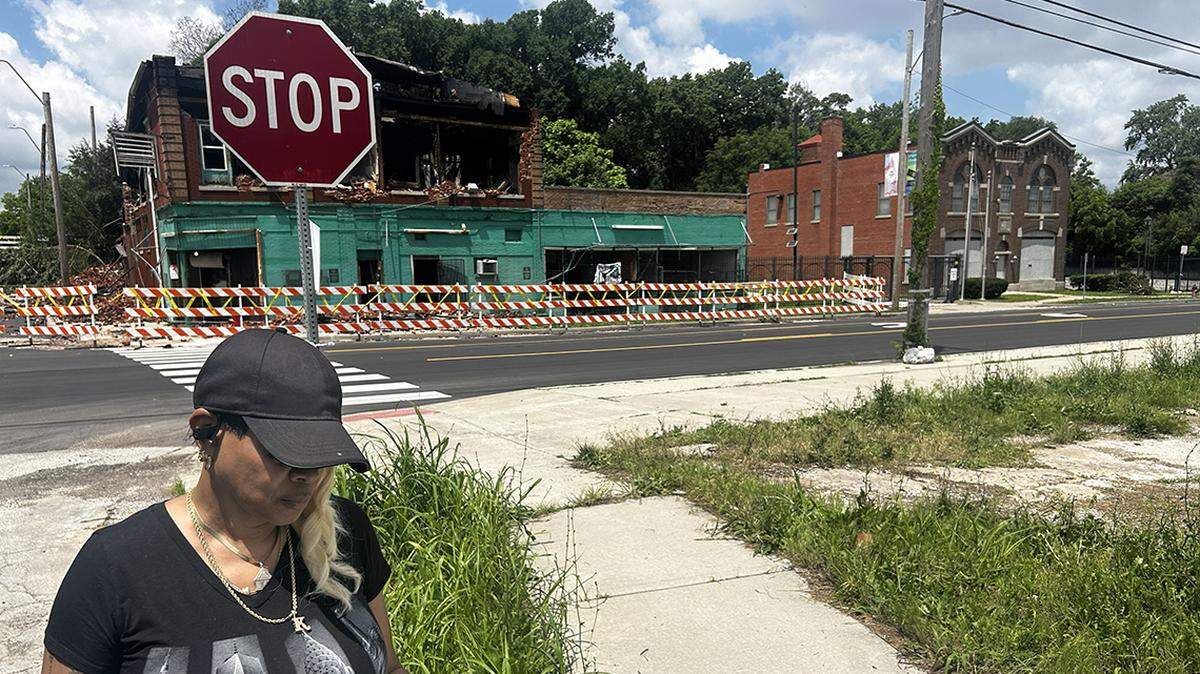
I drove over to the East Side Monday morning thinking I had a pretty tidy column to write.
The building that for decades housed the Green Duck had caught fire the night before, and the videos I’d seen on social media made it look like there wasn’t much left to save.
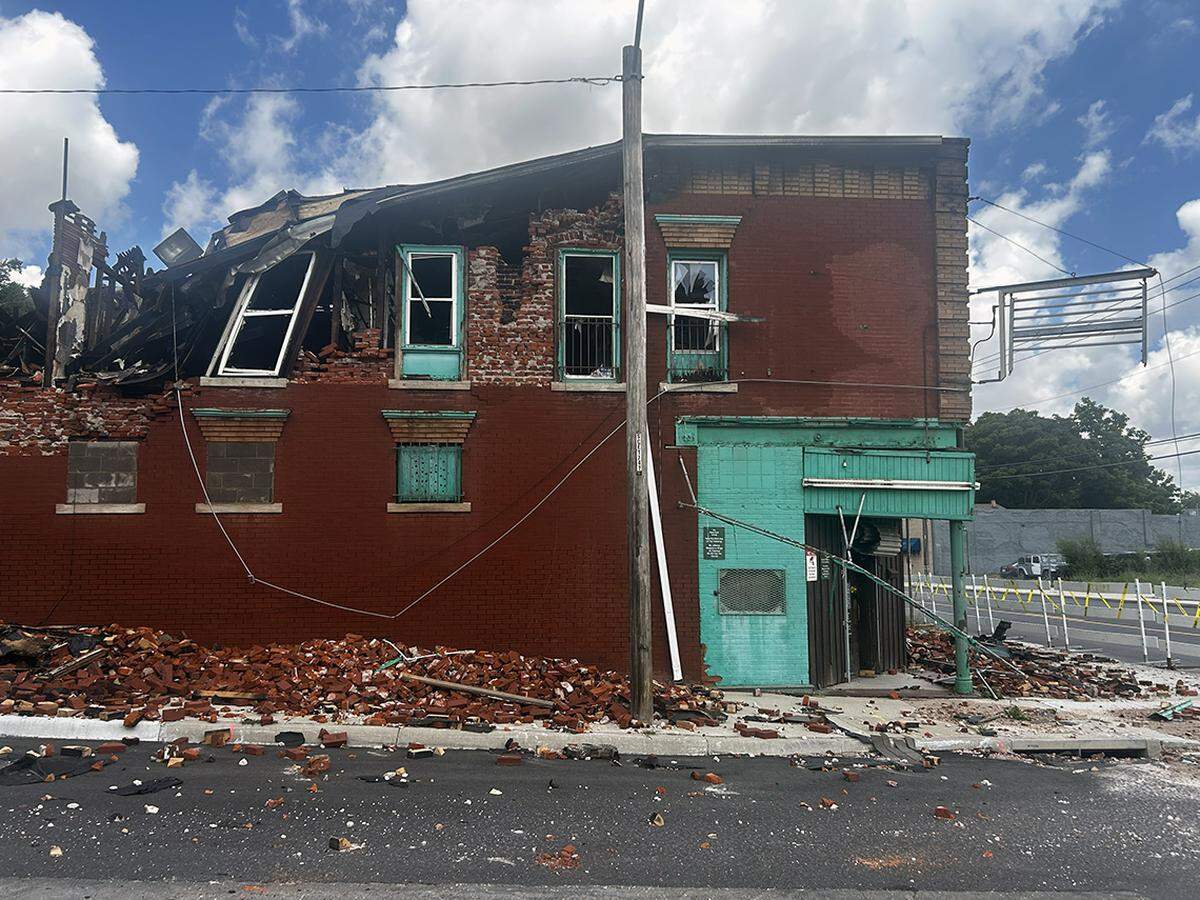
I figured I’d stop by, take a few pictures, grab a quote or two if anybody was hanging around and write, once again, about how Kansas City doesn’t do a very good job of preserving its history. The Green Duck was once a proud tavern and political club at 26th and Prospect with deep ties to Kansas City’s civil rights movement. It was on the city’s register of historic places but had been deteriorating for years.
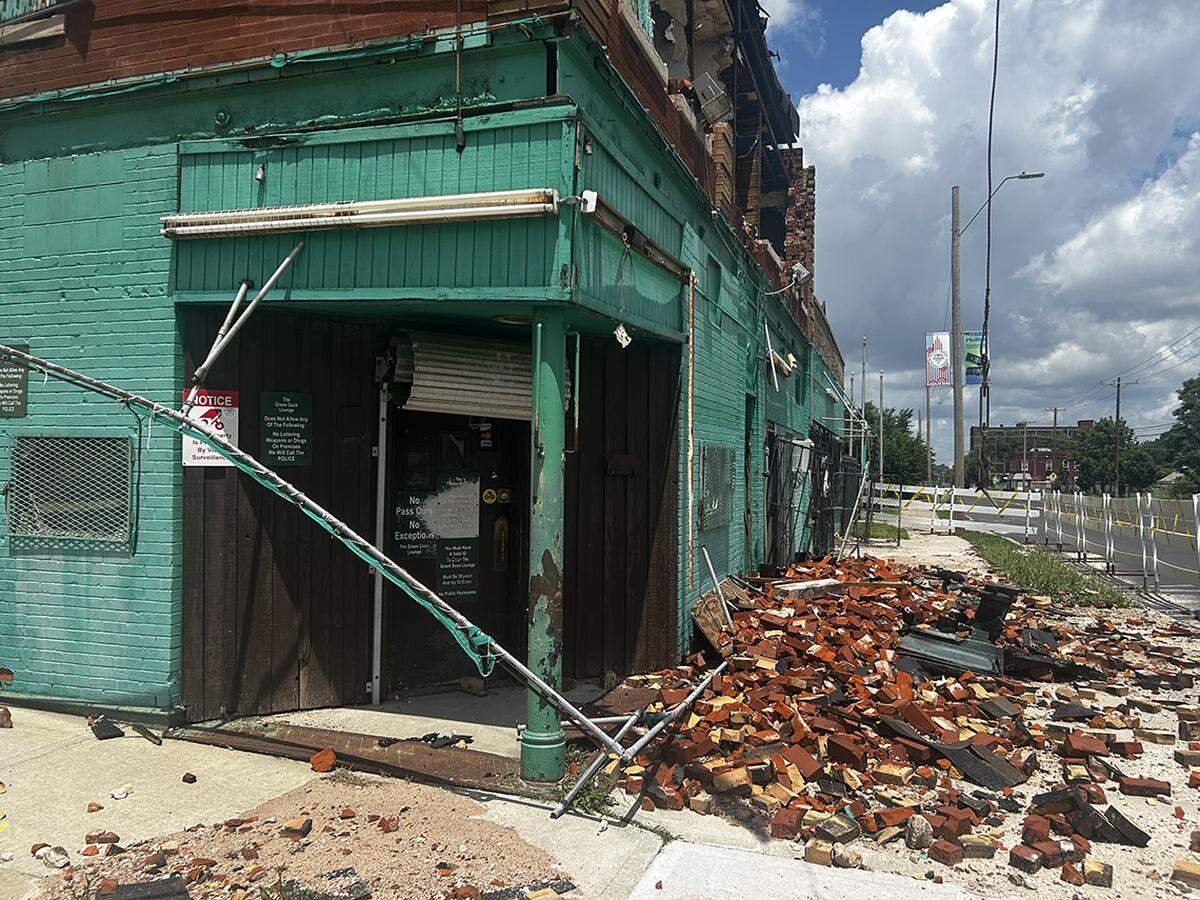
I pulled up around 11 a.m. The building looked like it’d been throttled by a tornado. The second floor was hollowed out and thousands of bricks littered the sidewalk. Barricades surrounded the site.
Across the street, three people were standing in the weeds talking. One was a plumber who had done work on the building at some point. He left before I could get his name. Another was a city planning employee who said she couldn’t talk and headed off.
The third was a woman named Kam White.
White was standing next to a large black pickup truck. Through the open rear driver’s side door, I could see file folders piled across the backseat, many labeled some version of “Green Duck.”
I asked whether she owned the building.
“No,” she said. But then she told me she has spent much of the past four years fighting over the Green Duck in court.
So much for my tidy column.
East Side history
White, who is 57 and until recently owned a south Kansas City bar called Club 31 Sports Bar and Lounge, told me a story of a dream project gone bad.
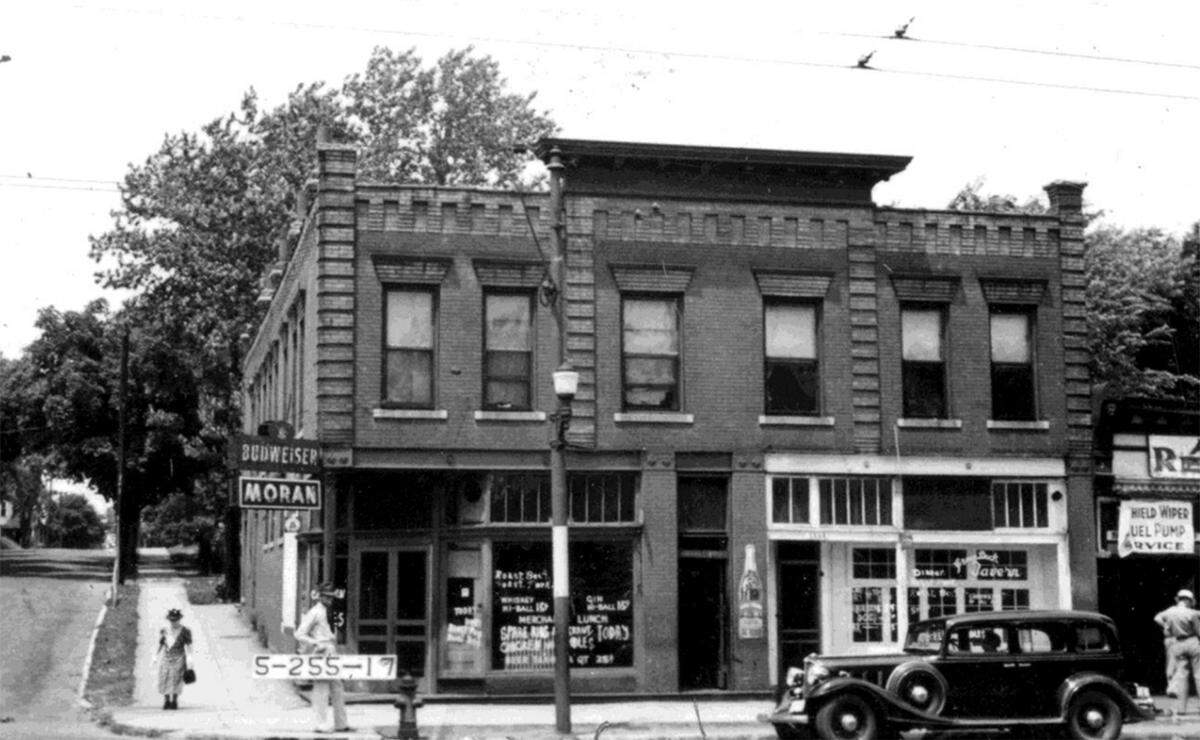
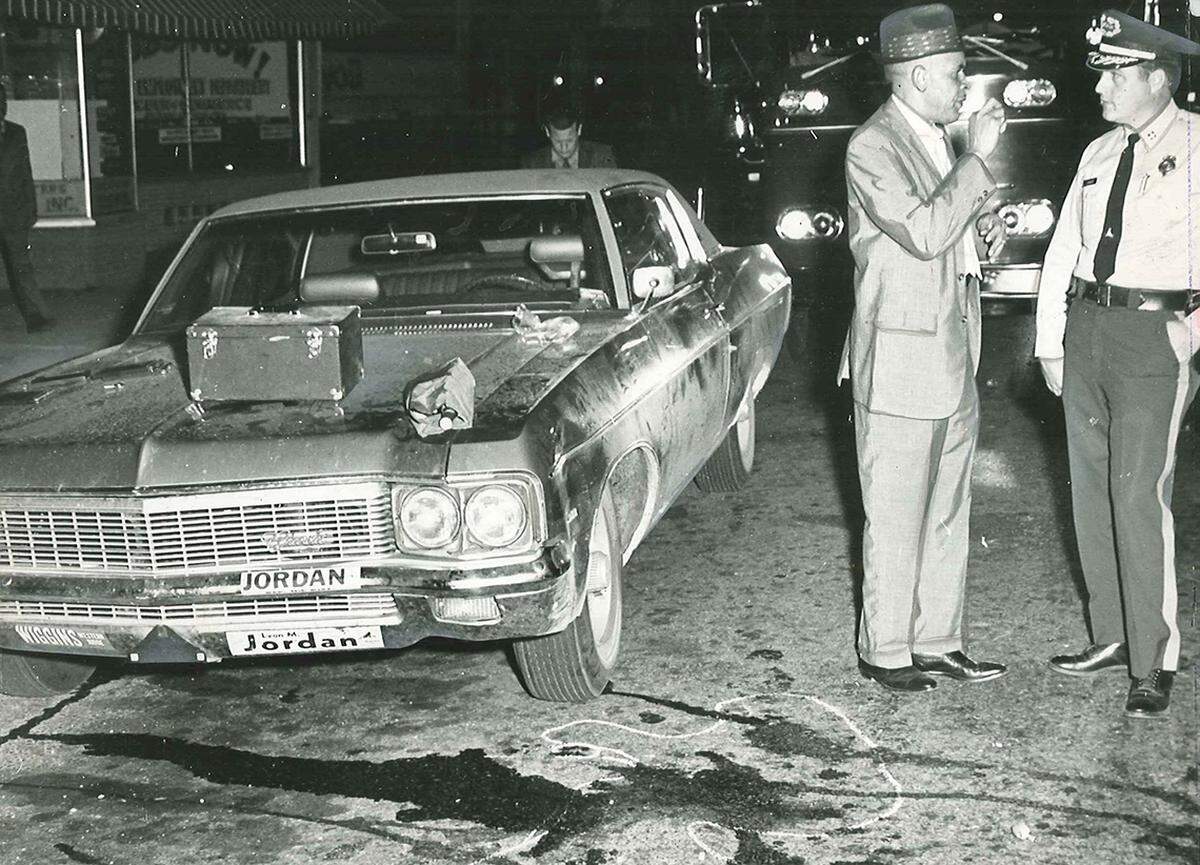
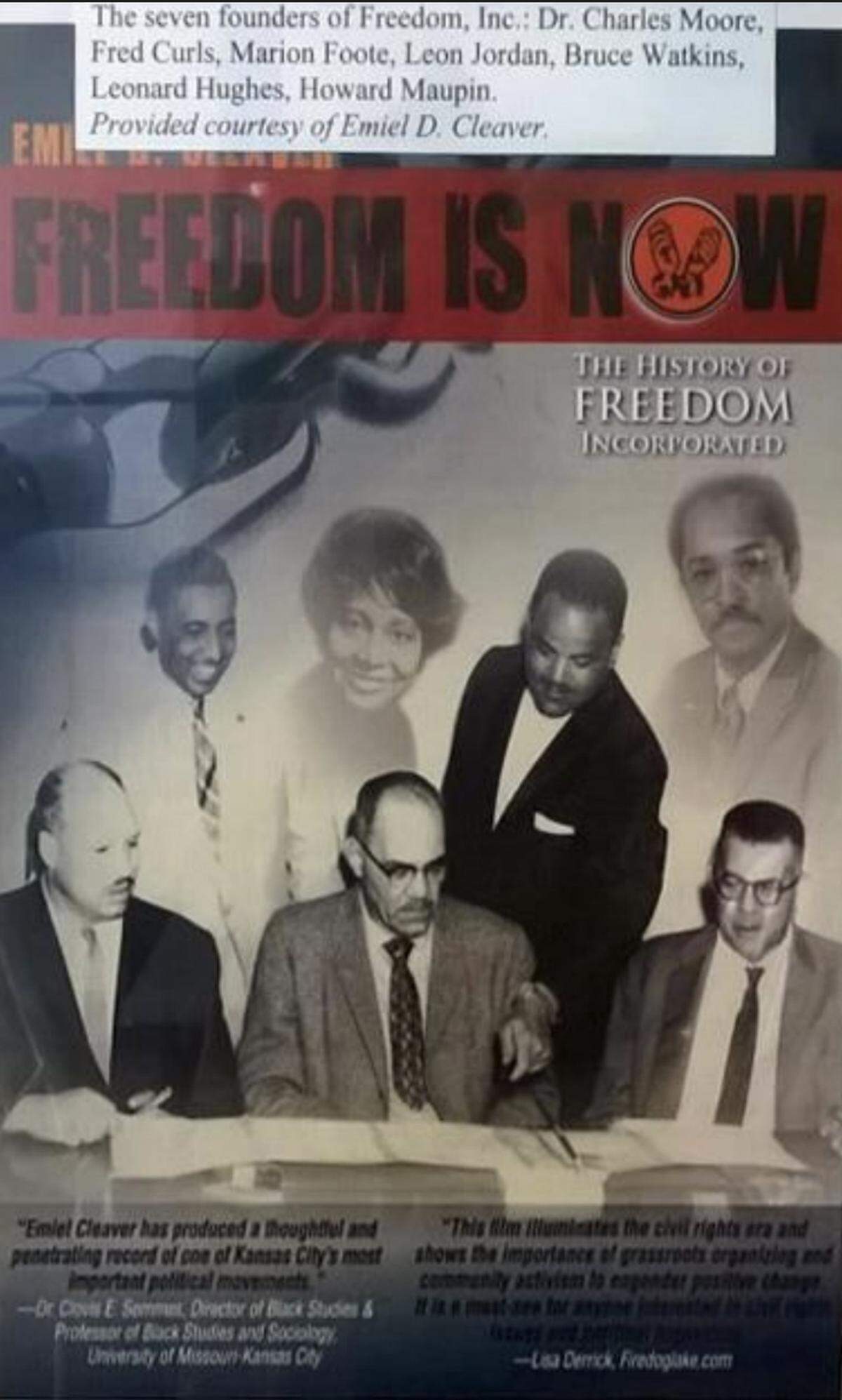
She grew up in the neighborhood, near 29th and Olive. Her grandfather knew Leon Jordan, the civil rights leader, Missouri state representative and Green Duck owner whose political organizing through Freedom Inc. reshaped Kansas City in the 1960s. Freedom Inc. was birthed and headquartered in the Green Duck building. It later helped propel Emanuel Cleaver to City Hall as Kansas City’s first Black mayor. It remains a fixture of East Side politics.
Jordan was shot to death outside the Green Duck in 1970. Today, the Kansas City Police Department’s East Patrol division, which sits next door to the Green Duck, bears Jordan’s name.
In the late 1980s, businessman Jimmy Townsend rescued the two-story, red brick building from foreclosure and spent years restoring it. Under Townsend, the Green Duck remained a neighborhood institution, though not without problems. Prosecutors shut it down as a public nuisance in 2011 after repeated violent crime and drug incidents. It reopened the following year, and in 2015 the city placed it on the historic register.
Later that same year, Townsend was shot to death near the tavern at age 83.
White said she became acquainted with Townsend’s daughter, Delores LaBlance, through New Testament House of Prayer, White’s father-in-law’s church. LaBlance was the executor of Townsend’s estate following his death.
White said she struck a deal with LaBlance to buy the property for $250,000. Under the arrangement, White would pay $125,000 upfront, take possession of the building and then pay the remaining $125,000 over time after reopening the property. According to White, she had little reason to doubt the arrangement.
“I met her at church,” White said. “She told me she believed God wanted me to take it over. Call me naive. I trusted her.”
White said she viewed the Green Duck as an opportunity to preserve a piece of Kansas City history. She planned to open a restaurant and bar downstairs called Duck Lounge and rezone the five apartments upstairs for commercial use. She formed an LLC, pursued a liquor license, obtained appraisals and architectural drawings, and explored redevelopment financing through the city’s Central City Economic Development programs.
White said she ultimately paid LaBlance the initial $125,000 through a combination of cash profits from her bar and cashier’s checks.
“But after I made my last payment, she ghosted me, blocked me on her phone, and wouldn’t give me access to the property,” White said.
That set in motion years of litigation that continue today.
The fight has taken a toll. White said she lost her home to foreclosure, closed Club 31 and is now living with her son while helping care for her mother, who recently underwent a leg amputation, and her 13-year-old granddaughter, for whom she has custody.
“I have nothing left to fight this lady with,” she said of LaBlance.
Still, standing across the street from the burned remains of the Green Duck, White insisted she had not given up.
“I still think I can get the building,” she said. “How much evidence I gotta come with? I got recordings. I got text messages.” She pointed to her pile of files. “Why else would I have been doing all this work if we didn’t have a deal?”
While we were talking, another woman pulled up and parked nearby. She sat in her car watching us for several minutes. As White and I were finishing up, the woman got out, passed us, and walked to the corner to stare at the destruction.
After saying goodbye to White, I wandered over and asked the woman if she had any connection to the Green Duck.
“I don’t,” she said. “I just figured I should come down and see it for myself. I just heard about it on Facebook.”
That did not turn out to be entirely true.
‘Couldn’t come up with the money’
I crossed the street to get a closer look at the damage and was headed off to knock on some neighbors’ doors when the woman called out to me from her car.
I walked down the hill and found her sitting behind the wheel with her phone on speaker. On the line was a woman named Carletta Temple, who identified herself as the property’s realtor. I leaned my head through the window to listen.
She and Temple said they had heard White was outside the Green Duck talking to a reporter and wanted to make sure her account wasn’t the only one that made it into print. They suggested White’s version of events should not be trusted.
I thanked them, confirmed LaBlance’s phone number and told them I planned to call her myself.
When I eventually reached LaBlance, she flatly rejected White’s account of being conned out of the building.
“That is a lie,” she said. “She couldn’t come up with the money.”
According to LaBlance, White repeatedly sought extensions while trying to secure financing. Lenders ultimately declined to make the loan after reviewing her credit, she said.
“She’s trying to gain an interest in something she isn’t supposed to have.”
I asked what would happen to the Green Duck now.
LaBlance said she could not discuss many details because the fire remained under investigation. She said that the building had been under contract to be sold and was scheduled to close June 5.
The buyer, she said, was local attorney Alfred Jordan.
I later reached Jordan. He declined to comment.
Legal battles over inheritance, probate
After spending several hours reviewing the court records, what strikes me the most is not the dispute between White and LaBlance. It is how long the larger fight over Jimmy Townsend’s estate has been going on.
Townsend was killed in 2015. Nearly a decade later, his estate remains unsettled.
Over that time, the case generated disputes over inheritances, property sales and the administration of the estate itself. Last year, the attorney who had represented the estate for eight years withdrew, telling the court that continuing the representation had become “unreasonably difficult” and financially burdensome.
In a 2021 letter to the court, Townsend’s son, Keith, complained that he still had not received the one-third share of the estate he believed he was owed under his father’s will. He alleged that estate property was deteriorating, that belongings had been sold without him receiving his share and that he was being told he might have to purchase the house he had lived in since before his father’s death.
“I would like for this to be all over,” Keith wrote to the judge. “I am trying to move forward in life even after losing my 83-year-old father to a murder and finding him in this condition.”
Three years later, Keith asked a judge to remove LaBlance as executor. He alleged that efforts to sell estate properties had repeatedly stalled and that years of delays had reduced the value of some of the estate’s assets, including the Green Duck.
I called Keith. He hung up on me.
White entered the picture in 2022. Her dispute with LaBlance added yet another layer to an already complicated probate case.
As of this spring, the estate had yet to be resolved, White and LaBlance were still litigating their competing claims and the Green Duck was apparently under contract to be sold.
Then it caught fire.
Falling bricks, broken windows
City records show years of complaints about the Green Duck and surrounding property.
Since 2022, residents have reported falling bricks, damaged awnings, broken windows, trash, weeds and unsecured entry points. In September, a report noted that the front door was open and the building was unsecured. A complaint filed in January reported that the Green Duck bus — which had sat for years across the street from the building — had become a site of alleged drug use and prostitution. The bus was removed a few months later.
Kansas City Fire Department officials told me the case has been referred to the department’s Bomb and Arson Unit, which investigates suspicious and undetermined fires, among other incidents. It’s too early to know the cause of the fire, though half the comments on social media are from residents convinced it was intentionally set.
“In June we tend to breathe a sigh of relief because we’re clear of the winter fire season,” Ethan Starr, executive director of Historic Kansas City, told me. “Summer is not when we expect a loss like this.”
He said the fire should prompt a broader conversation about deteriorating historic properties, particularly on the East Side. The Green Duck, he noted, illustrates the gap between recognizing a building’s importance and preserving it.
“It was protected from architectural modifications,” Starr said, “but not from neglect.”
No word from Freedom Inc.
I assumed that the people most closely associated with the Green Duck’s legacy would have strong opinions about its future.
I was wrong.
The phone number listed for Freedom Inc. was not accepting messages because the voicemail box had not been activated. An email address associated with the organization generated a bounce-back message.
I eventually reached a few people connected to the organization. Councilwoman Melissa Patterson Hazley, a Freedom member, said she didn’t have much to say about it and suggested I contact the building’s owner. Freedom attorney Clinton Adams, Jr., told me the building was not particularly significant to him. Freedom president Rodney Bland did not return a call.
The only person associated with Freedom I could get on the phone who was willing to discuss the building was Mayor Quinton Lucas.
Lucas acknowledged that the city needs to do a better job of getting ahead of buildings in decline before they become public safety threats. He also noted that many historic buildings survive because somebody with influence decides to make them a priority.
Lucas has made the Paul Robeson School a personal cause, recently pushing the city to pursue receivership of the long-abandoned property where he once ran track and lived nearby in President Gardens. Patterson Hazley led the city’s effort to acquire Holy Ghost Catholic Church, the historic church near 18th and Vine. And Ollie Gates spent years championing the old Paseo YMCA and leading efforts to transform it into the Buck O’Neil Education and Research Center.
“Sometimes it’s not enough to tape something to the door,” Lucas said. “You need to find people who give a damn.”
The Green Duck never found those people. And now it’s just another burned up building on the East Side of town.
This story was originally published June 2, 2026 at 11:39 AM.