
Keep politics and money out of Kansas Supreme Court justice picks | Opinion
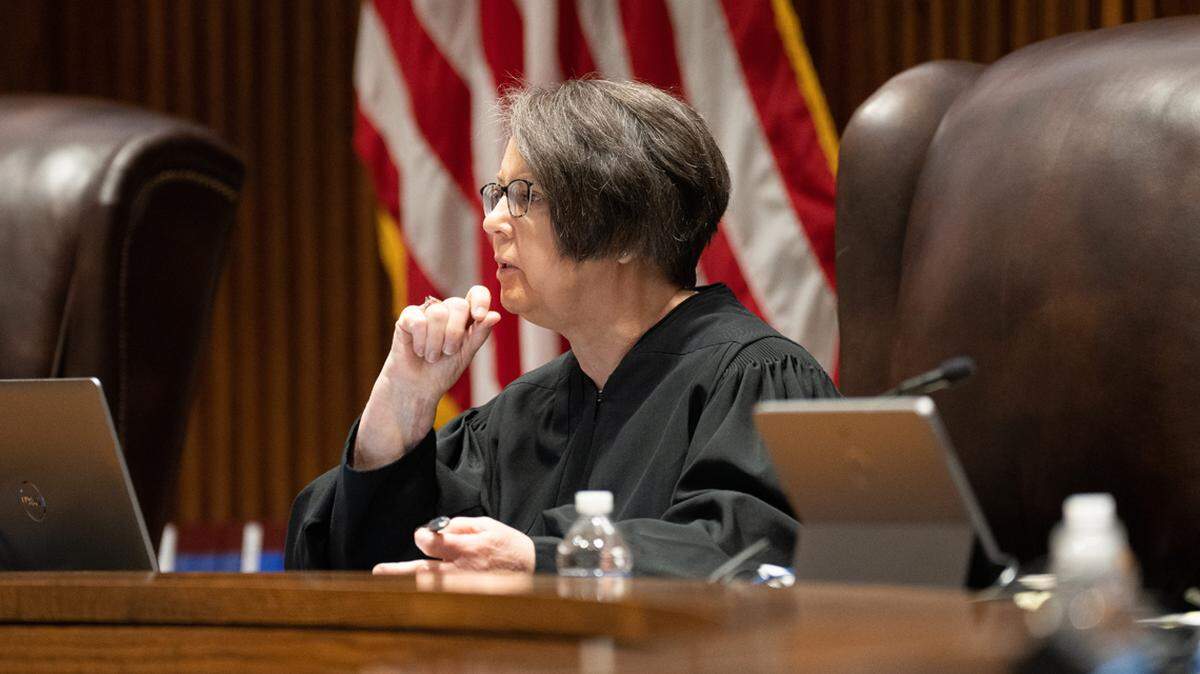
Kansas has a lot to be proud of this past week — not just because we have an outstanding new state Supreme Court justice in Larkin Walsh, but because the process that led to her appointment continues to work exactly as it should.
Unlike some other states, Kansas selects its justices through a nonpartisan, merit-based system. It’s a process designed to elevate the most qualified candidates — not the most connected or best funded — and to keep politics and special interests out of our courts. This approach has served our state well for several decades, and the appointment of Justice Walsh is the latest example of its success.
I had the privilege of working with Larkin early in her career, when she served the Kansas Supreme Court as my research attorney. Even fresh out of law school, her intellect, professionalism and commitment to public service were unmistakable. She has since built an impressive career handling complex litigation and appellate work, advocating for workers, consumers, and survivors of exploitation. She brings deep knowledge of the law — and a clear sense of justice — to her seat on the court.
She also brings a sensibility that’s increasingly rare: a grounded understanding of how law intersects with people’s lives. Whether working to ensure survivors of trafficking can access the courts, or helping to reform policies that prevent people from seeking justice, Larkin’s work has been guided by principle and purpose. She writes and argues with clarity, precision and heart. That is exactly the kind of perspective that strengthens our high court.
Kansas consistently gets some of the best and brightest legal minds on our state Supreme Court, because we don’t elect justices through partisan campaigns. Instead, a diverse nominating commission, with representatives from every part of the state, evaluates candidates based on merit and recommends finalists to the governor. That process, established by Kansas voters nearly 70 years ago, ensures that politics and money do not dictate who sits on our highest court.
Having gone through the process myself, and having served more than 20 years on Kansas’ appellate courts, I know how important that independence is. I also know how important it is for justices to be continuously evaluated and held accountable by the people. The residents of Kansas retained me in four separate elections, and I was always mindful that our courts must remain accountable without becoming politicized. Our retention elections strike that balance: They give the people a direct say, without putting justices in the position of fundraising or promising specific outcomes in the cases they must decide.
That balance is critical — especially now, when public trust in institutions is fragile and so many states are seeing their courts pulled into increasingly venomous partisan crossfire. Our commonsense Kansas approach offers a better way.
Larkin Walsh’s appointment shows us what’s possible when we protect a system that puts qualifications first. She will bring compassion, clarity and finely honed legal skill and expertise to the state Supreme Court. Kansans can feel confident that she will serve all of us — not just those with power or influence, but every person who comes before the court seeking justice.
This is a moment worth celebrating, not just for the justice system, but for Kansas. And, as we look ahead, we should remember what got us here: a process that works, and a tradition of fairness and independence that’s worth defending.
Kansas City, Kansas, native Carol Beier served 17 years on the Kansas Supreme Court.