Kansas’ new Supreme Court justice could be last appointed before polarizing vote
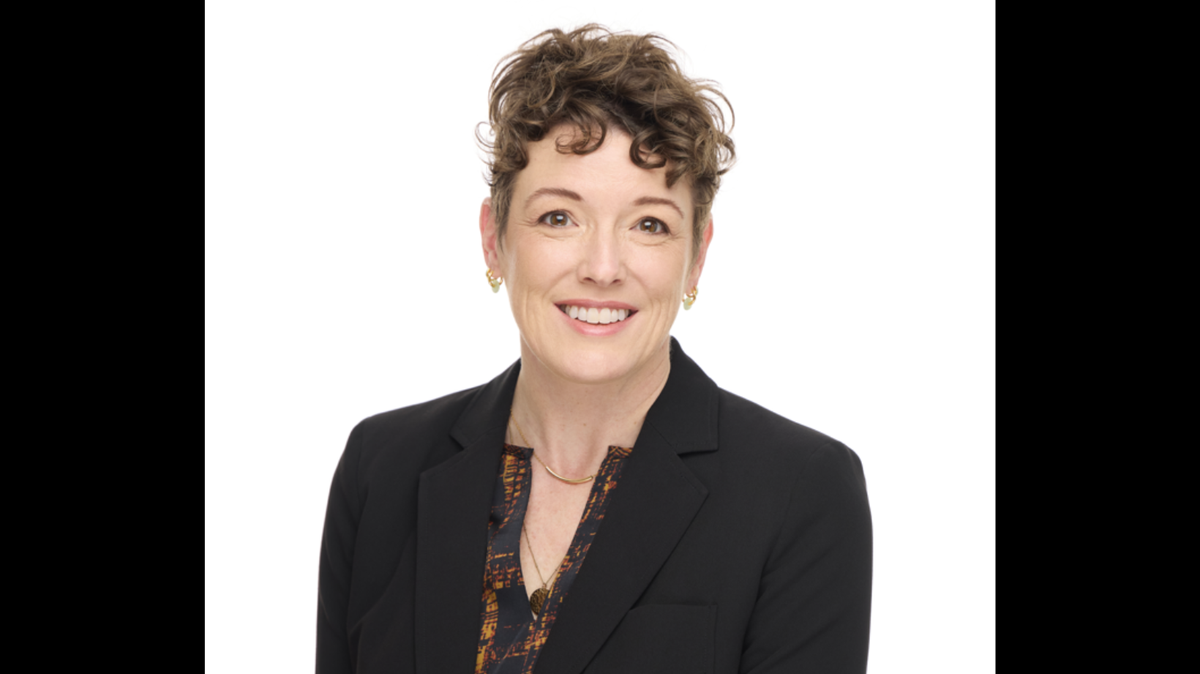
Leawood attorney Larkin Walsh will become Kansas’ next state Supreme Court justice, Gov. Laura Kelly announced Thursday.
Walsh’s selection comes as Kansas braces for a polarizing fight over whether to return to a system of directly electing high court justices after more than 60 years of relying on a nominating commission that screens candidates and picks three finalists for the governor to choose from.
“Our state’s process for nominating Kansas Supreme Court justices produces highly qualified nominees and incorporates voices from across the state,” Kelly said in a press release.
“Appointing justices to the Kansas Supreme Court is one of the most important responsibilities I have as governor, and it is not one I take lightly.”
The seven Supreme Court justices have the final say in consequential criminal and civil cases that work their way through Kansas courts. The high court issues on average between 100 and 160 opinions annually.
Kelly chose Walsh, a 46-year-old senior counsel at Stueve Siegel Hanson, over two current district court judges — Christopher Jayaram of Lenexa and Amy Hanley of Lawrence. Walsh will replace former Justice Evelyn Wilson, who resigned from her seat last month after sharing news of her ALS diagnosis.
Walsh’s law firm bio calls her a champion for “the rights of workers, consumers, and survivors of forced labor, trafficking, and sexual abuse.”
“Larkin’s extensive legal experience and her background of service makes her an excellent addition to the Kansas Supreme Court,” Kelly said. “Her deep understanding of appellate courts, combined with her breadth of experience in civil practice, gives her a unique and invaluable perspective.”
Before joining a private practice, Walsh, a University of Kansas Law School graduate, clerked for U.S. District Court Judge Carlos Murguia and worked as a research attorney for former Kansas Supreme Court Justice Carol Beier.
In the press release, Walsh pledged to be “the type of Justice that all Kansans deserve.”
She described that as someone who “with a clear understanding of the legal issues, will faithfully interpret and impartially apply the law to the unique facts of each case, irrespective of popular opinion or the political winds, while maintaining an awareness of each decision’s impact on people and on history.”
Senate President Ty Masterson, an Andover Republican who is running for governor next year, welcomed Walsh to the bench with a cutting remark.
“I wish Justice Walsh well on the court and certainly hope she discovers a judicial philosophy that is in line with Kansans, given she indicated she currently has no philosophy or even views on how to interpret the constitution.,” Masterson said in a statement. “Such an answer would never fly with Kansans, which is why we need to restore their right to determine who sits on our state’s highest court.”
Looming court fight
Next August, Kansans will be asked to vote on a constitutional amendment proposal brought by Republican lawmakers who want to eliminate the state Supreme Court nominating commission.
Opponents of the proposal say the current system has shielded the court from politics and that statewide judicial races in Kansas would quickly devolve into partisan, money-fueled brawls that scare away the most qualified candidates.
They point to this spring’s Wisconsin Supreme Court contest, which drew more than $100 million in spending, including from super PACs run by billionaires Elon Musk and George Soros.
Some Kansas Republicans have grown increasingly frustrated with the state Supreme Court over decisions protecting abortion access. Lawmakers have long viewed judicial reform as a potential avenue for bringing the court to heel.
They argue that the makeup of Kansas’ nine-member nominating commission gives attorneys undue representation. Under the current system, governors appoint one nominating commission member from each of the state’s four Congressional districts, and licensed attorneys from within each district vote to choose their representative on the commission.
Lawyers from across the state also have the opportunity to select an at-large attorney member who serves as chair of the commission. Those commissioners vetted 15 candidates who applied to fill the most recent vacancy.
Sen. Kenny Titus, a Wamego Republican and attorney, recently told The Star that it’s disingenuous to claim that Kansas’ selection process shields the high court from politics.
He said there’s a “political tilt” to practicing lawyers in Kansas, adding that they “carry that baggage with them” onto a nominating commission that gives them an outsized influence over the judicial system.
“It’s just like any other election. They send out campaign letters, they talk a little bit about their values and what they believe in, but the real difference is that only a very small number of people get to see that,” Titus said.
If voters see it the same way, Walsh could be the last Kansas Supreme Court justice placed on the bench without running a statewide campaign.
Beier, the former state Supreme Court justice whom Walsh worked as a research attorney under, said she believes that would be a mistake. In a statement to The Star, Beier said Walsh’s selection “reflects the very best of our merit-based process.”
“Larkin Walsh has already served the Supreme Court of Kansas with distinction, and I have no doubt she will again,” Beier said. “I have seen firsthand her sharp intellect, rigorous work ethic, and dedication to justice.”
This story was originally published August 7, 2025 at 5:00 PM.