
Long before business center controversy, KC neighbors fought over midtown Costco
For weeks and months, the conversion of the midtown Costco to a business center has been ruffling feathers for Kansas City shoppers and officials.
In one open letter to the store, Councilmember Melissa Patterson Hazley enumerated some common concerns and recalled the history of the site:
“Public dollars, public planning, and public sacrifice helped make this development possible. Families were displaced, homes were demolished, and Kansas Citians accepted significant community impacts because the promise was that this investment would bring jobs, economic activity, and access to essential goods and services to the urban core for everyday people.”
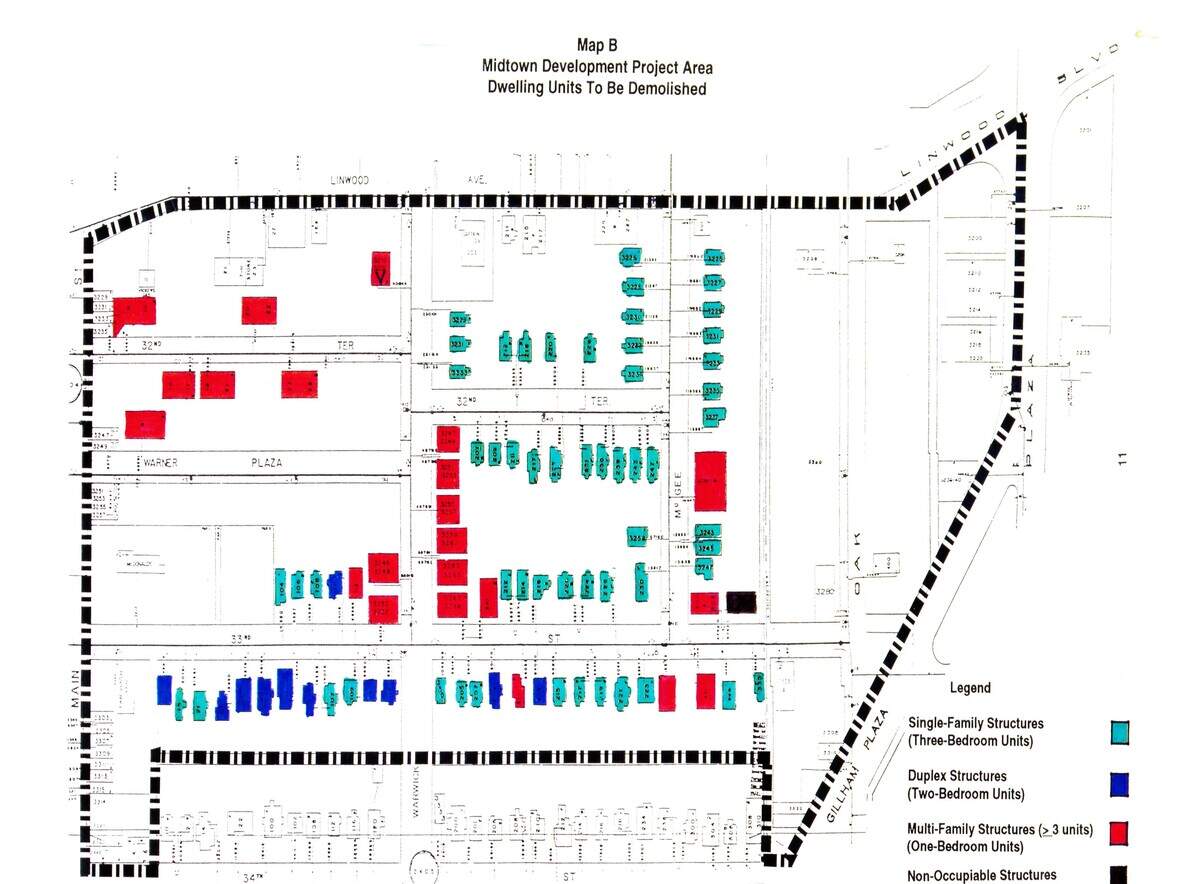
Public dollars were indeed spent, about $53 million out of a $70 million project budget. So, too, did the project displace families. Roughly 30 acres of land, over 10 square blocks of homes, apartments, and businesses, were cleared for the Midtown Marketplace, the official name of the suburban-style shopping center where Costco and Home Depot operate today.
While it is not exactly ancient history, many may not recall the site’s prolonged development process and the controversies that plagued it from the start.
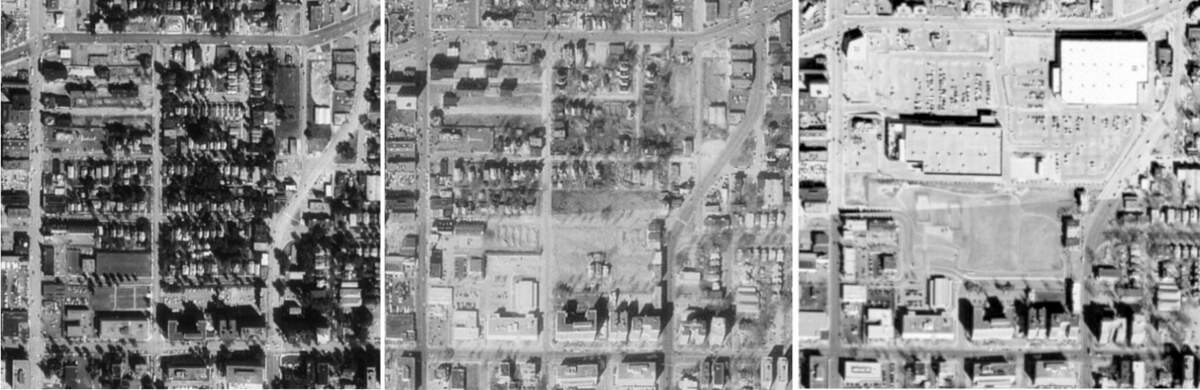
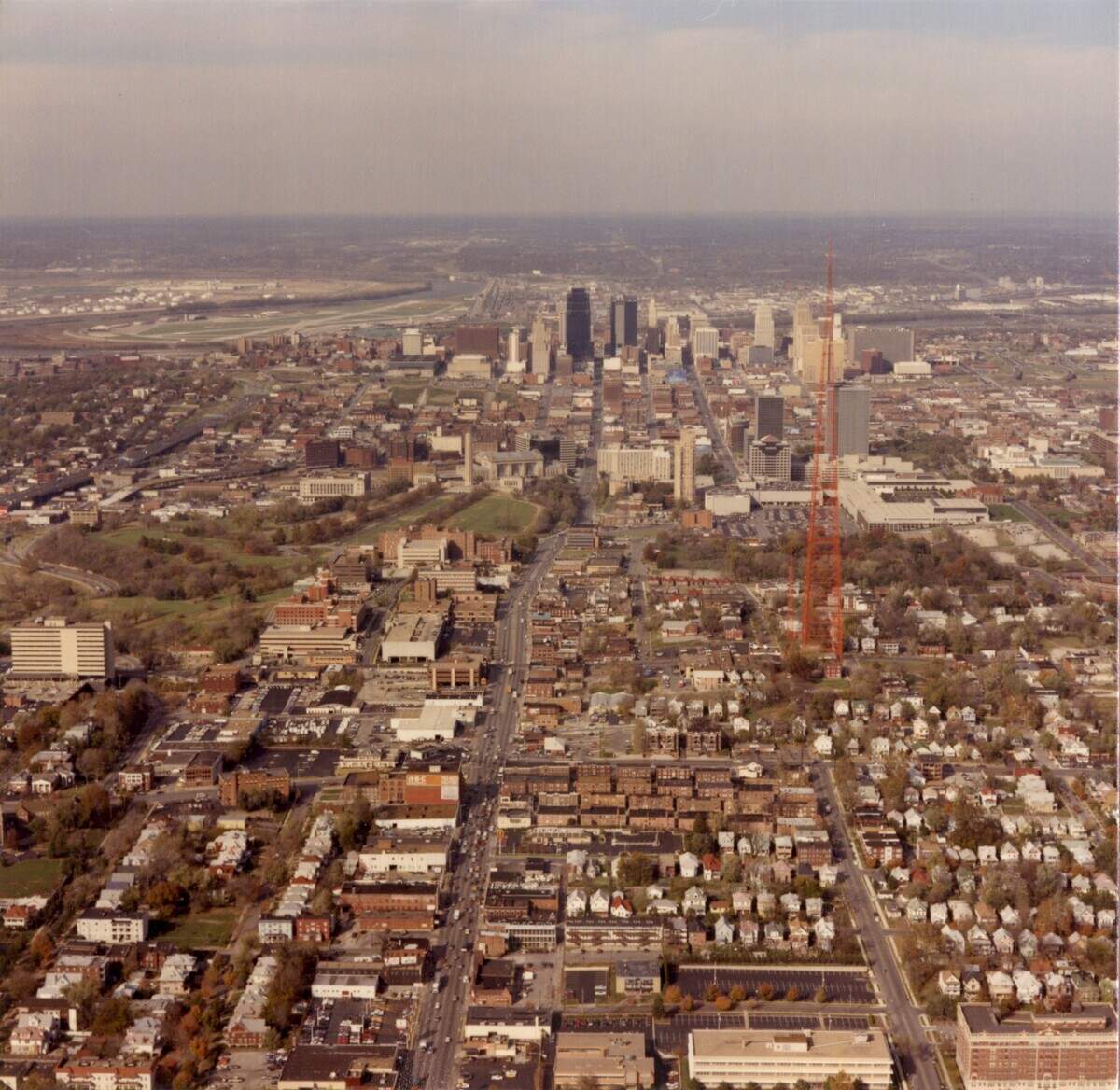
The Midtown Marketplace traces its genesis to efforts in the 1970s and ’80s to stem decades of physical and population decline in midtown and revitalize the Main Street corridor.
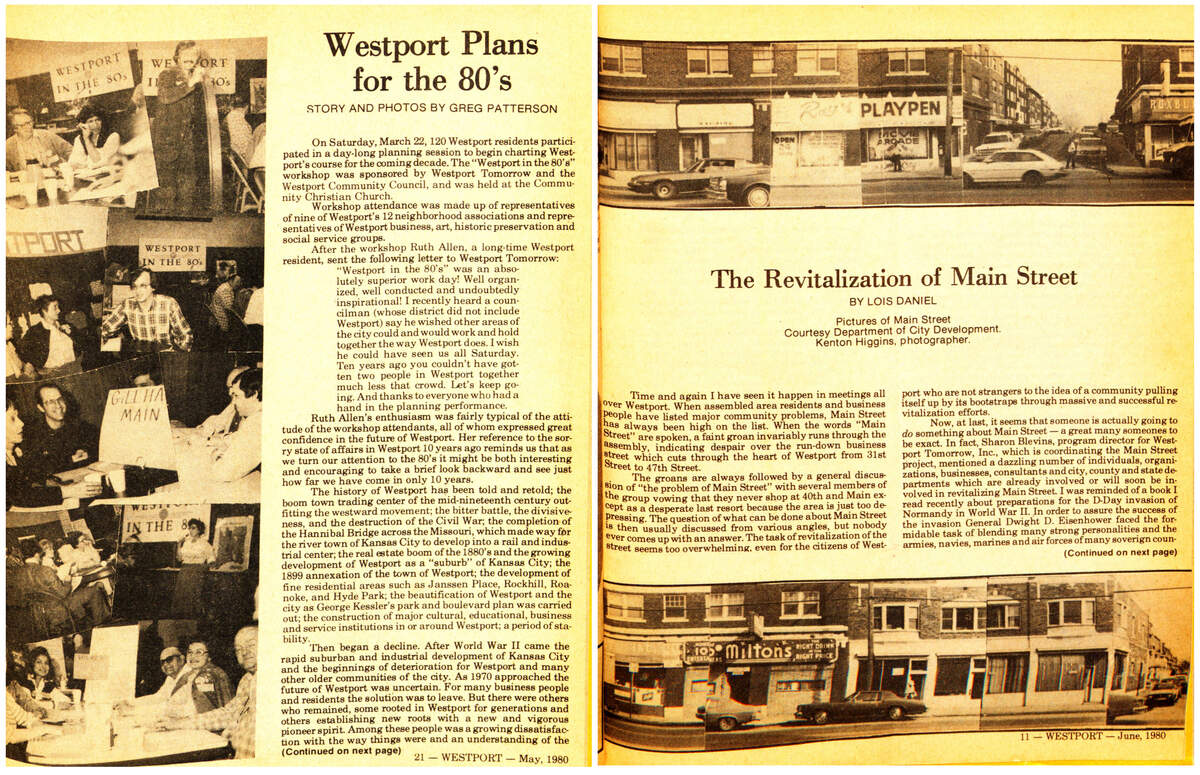
Plans to enliven midtown KC
Nascent neighborhood associations and groups like Westport Tomorrow hoped that through historic preservation and active community engagement they could resist large-scale developers and turn midtown’s residential neighborhoods into an “attractive alternative to suburbia.”
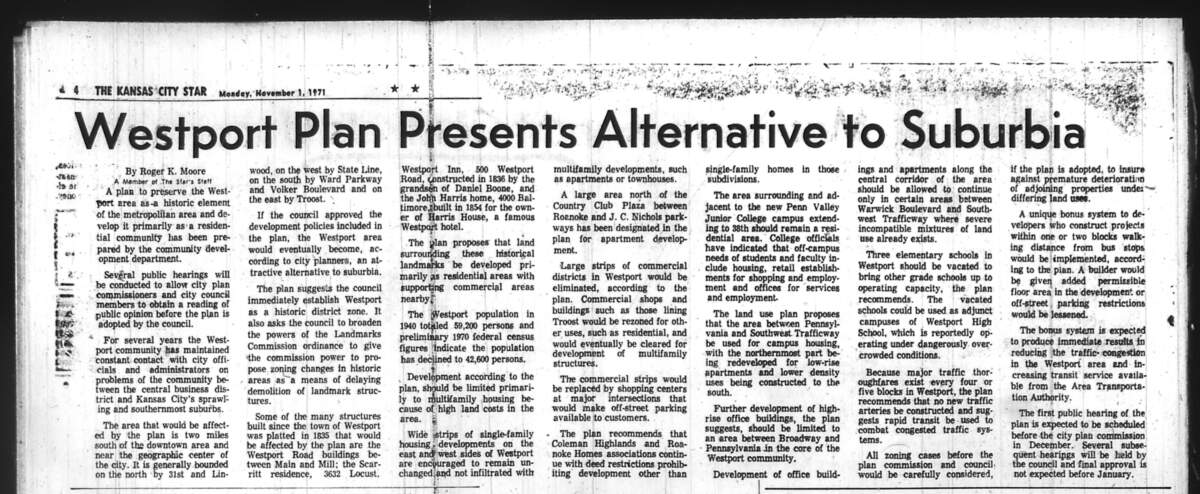
While neighborhoods like Hyde Park and Union Hill rebounded, the groups saw Main Street — lined with pockets of crime and blight — as a greater challenge.
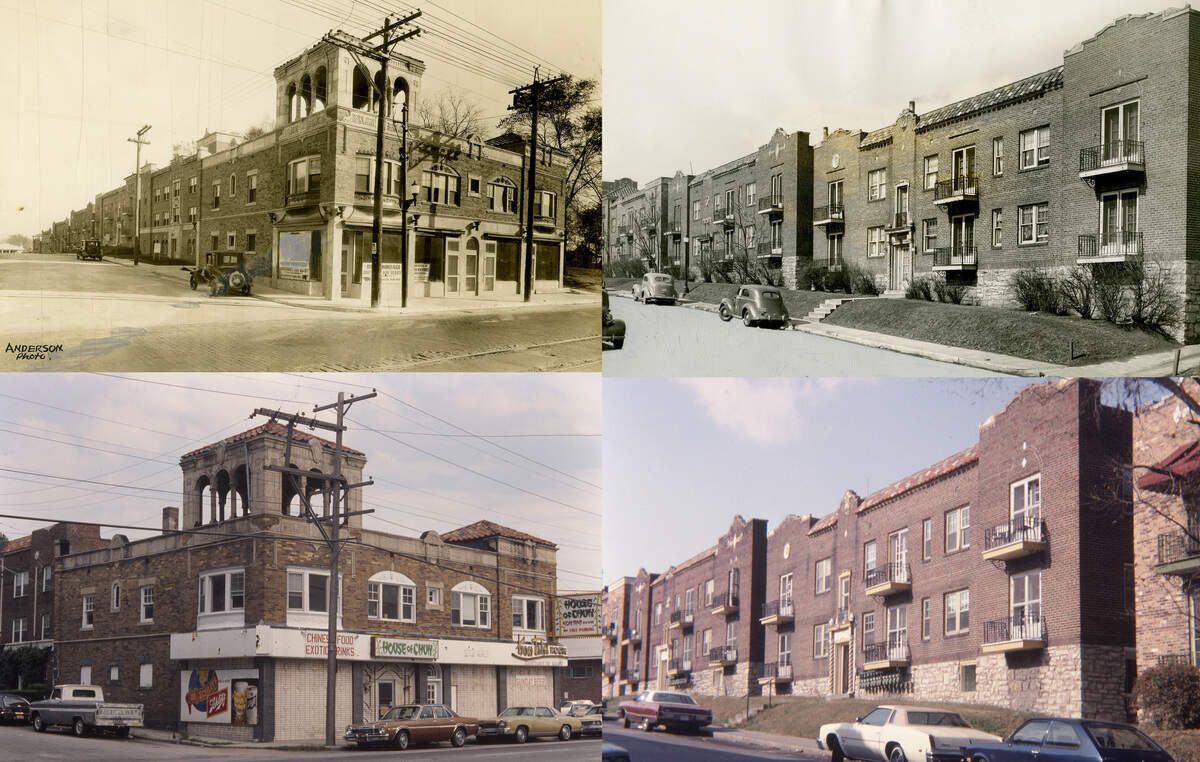
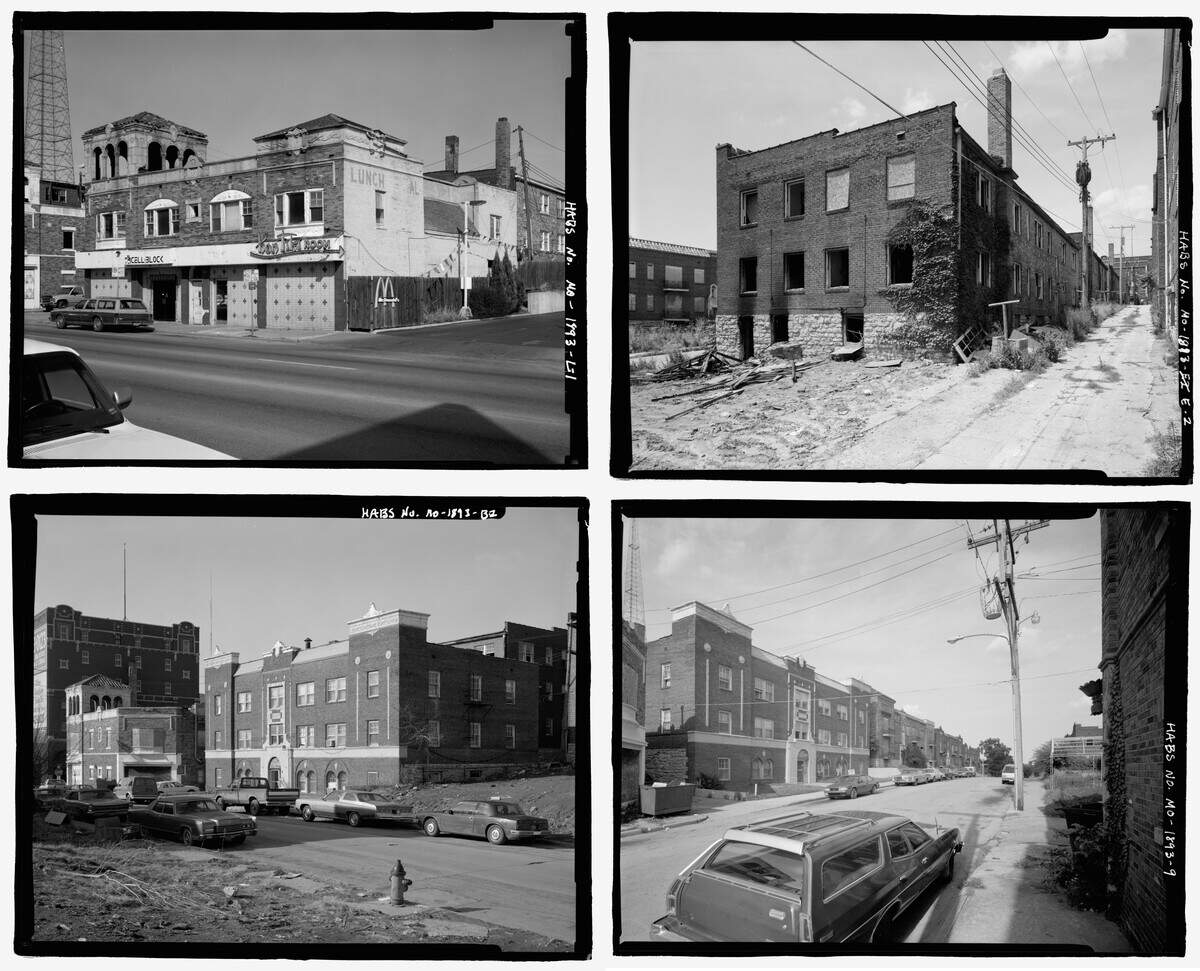
Among the worst of these, according to officials charged with studying the area, was the southeast corner of Main and Linwood. Two narrow apartment-lined streets dating back to the 1920s, Miller Plaza and Warner Plaza, were hotspots for burglaries, drugs, and prostitution.
Development pitches begin
Around 1986, the nonprofit Main Street Corridor Development Corporation (MainCor) purchased several of the apartment buildings and began working with the city to solicit redevelopment proposals for the Warner Plaza area.
Subsequently, two developers approached MainCor. Jack Oliver of the Oliver Group Inc. proposed a total renovation of all but two of the 27 historic structures. Leo Eisenberg Co., meanwhile, proposed clearing the entire area for a 50,000-square-foot grocery store and adjacent shops.
While MainCor recognized the need for retail in midtown, it prioritized the preservation of historic structures and the character of Main Street. According to one board member, “We want an urban atmosphere — not a Noland Road or a Metcalf.”
Their executive director agreed, telling The Star: “We want people to realize they are on Midtown Main Street, not Anywhere, U.S.A.”
The Oliver Group’s $9.8 million rehabilitation project got off to a good start, and for nearly two years residents foresaw a neighborhood renaissance. Toward the end of 1988, however, the Department of Housing and Urban Development denied the project’s request for federal mortgage insurance, dealing Oliver a major blow.
According to federal officials, the 188 housing units to be restored “greatly exceeds the market needs of an already oversupplied area,” and the project therefore “must be considered infeasible.”
Pitches shift from preservation to retail
With Oliver sidelined, Leo Eisenberg Co., which by then had become the largest developer of strip malls in America, reentered the fray. It was still eyeing the area for a commercial development, and while MainCor acknowledged residential concerns, it would not oppose “a real quality commercial development if it could be made to fit in with the character of the area.”
This could hardly be said for the plans that Eisenberg Co. filed in June 1989.
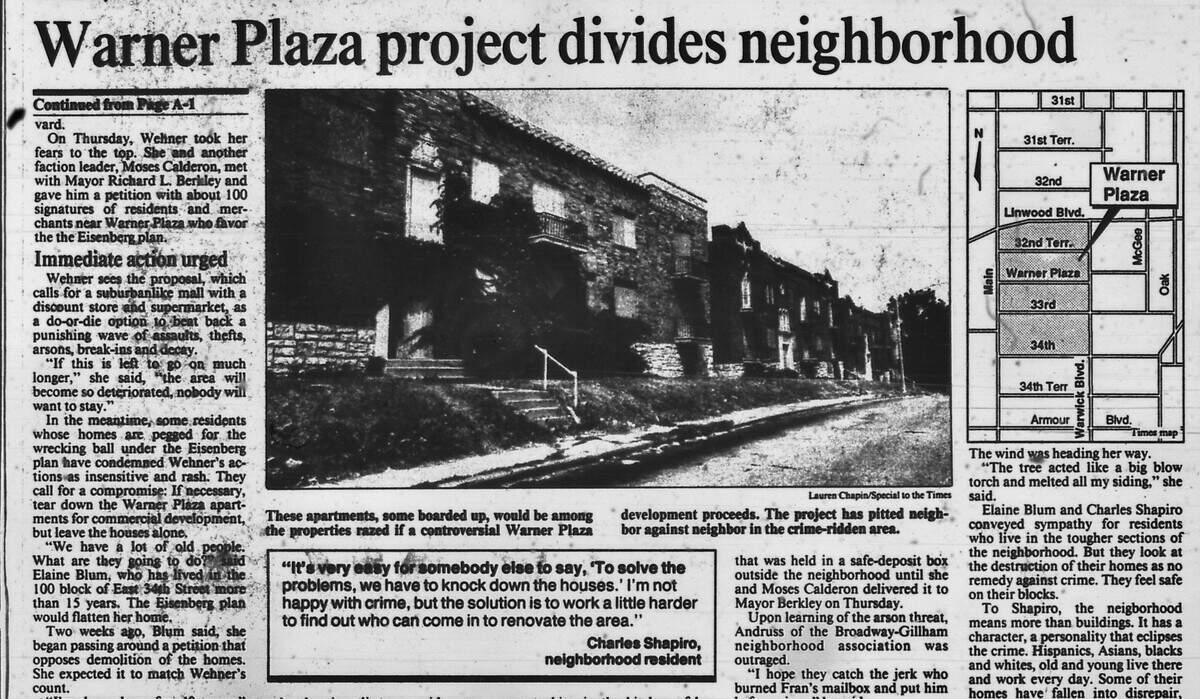
The developers not only recommended removing the Warner and Miller Plaza apartments entirely, but extended their plans south to 34th Street, demolishing an additional 23 homes. The only structures to be spared were a McDonald’s, a Taco Bell, and a Vickers gas station.
Mark Andruss, president of the Broadway-Gillham Neighborhood Association, pledged that any project that included the destruction of additional homes “cannot and shall not be supported by Broadway-Gillham.”
Yet some residents disagreed.
A petition in favor of the plan garnered 90 signatures, and its supporters subsequently resigned from the Broadway-Gillham association to form the breakaway Warner Plaza Neighborhood Association.
Any possibility of rehabilitation, however, was essentially eliminated in winter 1989-90, when a series of fires broke out in the Warner and Miller Plaza apartment buildings.
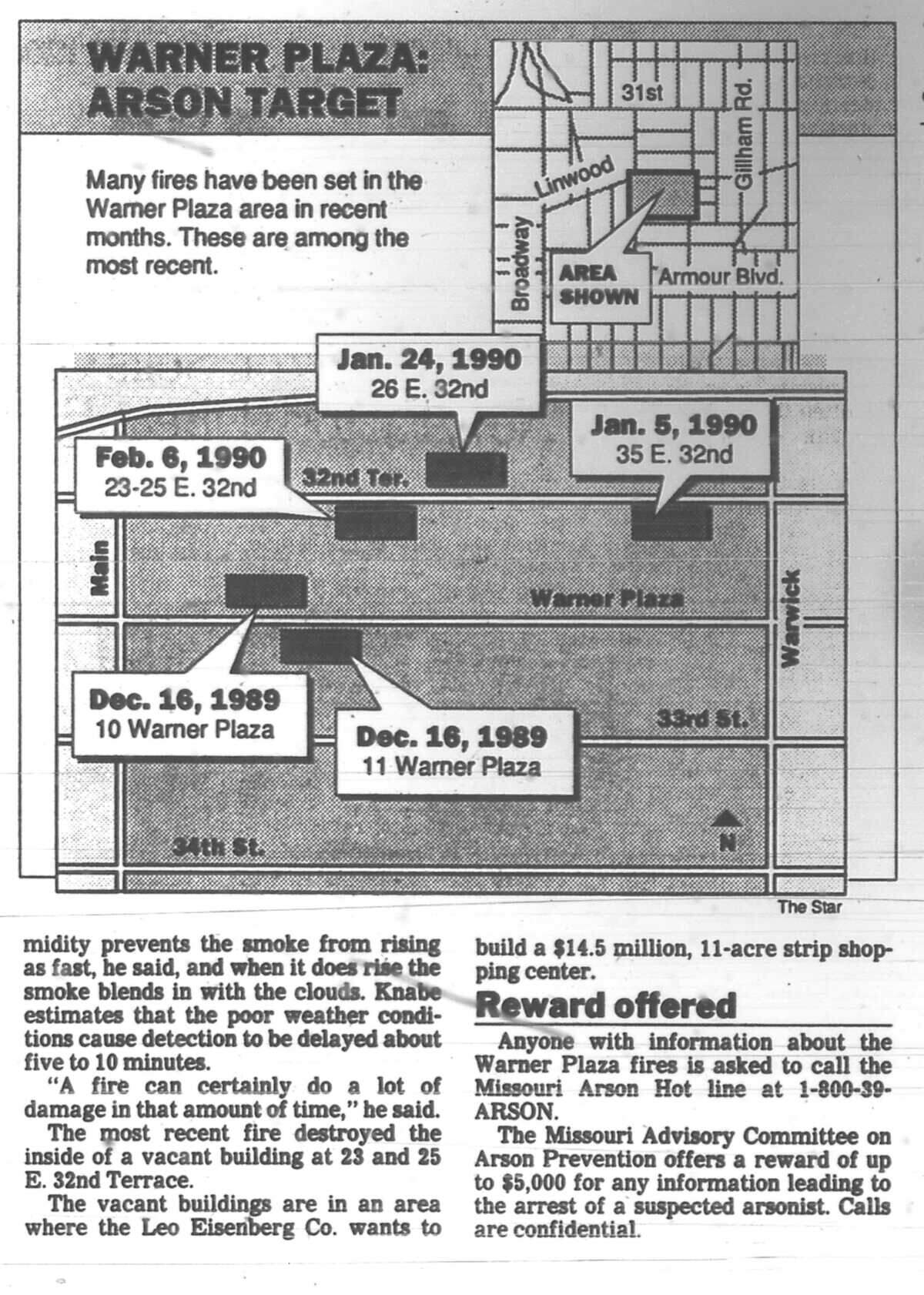
The city granted Eisenberg redevelopment rights the following spring.
In the following year, the city spent about $100,000 knocking down some of the apartments on the promise that Eisenberg would pay them back. However, by the end of 1991, the developer had defaulted on its loans and lost the redevelopment rights.
The ‘Glover Plan’
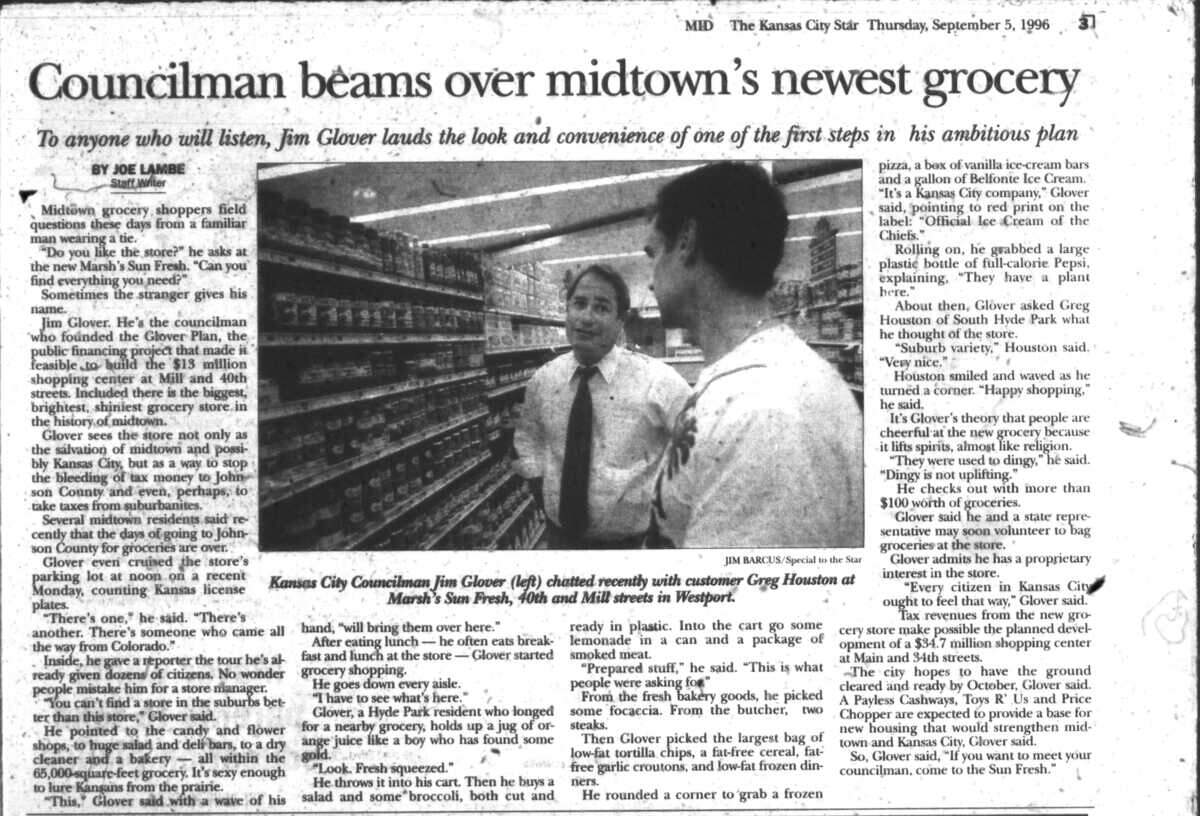
In the wake of yet another failed redevelopment, City Councilmember Jim Glover, whose name would become synonymous with the Midtown Marketplace, pitched his plan to “eliminate blight” in the area while bolstering midtown housing.
Glover, a midtown resident who had been on the council less than a year, spent the following months working out a tax increment financing (TIF) plan to build a Sun Fresh grocery store at 40th and Mill streets and a shopping center on the Warner Plaza site. What made Glover’s plan unique was its housing component: take a portion of the TIF funds generated by the Midtown Marketplace to finance more than $300 million in residential housing improvements across midtown.
On April 1, 1993, the council unanimously approved the “Glover Plan.”
While Sun Fresh successfully opened in 1996, the Midtown Marketplace faced numerous challenges. Buyout offers for property owners were delayed at least eight times over two years. Then a lawsuit over the relocation of Bazooka’s Showgirls halted work, prompting two of the four prospective commercial tenants to pull out of the plan.
The 30-acre site at Main and Linwood sat vacant for years before the City Council finally directed the developer to either find new tenants or lose their contract. After months of negotiations, in 1999 the development group finally announced leases with Costco and Home Depot. Both stores opened in 2001.
Where did money from Midtown Marketplace go?
Over the years, Glover had never abandoned his vision of using revenue from the shopping center to finance midtown housing improvements. In a typical TIF district, the city takes 100% of any increases, or “increments,” in the area’s property taxes and 50% of any increases in sales taxes and funnels it back to the developer.
Under Glover’s plan, that would occur as expected, but the other 50% of sales tax increments would go to a dedicated housing fund: Rehabilitation Assistance for Midtown Properties (RAMP).
The RAMP program got off to a rocky start. Early on, the city decided that TIF revenues would first go toward servicing the debt they had incurred in financing the project. They would also need to divert some revenue to a special “debt service reserve fund.” Over the shopping center’s first four years, less than half a million was spent through RAMP.
By the early 2010s, sales tax revenue had picked up, and the Midtown Marketplace reportedly became the city’s top-performing TIF district in terms of generating the revenue to service the city’s debt.
As a result, the money that had been put into the debt service reserve fund became available for other “midtown redevelopment” projects, and distributions began in 2011.
By 2016, it had allocated $8.2 million, with an additional $4.8 million in future funds already committed, all going to one developer: Mac Properties. The Chicago-based developer was nearly awarded a further $10.5 million in surplus TIF funds in 2022, but that plan was scrapped under pressure from groups like KC Tenants.
The Midtown TIF district officially expired in April 2023, and many millions of dollars in surplus revenue are now going to projects like the Barney Allis Plaza redevelopment and the 18th and Vine Pedestrian Plaza.
In terms of midtown housing assistance, Glover had once hoped that the project could raise as much as $300 million over its lifetime. Most of the Midtown Marketplace’s boosters cited the more conservative figure of $50 million over 23 years. Instead, the Midtown TIF has contributed $6.3 million to the RAMP program, which has been spent across 625 housing units.
This has undoubtedly been money well spent, but it does not come close to the $500 million that Glover once suggested midtown neighborhoods were “starving for.”
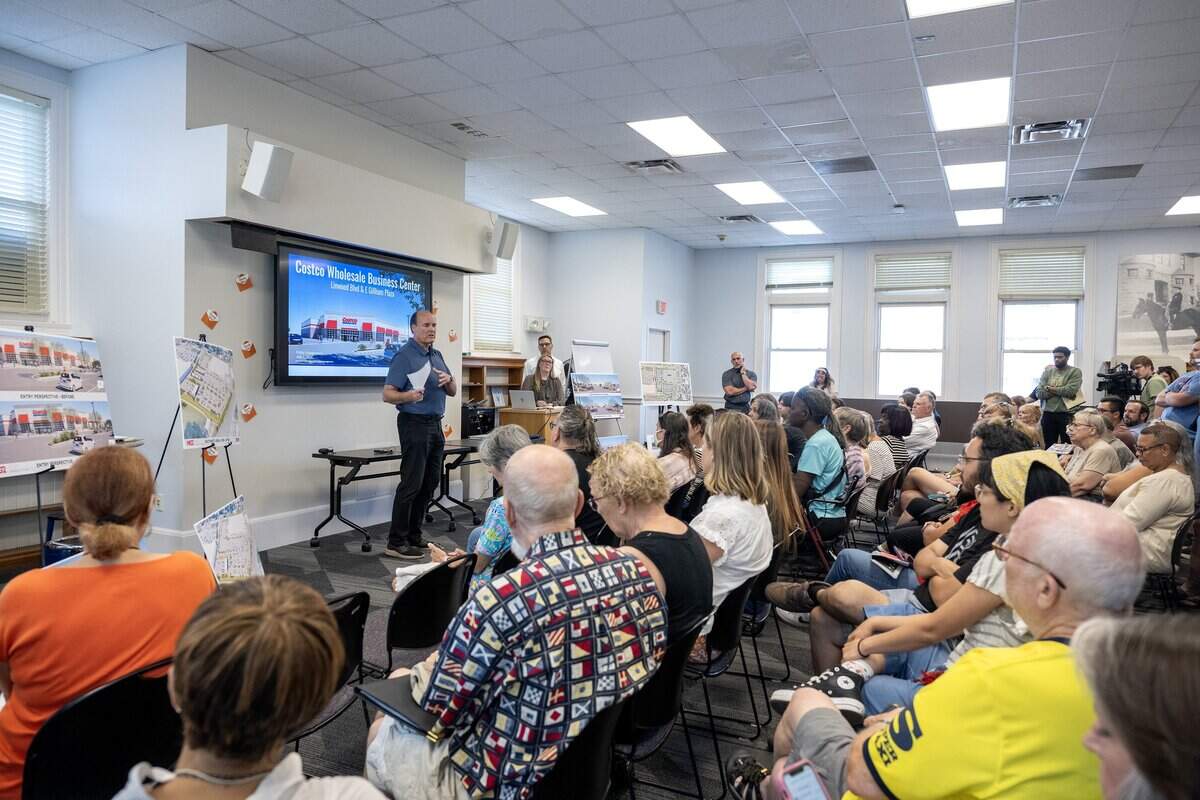
More importantly, as Costco representatives witnessed firsthand at a recent public engagement session, the legacy of such programs does little to ease the fears or resentment of community members facing the loss of services they have come to rely on.
Though the Costco conversion is not entirely finalized, it appears heading to approval after getting the rezoning OK from City Plan Commission last week. It will next go to the City Council.