
How did KCK and KCMO end up with the same name? Explore the history
What’s Your KCQ? is a partnership between The Kansas City Star and the Kansas City Public Library. For this installment, exploring why two cities share the same name on either side of the state line, we invited the Kansas City, Kansas Public Library to collaborate.
For the past decade, the NFL playoffs have brought a lot of attention to Kansas City.
Every January and February, the Kansas City Public Library sees more people visiting our local history FAQ page to find out, “Why is there a Kansas City in both Kansas and Missouri?”
Although the Chiefs missed this year’s postseason, the team still made national news in December when ownership announced they would leave Arrowhead Stadium for a new facility in Kansas. This led some NFL fans to ask, “Don’t the Chiefs already play in Kansas?”
With the World Cup coming up this summer and knowing that some international visitors might also be confused, What’s Your KCQ? explores how two cities on either side of the state line ended up with the same name.
A Town of Kansas in Missouri
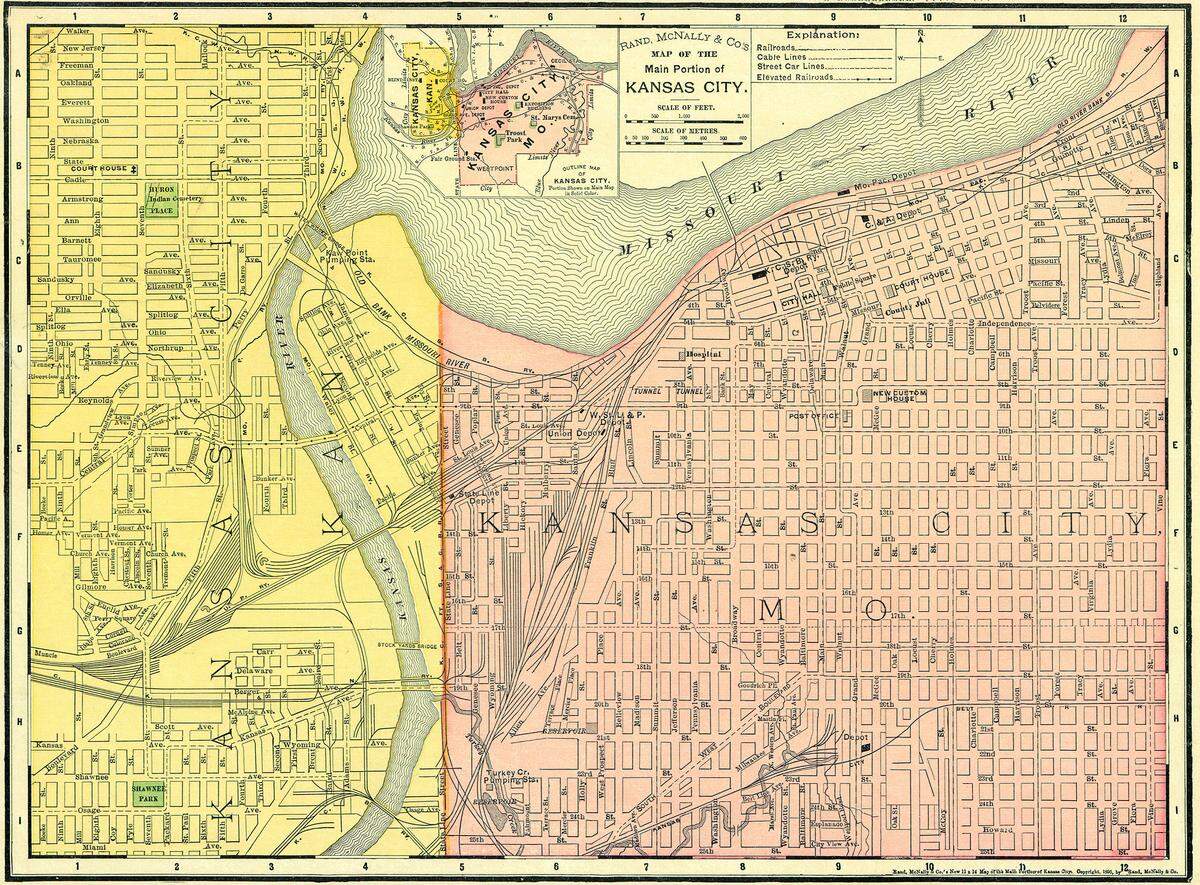
The short answer is that both KCMO and KCK got their names from the Kansas River, which flows through Wyandotte County’s easternmost edge before joining the Missouri River.
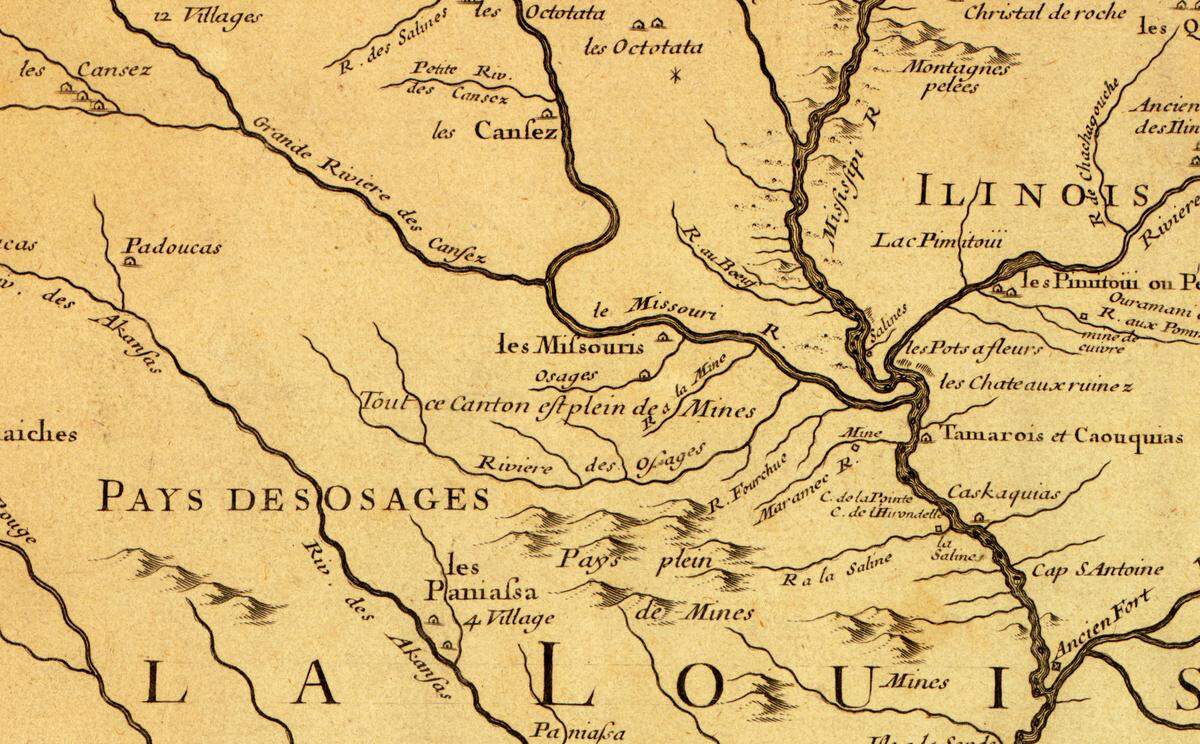
The Kansas River is named for the Kansa or Kaw people who lived in the region at the time of European settlement. As early as 1718, when cartographer Guillaume De L’Isle completed his map of French Louisiana, the tributary was identified as the “Grand Riviere des Cansez.”
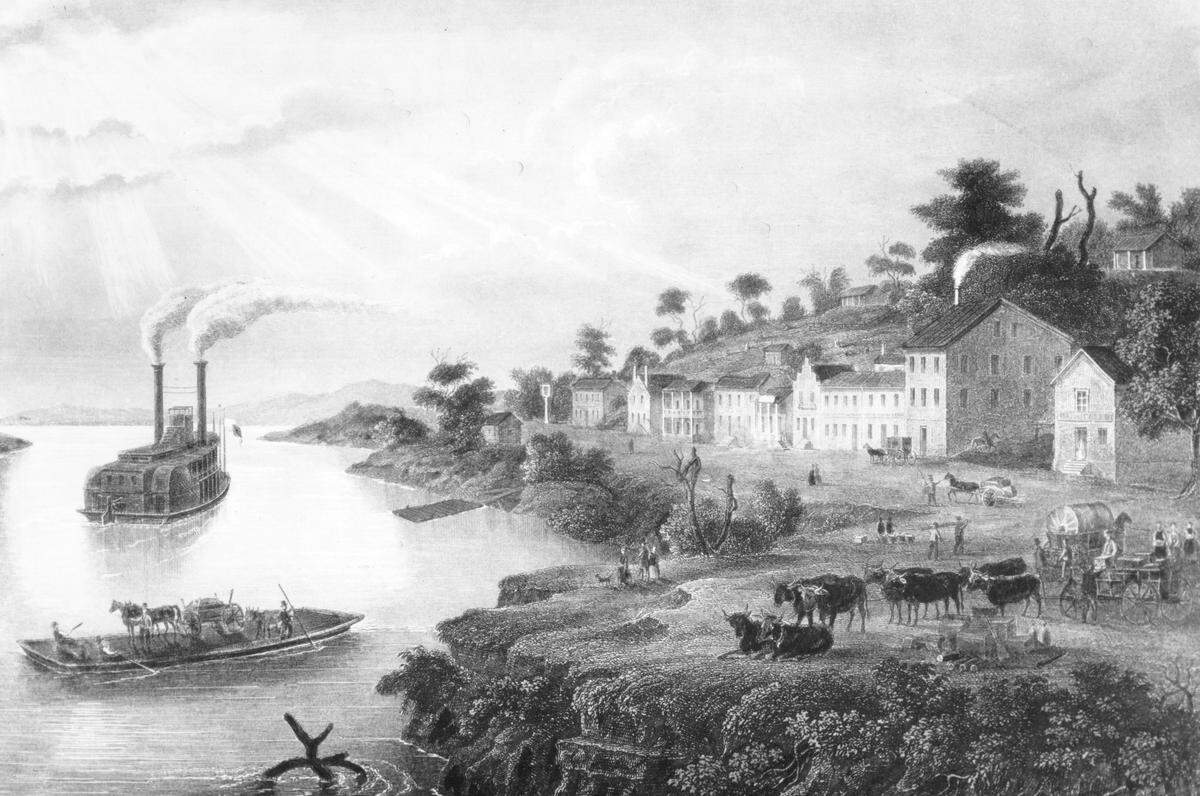
After Missouri became a state in 1821, American settlers and French fur traders flocked to the region. Among the latter group was Gabriel Prudhomme, who secured a tract of land along the south bank of the Missouri River that included a natural landing for boat traffic.
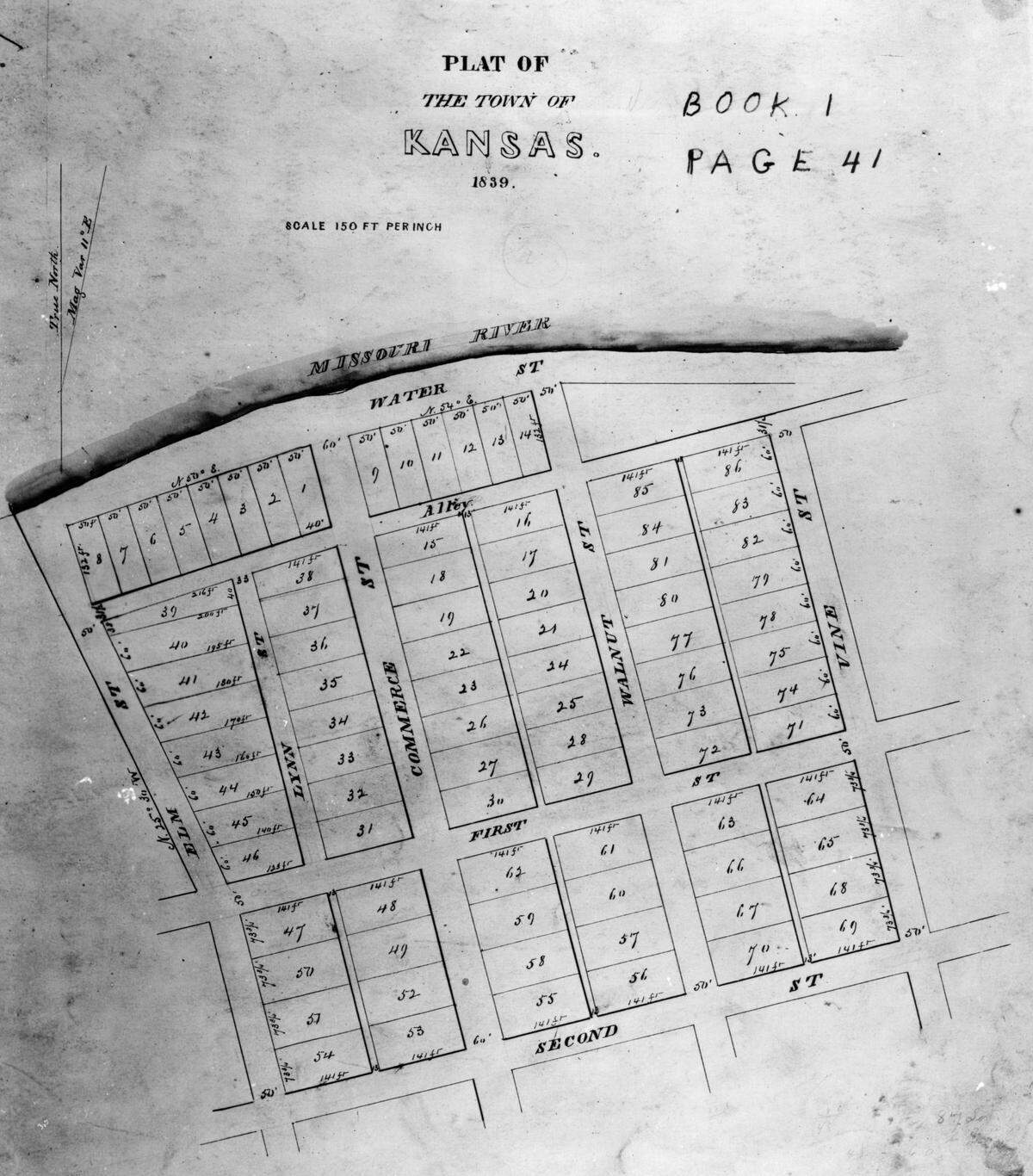
By 1838, Prudhomme was dead, and his daughter petitioned to divide the estate. A group of 14 formed a Town Company and purchased the land at auction for $4,220. Early the next year, the speculators gathered at the riverside cabin of a home distiller known only as “One-Eye” Ellis. The agenda included choosing a name for their future town.
Abraham Fonda, one of the original investors, humbly suggested the name “Port Fonda,” but it was not well-received. The debate continued for some time. They looked for inspiration from a Webster dictionary, but to no avail. According to the later reminiscences of John Calvin McCoy, a “dry old spectator” named Squire Bowers stopped in on the meeting and cheekily proposed “Rabbitsville” or “Possum Trot,” suggestions which were met with “silent contempt.”
Finally, being near the mouth of the Kansas River, the unimaginative group settled on the “Town of Kansas.” According to McCoy, the name was adopted “by the skin of its teeth.” The Town of Kansas was officially chartered a decade later in 1850, and in 1853 was renamed “the City of Kansas.”
It was not until 1854 that the territory beyond Missouri’s western border was organized and named the “Territory of Kansas” — hence no one in “One-Eye” Ellis’ cabin found the “Town of Kansas, Missouri” geographically objectionable.
‘Kansas at last is to have a great city’
By the 1850s, the Kansa people had been displaced from their lands and moved to a reservation near present-day Council Grove. At the same time, the Wyandots, who were driven from Ohio to eastern Kansas in 1843, had become quite influential in territorial politics.
In 1856, the Wyandotte City Town Company was established by four white men and three Wyandots with the goal of building a town across the river from the young Kansas City, Missouri. Their efforts bore fruit in 1859 when the Territorial Legislature incorporated their city into the county of Wyandotte, which shared the same name.
With the arrival of the railway and meatpacking industries, additional towns sprang up along the banks of the Kansas River. Armstrong was surveyed and platted in 1871 by a representative of the Kansas Pacific Railway Company. Between Armstrong and Wyandotte was Riverview, laid out in 1879. Armourdale, located in the bottomlands and named for the Armour meatpacking family, was incorporated in 1882.
Confusingly, a separate Kansas City, Kansas, was organized in 1868 in the portion of the West Bottoms on the other side of the state line, where the Rock Island Bridge stands today. It was not until 1886, however, that the larger Kansas City, Kansas, we know today came into being.
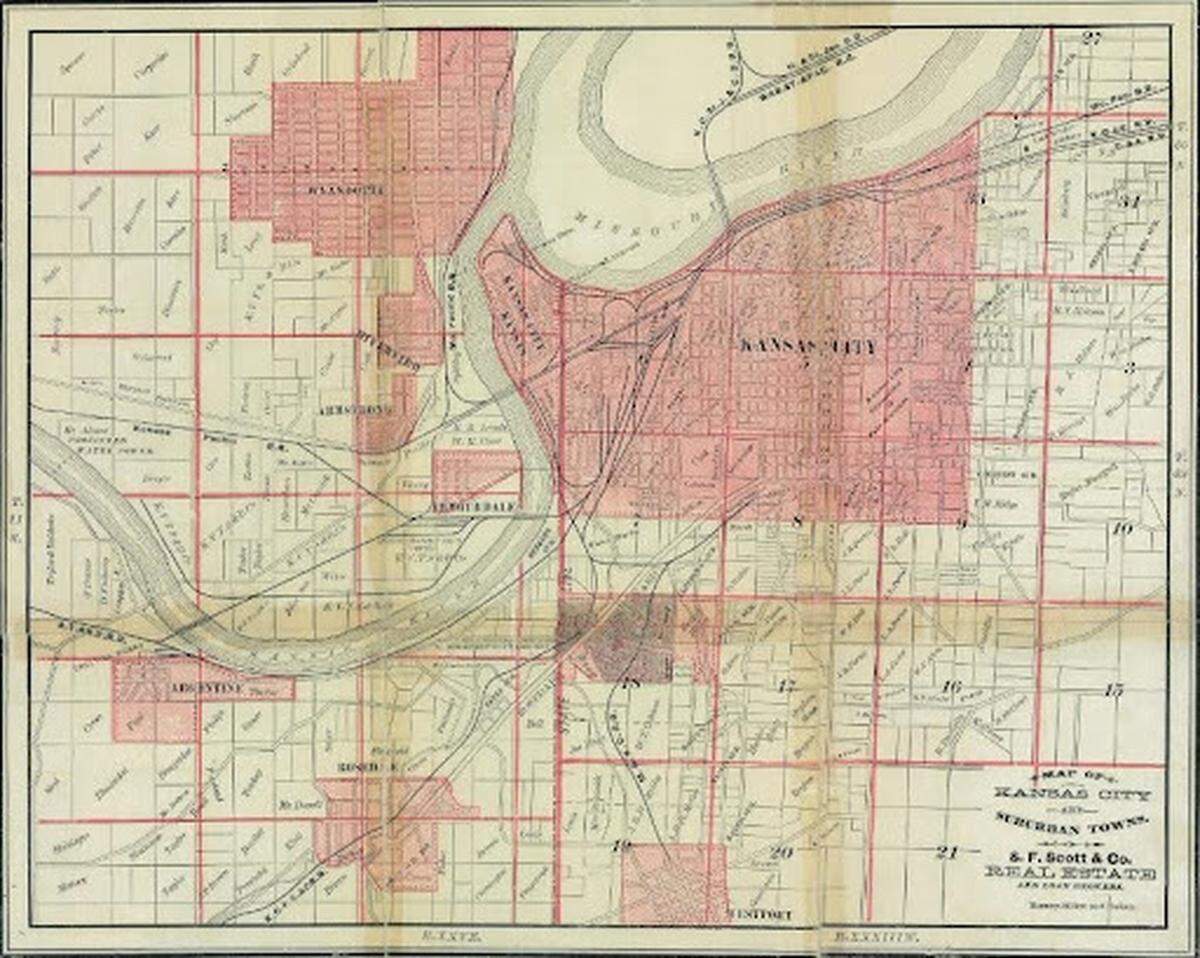
As early as 1876, petitions for the consolidation of the towns of Wyandotte County were discussed by city councils and the state legislature. On several occasions, such resolutions were considered and rejected, often due to resistance from smaller municipalities. However, in May 1881, Wyandotte finally succeeded in annexing Riverview, and by 1886, the state government moved to allow further mergers.
During a special legislative session, the governor was authorized to consolidate neighboring municipalities whose combined population reached at least 15,000, creating a first-class city. At the time, Wyandotte, Armstrong, Armourdale, and “Old Kansas City” in the West Bottoms together had a population of 17,470.
Clear as it was that the legislation was aimed at the towns of Wyandotte County, “The Kansas City Times” congratulated their neighbors to the west “upon the brilliant destiny in store for their city, which will always sustain, as it always has sustained, the relation of Siamese-twinship to Kansas City, Mo.”
On the Kansas side, “The Lawrence Tribune” likewise celebrated the news. The state of Kansas, they editorialized, “has at last learned that cursing Kansas City will not harm her nor build up a great city within her limits.” By enabling the consolidation of the towns of Wyandotte County, the legislature had ensured that “Kansas at last is to have a great city.”
At this point, it was unclear what the new consolidated city would be called. The “Olathe Mirror-Gazette” favored keeping the name Wyandotte, “were it not for the fact that Missourians had jayhawked the name of Kansas City.” So, it was a surprise when Governor John A. Martin announced on March 6, 1886, that the city would be called Kansas City, Kansas.
According to local lawyer and amateur historian Grant W. Harrington, the consolidation was not popular, and Armstrong, Armourdale, and Wyandotte were all “peeved.” Wyandotte was especially upset because, as Harrington put it, “the Governor had listened to the bankers and bond speculators’ plea that the bonds would sell better under the name Kansas City … and so had robbed her of the name that the consolidated city should have carried.”
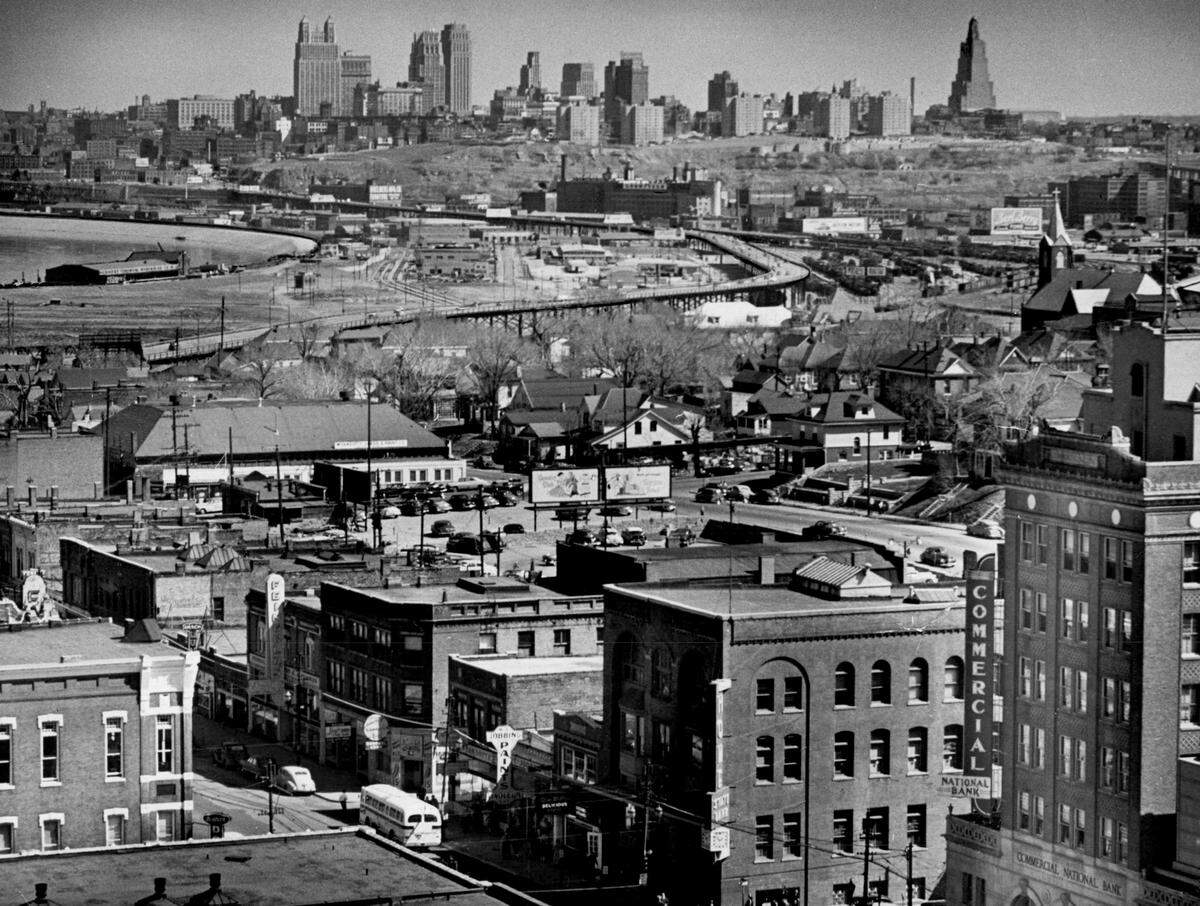
What’s in a name?
Despite the purported dissatisfaction, several efforts to revert KCK’s name back to Wyandotte failed to gain traction. In February 1889, state representative J.V. “Jake” Admire of Osage City introduced just such a bill, only to be rebuffed by his colleague W.H. Young of Wyandotte County, Young introduced his own bill on the floor of the Kansas House to change Admire’s name to “John Valentine Whitecrow.”
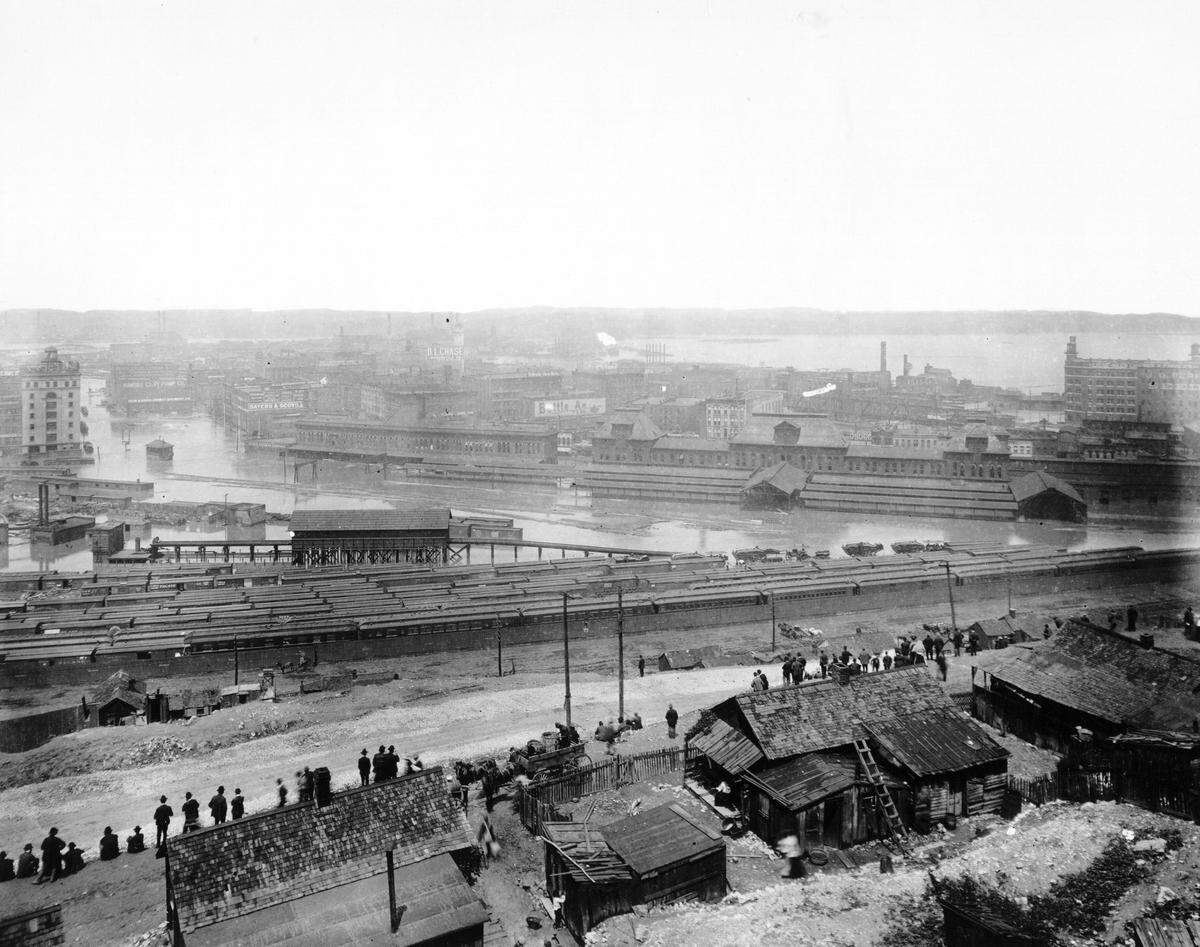
Again in 1903, W.J. “Billy” Buchan, a former state senator from Wyandotte County, circulated a petition to restore the name Wyandotte, although this plan was eventually overshadowed by the devastating flooding of the Kansas River that summer.
With the names of the two Kansas Cities firmly established over time, complaints about their dullness or geographical inaccuracy were largely confined to letters to the editor. In 1911, a Baltimore reader identifying himself as “A Crank On Town Names” asked readers of “The Kansas City Star” to imagine if Boston had been named “Massachusetts City” or Chicago “Illinois City.” Naming Kansas City, Missouri, he wrote, was like “dubbing a helpless baby Reginald or Orval or Wilbur,” and he suggested that while Kansas City was a perfectly suitable — if altogether uninspired — name for a city in Kansas, the Missouri city ought to “move on and acquire a real, snappy, one-word name.”
Some years later, a reader from Elk Springs in McDonald County voiced much the same opinion, writing that it must be humiliating to The Star’s writers to have to distinguish between KCMO and KCK “innumerable times in every issue,” and adding that Kansas City, Missouri, should “rise up and give the town a name of force and distinction.”
Perhaps the last time a public official on the Missouri side addressed a name change was when Kansas City Mayor H. Roe Bartle received a letter from a fifth-grade class in Wheeling, West Virginia, stating that they found it “very difficult to distinguish” the two Kansas Cities and “thereby request you to change the name of Kansas City, Mo., to Missouri City.” Bartle replied that the two Kansas Cities were really one big city, separated only by an imaginary state line.
Bartle may have been right, but for some Chiefs fans and stadium developers with billions of public dollars at stake, that state line probably feels very real.
This story was originally published March 29, 2026 at 5:00 AM.