KCK historians refresh museum that honors legacy of finding freedom in Quindaro
Local historians in Wyandotte County have long documented the arduous journeys that their ancestors, and those of many Kansas City, Kansas residents, made to find freedom from slavery.
Now, with the help of some new state money, they’ll be able to tell those stories in new ways.
Kansas Tourism, a division of the Kansas Department of Commerce, awarded the Kansas City Underground Railroad Museum of Quindaro (formerly the Quindaro Underground Railroad Museum) a $4,000 grant to continue to develop its role of telling key parts of Wyandotte’s history.
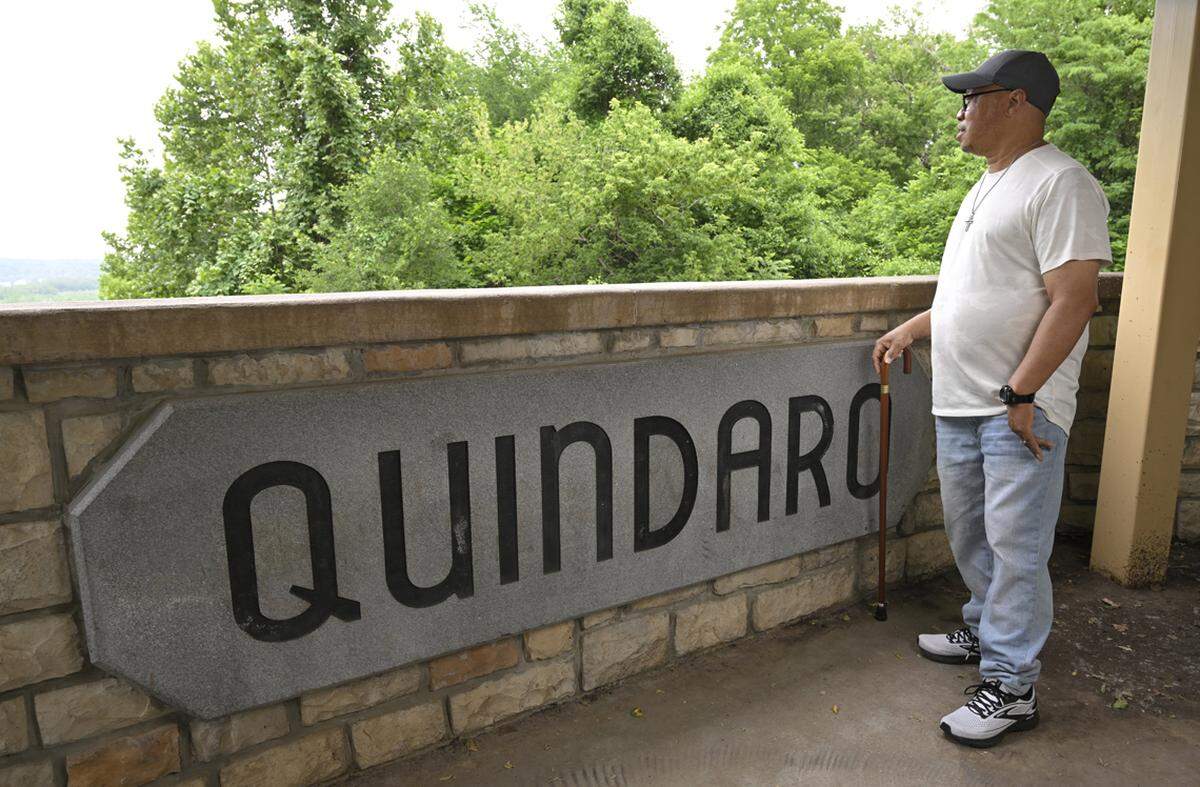
The Quindaro Townsite, now part of a KCK neighborhood, was once a bustling town that ran along the Missouri River in the 1800s. People seeking refuge from slavery crossed into Kansas by way of Quindaro, and the town gained recognition as a safe haven along the Underground Railroad. The townsite was eventually abandoned years later and now lies in ruins that people can visit.
About 25 people attended a Thursday morning ceremony at the Vernon Multipurpose Center, which houses the museum in northeast KCK, to accept the donation and offer museum tours. The building also offers services and resources for the surrounding community.
Tai Barber-Gumbs, museum director, told attendees that the funds will be directed toward buying museum exhibit panels to “better tell the story of our community.” The panels will work in tandem with a separate grant project the museum received last year to install a museum audio tour.
Barber-Gumbs assumed leadership of the museum shortly after the death of longtime director Luther Smith. Smith, who died in the summer of 2025, was an outspoken advocate for preserving the Quindaro Townsite and Ruins and the history behind the underground railroad stop.
Kansas Tourism had $1 million to give out to preservation efforts and attractions across the state. The $4,000 grant given to the museum was among 22 donations to other project requests statewide.
The Vernon Multipurpose Center, where the ceremony was held, was once Vernon School. And before the desegregation case Brown v. Board of Education, it was used to educate African American children living in KCK. The building is now listed on the National Register of Historic Places, according to the Unified Government of Wyandotte County and KCK.
The school sits just down the street from the Quindaro Ruins.
Leaders representing KCK at various levels of government and community organizers have long fought to get Quindaro national landmark status, and those efforts are still ongoing at the federal level.
Congress named the Underground Railroad outpost a National Commemorative Site back in 2019, although gaining official landmark status would help advocates and historians obtain needed federal funding to continue to preserve and protect the site.
Matthew Kelly contributed to this report.