
How ACT-UP fought for LGBTQ rights in Kansas City during the HIV/AIDS epidemic
Visitors to City Hall in downtown Kansas City, Missouri, on July 12, 1990, would have been in for a pungent surprise.
Wafting down the normally quiet halls were the sounds of whistles, shouting— and the unmistakable smell of a skunk. Did an animal wander into the City Council chambers? No, something far more historic was happening that day.
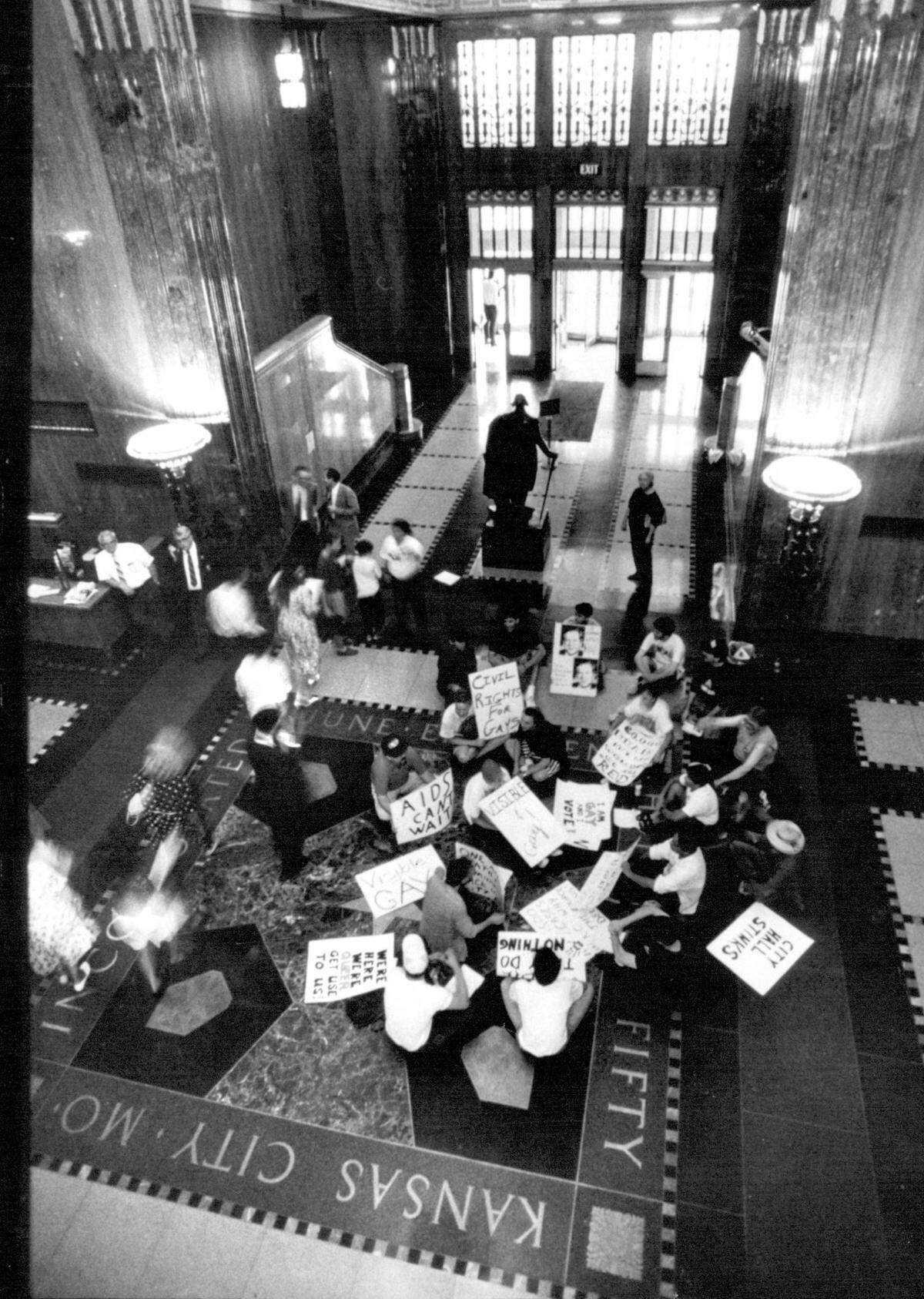
The shouts and whistles — yes, even the smell of rotting eggs, courtesy of cotton balls doused in skunk oil — were the work of the local chapter of AIDS Coalition to Unleash Power (ACT-UP/KC), an HIV/AIDS rights group whose theatrical and confrontational protests led to condemnation across the political spectrum. Their tactics also turned it into one of the most effective advocacy groups in American history.
After seeing an exhibition of ACT-UP buttons, a reader wrote to What’s Your KCQ for more information about the organization’s history.
On March 12, 1987, nearly six years into the HIV/AIDS epidemic — which had already claimed the lives of nearly 40,000 Americans — Larry Kramer, a playwright, author, and activist, spoke at the Lesbian and Gay Community Services Center in New York City. Frustrated with the ineffectiveness of HIV/AIDS advocacy groups and the spread of the disease like wildfire through the gay community, Kramer asked the audience, “Do we want to start a new organization devoted to political action?” The response was a resounding yes.
Two days later, close to 300 people of diverse sexes, races, and sexual orientations came together to establish the AIDS Coalition to Unleash Power (ACT-UP). The organization quickly gained national attention with its confrontational and disruptive protests.
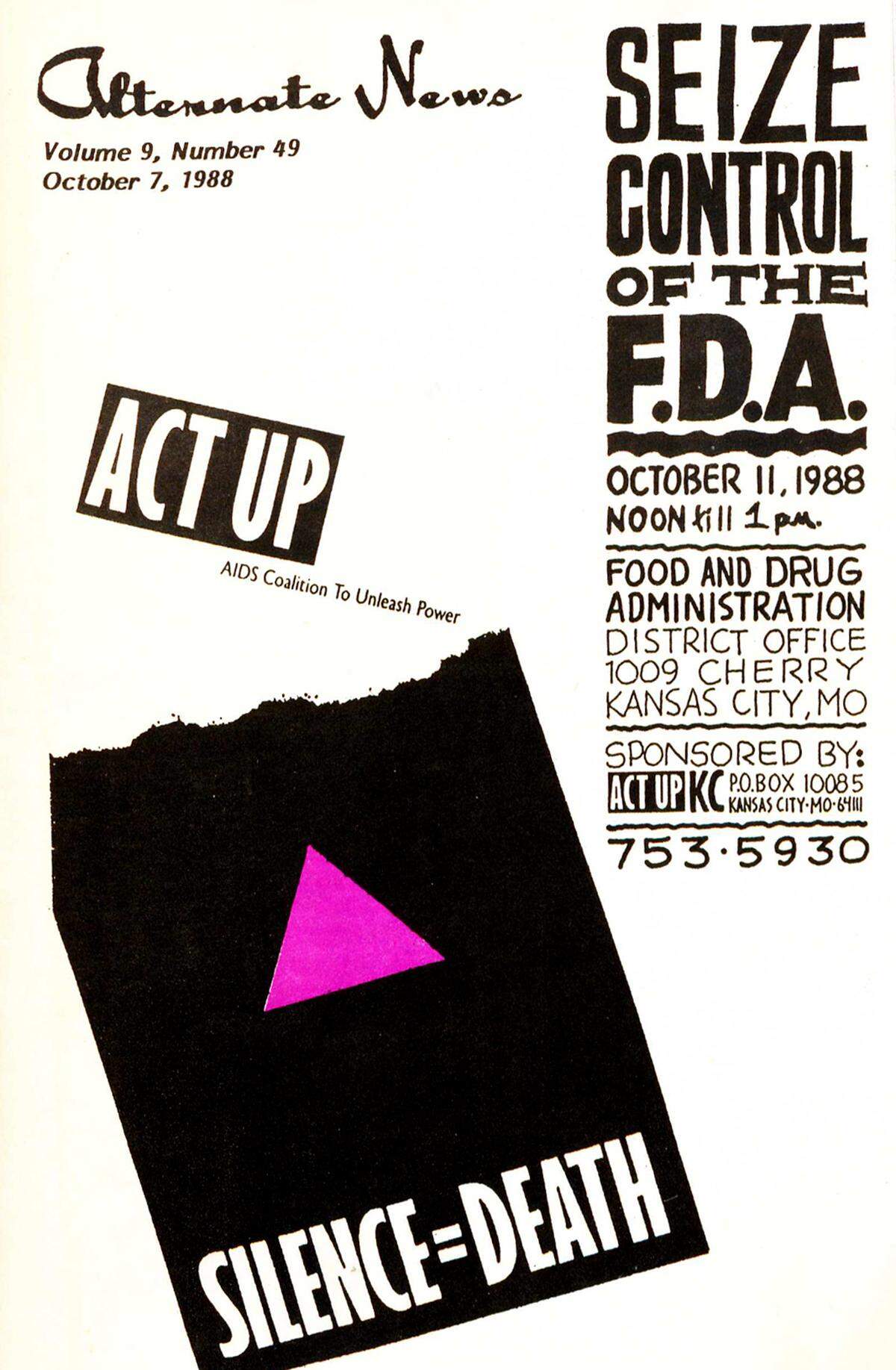
Within a month of ACT-UP’s founding in New York, Jon Barnett, a Kansas City gay activist, placed an ad in the “Alternate News,” a local gay newspaper, proposing to start a local chapter of the organization. Barnett had learned about ACT-UP through gay newspapers from New York and Boston. He was enthusiastic about bringing the group’s activist focus to a city that was already experiencing hundreds of new HIV/AIDS cases each month. Barnett scheduled a meeting with those who responded to his ad and ACT-UP/KC was born.
ACT-UP/KC’s first major protest took place in the fall of 1988 when the organization targeted Circle K by picketing their local convenience stores. The company’s decision to cut health insurance for employees diagnosed with HIV/AIDS prompted this action; the company eventually reversed this, in large part due to pressure by activists.
In the following years, the organization increased its efforts to pressure the city government over its response to the AIDS crisis. On June 22, 1989, activists, including ACT-UP members, staged a pride rally on the steps of City Hall. They hung a large homemade banner that read “Stop Aids” from the observation deck. Meanwhile, protesters on the ground performed a “die-in,” symbolizing individuals who died of AIDS. Others unfurled a smaller banner featuring ACT-UP’s signature slogan “Silence = Death” and engaged in same-sex kissing.
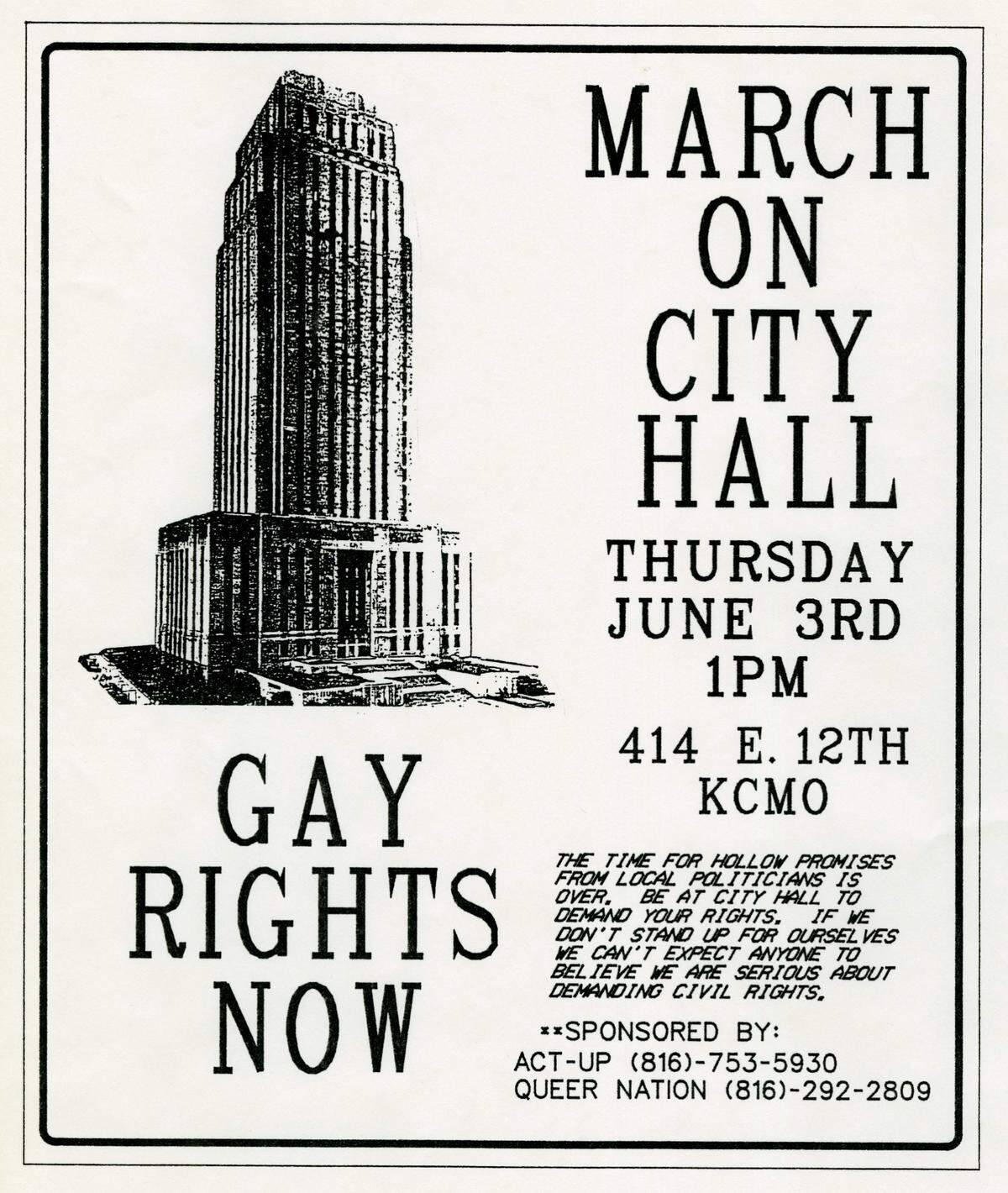
One of ACT-UP’s most contentious fights involved efforts to convince the city to expand its anti-bias laws to include protections based on sexual orientation and HIV/AIDS status. When progress on this initiative stalled in 1990, protesters descended on the May 17 city council meeting, led by politician and pastor Emanuel Cleaver II. During the meeting, ACT-UP protesters heckled the mayor pro tem, chanting, “Cleaver and the Klan go hand in hand.” In response, Cleaver shouted at the protesters to “shut up.”
As if this dramatic moment was not enough, ACT-UP member Mark Chaney took it upon himself to splash and smear several vials of a red liquid onto the door of the City Council chambers. This act raised concerns that the liquid might contain HIV. It was later confirmed that the liquid was Chaney’s own blood and that he was HIV negative. Despite this, Chaney was convicted of defacing City Hall, but Jackson County Circuit Judge Donald Mason overturned the judgment in December 1990.
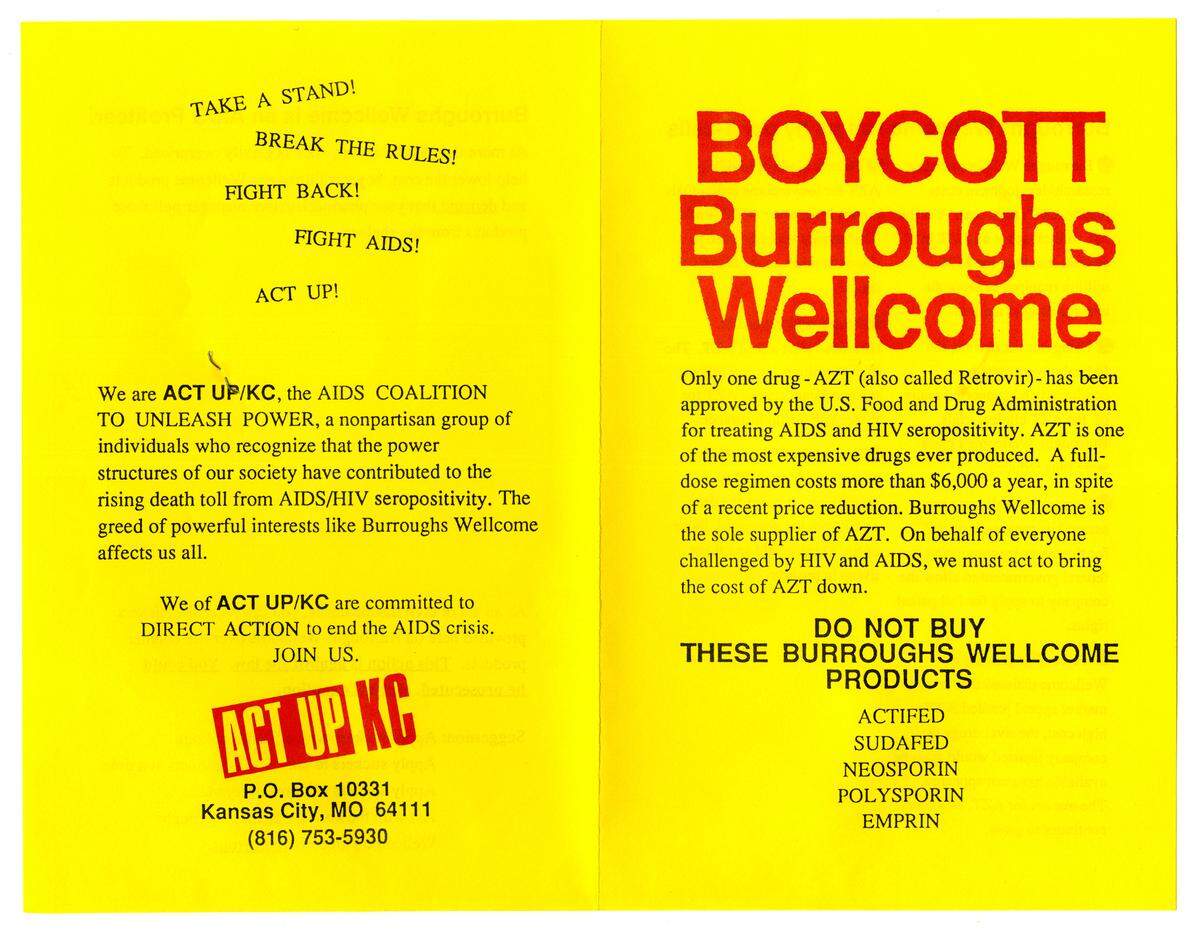
Previously, Chaney had been arrested for putting stickers on Burroughs Wellcome prescription drug packages at an Osco drugstore. These stickers claimed that the manufacturer was responsible for the deaths of AIDS patients due to the high price of AZT, the only drug approved at the time or treating HIV/AIDS.
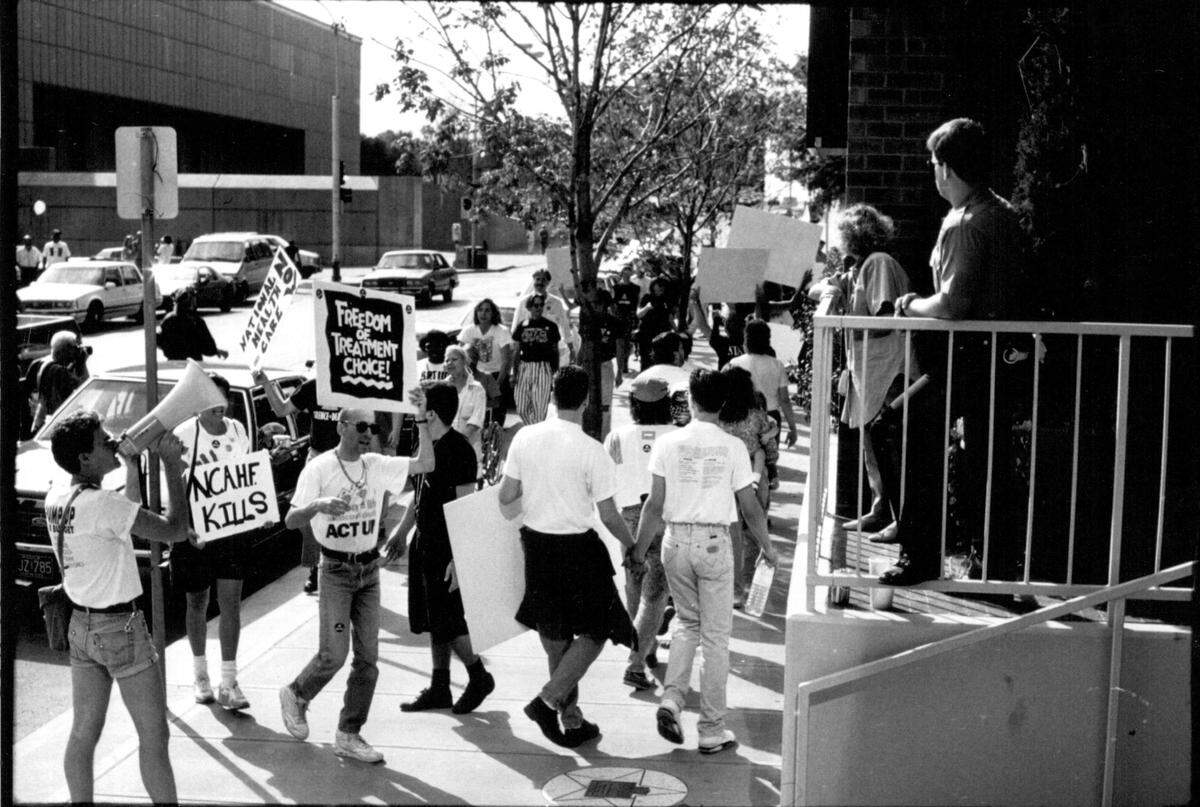
On Sept. 17, 1990, activists from several ACT-UP chapters joined forces with ACT-UP/KC to protest the National Council Against Health Fraud conference held at the Allis Plaza Hotel. They were demonstrating against the rejection of experimental HIV/AIDS drugs by health insurance companies. Police arrested 23 protesters, who later accused the police of brutality and homophobic prejudice. These accusations gained traction after The Kansas City Star published a photograph that appeared to show a police officer violently restraining a protester.
Other activities by ACT-UP/KC were less confrontational. Participants handed out condoms and pamphlets about HIV/AIDS at schools, grocery stores, and community centers in hopes of filling the gaps they saw in the city’s attempts to raise awareness.
In May 1989, ACT-UP/KC initiated a study to document instances of homophobia in Kansas City. Their goal was to convince city leaders that anti-LGBTQ prejudices were more widespread than they and the police realized. The findings revealed not only a considerable number of bias crimes but also that some were committed by a specific member of the Kansas City Police Department.
ACT-UP’s protests faced backlash, which was reflected in letters to the editors of The Star. Some detractors included members of the LGBTQ community as well as members of ACT-UP/KC itself. David Weeda, one of the founding members, left the organization in dissent after a Vatican flag was burned during a demonstration at the Immaculate Conception Cathedral in March 1990.
One of the most vocal opponents of ACT-UP and LGBTQ activists was the Westboro Baptist Church of Topeka, Kansas, led by founder Fred Phelps, a minister and disbarred lawyer. Phelps and members of the church, who were often part of the Phelps family, gained national attention for their confrontational signs and for picketing the funerals of people with AIDS.
On March 11, 1993, famed composer and Kansas City native Kevin Oldham died due to complications from AIDS. He was 32. When Oldham’s family announced plans to hold his funeral in Kansas City, Phelps and the Westboro Baptist Church decided to protest the event.
In response, the city council quickly worked to pass legislation to prohibit protests at funerals, and ACT-UP/KC mobilized. On the day of the funeral, members of the Westboro Church arrived across the street from Community Christian Church, approximately four hours before the scheduled funeral, well outside the 90-minute window that the council had imposed prohibiting protests.
Within an hour, members of ACT-UP/KC organized a counter-protest outside the church and members of Westboro Church quickly fled.
Despite its successes, ACT-UP/KC slowly lost power and momentum. On Jan. 15, 1995, The Star ran an article entitled “Act-Up Chapter May Fold.” Many of those interviewed for the article shared the belief that the group had its time and place, but its tactics were no longer effective.
Thanks in large part to the confrontational activism of ACT-UP, there was greater understanding about HIV/AIDS, and the disease lost some of its social stigma. AIDS activists found themselves in the boardrooms of major lobbying groups and community organizations, shifting away from protesting on the streets.
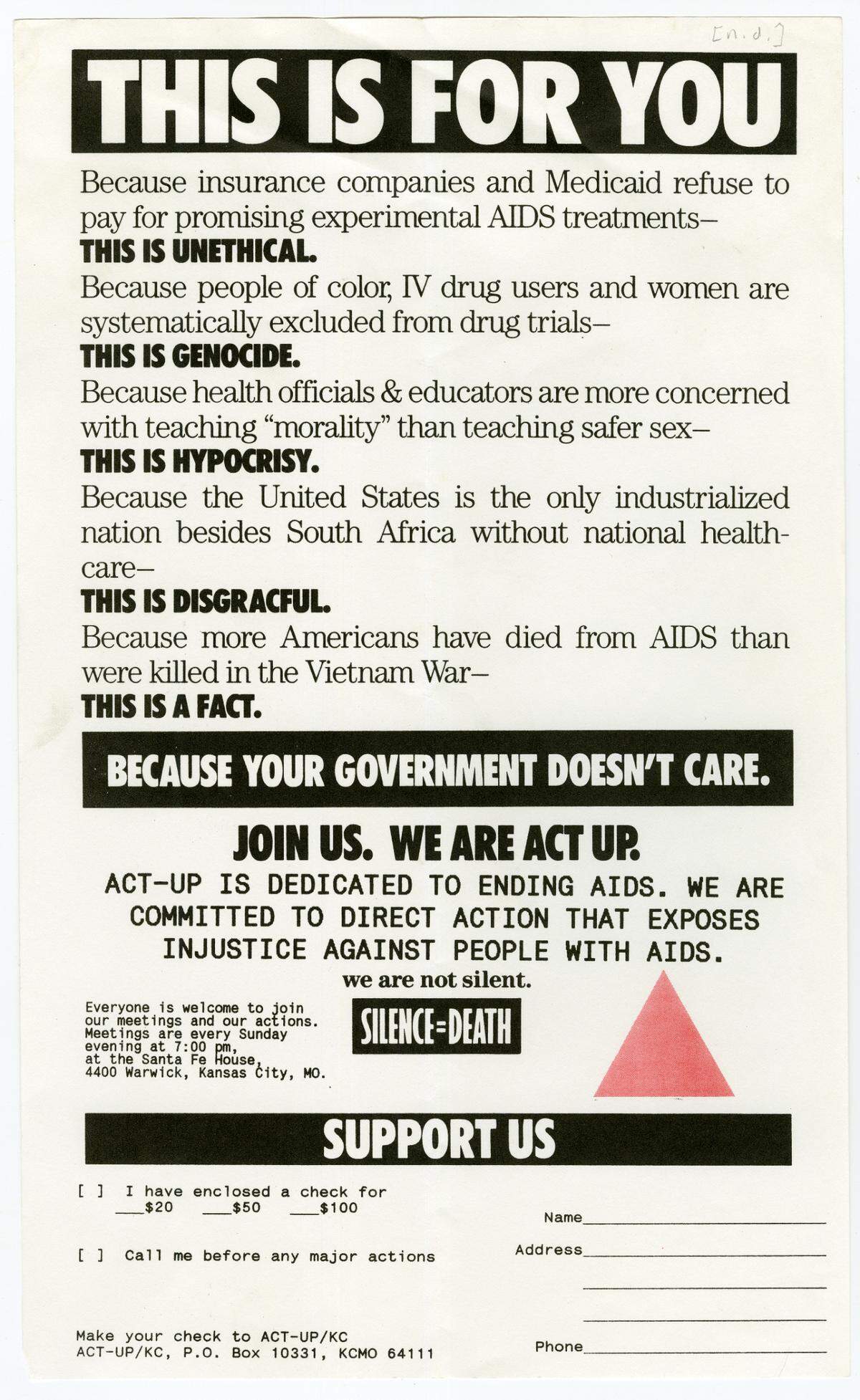
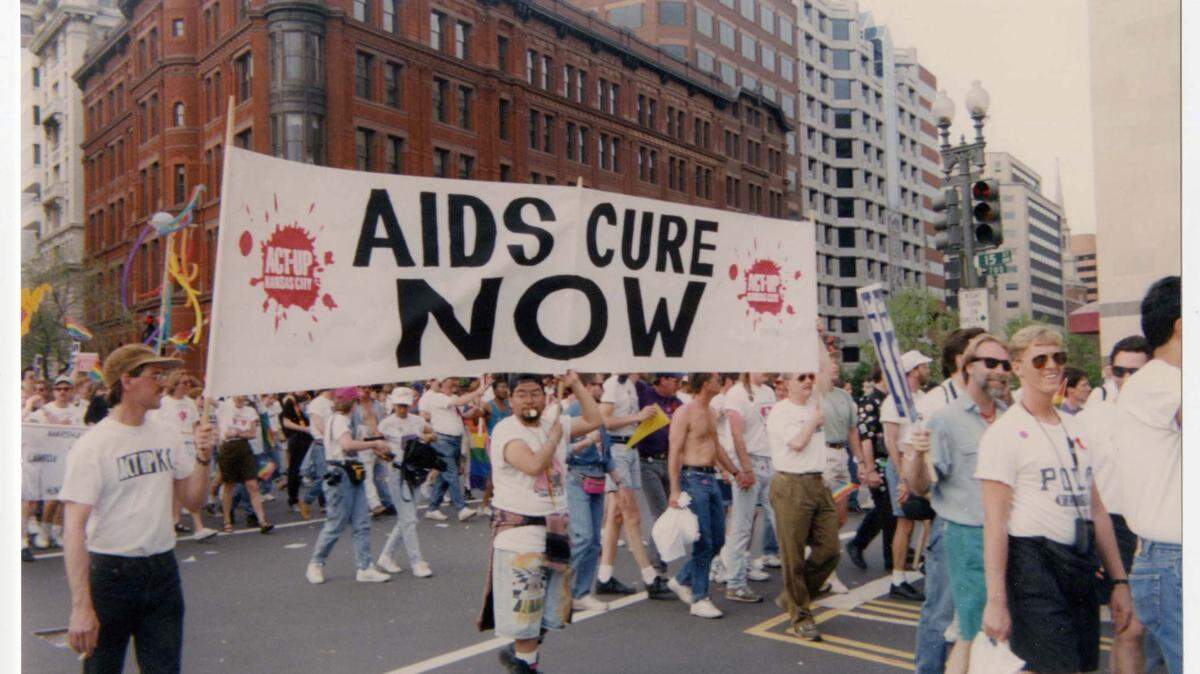
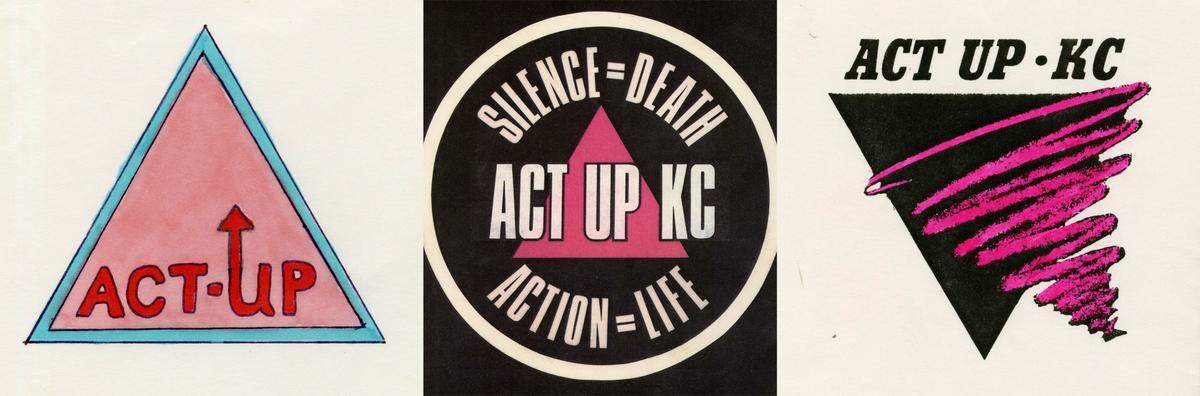
In the years after its eventual closure, Jim Hull, one of the original organizers of ACT-UP/KC, donated five boxes of the organization’s historical materials to Missouri Valley Special Collections at the Kansas City Public Library. These items include posters, photographs, organizational correspondence, T-shirts, a parade banner, and political buttons, which help preserve the organization’s history for future researchers.
ACT-UP’s legacy lies not only in its provocative activist tactics which more recent social movements have continued, but perhaps most importantly in its role in raising public awareness of HIV/AIDS. Their efforts undoubtedly saved thousands of lives.