These KC warriors have survived 3 decapitations. Learn the history of the Plaza statues
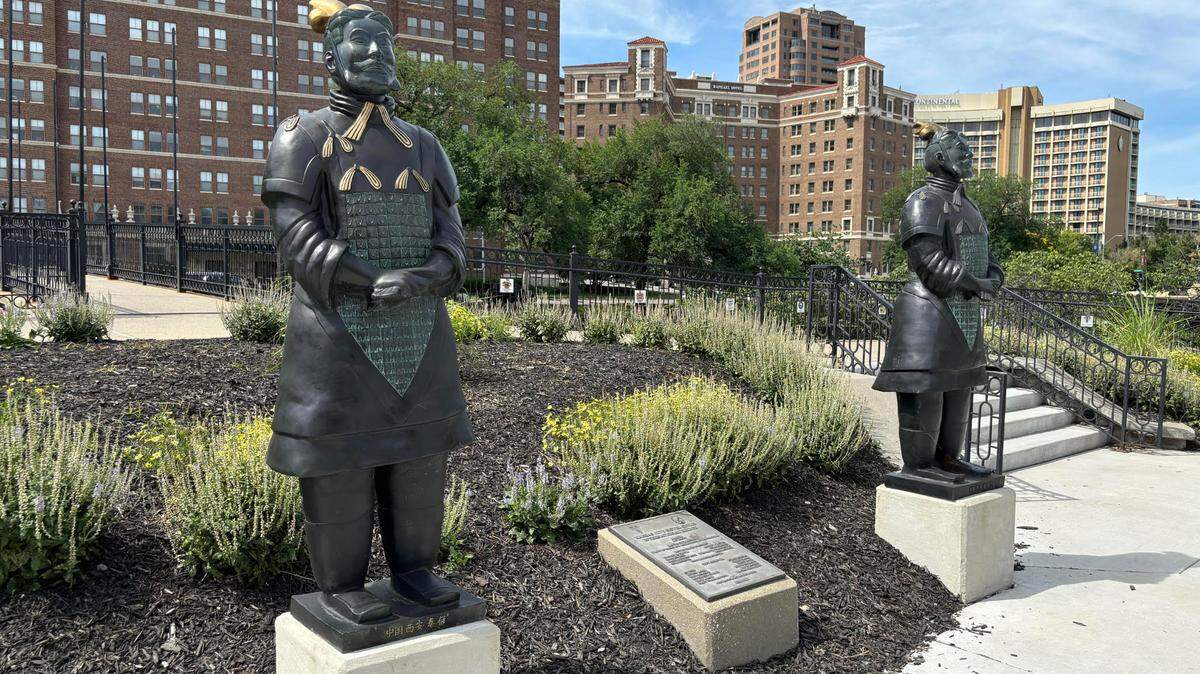
Plaza resident Beverly Parson is not intimidated by the two towering warriors she walks by every day.
On the contrary, she said the Chinese statues seem to greet her when she walks on the footbridge across Brush Creek.
“I just think it’s a nice entryway and a nice welcoming to the Sister City bridge,” Parson said.
Star reader Chris Lewellen was curious about these sculptures, asking why they are on the Plaza.
These two 6-foot-tall replicas of terracotta warriors were a gift from Kansas City’s sister city of Xi’an, in the northwest of China. Their time in the Midwest got off to a rocky start, with multiple acts of vandalism in their first year.
Sculpted in China, the first version of the Plaza figures were made of terracotta and coated in fiberglass to make them more durable. Their Chinese inscriptions read, “Xi’an China Qin Terracotta Warrior,” referencing the Qin Dynasty in power during the 200 B.C.s, when the iconic sculptures were made.
In January 2004, the sculptures were placed on the Country Club Plaza’s Sister Cities International Bridge, on Ward Parkway near the Apple Store and Tiffany & Co. They are replicas of some of the 8,000 unique figures found at the grave for the first Chinese emperor, located just outside of Xi’an. Unearthed in 1974, the terracotta army is more than 2,200 years old.
The trouble started a few months after the statues’ installation. In June, vandals took the head of one of the sculptures.
Luckily, Kansas City’s sister city committee with Xi’an had planned ahead. The chairman Bob Chien told The Star he had “spare heads and hands in anticipation of vandalism.”
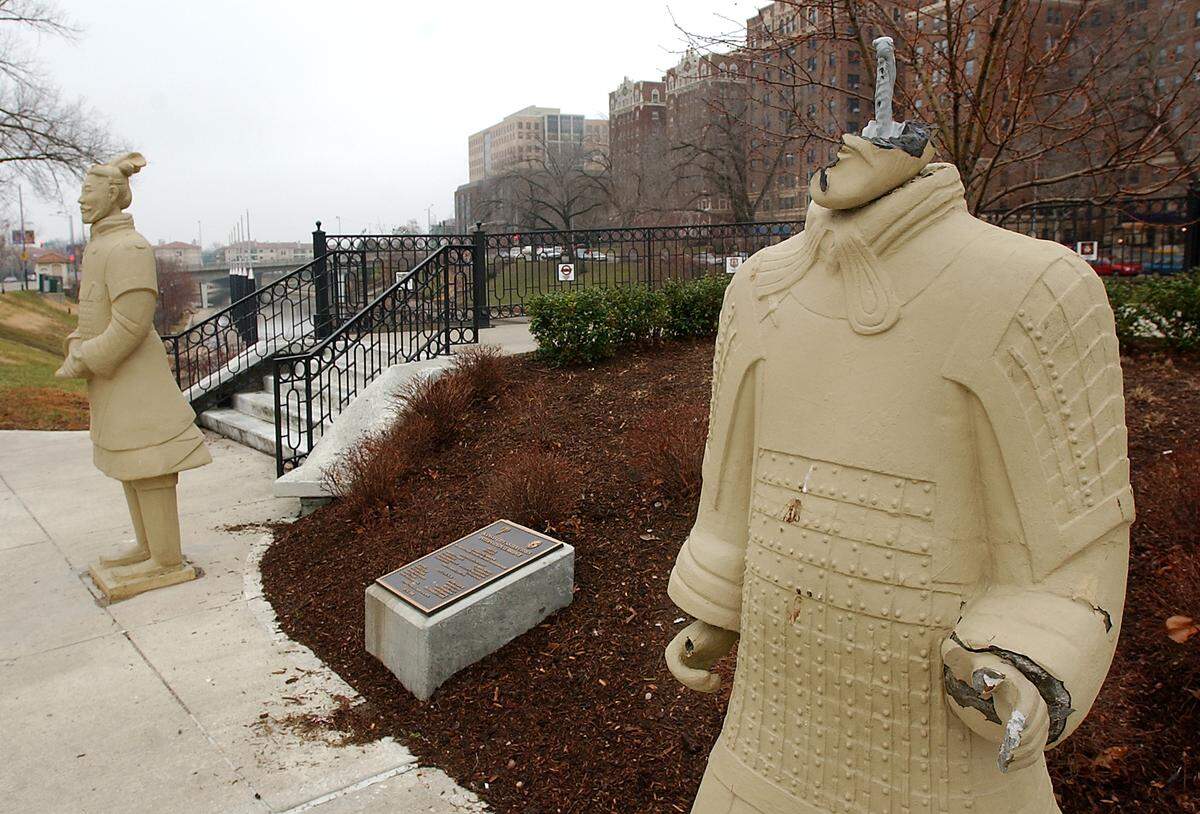
But in September, it happened again. That fall, the Parks Department attempted to stop the robberies with “a sort of steel rod that ran from the head clear down to the base of the statue.”
The attempt proved fruitless, because in January 2005, a terracotta warrior was headless again. Parks officials were “getting fed up with the recurring destruction” and considered putting the figures indoors or removing them altogether.
Coverage at the time theorized the heads were stolen as a trophy or a statement against China, but did not discuss the robberies as a hate crime.
After three beheadings, Chien had an iron-clad plan. Chien arranged to ship sturdier metal replacements to the terracotta warriors from Shanghai to Kansas City, along with 12-person dragon boats and 200 Chinese lanterns.
Cast of bronze, the new sculptures were made to last. “The heads are welded on,” noted a September 2005 article in The Star. While the first two figures had slightly different poses, the metal ones both have their hands clasped in a secure position.
And the welding worked — no extremities have been stolen in the nearly 20 years since, according to the Star archives.
You can visit these enduring statues at the intersection of Ward Parkway and Central Street, on the north side of the Sister Cities International Bridge.
Kansas City’s international sister cities
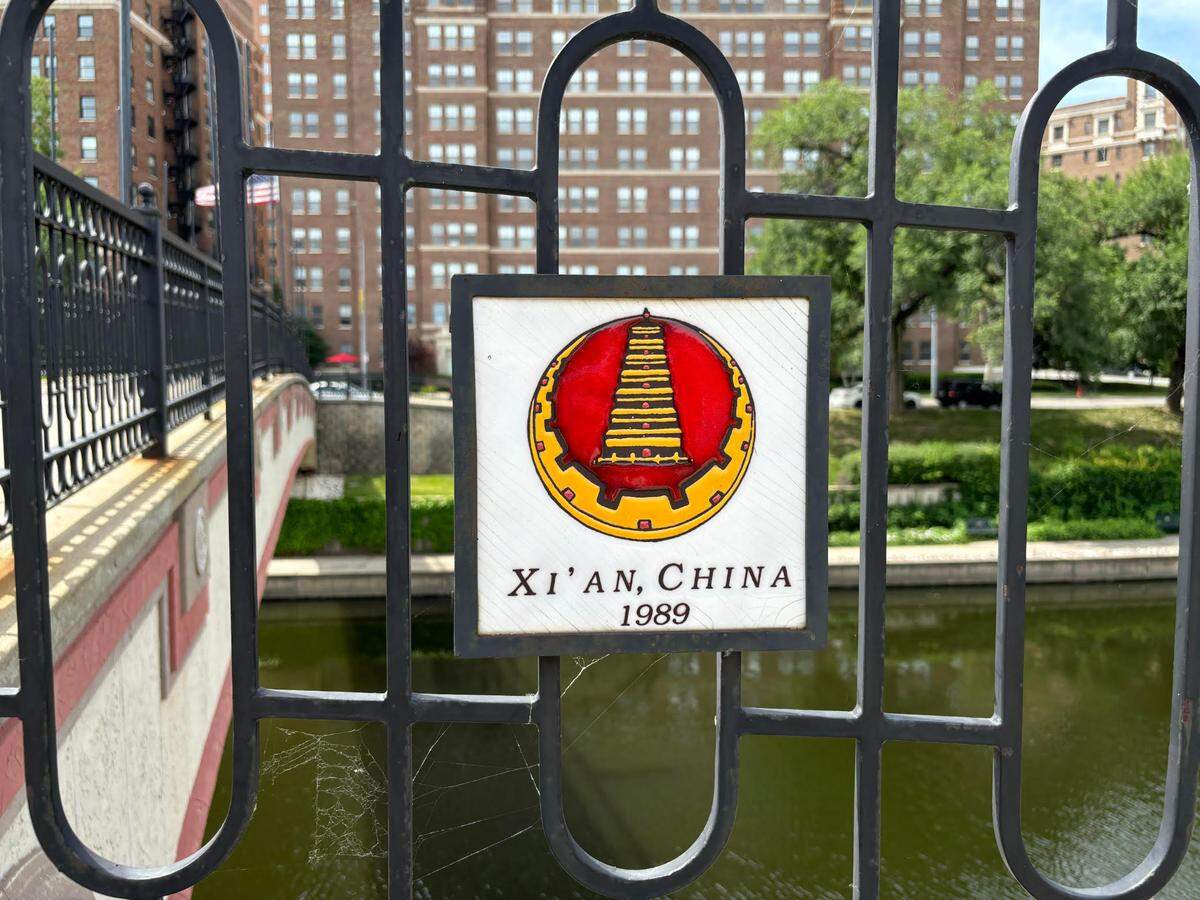
Kansas City has 13 sister cities, 12 of which are recognized on the Plaza bridge, constructed in 2000:
Xi’an, China
Hannover, Germany
Ramla, Israel
Kurashiki, Japan
Guadalajara, Mexico
Morelia, Mexico
San Nicolas de los Garza, Mexico
Port Harcourt, Nigeria
Freetown, Sierra Leone
Seville, Spain
Tainan, Taiwan
Arusha, Tanzania
Yan’an, China, is KC’s latest sister city, added in 2017. The sister cities promote international exchange by hosting events and sending delegates back and forth. In November, three Kansas City officials visited Chinese sister cities Xi’an and Yan’an.
The Star’s HG Biggs contributed translation.
Do you have a Kansas City oddity you want uncovered? Contact the Service Journalism team at kcq@kcstar.com.