
Will Kansas and Missouri see northern lights Thursday night? Here’s the forecast
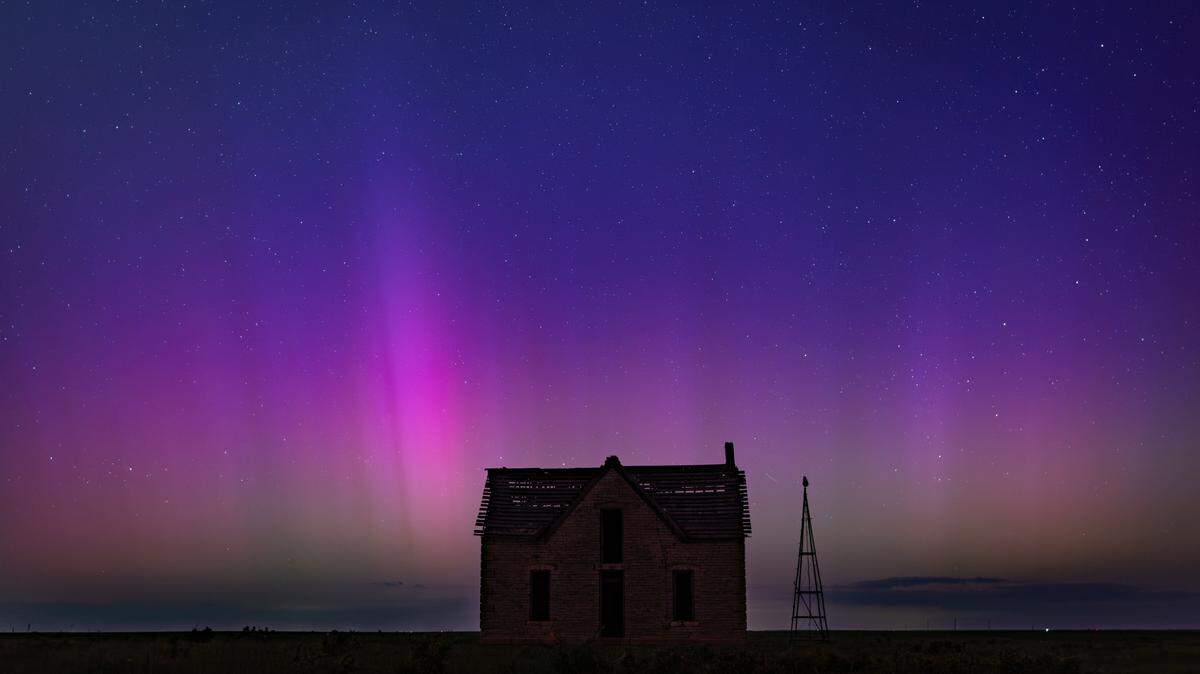
Some parts of Kansas and Missouri could see another display of the northern lights Thursday, Oct. 10 — but you might have to squint.
A coronal mass ejection from the sun arrived above the earth Thursday, triggering the same alert that preceded the striking displays of northern lights seen across many states, including the Kansas City area, in May.
The Space Weather Prediction Center issued a G4 warning for severe geomagnetic storms for Thursday and Friday. It’s a rare alert that the center has issued only twice since 2005 — both times in 2024.
A forecast for Thursday night on the center’s website has the view line for the aurora just barely touching the tops of Kansas and Missouri, with higher chances for states farther north. On Friday, the view line retreats into Iowa.
But Thursday’s forecast is a similar map to the one issued in May on the day of the widespread visibility, when pictures of auroras blanketed social media.
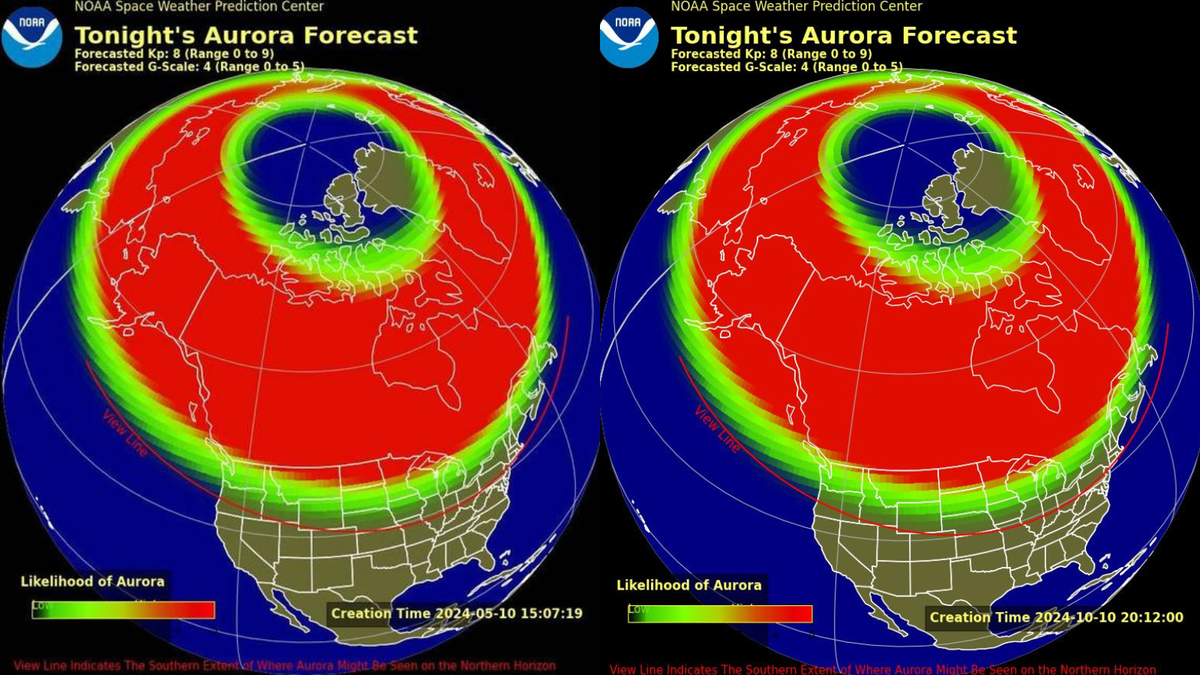
“When skies are clear, the (Northern Lights) could be visible as far south as Alabama and northern California tonight,” the center said in a news release Thursday.
And there’s good news for Kansas City: Accuweather forecasts clear skies in the area, with temperatures in the low 70s late Thursday.
How to see and photograph the aurora in Kansas City
The aurora can only be seen at night and away from city lights. It will likely be visible low on the northern horizon overnight in the Kansas City area.
Be sure to check both NASA’s light pollution map and your local weather forecast to ensure you’re picking the perfect spot.
The best time to view auroras is typically between 10 p.m. and 2 a.m., the Space Weather Prediction Center said. They may be seen earlier, but are not as active or visually appealing.
But even if you can’t see the aurora well, that doesn’t mean you can’t photograph it.
Modern cameras — even those on the newest smartphones — are better at picking up minor variations in color than the human eye. Using the long-exposure setting on your camera or phone might reveal more color than you think you’re seeing.
The Star’s Robert Cronkleton and Natalie Wallington contributed to this story.
This story was originally published October 10, 2024 at 4:50 PM.