Gray haze blankets Kansas City metro skyline. See where all that smoke is coming from
Have you seen how the skies over Kansas City look? Kinda gray and hazy, huh?
Plumes of smoke from wildfires in western Canada have been drifting over the central part of the United States, making Kansas City’s blue skies rather dull.
The smoke has been spilling into the Kansas City skies since Wednesday, satellite images from National Oceanic and Atmospheric Administration show.
It appears as a light gray band on the images, stretching from Canada, down through Nebraska and Iowa and into northeast Kansas and Missouri, satellite images show.
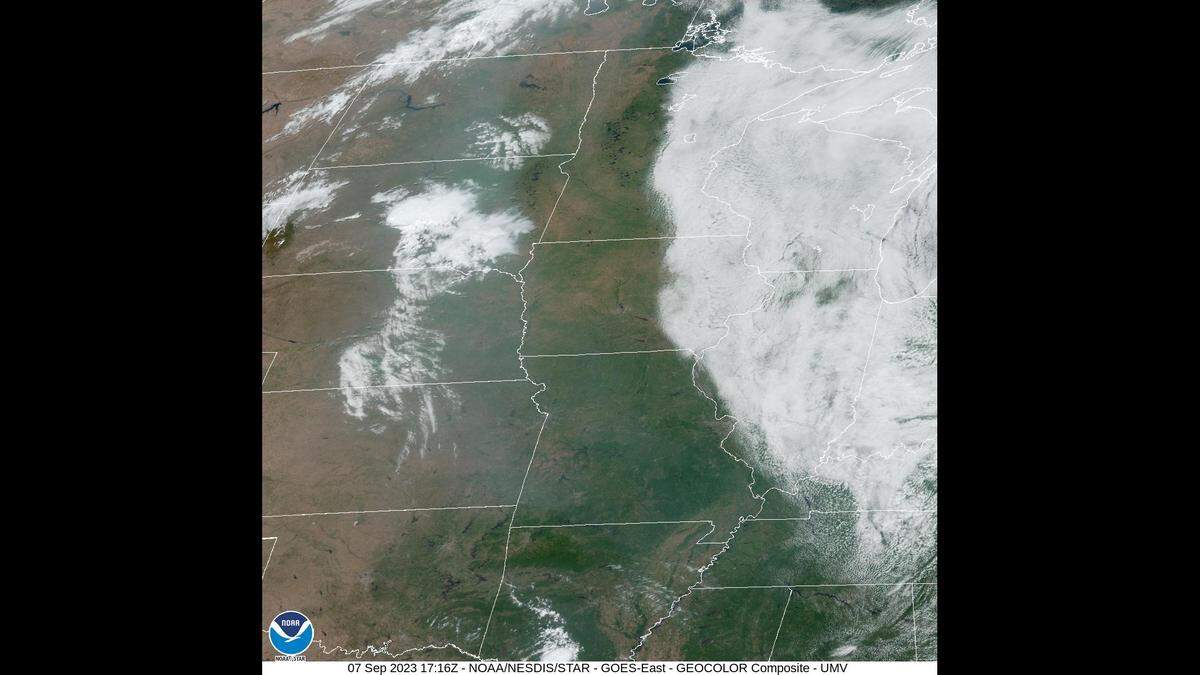
As a result, the metro’s air quality has reached an unhealthy level, according to AirNow.gov. Particulate matter is the primary pollutant.
The Mid-America Regional Council on Thursday morning issued an air quality alert, saying that the smoke may affect air quality in the area, according to the National Weather Service in Kansas City.
Poor air quality will continue to be a concern through the end of the week, the weather service said on X, formerly known as Twitter.
The smoke may cause some people to experience symptoms similar to allergies, including itchy eyes, scratchy throats, runny noses and coughing, according to Yale Medicine.
With air quality at the unhealthy level, people with heart or lung diseases, as well as older adults and children, are encouraged to take steps to reduce their exposure to the smoke including avoiding strenuous outdoor activities, keeping outdoor activities short and considering rescheduling or moving any physical activities indoors, according to AirNow.gov.
In addition to Kansas City, the unhealthy air quality was affecting parts of northwest Missouri as well, the Missouri Department of Natural Resources said on X.
The agency encouraged people to monitor current air quality at fire.airnow.gov. The site has tips on how to reduce the amount of smoke people inhale, including limiting or choosing lower-intensive activities when exercising outdoor, wearing a N95 mask and rescheduling outdoor work and activities until air improves.
This story was originally published September 7, 2023 at 1:46 PM.