Flu cases are ‘very high’ in Missouri. What’s the difference between influenza A and B?

If you feel like everyone around you is getting sick, it’s because they are. Flu season is in full effect in Kansas City and all around Missouri.
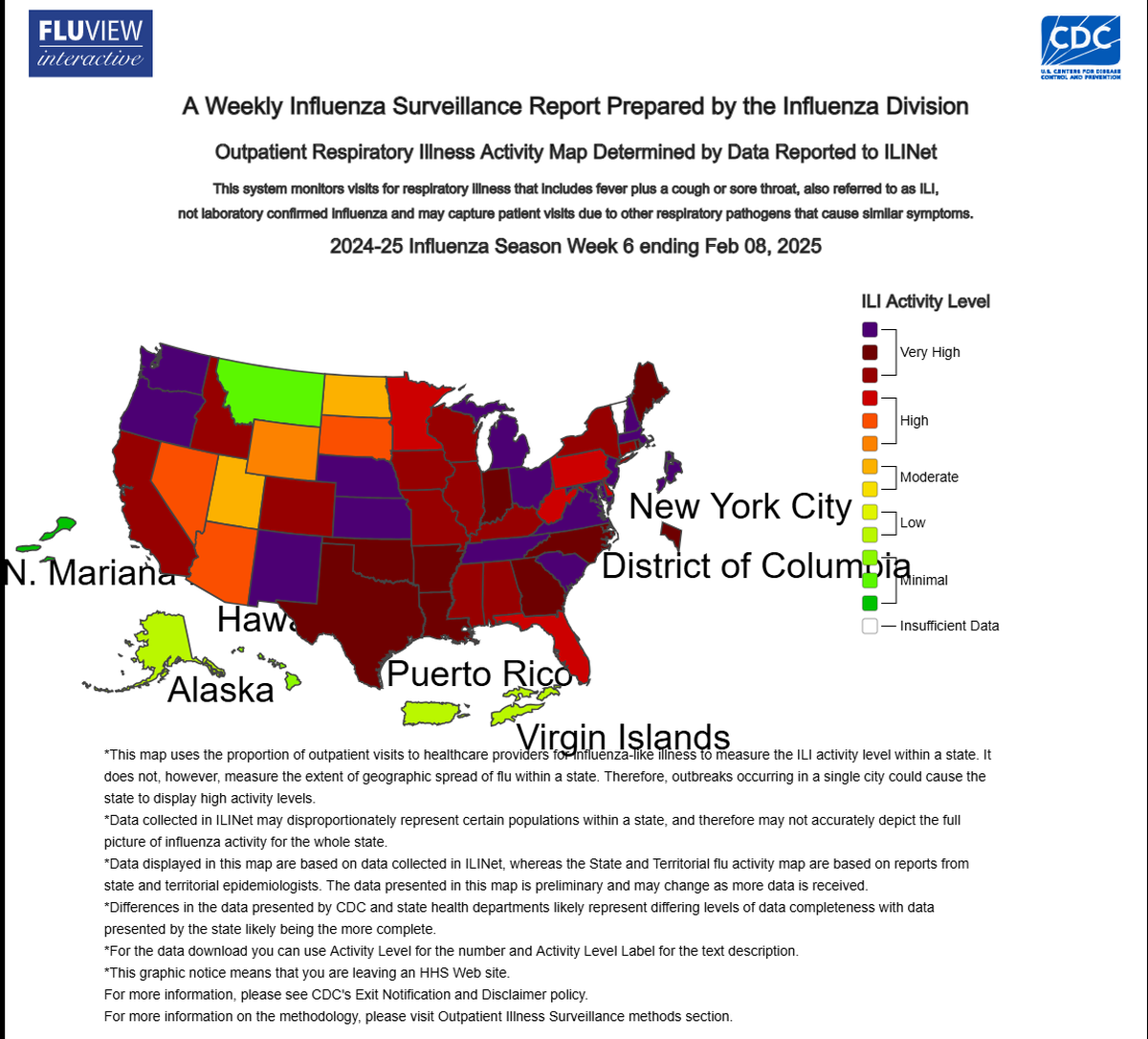
The influenza-like illness tracker on the Centers for Disease Control and Prevention’s website places Missouri in the “very high” category, and it’s just two levels below the highest level on the tracker, according to the most recent data collection for the week ending Feb. 8. Kansas is at the highest level on the tracker.
The influenza season kicked off Oct. 8 and will run through May, and the Missouri Department of Health has reported more than 70,000 cases and 97 deaths of the illness since. In week 6 of the season, which was Feb. 2-8, the health department said it had a total number of 14,272 influenza cases reported.
Of the 70,000 cases, 67,000 were Influenza A, and 3,000 were Influenza B. While you’re more likely to get one illness over the other, both can be dangerous, since the contagious respiratory illness can hospitalize and kill people in extreme circumstances.
What’s the difference between Influenza A and Influenza B? Here’s what health officials say.
Influenza A versus Influenza B
Flu cases didn’t start to pick up until December 2024, according to the CDC. But cases are starting to increase weekly nationwide and many states find themselves in the “high” or “very high” category on the CDC’s influenza-like illness tracker.
You’re more likely to get infected and see others infected by Influenza A, according to a TODAY.com interview with Dr. Stuart Ray, professor of medicine and oncology at Johns Hopkins University School of Medicine.
Flu A can also infect animals, like pigs and birds, while Flu B only infects humans. Any widespread flu outbreaks, like the 2009 swine flu, are caused by Flu A infecting animals and spreading the illness.
The bird flu is a type of Influenza A that only spreads between birds, but people can get infected through direct unprotected contact with birds that are infected. The CDC says the current public health risk is low.
As for how you can tell whether you have Influenza A or B, it’s tough. Symptoms for the two varieties look the same:
High fever and/or chills
Extreme exhaustion
Weakness or fatigue
Muscle or body aches
Headache
Sore throat
Runny and/or stuffed nose
While there are similarities, there are also several differences between the two strains.
The strain’s active periods happen at different times, according to Cleveland Clinic. Flu A usually starts in the fall and peaks around February or March, but the period can continue into April. Flu B infections tend to begin in March.
Each strain also affects children differently. Flu A is more likely cause ear infections than Flu B, but Flu B can cause seizures, vomiting and diarrhea, Sherif Mossad, an infectious disease doctor at Cleveland Clinic, said to the Milwaukee Journal Sentinel.
Flu A is generally more severe than Flu B, but both are equally contagious.
Is treatment for Influenza A different than Influenza B?
No matter what flu strain you’re infected with, the treatment is the same, according to Cleveland Clinic.
A doctor can prescribe antiviral medications to help, but those reduce the symptoms and severity only if they’re taken early enough in the infection, the National Council on Aging says.
Otherwise, drinking lots of fluids, resting, and taking over-the-counter medicines like acetaminophen or ibuprofen will help you recover from the flu.