Missouri’s premature birth outcomes are bad. What can lawmakers learn from KC doulas?
In the decade since Uzazi Village opened its doors with a goal of bringing better birth outcomes to Black families across the Kansas City metro, the nonprofit is showing that doulas can make a difference in a state where birth outcomes are abhorrent.
Uzazi Village recently provided their birth outcomes data to independent researchers at Washington University in St. Louis, who looked at the health outcomes associated with doula care at the nonprofit. Their data showed better birth outcomes for Black families at Uzazi Village when compared to Black families outside of Uzazi Village in Kansas City and Missouri.
Hakima Tafunzi Payne, a co-founder and CEO of Uzazi Village, now hopes to use the study to inform the expansion of Medicaid coverage to doula services in Missouri.
While midwives can deliver babies, doulas cannot provide medical care. Rather, doulas are experts trained to provide physical and emotional support to families during pregnancy, birth and postpartum. They are also advocates for the mother, helping to ensure she is heard, especially when something doesn’t feel right.
In the past decade, Uzazi Village has helped train hundreds of doulas to provide families with the support and resources they might not get otherwise, with the goal of reducing racial disparities and negative birth outcomes.
Now, with 10 years of doula data on her desk, Payne sees a lot of room for improvement by hospitals and the state.
Uzazi Village leadership in a report published Friday is asking Missouri lawmakers to do the following:
Create doula-friendly policies, including designating doulas as healthcare workers so that hospitals that restrict visitor access allow both a doula and the birthing person’s partner to be in the room during delivery. Often, women are made to choose one or the other.
Bring more awareness to the underlying reasons for Black maternal and infant mortality, including systematic racism, by putting into place ongoing antiracism training in healthcare systems.
Enact legislation that makes doula services reimbursable through Medicaid, in turn making doulas more accessible for the communities who need them most.
Poor premature birth rates
Premature birth, when a baby is delivered prior to 37 weeks, is among the leading causes of death for Black infants in America, according to the Centers for Disease Control and Prevention.
Last week, the March of Dimes released its latest report card on preterm birth rates. Across the country, birth outcomes are getting worse. Overall, the U.S. received a D+ for preterm birth rates, the worst in a decade. Missouri got a D-, ranking 16th worst in the nation. Jackson County, Missouri, received an F.
The percentage of babies born prematurely in the state has increased from 9.6% in 2011 to 11.3% today, the study found.
“Prematurity is where the rubber meets the road,” Payne said during a presentation Friday at Uzazi Village, located on Troost Avenue near East 43rd Street. “These babies are vulnerable and fragile on arrival, and some of them aren’t going to make it because they’re premature.”
There is hope though. Premature births are mostly preventable, Payne said, and doulas are part of that prevention.
In a report released Friday by Uzazi Village in collaboration with researchers at Washington University, the nonprofit calculated the premature birth rate for its Black clients, which make up 90% of the people they’ve served in the past decade, compared with the premature birth rate for Black Kansas Citians and Black Missourians.
They found Uzazi Village had a premature birth rate for Black families of 10.8% compared with 17.9% across Kansas City and 15.2% across the state, a striking difference.
Racism in healthcare; more births outside hospitals
A report published Thursday by the CDC shows home births saw a 12% increase from 2020 to 2021, the highest in at least 35 years. But overall, the home birth rate, while higher, is only at 1.41% nationally. Birth center birth rates saw similar results.
But over the past decade, 15% of Uzazi Village’s clients gave birth outside a hospital: 9% at birth centers accompanied by a doula and 6% at home with a midwife and a doula.
“For me it shows that Uzazi Village has done a good job empowering folks about their healthcare options that previously our community may not have known about,” Payne said.
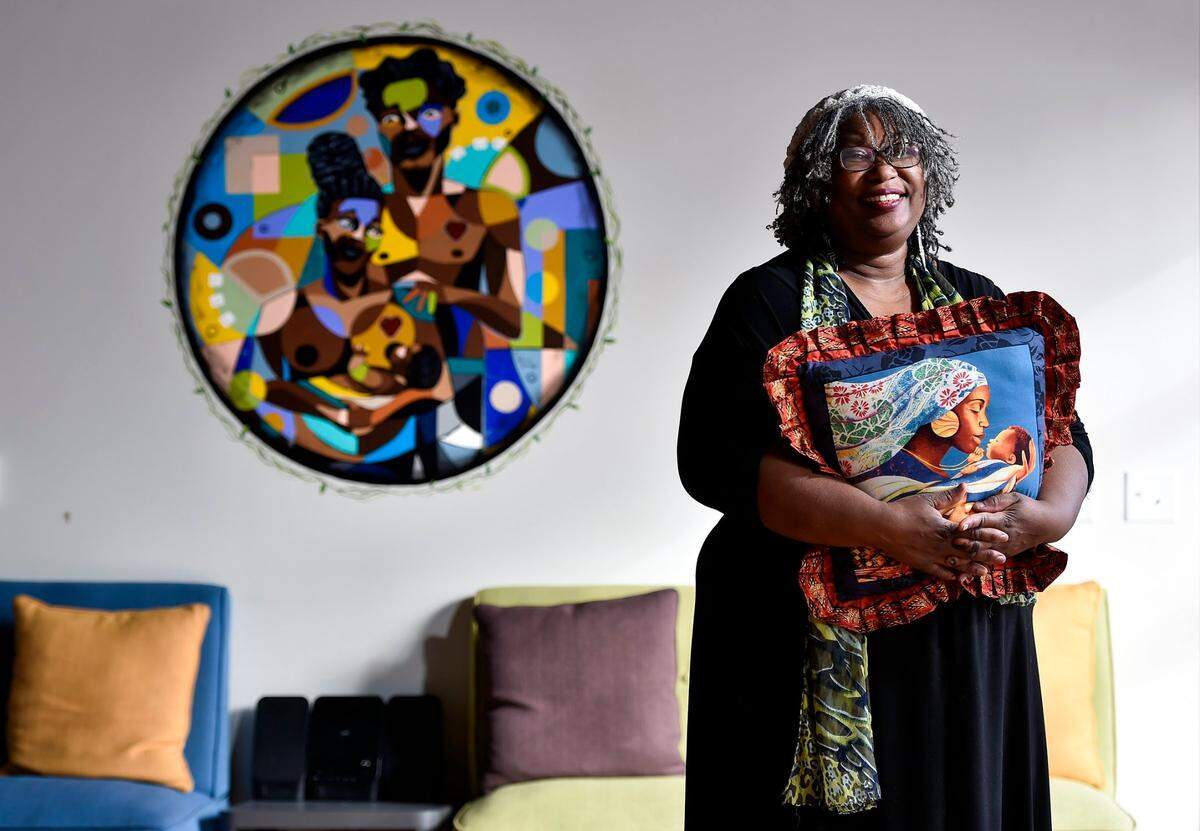
Payne has long pressed healthcare systems to initiate anti-racism training. Early in her career she worked as a nurse, nurse educator and researcher, and saw firsthand how Black women “were not seen as reputable historians of their own experience.”
“We know that this is a racially-based health inequity because a Black woman with a college education still has worse health outcomes than a white woman who didn’t graduate high school,” she said. “This is not about education level or economic status. It is truly about race.”
The United States has the highest maternal mortality rate among developed countries in the world, and it’s getting worse.
Missouri currently ranks 12th worst in the US for maternal mortality. A recent CDC report released this fall showed that 80% of pregnancy-related deaths are preventable. Black mothers insured by Medicaid are about two times more likely than white women on Medicaid to become cases of severe maternal morbidity, the CDC says.
Payne, as part of her research, collects the birth stories of Black women around the metro, listening to how they were treated, and whether they were listened to.
The problem is so widespread that at a national level, the CDC recently launched a campaign called “Hear Her,” which encourages health care providers, family and friends to listen when a patient says something is wrong during and after pregnancy.
“In my opinion, our local institutions have a long, long, long way to go in building those bridges of trust and support that are needed to build confidence in birthing Black bodies to put themselves in those environments,” Payne said.
Push for policy change
Studies show that pregnant women who are supported by doulas have fewer babies with low birth weights and fewer C-sections, both of which are factors in infant and maternal deaths. But doula services can be expensive.
Some states allow doula services to be reimbursed with Medicaid. Missouri is not among them, though the state does distribute about half a million dollars annually for community-based doula trainings, Payne said.
She hopes that soon, all women will be able to afford doula services, which the Uzazi Village report describes as “a cost-effective method both to increase positive health outcomes for mothers and their babies and to aid in closing the gap on racial disparities that exist within the healthcare system.”
Payne believes most of these changes will come eventually. But she believes there’s a right and a wrong way to do them.
Some states have fair reimbursement, but tight restrictions cut out the doulas the legislation was written for, she said. Other states have compensation rates, but they’re so low it’s almost not worth it to get the Medicaid reimbursement. She and other advocates are working to ensure neither happen in Missouri.
“We’re trying to put ourselves on the forefront of that conversation here in Missouri,” she said, later adding: “Will our voices be heard and heeded is the question.”
This story was originally published November 22, 2022 at 6:30 AM.