One mother’s fight on ‘the front lines of a revolution’ to save Black mothers, babies
Editor’s note: During the month of February, in honor of Black History Month and the vibrant Black community in Kansas City, The Star will feature profiles of Black Kansas Citians by telling their stories and highlighting their businesses, causes, and passions.
Portraits of Black, breastfeeding Kansas City mothers, seated on chairs, stoops, next to a pond, hang on the walls surrounding Hakima Tafunzi Payne as she works. They are a constant reminder of those she’s been called to serve.
On a brisk February day, Payne stood in the middle of the old candy factory that has, over the years, served as the location for a car wash and then a community center on Troost Avenue near East 43rd Street. Now it’s Uzazi Village, a nonprofit Payne built from the ground up. The organization was conceived from her determination to build an army of advocates for laboring Black mothers and their children.
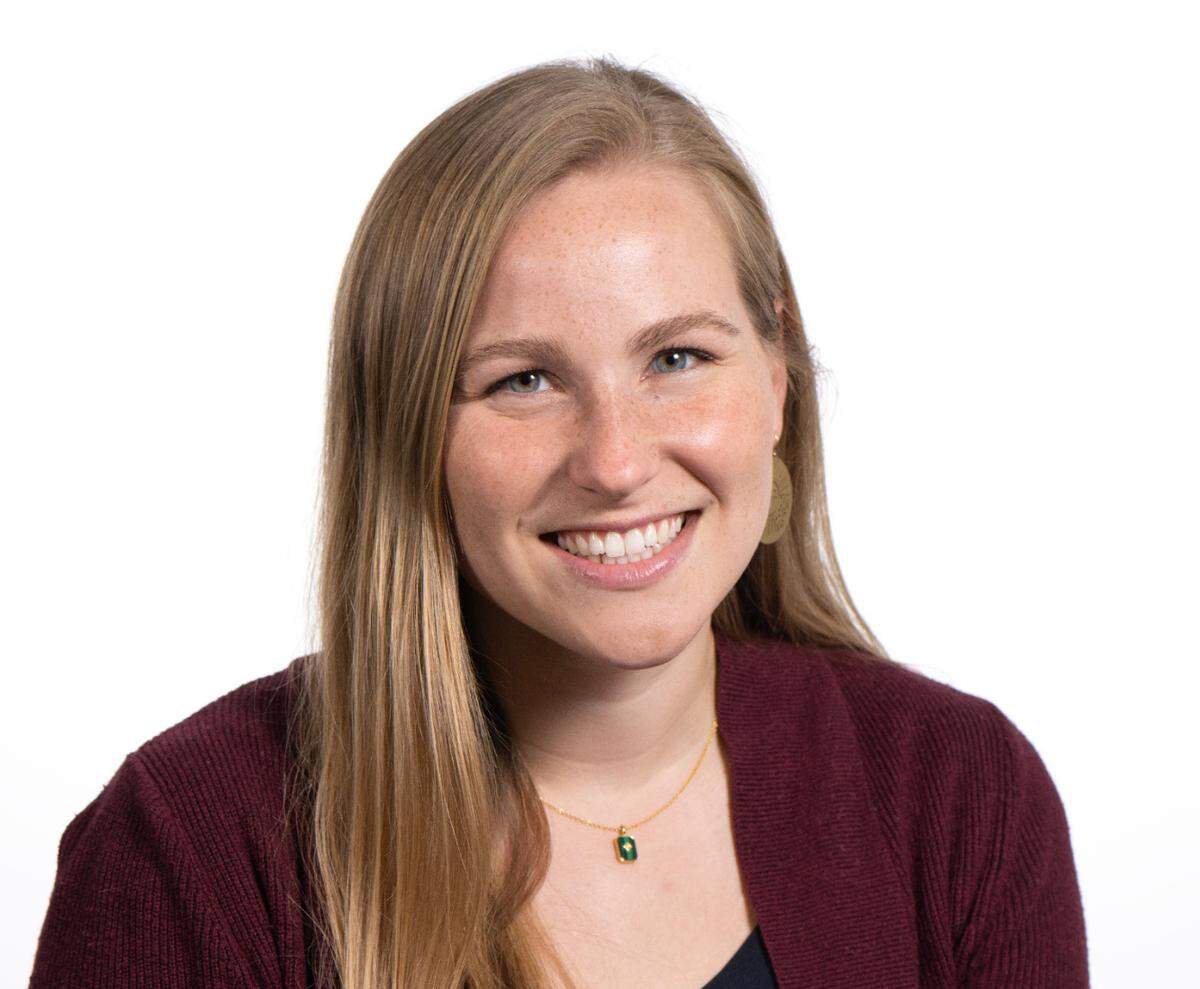
Payne, a born and raised Kansas Citian who has given birth to nine children herself, is a fierce champion and protector of Black mothers and babies. She knows that for some women, the act of bringing life into the world can end in unnecessary death.
For nearly every three white babies who don’t survive past infancy, nine Black infants die, according to the Kansas City Health Department. Payne called these statistics, which in recent years have seen a widening gap, “maddening.”
Across the United States, where maternal mortality rates rank high among the developed countries, Black mothers are three times more likely to die from complications of pregnancy or birth than white mothers, according to the Centers for Disease Control and Prevention.
So when Payne, a co-founder and CEO of Uzazi Village, trains doulas — professional companions during pregnancy and labor — to stand beside Black women, she begins by telling them they are “freedom fighters on the front lines of a revolution.”
Though she deals in the world of child-bearing and birthing, Payne says the essence of her work is anti-racism.
“Race shouldn’t have anything to do with whether you survive the child-bearing process, and for it to fall so heavily on the Black community, something’s wrong, and nothing’s wrong with us, so we have to look at the system,” she said.
A deficient system
For Payne, the journey to Uzazi Village was paved by years of witnessing the mistreatment of pregnant women of color in the hospital system.
Before she delved into her fight for birth equity, Payne had her first three children in a hospital. It wasn’t until her fourth child — the first one she opted to have at home rather than a hospital — that the urge to join the front lines was born.
The experience was “almost ethereal or spiritual,” she said, serving as a watershed moment.
Payne enrolled in nursing school with the goal of becoming a labor and delivery nurse. However, she wasn’t prepared for the horrific treatment of women of color she said she witnessed. So Payne went back to school, this time earning a master’s in nursing education. She hoped to change what she saw as a flawed system from the inside, but she again quickly felt defeated.
In hospitals and often in the care of predominantly white health care providers, Black women are more likely to have their labors induced and to undergo a cesarean section, both of which introduce increased risks for the mother and child, Payne said.
“It was really soul crushing,” Payne said. “I felt really helpless.”
Though sometimes it can be difficult to recognize, this is what racism in health care looks like, she said, adding that even though the inequity is often fueled by unconscious and implicit bias, that’s no excuse for the impact it can have on patients’ care.
Historically, Black patients have long withstood racial bias in health care. For Black mothers, this can manifest as a doctor brushing off legitimate and dangerous symptoms reported by the mother and insisting on drug tests ahead of diagnosis. Payne has heard such stories from women seeking out Uzazi Village as a place of safety.
“It’s not because Black women are deficient that they’re getting these outcomes,” she said. “It’s because the system that takes care of them is deficient.”
A 2019 report from the Center for American Progress argued that the issue of maternal and infant mortality could not be adequately addressed without confronting racial bias in the health care system.
“For African Americans, the social determinants of health — including income level, education, and socio-economic status — are not protective factors as they are for white Americans when it comes to maternal and infant mortality,” the report, laying out a policy framework, read. “Racism is part and parcel of being black in the United States, and it compromises the health of African American women and their infants. Applying a racial justice lens to contextualize this urgent public health crisis is critical. Put simply, structural racism compromises health.”
By contrast, Payne’s home birth experiences were empowering and sacred, she said.
With a midwife by her side rather than a doctor, Payne said she had more control over her own birth and could be a true partner in the experience.
What if all women could experience this, even in a hospital setting, she asked. Payne saw doulas, whom she described as “pregnancy navigators,” as the answer.
Doulas are largely not accessible in the Black community, but grant funding has allowed Uzazi Village to provide doulas at no cost to mothers.
An army of advocates
Throughout the pregnancy, they help educate and inform women of all their options. During birth, they advocate for them. When apart from the mothers, they examine underlying issues of racism, sit on city committees and seek out policy-makers in the hopes of bringing about long-term change.
“Black women just need an advocate,” Payne said. “They’re not seen. They’re not heard. They’re abused and discriminated against, and the doula just sort of stands in the gap of all that.”
About three years ago she accompanied a doula to a birth. Payne stood back as the woman delivered her second daughter. The mother rocked on the toilet in her hospital room as her doula sat in front of her, whispering words of encouragement.
“You’re doing great. You’re getting through these contractions beautifully, you’re doing a fantastic job,” she recalled.
Payne likes to witness these tender and sacred moments of birth. She wants to protect them.
On Monday, Payne sat in the upstairs room of her business, named after the Swahili word for family. The space is reserved for all-day doula trainings on Saturdays. This year, they’ve reduced their capacity by 50%, down to six students per session to maintain social distancing.
In the eight years since Uzazi Village’s inception, Payne has helped train many of the 300-some doulas to come out of the program.
When she first co-founded Uzazi Village in 2014, Payne paid for the building’s rent out of her own pocket while still working as a nursing instructor full time. She taught herself how to write grants as she trained doulas for free.
“I believe with all my heart that creating Black doulas, putting them out in the community, would absolutely make some difference,” Payne said. “I knew it was part of a viable solution to Black maternal and infant health inequities.”
The elegant old brick building has transformed under Payne’s watch. The rooms are bright, with colorfully painted walls and pictures of smiling families. The floor plan includes a breastfeeding room, playroom and an apothecary scattered with drying herbs grown in the greenhouse by the parking lot.
Before the pandemic, community members could rent out the main clinic room for baby showers and birthday parties. They also hosted an evening two-step class. Now, the space is used as a COVID-19 testing location.
In many ways the building is still playing its role as a center for community.
Her radical work
Payne works hard to offer what she describes as practical, barrier-free assistance. They host weekly diaper drives and give away children’s clothing. They also offer a free walk-in breastfeeding clinic.
But most days, with the pandemic continuing to limit the number of people coming into the building, Payne does her most vital work behind a computer, jumping on Zoom meetings, leading virtual trainings and writing grants.
She spent a recent Sunday morning working on a report about a research project in which Black mothers across Missouri were asked about what kind of support they received when it came to breast-feeding, which has many known health benefits for mothers and babies.
They found that many nurses have a bias that Black women don’t breastfeed. This, Payne said, fuels the kind of clinical care they get as some nurses pushed formula on new mothers after they were called into the room to ask a breast-feeding question.
A community member recently lauded Payne’s efforts, describing her work as “radical.”
But it’s only radical because no one wants to hear it, Payne said.
“Kansas City is incredibly imperfect, it is a very race-segregated city, but it’s also where I’m known and have some influence,” Payne said.
It’s where she’s grounded. And after spending all 58 years of her life in Kansas City, she notices some things are changing. There are more Black people on the City Council, and last year, Mayor Quinton Lucas appointed Payne to head the city’s birth equity committee.
“This work to me is the same as people who are out there in the streets fighting against police brutality because I very much see Black maternal health work as analogous to police who kill and injure unarmed Black men,” Payne said. “Doctors and nurses kill and injure Black babies. To me there’s a perfect correlation, that we’re all in danger, even though we face danger in different arenas.”
This story was originally published February 2, 2021 at 3:05 PM.