‘Absolutely incredible’: Missouri has 7,000 caves. Here’s a guide to some of the best
READ MORE
Exploring Missouri, The Cave State
Missouri has more than 7,000 caves under its ground, though fewer than 20 are easily accessible to most people. We’re highlighting some of the wonders inside.
Expand All
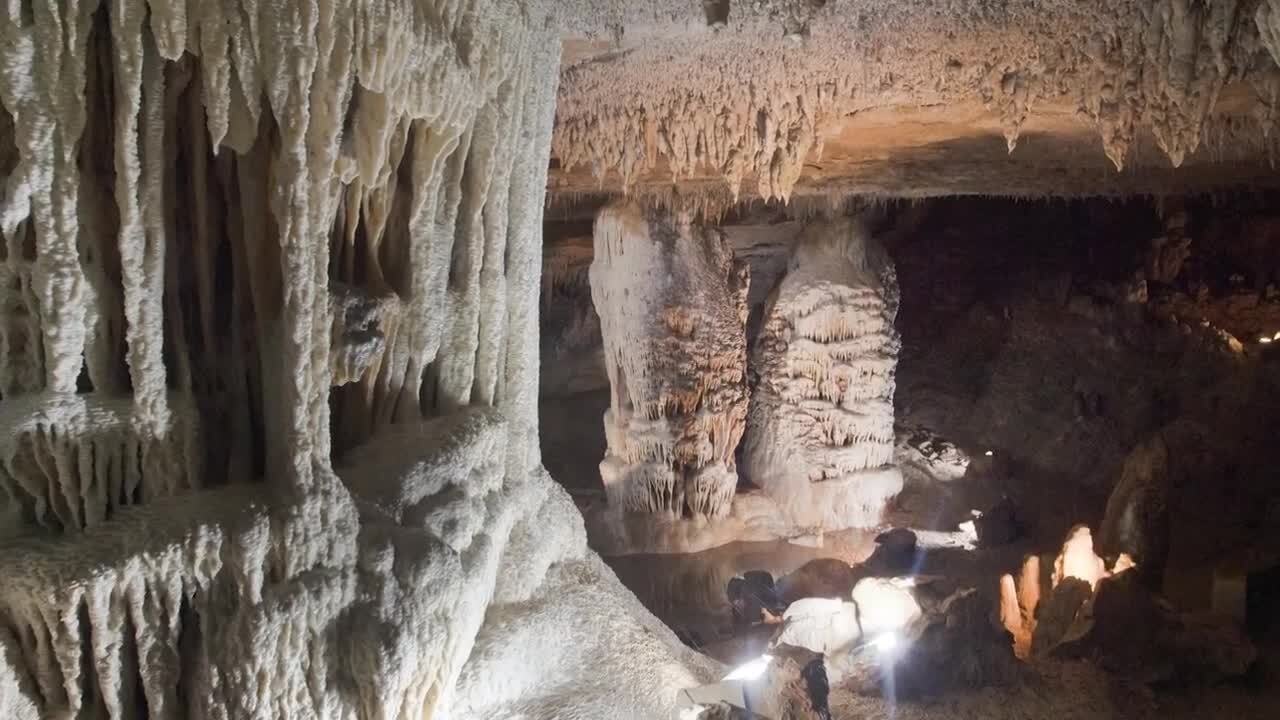
Missouri’s caves can be majestic, with towering crystalline ceilings and herds of stalagmites, stalactites, soda straws and flowstone. But also, because caves are naturally dark and drippy, they can be a little scary.
Take the cave outside Hannibal, where Samuel Clemens often played as a boy. The one that inspired some of the most hair-raising moments in “The Adventures of Tom Sawyer.”
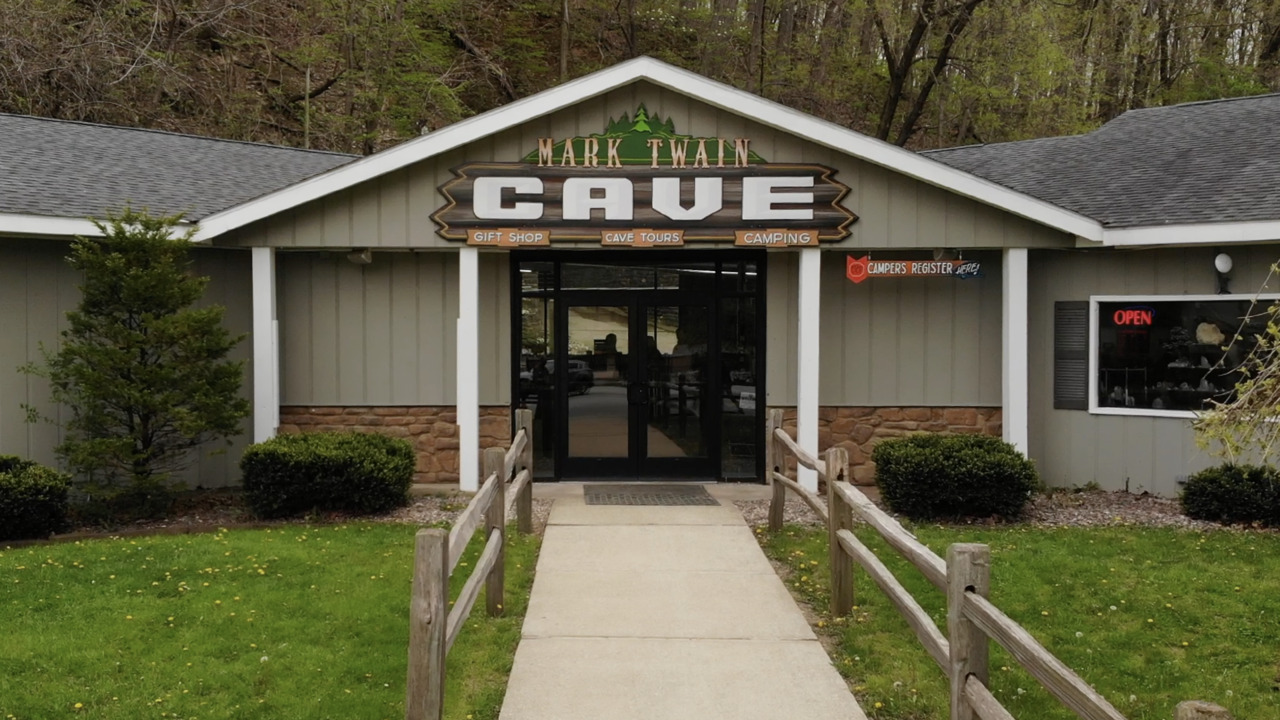
“He (Clemens) says the walls were dewy with a cold sweat,” tour guide Jessica Bonvillain says softly, as she points to a suitably sweaty spot along one of the many mazes throughout Mark Twain Cave.
“When you walk in and imagine what’s down all those passageways, it always brings a spark of childhood. No matter how old you are.”
Hubert Heck, public relations director for Fantastic Caverns in Springfield, concedes that part of his job is to reassure potential visitors “there are no vampire bats in the caves. And no creatures that will get them.”
Heck says there’s always been an air of mysticism around caves. “And fear of the unknown.” But as cave paintings suggest, there’s also a sense that “people did something special in them.”
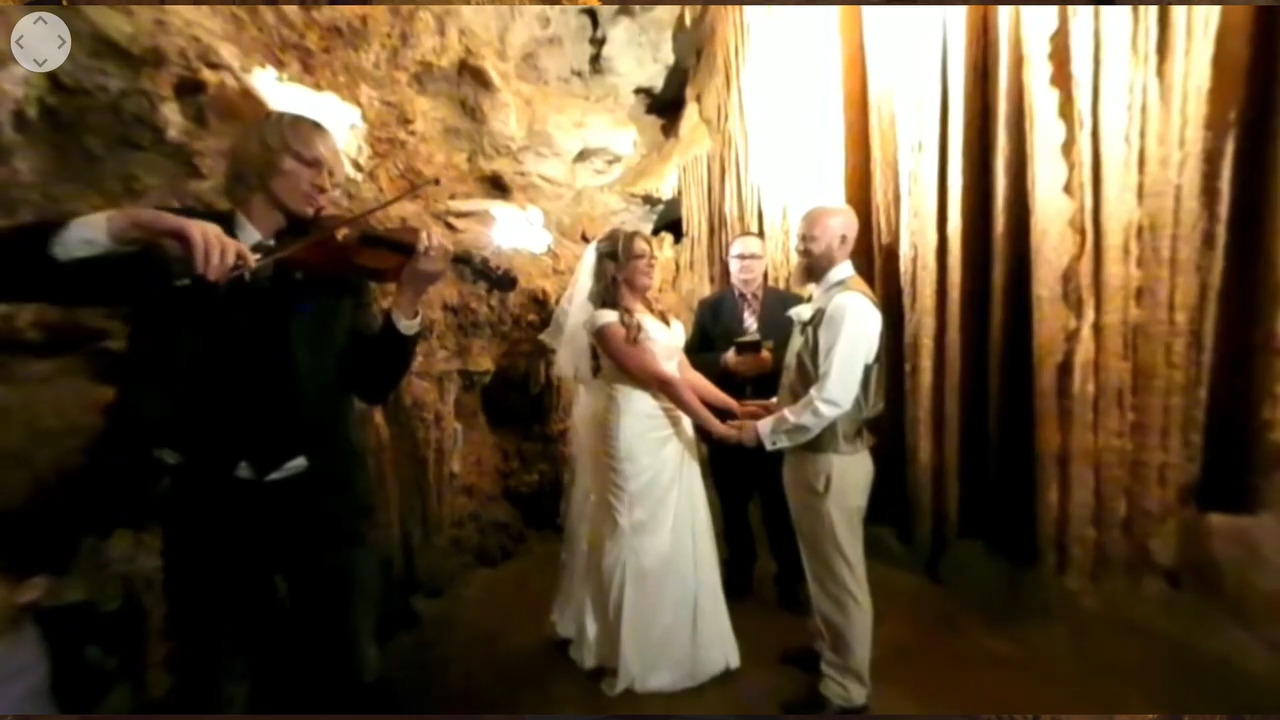
And still do. At Bridal Cave near Camdenton, the specialty of the house is obvious. Since 1949, more than 4,000 couples have tied the knot inside it, a one-of-a-kind wedding chapel. And as the owners like to point out, the temperature inside is always 60 degrees, with no risk of wind or rain.
Missouri has over 7,000 documented caves — no wonder it’s known as The Cave State. Yet fewer than 20 are the kind of “show caves” that most of us will ever set foot in. You know, the ones that call out to travelers from hundreds of signs along the highway.
We visited five of those, to give you a taste of the possibilities.
Mark Twain and Cameron Cave
Some quick clarification: Samuel Clemens did not discover the cave. The first recorded visit occurred in 1819 when Jack Simms’ dog chased a cougar into an opening in a hillside near the Mississippi River. And Simms clambered in behind it.
Thirty years later, growing up in Hannibal, the boy who became Mark Twain spent lots of time exploring it. As a writer, Clemens made the cave a pivotal part of dramatic scenes with Tom Sawyer, Becky Thatcher and Injun Joe.
“We like to say it was his first great adventure,” tour guide Bonvillain says proudly. “And he went on to have more adventures all over the world.”
As Twain’s popularity grew, the cave — about 100 miles up the river from St. Louis — began hosting formal tours. And the number of signatures left on its walls rose exponentially. (Don’t try it yourself: This is now a National Natural Landmark.) Jesse James’ is up there, with surprisingly good penmanship for an outlaw. He supposedly visited shortly before pulling a bank job in Independence.
In all, there are some 250,000 names written in everything from candle wax to graphite pencil, ink pen and berry juice. Three years ago, a signature that’s been substantiated as Clemens’ own was discovered.
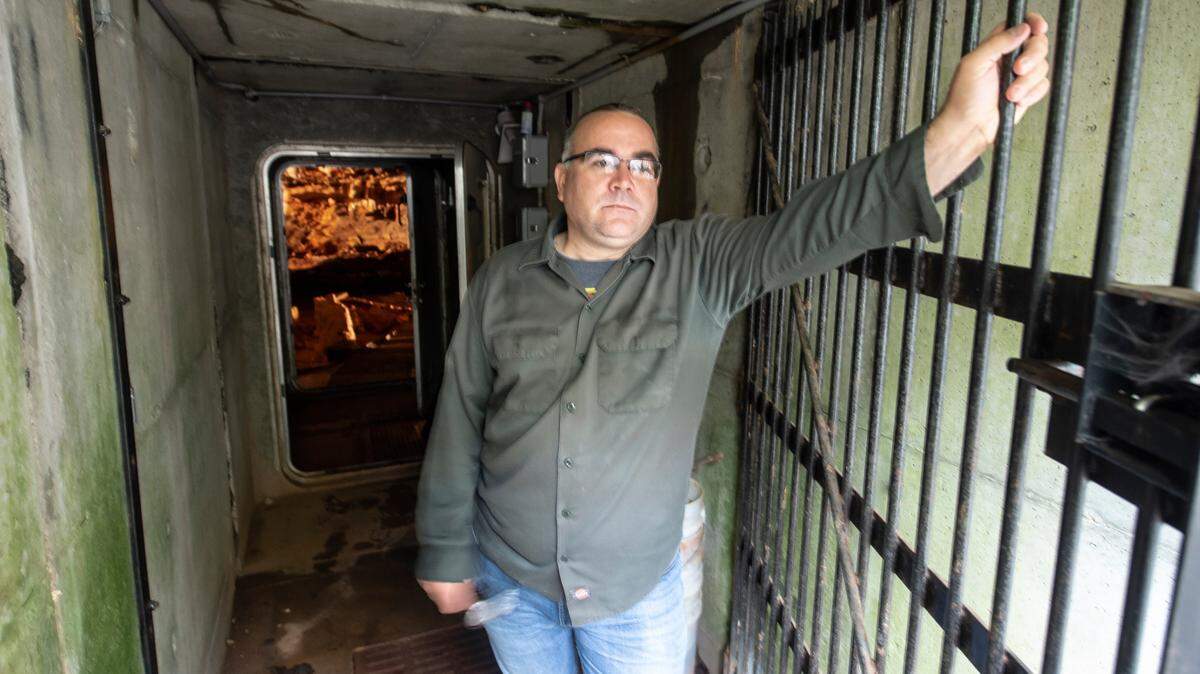
Tessa Hosmer, the cave’s general manager, says the signatures have remained intact largely because the cave’s elevation (unlike most in Missouri) keeps it dry. She calls it a “maze cave,” most notable for the 290 passageways that look much the same as they did 200 years ago. But brighter (thankfully) because of the lights that were added in 1939.
Across the road, there is no electricity in Cameron Cave, also a part of the Mark Twain Cave complex. Tour guide Jeremiah Craighead says it’s more akin to a so-called “wild cave,” though the “regular” tour he leads stays near the top and can be taken without special gear.
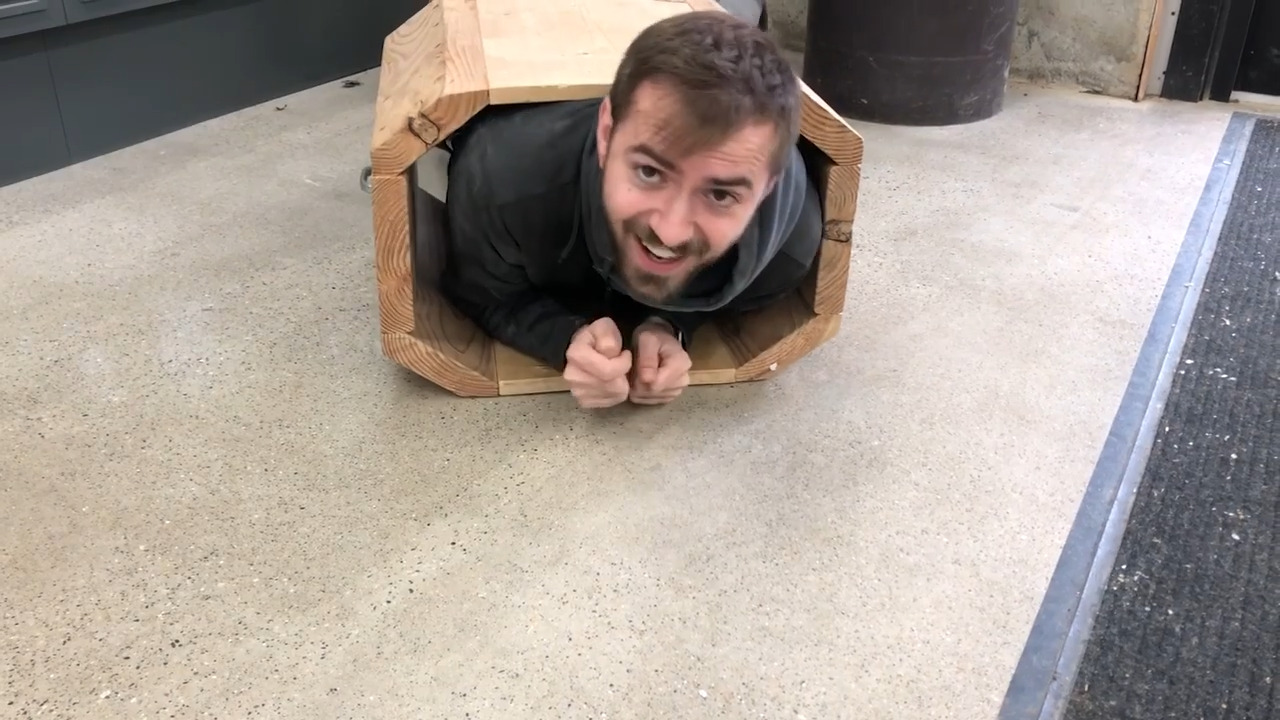
The “adventure” tour is another story. It calls for knee pads, a helmet and a willingness to straddle small chasms. Not to mention crawling through the 12-by-18-inch opening affectionately known as the Wormhole. “It’s a lot of fun,” Craighead says with a laugh, “but you’d better know what’s in store.”
300 Cave Hollow Road (7097 County Road 453) in Hannibal. 573-231-1000. marktwaincave.com
Bridal Cave
There’s no shortage of signs pointing you and your car toward Bridal Cave. But it’s worth noting that you can also get there by boat.
Bridal Cave and Thunder Mountain Park are nestled into a scenic cove on the Lake of the Ozarks, suitable for outdoor activities both above and below ground. As public relations director Lindsey Webster-Dillon explains, the original development company bought up the land around the cave, so “its watershed will always be protected.”
Bridal Cave only has one entrance, so don’t expect to see much wildlife inside. But Webster-Dillon notes, “We do have small animals throughout — crickets, some spiders, frogs and small bats, which we see flying around from time to time. Usually when you have a group that’s terrified of them,” she chuckles.
One thing the cave has in abundance is a formation known as drapolite, or bacon strips — 500 million cubic inches of it, according to a “Ripley’s Believe-It-or-Not” article from the 1960s.
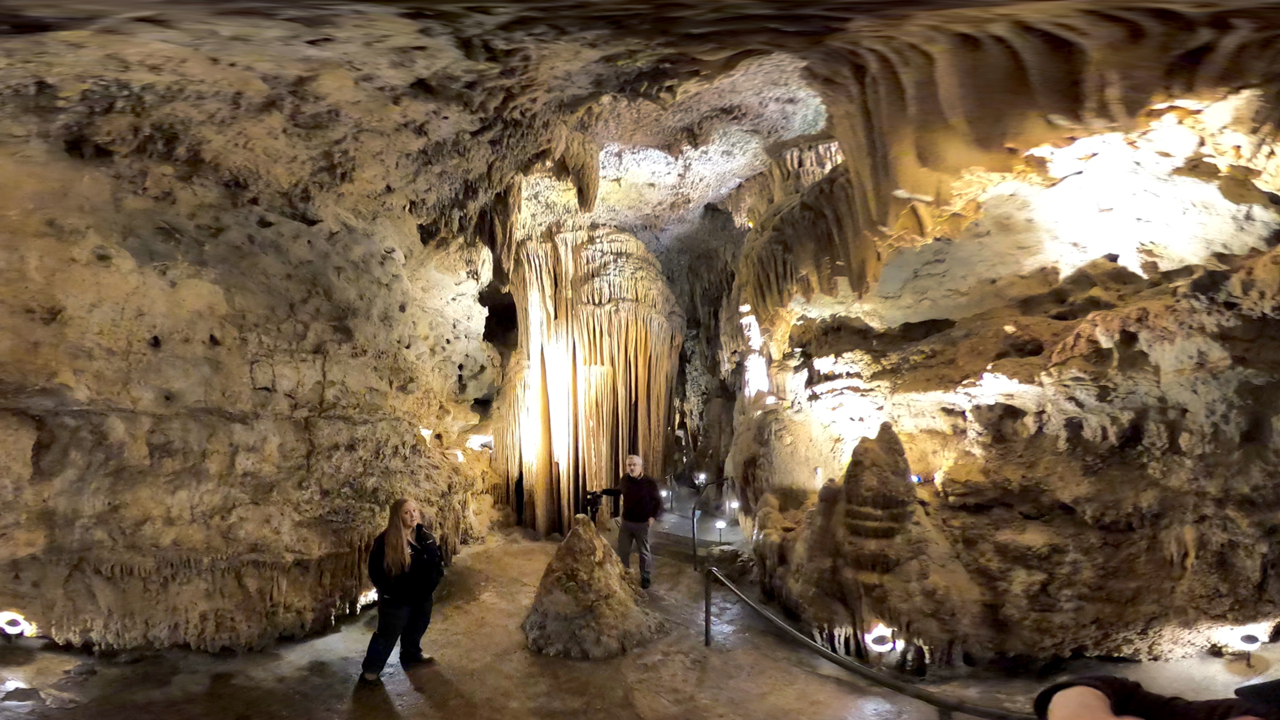
Webster-Dillon describes the cave as “more intimate than some,” a place where narrow passageways open into rooms with clusters and curtains of stalagmites and stalactites colored by minerals that seep in ever so slowly. “You can see the little ridges and the crystalline formations up close,” she says.
As for the name, Bridal Cave took it from a book called “Indian Romances.” In it, Col. R.G. Scott recounted a legend involving a lovelorn leap and a wedding held inside the cave’s second big room.
Historically accurate or not, you can’t argue with success. The show cave’s first marriage took place in 1949. The most recent was this month. “I think our satisfaction rate with the venue runs pretty close to 100%,” Webster-Dillon says with a grin.
While a climate-controlled space does have its virtues, she’s found that people who get hitched in a cave usually do so because of family ties. Or memories of a happy time they’ve had in the past. “One groom told me that when he was a little boy, he’d said he was going to get married here. And he did.”
526 Bridal Cave Road, Camdenton. 573-346-2676. bridalcave.com
Stark Caverns
Moonshiners and schoolkids. They’ve both played a role in the evolution of Stark Caverns. Separately, of course.
First, the moonshine.
Archaeologists believe the cave and its unusually large entrance were known to Native American tribes long before Charles Stark “discovered” it in the early 1800s in what is now Eldon, near Lake of the Ozarks. Afterward, his neighbors used the cave to shelter cattle and store vegetables. Church services were held in it. A natural ice-skating rink near the front of the cave provided recreation in the winter.
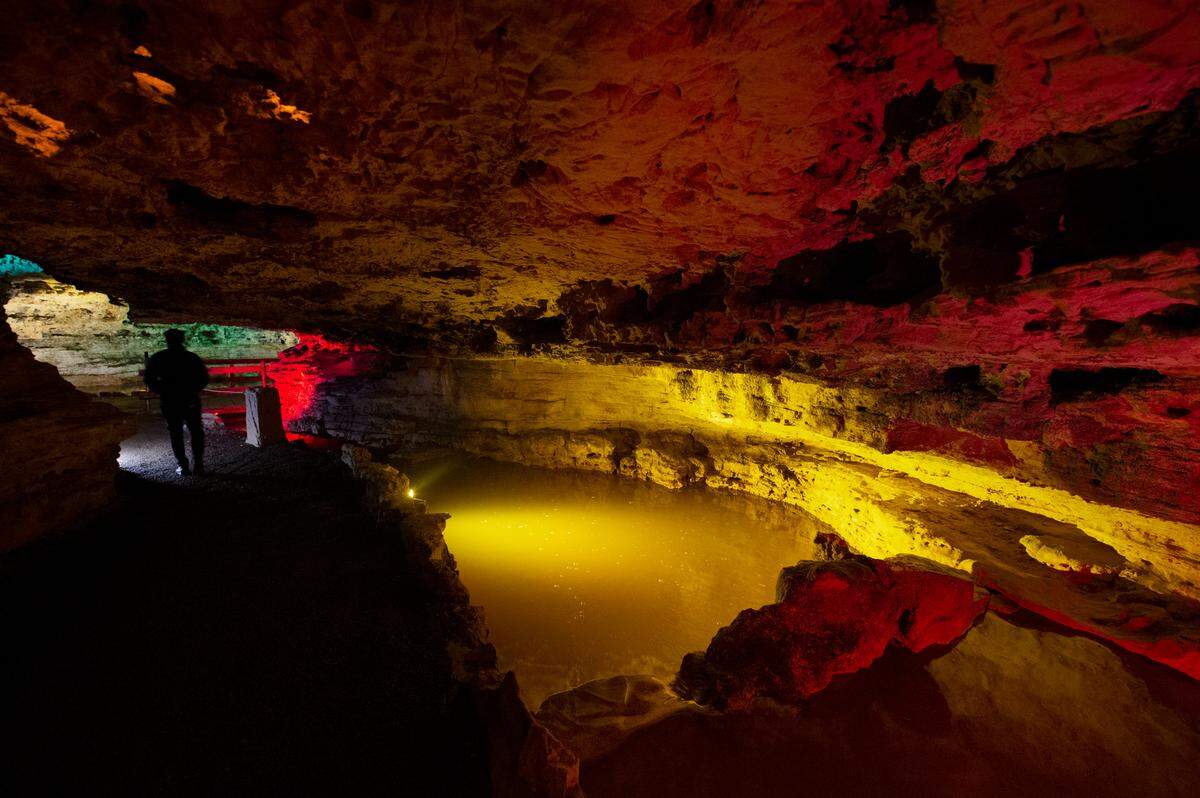
When Prohibition arrived, so did moonshine makers — who figured the cave’s cool, clean water supply and dark recesses were perfect for plying their trade. A subterranean speakeasy!
It wasn’t until 1950 that the first show cave appeared on the site. It debuted as Stark’s Cavern but took on other names over the years. In 2017, a former tour guide named Jeff Hargroves and his wife, Amy, purchased the cave. Their vision for the new Stark Caverns put a premium on education.
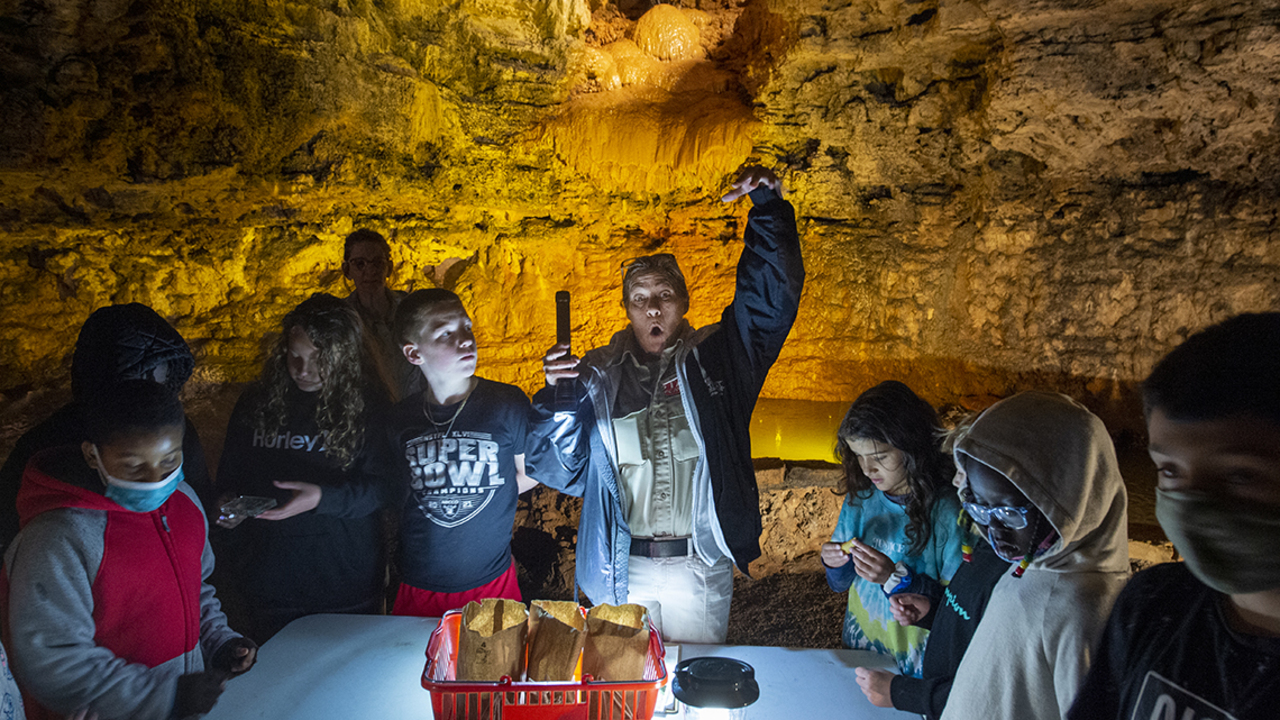
Cue the schoolkids. In this case, a busload of fourth graders from Crestview Elementary School in North Kansas City, squeezing in a field trip before summer break begins. “We like to teach and have fun at the same time,” says Operations Manager Chaz Jesiolowski as students pour forth from the morning’s tour. Their teacher, Laura King, confirms that “walking through a hole in the ground was mind-blowing for them.”
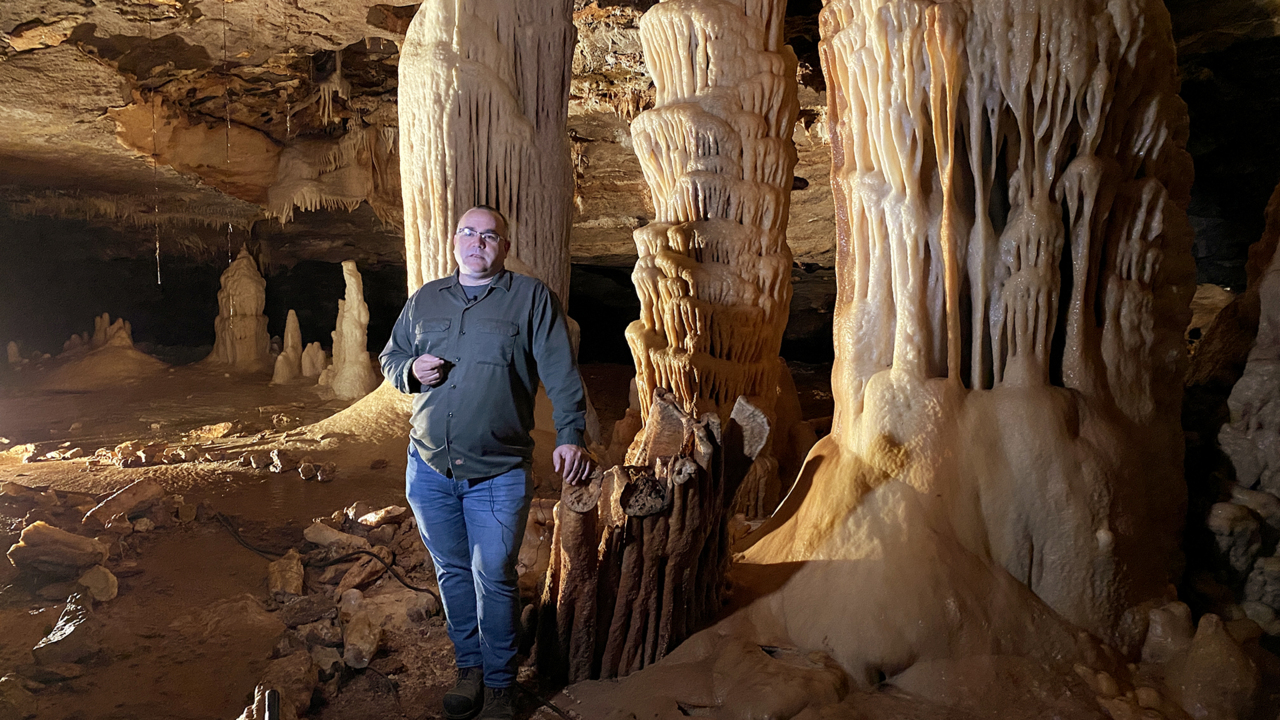
Stark Caverns is often referred to as a dolomite cave, the substance that forms when water softens limestone. Dolomite and algae together in the right conditions can birth cauliflower-like structures called stromatolites — which are unusually abundant here.
“We’re very blessed with our cave,” Jesiolowski says. “We have ceilings as high as 75 feet and our smallest path is the size of a hallway. There are dry areas that have fossils and wet ones with beautiful formations.”
Ancient rocks may be gazeworthy, but kids today have a lot of options. Which is why Stark Caverns claims it opened the first cave escape room in North America. And it created a black light tour that wraps mineral science in day-glo colors.
“We hope to give families some great takeaways,” Jesiolowsi says, “fun facts they can take home and keep learning about.”
125 Cave Drive, Eldon. 573-867-2283. starkcaverns.com
Fantastic Caverns
“It was absolutely incredible … the whole thing. … It was life-changing. Like seeing a UFO!”
Sonny Woods has just stepped off the tram at Fantastic Caverns, and he can barely contain himself. Driving home to Maricopa, Arizona, he and his wife, Kim, saw the signs outside Springfield and decided to take the tour.
Jody Vandergraft, visiting from Des Moines with husband Mike, is more succinct. “It was dark. Wet. Nice and cool. It was great.”
Trailers pulled by Jeeps have been hauling people like these into this ancient riverbed since 1962. That was exactly 100 years after a runaway dog led a man named John Knox into a small opening in the hillside. One that opened into far bigger spaces.
But the Civil War intervened, and Knox’s cave wasn’t officially explored until 1867. By a group of 12 young women.
That’s right, college students from Springfield who crawled into the depths, checked it out, signed the wall and made their report.
1887 is another important date in the cave’s transformation. That was the year generator-powered electric lights were installed, at a time when very few homes in the area had them. The curious started to come (as much for the lights as the cave), and they’ve never really stopped.
As for those ubiquitous billboards, Heck, the cave’s PR director, says that whether you love ’em or hate ’em, they’ve done their job well. “Back before GPS … how else were you gonna get people out here?” he chuckles.
Like other show caves across the state, Fantastic Caverns owes its existence to soluble rock. Heck likens it to “Swiss cheese, only harder.” Water carved the cave’s long, winding (and occasionally low hanging) pathways accented by stalactites, stalagmites, flowstone and cave onyx in a striking array of shades and hues.
“Missouri caves are kind of like fingerprints,” he says. “They’re all sort of the same, but with unique differences.” Among the key differences at Fantastic Caverns are a pair of sinkholes that can fill up with water in the aftermath of significant rains. Sometimes, when the levels come up too far, the trams shut down.
A short film shown midway through the tour highlights some of the ways scientists pull data from the cave to help understand and protect Ozark waterways.
“I call it edutainment,” Heck explains. “It’s not doom and gloom, just a reminder that what goes down, comes back up. And when it comes to the environment, we can all do better.”
4872 N. Farm Road 125, Springfield. 417-833-2022. fantasticcaverns.com
Three more you might want to try
▪ Marvel Cave: The Cathedral Room is large enough to hold a hot air balloon. 399 Silver Dollar City Parkway, Branson. silverdollarcity.com (search Marvel Cave)
▪ Bluff Dwellers Cave, complete with its own museum of Native American artifacts. 163 Cave Road, Noel. bluffdwellerscave.com
▪ Onondaga Cave State Park on the Meramec River is also home to the Vilander Bluffs Natural Area. 7556 Highway H, Leasburg. mostateparks.com (search Onandaga)
This story was originally published May 25, 2022 at 4:00 AM.