‘Prices are going up so much’: Hunger stalks Missouri as even food banks feel the crunch
READ MORE
High prices hurt Missouri families and food banks
Missouri food banks are strained with supply chain challenges and rising transportation and food costs, all while food insecurity increased during the COVID pandemic.
Expand All
It only took being short on one paycheck.
Taylor Huff works. She didn’t think she would need any help. She’s seen the people who do, at her job managing a loan agency and years ago when she worked briefly at the Open Door Service Center, a Sedalia food pantry.
“I have a good job, you know,” she said, initially hesitant to seek assistance.
But lately, the 24-year-old said, she’s been the sole provider for herself, her boyfriend and her 10-month-old daughter. And in the past several weeks, costs have risen for gas and at the grocery store. This month, her paycheck alone wouldn’t make ends meet.
“The prices are going up so much,” she said. “The cheaper brands ... it’s getting cleared off the shelf so that by the time I get paid, it’s gone, and I have to buy the more expensive things.”
She called Open Door and was assured the pantry is open to anyone in need. So she found herself driving back to the service center on a recent December morning to pick up a box of groceries.
The same forces that drove Huff to seek help at the pantry have made efforts to help families like hers more challenging in recent months.
Food prices are up more than 5% compared to last year in one of the biggest hikes in the past two decades, according to the consumer price index. It’s been driven by a complex web of economic factors, including the COVID-19 pandemic, that’s affected nearly every step of the global supply chain.
It’s contributing to a need for assistance that hasn’t gone away since the pandemic began. In a cluster of four counties that surround Sedalia, the Food Bank for Central and Northeast Missouri said it’s seen a monthly increase in clients since July, from about 8,000 to 10,000.
Food banks across Missouri are still reporting a 15% to 20% increase in demand compared to 2019.
That’s far down from the height of the pandemic but still a notable increase from normal times, when a 3% to 5% bump in clients was considered serious, said Scott Baker, director of Feeding Missouri, a network of six regional food banks that stock the shelves of hundreds of pantries and community organizations across the state.
Uninsulated from the challenges their clients face, food banks are in turn contending with rising costs of buying and shipping groceries to the pantries that distribute food to those in need.
For Harvesters Community Food Network, which stocks Kansas City pantries as well as those within a roughly 80-mile radius, the cost to get a truckload of food shipped from the middle of the state has gone up by about a third. Harvesters spent $50,000 more this year buying Thanksgiving and Christmas meats than last year, spokeswoman Sarah Biles said.
The Southeast Missouri Food Bank, which serves 16 counties in the poorest corner of the state, averaged more than 60,000 clients a month during pre-pandemic times. That number doubled in 2020 and began to fall this year, to 70,000.
But in the past three months, it’s back up to more than 80,000, said spokeswoman Lisa Church. The food bank spent triple the amount of money buying food in the first six months of this year than in the same time period of 2019.
“Not only are we needing more food to meet the increased need, the food that we’re acquiring is costing us a lot more and the freight to get it there is a lot more,” Church said. “We’ve always prided ourselves on the fact that for every dollar donated, we’re able to provide four meals. Now that’s getting much harder to do.”
Food insecurity in Missouri
Food insecurity, which many Americans experienced during the pandemic for the first time, has persisted through an economic recovery that experts say has been uneven at best.
Prior to the pandemic, more than 13% of Missourians were food insecure, meaning they lacked regular, reliable access to enough nutrition for the whole household. That was more than 800,000 Missourians, about 200,000 of whom were children.
The rates were most severe in southern and southeast Missouri, where counties with older populations and mainly low-wage workers commonly saw a fifth of residents living in hunger.
Feeding America, the national food bank network and advocacy organization, estimated increases in food insecurity of between 6% and 26% across Missouri counties during the pandemic last year. Some of the spikes were particularly acute in the Kansas City area. Clay, Platte, Jackson and Cass counties all were estimated to have seen increases of roughly 20%.
While few detailed breakdowns are available for 2020, one U.S. Department of Agriculture study hints at the uneven impact of the pandemic. It found food insecurity broadly remained unchanged in the United States last year compared to 2019 but ticked upward for households with children and for Black and Latino households.
Food banks in Missouri say most of their clients are either elderly and disabled, living on fixed incomes or working and not able to make enough for the entire household.
“You or I, we see gas for $3.10 a gallon, it’s like, that’s a hassle,” Baker said. “For others, that’s a backbreaker that suddenly impacts their ability to get to work.”
When costs increase, food pantries are the first line of defense, where those on the edge of financial precariousness can most easily fill a gap in their budgets.
In line for food distribution this month in Henry County, which has an above-average food insecurity rate of more than 17%, most clients were retired and all had noticed increasing prices at the grocery store, especially for meat.
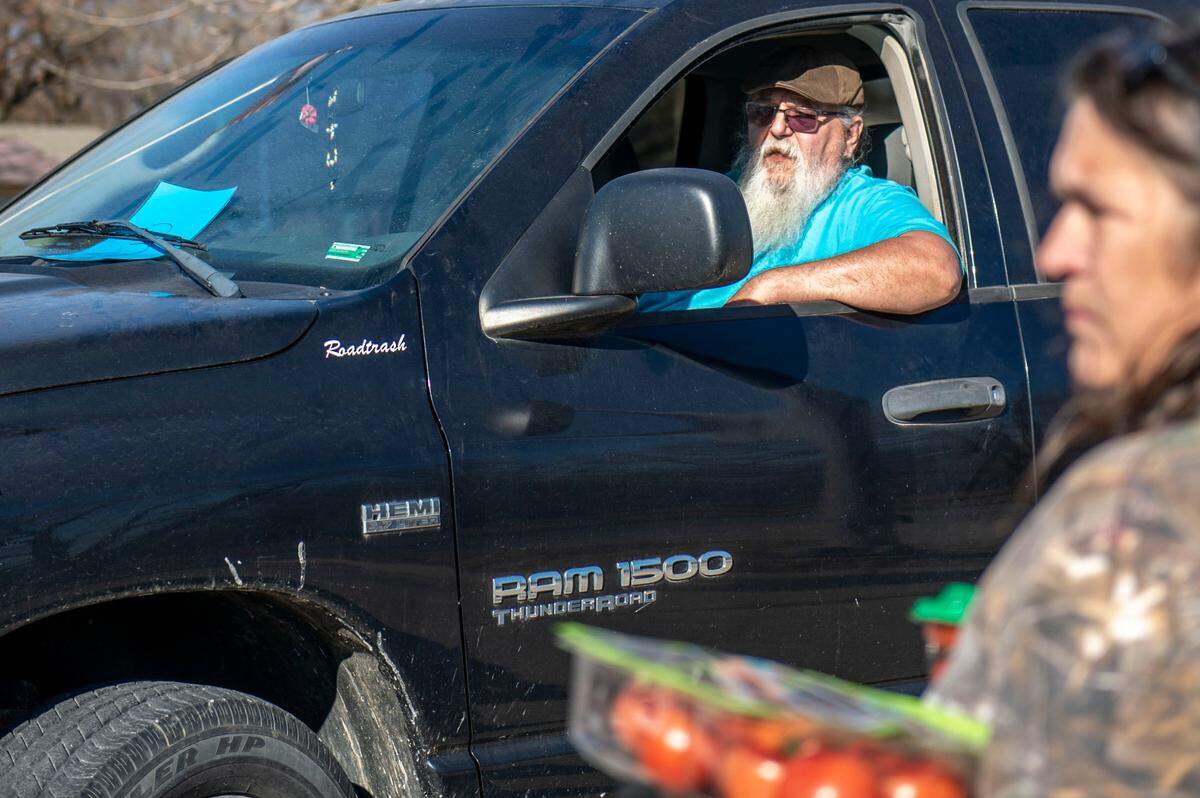
Bill Adams of Lowry City said he’s never relied on charity or assistance before this year.
The 65-year-old recently retired from his job as a boilermaker. His wife, not quite old enough for full Medicare coverage, recently had gallbladder surgery. The couple also have been helping out an adult son.
COVID, and the cost hikes it brought, was the “final straw,” he said.
“Money has just not gone as far,” he said.
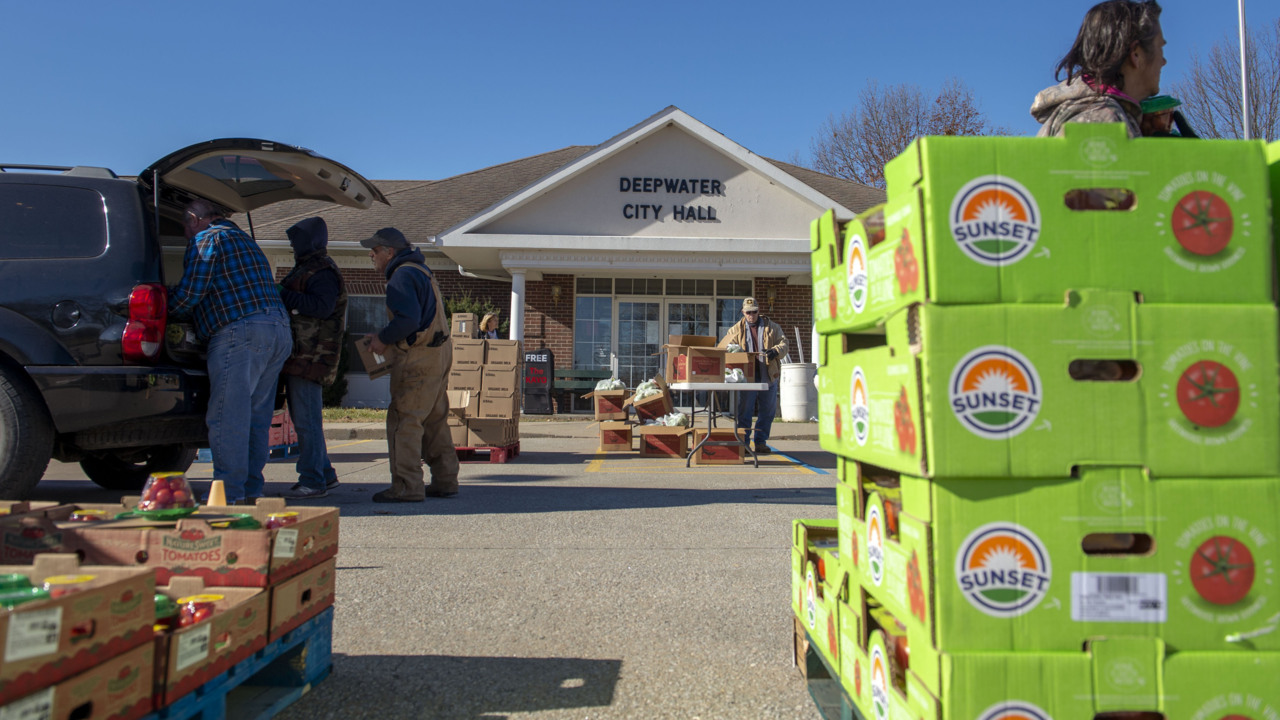
Now, he makes one visit a month to two distribution events in the county, including one in Deepwater, which Mayor Corrine Lesmeister started this year, sensing a need. The town’s pantry serves about 175 families in the area each month, Lesmeister said.
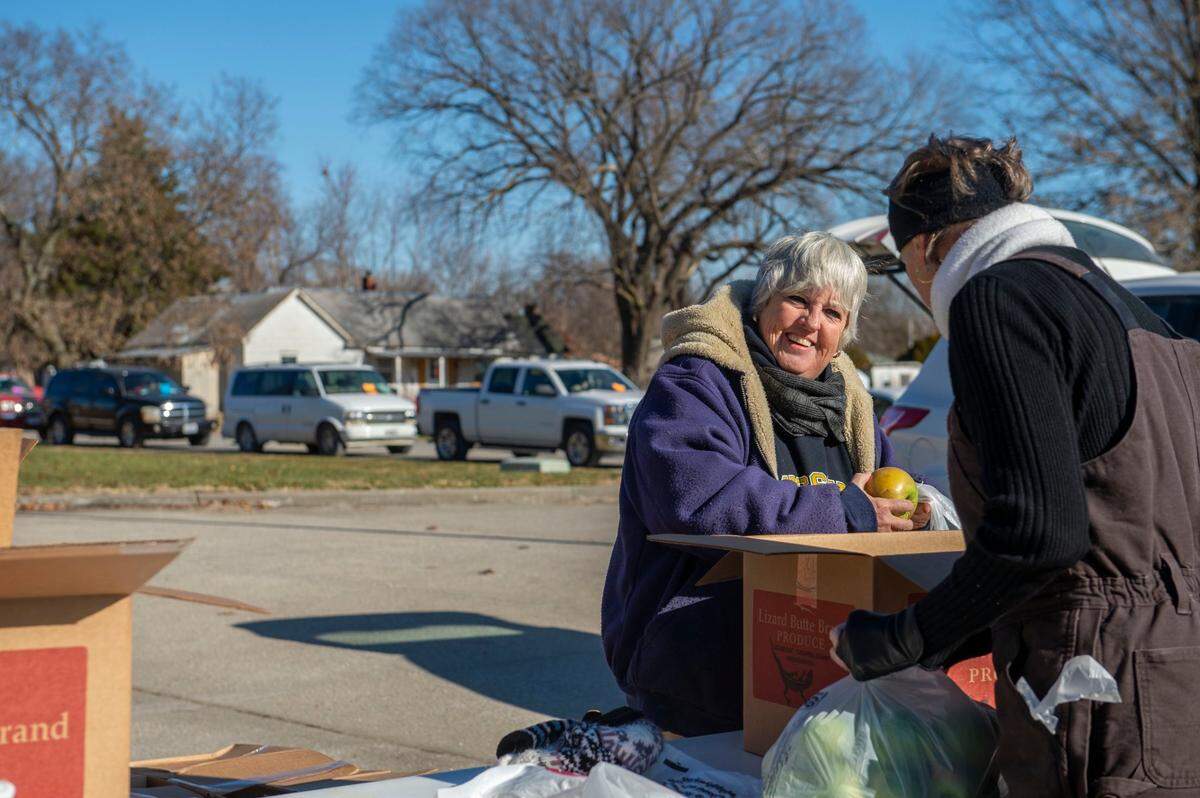
On a 30-degree Monday morning this month, volunteers in Deepwater loaded broccoli, sweet potatoes, milk and grapes from a Harvesters Community Food Network truck into the back of waiting cars. In this town of scarcely 450, a line 30 cars deep had formed before the truck even arrived.
Food banks adapting
Food banks and pantries have weathered numerous hurdles during the pandemic. Supply chain issues have created unpredictable and financially heavy strains.
Numbers of clients have risen and fallen with economic trends, as record levels of unemployment last year were at times tempered with federal aid checks and enhanced food stamps. Volunteers, too, have fluctuated as the virus forced precautionary measures.
With many seniors fearful of catching the virus while going out, some pantries have adapted their distribution models to deliver food instead or have held drive-in events.
At Open Door Service Center in Sedalia, clients used to be able to walk in and “shop” around the pantry as if it were a grocery store. Now, clients drive up to a window, a change that director Amanda Davis worries has reduced their interactions with caseworkers who could provide additional social services.
“We’re still getting it done,” she said.
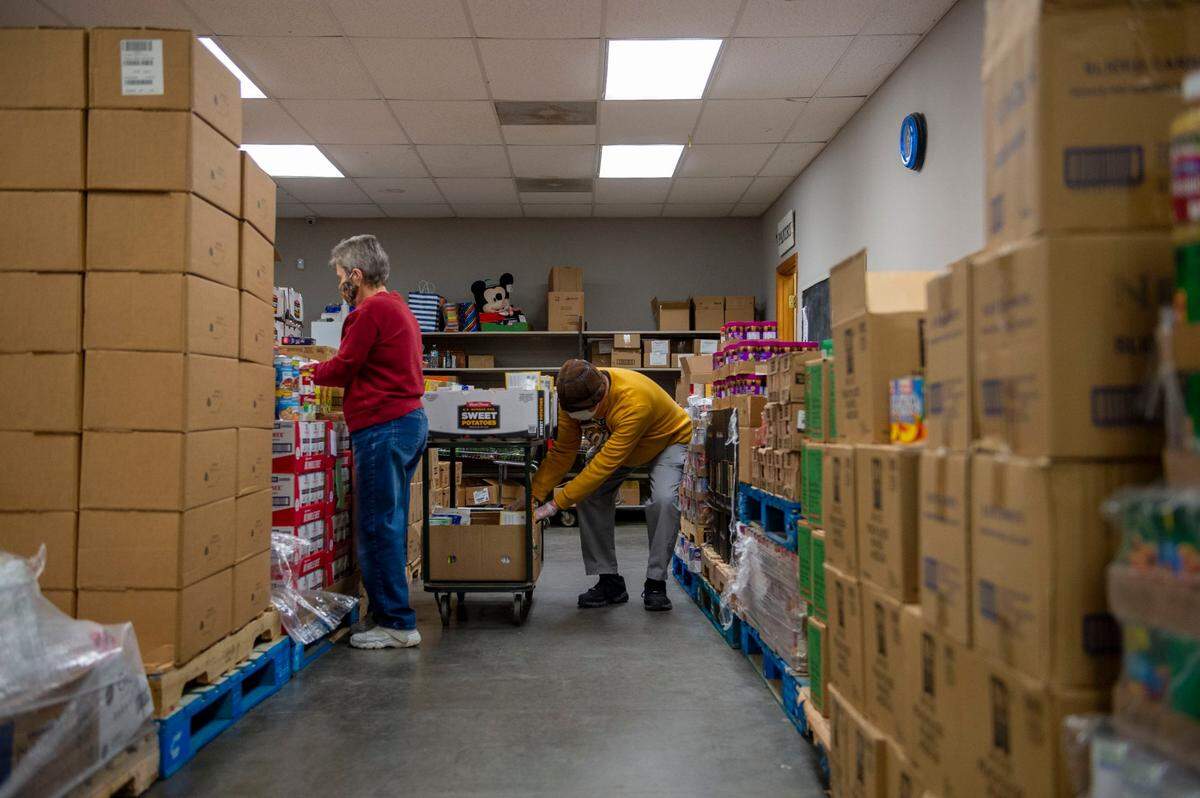
Like the pantries they supply, food banks have been forced to adapt.
The supply chain challenges have caused some orders to take several weeks to arrive or to be unavailable at all, said Katie Adkins, spokeswoman for the Food Bank of Northeast and Central Missouri, which provides about 90% of the food at Open Door.
The pantry staple of canned fruit, for example, has been impossible for the food bank to purchase lately, she said. Instead, they’ve focused more of their time on “food rescue” efforts, salvaging unbought but still-fresh produce from grocery stores.
“And we might not receive things that we normally would have gotten through donations in the past simply because they’re not there to donate,” Adkins said. “It’s primarily a monetary burden. ... Whatever you notice in the grocery store, we’re just noticing on a different kind of scale.”
While at Open Door picking up her box of groceries, Huff said she’s noticed other young people have been embarrassed to seek out food assistance. With older clients more fearful of going out during the pandemic, pantry staff said their new clients in the past two years have skewed younger.
“I’m just glad there’s places like this where they don’t care if you work or not,” Huff said. “It just helps supplement things.”