
Lawrence forced everyone out of a homeless camp. Getting them housing was not as simple
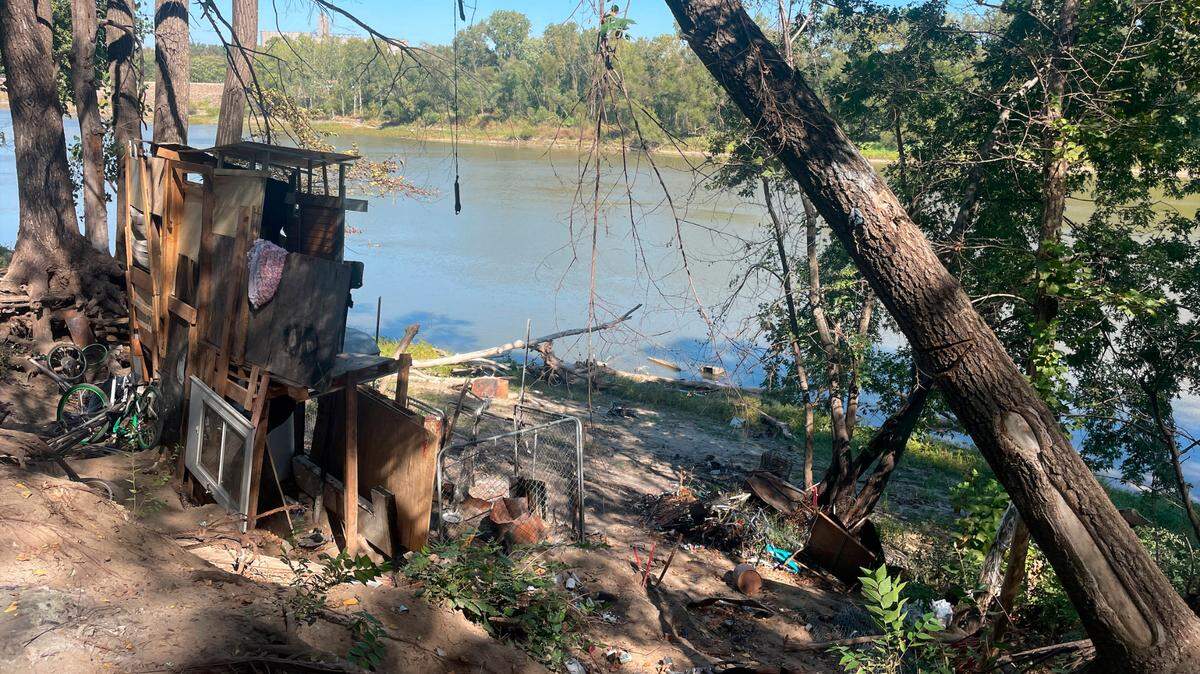
Julio Garcia was woken up at 5 a.m. on Oct. 16 to the voices of police officers outside his tent. They asked if anyone was in there, and when Garcia responded, told him that he had two minutes to pack up his things and leave.
Garcia had been living in a homeless camp behind Lawrence’s Amtrak station for six weeks, and he refused to leave when the city came on Oct. 15 to relocate everyone.
When he was finally forced out, he had to leave all his belongings behind. All he could take were his bike and the things that fit in his hands.
Garcia now lives in another homeless camp down the road from the Amtrak station that he calls The Hole. Garcia said that a lot of people from the camp behind Amtrak moved to The Hole after it closed.
The city pledged to move everyone into sheltered homelessness or housing before the camp’s closing, but that did not happen. Many of the camp’s former residents are now no closer to housing arrangements, and do not have their belongings or space to sleep.
The Lawrence Community Shelter and Pallet Village are sheltered homelessness options in the city.
Misty Bosch-Hastings, Lawrence’s Homelessness Solutions Divisions director, said that the city wants to find solutions for everyone. However, she said the city and homeless individuals do not always agree with each other.
“What they usually want is some resolution, but it’s usually not something that’s attainable right then and there,” Bosch-Hastings said.
She said that one woman wants a farm outside of Lawrence so her dogs can run around, but the city cannot provide that. So, the woman continues living outside.
Matthew Faulk, the director of housing at Bert Nash, said some people don’t want housing services yet because of underlying issues in their lives like substance use and mental health.
“There are a lot of people in the homeless community who are not ready to receive services,” Faulk said. “They are not ready to kind of think about changing their life.”
The Amtrak Camp
The Lawrence Journal-World reported that fifteen people still remained at the camp on Oct. 16 before being kicked out. Many others had already left for other camps the previous day.
Camp residents argued with officers, but the camp was eventually cleared with no arrests being made. The remaining people walked off to other parts of the city.
However, Bosch-Hastings said that 15 people from the camp were moving into housing, and three were receiving substance use disorder treatment.
Bosch-Hastings said the city would continue working with the individuals from the Amtrak Camp who did not get into shelter.
According to Lawrence’s Affordable Housing & Homelessness E-newsletter, 136 homeless individuals received case management services from Sept. 22 to Oct. 5. Many of the individuals who lived behind Amtrak have case managers.
Joe Larry Hunter, a former resident of the Amtrak camp, has a case manager. With his case manager’s help, he was able to get a housing voucher. He still hasn’t found a place to live, though.
Housing vouchers are offered through the Lawrence-Douglas County Housing Authority and will cover the cost of monthly rent up to a specified amount.
Anthony Morris, a homeless man who frequently visited the Amtrak Camp, also has a case manager from the Bert Nash Center. He said his case manager helped him get a Social Security card and ID. He needs these documents to apply for a housing voucher, which is his next goal.
Bert Nash is Douglas County’s designated community mental health center under Kansas law.
The camp behind Amtrak closed before many could achieve their housing plans. Bosch-Hastings said the camp had to close despite this because it was too dangerous.
“People will not be motivated to go and to do better and leave these groups where they are using together. It doesn’t matter if there are several women out here who have been raped repeatedly,”
Bosch-Hastings said. “This is what they know, so change is hard.”
Faulk said that many who refuse services engage in harmful and dangerous behaviors that negatively affect the community. He said these behaviors need to be addressed, and closing the camp is one way to do so.
Still, Bosch-Hastings said the camp was not closed for political reasons, and she has “no desire to try to please anybody else.”
Morris, a frequent visitor of the camp, said it was not dangerous.
“If it was a danger there’d be a lot of bad things happening,” Morris said. “I don’t know how
they can say that.”
Others living behind Amtrak said there were “bad apples” at the camp, but they usually didn’t live there and would come in and cause problems for everyone else.
Challenges for the unhoused
According to a few residents of the former camp, police were called multiple times a week for disputes between residents. Sometimes these disputes got violent.
When asked why traditional law enforcement measures haven’t been taken against perpetrators of violence in the camp, Bosch-Hastings said her team has suggested it, but women are too scared to file police reports.
The Amtrak Camp’s closing follows the closing of the North Lawrence homeless camp behind Johnny’s Tavern earlier this year. Other homeless camps remain, but Bosch-Hastings said she wants to close them all.
She doesn’t know if she will set a closing date for future camps like she did for the Amtrak Camp, though.
“I don’t feel good about setting a date,” Bosch-Hastings said. “I don’t know what to do about if I don’t put a deadline on it, then there’s some folks that just will not have that sense of urgency.”
The city faces significant challenges with getting everyone in Lawrence housed.
Faulk said that most of the housing available in Lawrence is market-rate. This is standard housing where the same is expected of everyone regardless of their background: paying rent, utilities, etc.
This presents an obstacle for homeless individuals because they have varying needs with their housing.
“We need to develop more diverse types of housing programs,” Faulk said. “Specifically, programs that cater to individuals who have serious mental illness, who have serious substance use issues, who have serious developmental issues.”
Housing solutions
A type of this nontraditional housing could be group homes with 24/7 staffing and treatmentprogramming built in. The Behavioral Health Campus behind Bert Nash is one example.
Faulk said that Bert Nash also has 10 permanent apartments and is looking to build 24 more units.
He said that being able to pay for these projects is an issue, though, because developers do not want to build affordable housing that undercuts their revenue stream.
So, the city and nonprofits will have to provide the funds to build them themselves.
Bosch-Hastings said that the city definitely needs more housing. She also believes that the city having more programs for mental health issues and topics like stress management will help people be more successful in market-rate housing.
Even just finding market-rate housing is a difficult process for homeless individuals, though.
Hunter spends large parts of his day calling various apartments to see if they will accept his housing voucher and has to go across town on inconvenient bus rides for apartment tours.
He said he’s had a housing voucher since 2020 and can’t wait for the city to do anything anymore.
“The more you have the responsibility of taking care of stuff, you'll be more focused on doing instead of waiting on them,” Hunter said. “I wait on them, and I’d be dead and gone before I get a place.”
Without viable housing options, Faulk said homeless individuals in Lawrence will continue to establish new camps when old ones shut down.
Isabella Waters is a junior at the University of Kansas from East Lansing, Michigan, studying journalism and history.
This story was originally published November 4, 2024 at 11:58 AM.