
Seeing rainbow flags everywhere this month? This iconic Kansas artist is responsible
Sex. Life. Healing. Sunlight. Nature. Magic. Serenity. Spirit.
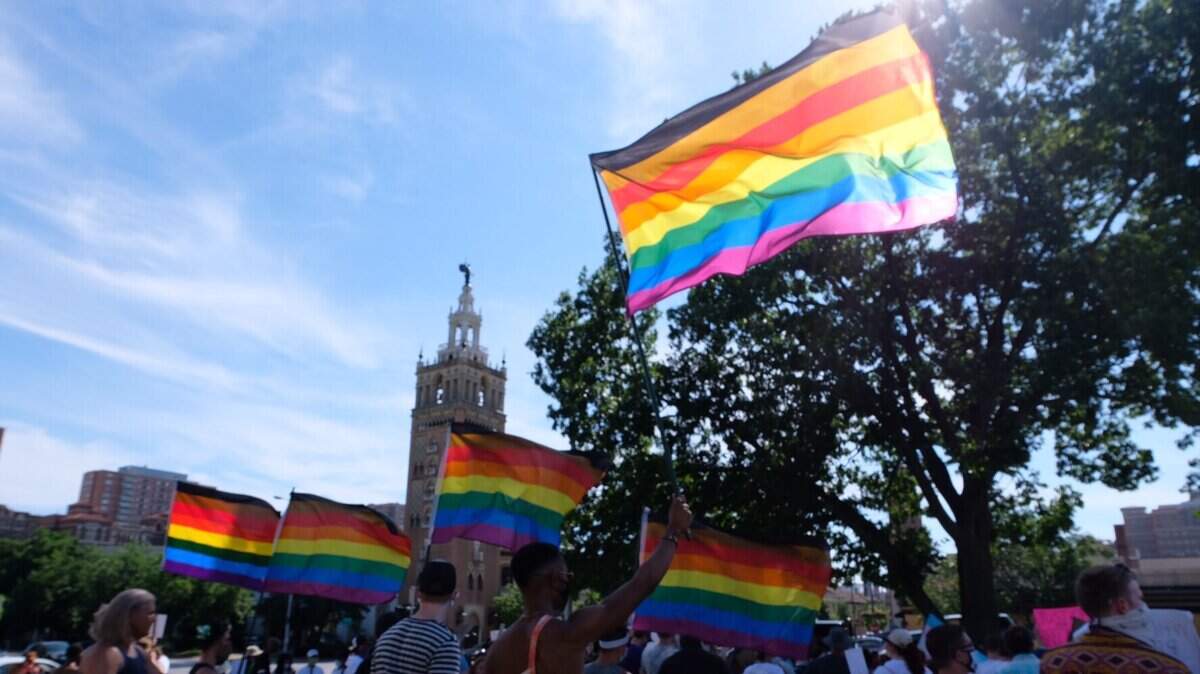
These are the meanings behind each of the eight colored stripes on the original LGBTQ+ pride flag — a rainbow symbol of love, acceptance and unity known around the globe.
While its design has been simplified to six stripes over the past decades, and more recently has been used in modern adaptations like the Progress Pride Flag, the original rainbow design transcends language and cultural boundaries.
And it exists thanks to an artist from small-town Kansas.
Who was Gilbert Baker?
Gilbert Baker was an artist, activist and army medic born in Chanute, Kansas, and raised in Parsons, both in the southeast corner of the state. His grandmother owned a women’s clothing store in Parsons, while Baker’s mother worked as a teacher and his father worked as a judge.
Growing up gay in rural Kansas in the 1950s and ‘60s wasn’t easy. According to the Gilbert Baker Foundation, his childhood affinity for art and fashion alienated him from other kids. The GLBT Historical Society quotes him as once saying, “Unlike Dorothy, when the tornado came, I ran right for it, saying, ‘Take me away!’”
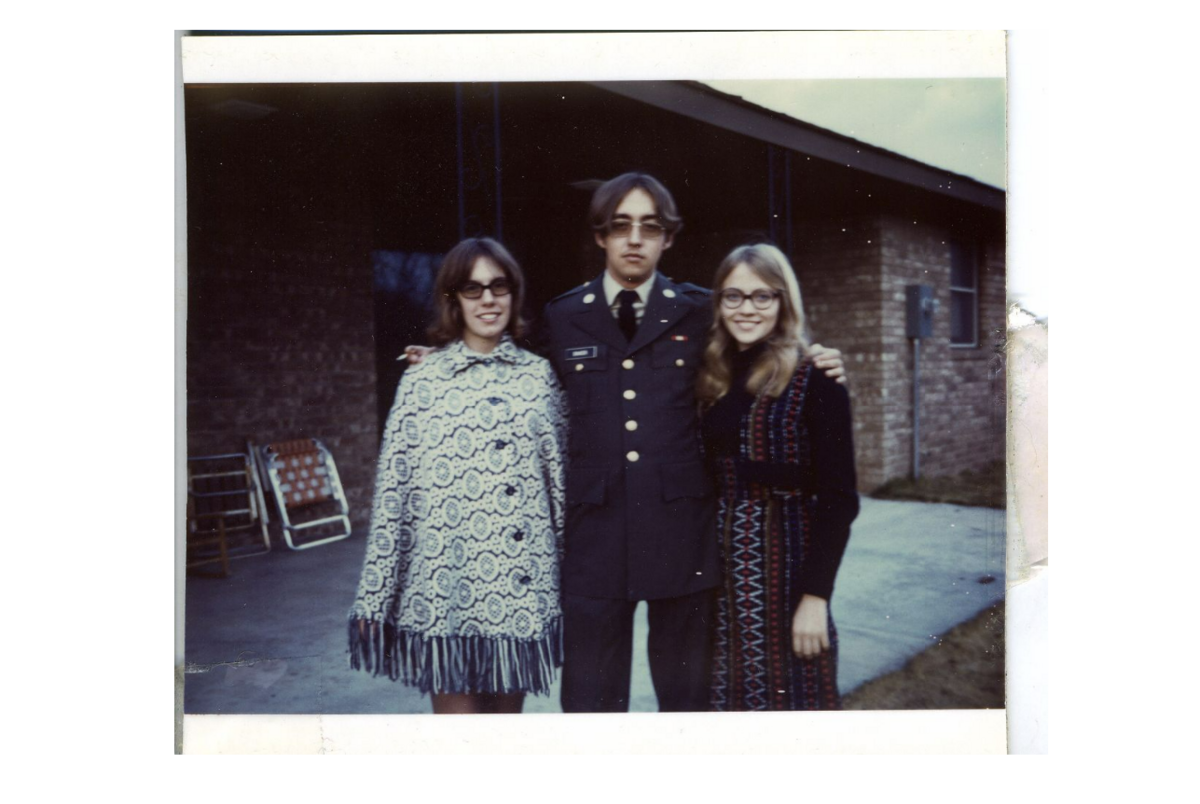
He got his chance at 18, when he joined the U.S. Army and was trained as a medic. By a stroke of luck, Baker wound up stationed in San Francisco, at the time a rare haven of LGBTQ+ acceptance and community. It was there, in the early 1970s, that he began living as an openly gay man.
The first rainbow flag
Baker quickly became integrated into San Francisco’s queer community and learned to sew, using his artistic skills to create banners for protests and parades. He joined the drag activist group Sisters of Perpetual Indulgence, which continues to this day and even has a chapter in Kansas City. His friends included Harvey Milk, the first openly gay politician elected in California.
Milk and others encouraged Baker to design a new symbol of pride for the LGBTQ+ community. According to Baker’s biography, they hoped to replace the pink triangle — a symbol reclaimed by the community after it had been used in Nazi concentration camps to identify gay men and gender-nonconforming people — with a new design crafted with positivity and inclusion in mind.
Here’s a short excerpt from Baker’s biography, “Rainbow Warrior,” wherein he describes the moment during a night out with friends in 1978 when he was inspired to create the rainbow design:
“Everyone was there: North Beach beatniks and barrio zoots, the bored bikers in black leather, teenagers in the back row kissing. There were long-haired, lithe girls in belly-dance get-ups, pink-haired punks safety-pinned together, hippie suburbanites, movie stars so beautiful they left you dumbstruck, muscle gayboys with perfect mustaches, butch dykes in blue jeans, and fairies of all genders in thrift-store dresses. We rode the mirrored ball on glittering LSD and love power. Dance fused us, magical and cleansing. We were all in a swirl of color and light. It was like a rainbow.
A rainbow. That’s the moment when I knew exactly what kind of flag I would make.”
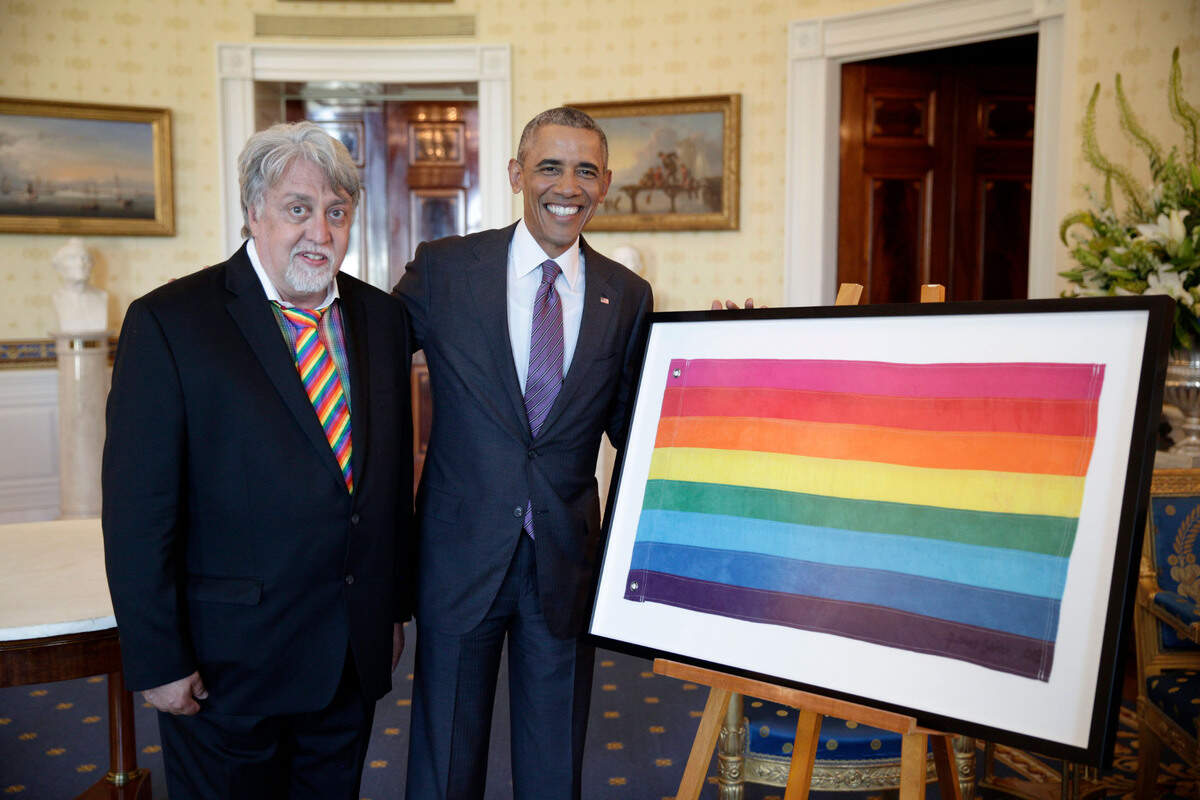
The first rainbow flag wasn’t made from mass-produced colored fabric: Instead, to save money, Baker and a group of volunteers dyed white muslin eight different colors in huge trash cans. The group waited until late at night to rinse out the fabric at a local laundromat, since using colored dyes in the communal washing machines wasn’t allowed.
The first flag created was a massive 30 by 60 feet, and it was raised in San Francisco’s United Nations Plaza on June 25, 1978. Baker was just 27 years old.
The original pride flag had eight stripes, each with a different meaning:
Pink: Sex/Love
Red: Life
Orange: Healing
Yellow: Sunlight
Green: Nature
Turquoise: Art/Magic
Indigo: Serenity
Purple: Spirit
Gilbert Baker’s influence and legacy
The rainbow flag was soon flying at Pride parades around the country, and Baker got a job at Paramount Flag Company in San Francisco. When the flags went into mass production, Paramount left off the pink stripe due to the high cost of hot pink fabric at the time.
But the seven-stripe design was difficult to display vertically, the Gilbert Baker Foundation recalls. When it was hung on light poles along San Francisco’s Market Street, the pole itself covered the middle stripe. The design was then simplified into six stripes by removing the turquoise color. This created the red, orange, yellow, green, blue and purple rainbow flag we know today.
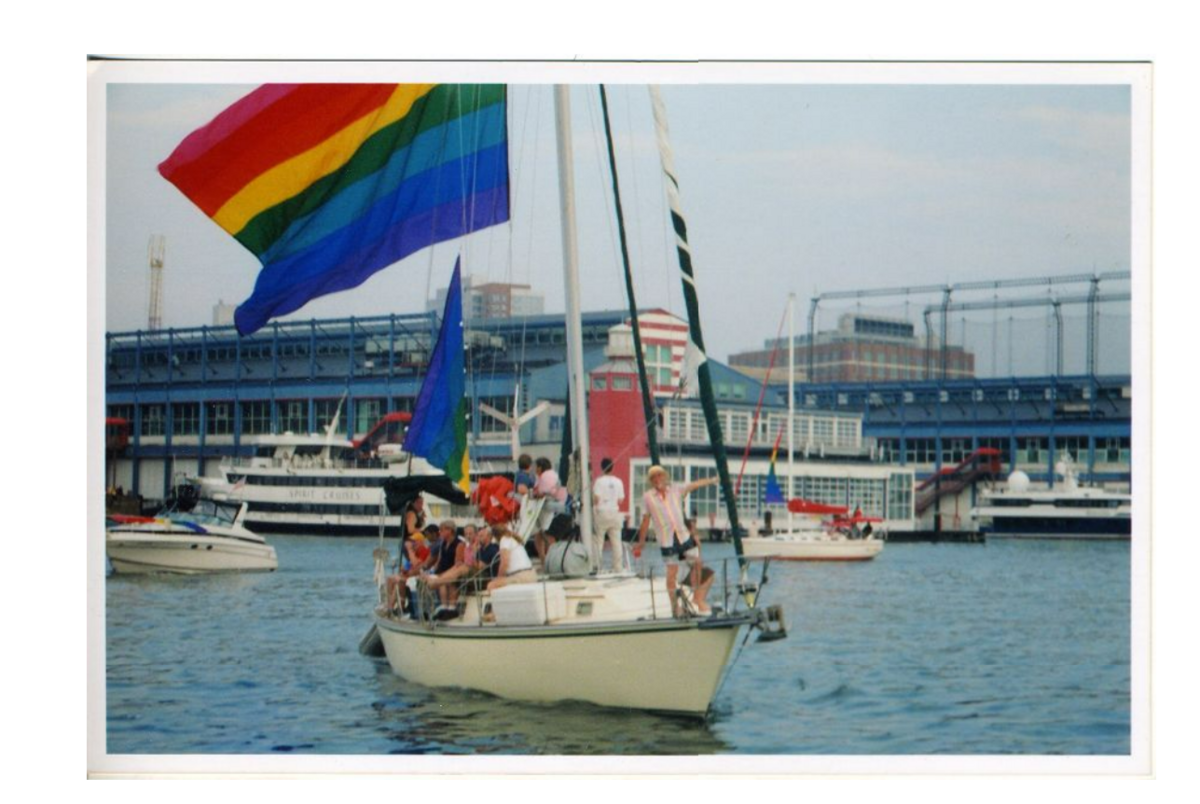
Later in his life, Baker moved to New York City and created a new version of his original rainbow flag — this time with a lavender stripe at the top to represent diversity. While this version was never widely popularized, echoes of its deliberate nod to inclusion are seen in modern designs like the Philadelphia pride flag, the Progress Pride Flag and more.
Baker died in 2017, but his legacy lives on through the rainbow’s enduring association with the LGBTQ+ community.
Do you or a loved one have any memories of Baker’s time in Kansas? Do you have more questions about LGBTQ+ history in Kansas or Missouri? Let the Service Journalism team know at kcq@kcstar.com.
This story was originally published June 13, 2024 at 2:31 PM.
.jpg)