
‘Going to be really weird.’ COVID-19 disrupts families’ Easter, Passover traditions
On Sunday morning, Karen Averitt will sit in front of her TV trying to replicate an experience she will dearly miss. She cannot recall the last time she skipped church on Palm Sunday or Easter.
But with the coronavirus response prompting closures throughout the city, Averitt, like many, will sit on her couch and watch a sermon instead. Across Kansas City, churchgoers have made plans to see their pastors on Facebook Live. Others will tune in to nationally syndicated personalities on TV.
Averitt will watch someone with a more personal connection.
Her father.
The Rev. Marvin Kuhlmann died in 2007 after serving as a pastor for 33 years, the final 16 at Holy Trinity Lutheran in Grandview. After his death, the church copied some of his sermons onto DVDs and gifted them to his daughter.
Karen Averitt has never had more use for them.
“It will be different — a huge component of Christianity or any faith is the gathering with other people,” Averitt said. “But my dad’s words have given me a lot of encouragement these days.”

The shutdowns prompted by COVID-19 have changed our daily lives, a reality made all the more real to many with long-standing holiday traditions that will now take the year off. No large gatherings for Easter brunch next weekend. A Seder feast — to be held on the first night of Passover on Wednesday — will entail immediate family only.
But across living rooms in Kansas City, the celebrations will carry on in some form or fashion.
Uniquely so. Averitt has picked out a DVD for Easter Sunday, a sermon with a message her father delivered. She’s recently come to appreciate it a little more.
The theme?
We have nothing to fear.

‘It’s going to be really weird’
The Holy Week commences Sunday in Christian religions, and for her entire life, 32-year-old Sarah Haas has celebrated just about every one of its traditions.
But she has her favorites. On the final Saturday before Easter, she gathers with cousins, aunts and uncles and dyes eggs. Her grandmother started the event, and after she died, it was passed along to an aunt. Years later, the group of cousins now stand back and watch kids handle the decorations.
In 25 years, they’ve never taken a year off.
They hope not to start now.
Next weekend, a group of about 20 will attempt a video call, and if all goes well, they will each continue the practice that brought them together for a quarter-century.
“It’s going to be really weird not doing it together in person,” Haas said. “But we’ll try to make do.”

When they can.
Haas and her husband, Kyle, recently had their second kid and first daughter, one-month old Collins.
They had planned to have Collins baptized at St. James Catholic Church in Liberty before Easter Sunday, but that’s been canceled. They had planned to visit the Easter Bunny, so instead they had a family member put on a costume and come to the house.

But cancellations-be-damned, they will still dress up for the holiday next weekend. The kids, too — Collins in her first dress, 2-year-old Finn in his searsucker jacket.
The audience? Just Mom and Dad.
“This whole situation has been surreal,” Sarah Haas said. “You want to look forward to something, and Easter is usually something to look forward to. A big thing with me is traditions and family, and it’s going to be hard not celebrating together in person. Thankfully for technology, we’ll do our best.”
Meals-to-go
Cathy Levin has been cooking and catering kosher food for three decades. One of her busiest days falls at the beginning of Passover with the Seder, a Jewish ritual feast.
She had planned to cater food Wednesday for a community at Temple, Congregation B’nai Jehudah.
Plans change. The coronavirus has ensured that much.
Levin is still preparing and cooking her food, which, to adhere with Passover guidelines, is unleavened. They can be complicated meals. Ingredients aren’t always easy to find, especially now.
But Levin is making 200 meals through her service, the Kosher Connection, a project sponsored by Rabbinical Association of Greater Kansas City. More than 50 families placed orders, reserving specific times to have them placed in the trunks of their cars.
The meals will be prepared at Congregation Beth Shalom synagogue in Overland Park
“We are worried about the people who are not wanting to get out and shop for the food and get everything they needed because it’s just one of those holidays that’s very specific for dietary,” Levin said. “So at the last minute, we decided to try to do this.”
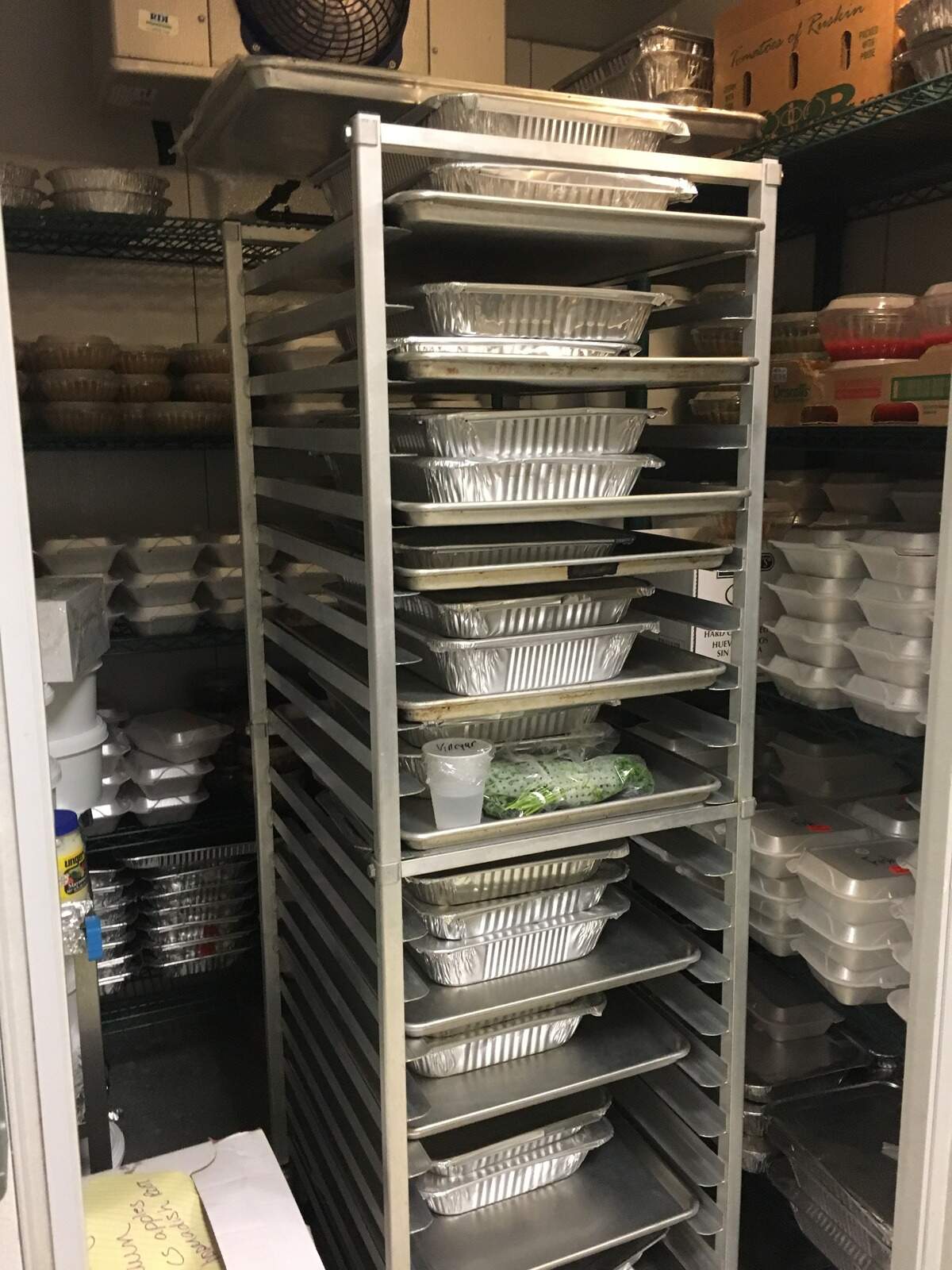
Rachel Krantz of Leawood will stop by for her meals. She normally hosts a Seder for 15-20 people and does all of the cooking. It’s a labor-intensive day, with Passover directions calling for a complete sweep of the kitchen, refrigerator and pantry. She replaces all of her dishes.
“I sometimes say, ‘This is a lot of work. I wish I didn’t have to do all this,’” Krantz said. “Now that I actually don’t have to do it, it just doesn’t feel right. It all feels numb this year.”
10,000 Easter eggs
The $100 gift certificate draws the most attention in the end, with some fortunate hunter waving it toward the crowd like a first-place trophy.
But the Louisburg Cider Mill’s Easter egg hunt isn’t one prize.
It’s 10,000 of them.
For nearly two decades, the organization has hosted a community egg hunt, growing so large that company president Josh Hebert and his wife had to relocate it to their family farm. They spend four hours hiding the 10,000 eggs across more than 20 acres of land.
And then they sit back and watch more than 500 people scurry for the prizes.
“People just go for it,” Hebert said. “It’s pretty fun to see. You just get out of the way. The competition gets pretty fierce.”

Not this year, of course — the egg hunt will take a hiatus for the first time in 19 years.
Candidly, Hebert worries about the business’ revenue, too. The cider mill is open year-round, but foot traffic generally picks up around Easter as the weather improves. Instead, it’s slow for the foreseeable future.
He and his wife purchased the business in 2015. His wife’s grandfather had owned it since 1975.
“I came in knowing a lot about the traditions that were already here,” Hebert said. “Part of the reason I came was I wanted to continue those things. It’s become a lot of fun. We’ll miss it this year.”
Watching Mass from home
Earlier this week, Jennifer Morris called her mother, and like any other year, they talked about Easter dinner.
This time, with a twist.
The custom for family holiday dinners dates back longer than Morris can remember. On Christmas, she brings potatoes. On Thanksgiving, it’s pie.
On Easter, she arrives with strawberries. Mom brings the ham.
“There’s usually more than 20 of us, and we all bring our own thing to share,” Morris said. “Now we’ll all have to put together a whole meal on our own, I guess.”
In a typical year, Morris would attend church four times over the next eight days — Palm Sunday, Holy Thursday, Good Friday and Easter Sunday.

Lately, she’s been attending Mass all over the country via the internet. Went to Mass in Washington D.C. this week, joined there by a man from South Africa. That was kind of cool, she thought.
On Palm Sunday this weekend, she will still drive by her church, which is distributing customary palms, asking people to stay in their vehicles when they pick them up. She always displays hers in the house until next Palm Sunday, an observance of the welcoming of Jesus to Jerusalem.
For more than 20 years, Morris has sung in her church choir. Nothing, she says, better raises the level of praise. “It’s like praying twice.”
So while she watches Mass — in Kansas City, Washington D.C. or anywhere else in the world — she will stand up from her seat and do what makes has made her feel most comfortable during an anxious time.
She’ll sing.
This story was originally published April 5, 2020 at 5:00 AM.