Johnson County District Attorney Steve Howe, Democratic challenger, advance in primary
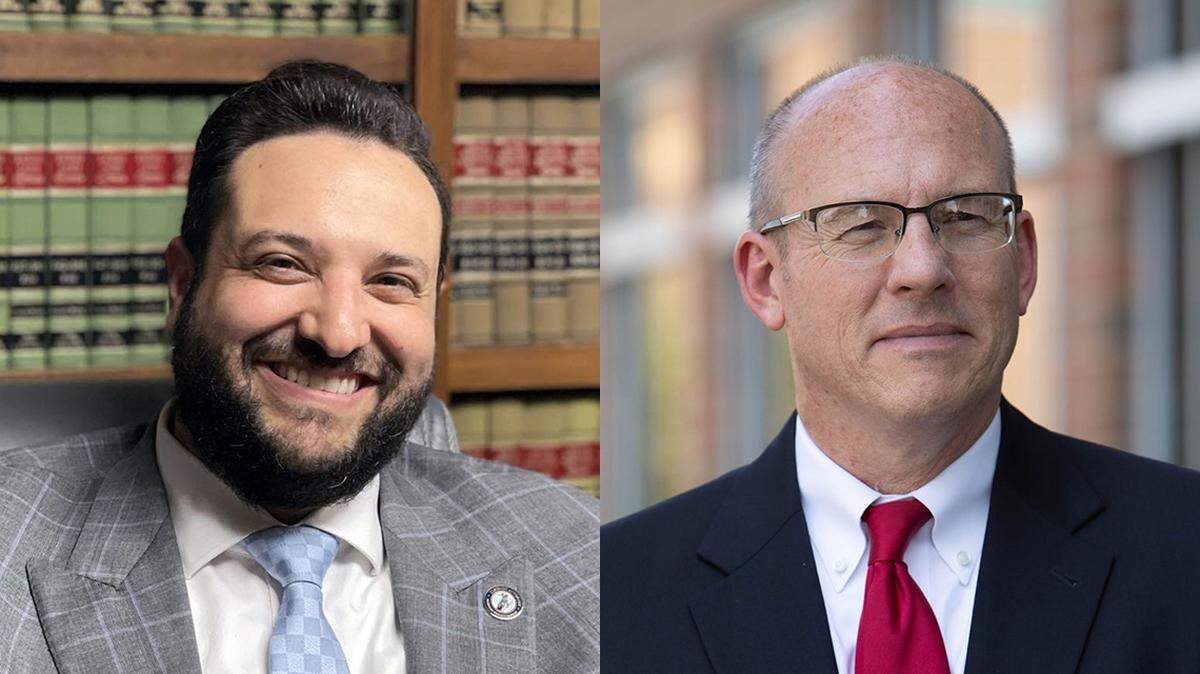
In his first Republican primary challenge since taking office, Johnson County District Attorney Steve Howe on Tuesday won his race to advance to the November election.
At about 9 p.m. Tuesday, Howe handily won with 26,365 votes, or 64%, defeating David Greenwald, who currently serves as the Douglas County deputy district attorney, with 14,626 votes, or 36%, according to unofficial final results.
In a tight Democratic primary race, Vanessa Riebli, a longtime prosecutor who spent more than two decades in the Johnson County DA’s office, took the lead with 16,511 votes, followed by second-time candidate Zach Thomas, a criminal defense attorney, with 16,280.
This election is the most competition for his seat that Howe has faced. In 2020, with 52% of the vote Howe defeated Thomas in the general election, the first time Johnson County voters had a decision to make about who would serve as the county’s top law enforcement official in 12 years.
Howe began his career as a prosecutor in 1988. He worked his way up the ranks in the Johnson County District Attorney’s Office before former district attorney Phill Kline took over the office in 2007. Howe ran shortly after in 2008 and defeated Kline in the Republican primary before winning the general election against Democrat Rick Guinn.
Howe touted having the most experience as a prosecutor and supervisor in his primary, while saying he has continued to play a role in high-profile cases and investigations. Over his most recent term, he said his office has tackled growing issues, such as internet fraud cases, and has made mental health support a more significant component of his office, including the development of a drug treatment court and behavioral health court.
Both treatment courts offer defendants with lower level offenses opportunities for diversion, counseling and other alternatives to typical incarceration.
His Republican challenger Greenwald criticized Howe for being slow to embrace treatment courts, saying that Johnson County was behind its neighbors in adopting them. He pointed to a debate in the 2020 election, with Thomas who was pushing for the treatment courts, where Howe said, “Drug courts aren’t some magic elixir that’s going to solve all the world’s ails.”
Greenwald, who has led the Douglas County DA’s drug unit for the past few years, also argued Johnson County should more aggressively go after fatal fentanyl overdose cases, saying too few deaths related to the extremely potent drug have resulted in charges.
Howe countered that such fentanyl-related cases are extremely difficult to prosecute. But argued Johnson County has been ahead of others in the Kansas City metro in charging such cases, and has brought more to trial than any other county in the state.
The Democratic challengers both took jabs at Howe over his leadership.
Riebli, who worked in the Johnson County DA’s office for more than two decades including as a supervisor before leaving for private practice, criticized Howe for not personally trying many cases in court. She argued that a strong leader should set an example by taking on a caseload of difficult cases.
She also voiced frustrations with Howe’s decision to restructure the office during the pandemic. Attorneys were previously assigned to specialized units, such as traffic or sexual assault cases. But Howe moved to a new system of assigning attorneys to different courts, where a group of prosecutors would tackle the caseload under a specific judge, from drug cases to homicides.
Howe said he made the change as his office was dealing with a backlog of cases from court shutdowns during the pandemic. He said he has kept heads of each unit, but the trial team system made it so prosecutors didn’t have to run to different courts, and “allowed us to survive the double caseloads and backlog that we experienced. It’s really proven to make us more efficient in handling cases.”
But Riebli argued that it has resulted in prosecutors losing important experience specializing in certain cases.
Both Riebli and Thomas said several prosecutors and staff members have left in recent years, calling it a result of a workplace culture problem and a lack of opportunities for attorneys to move up. Howe countered that he mostly lost staff during typical pandemic-related turnover and that he currently has no attorney roles open.
Thomas campaigned on bringing more transparency to the DA’s Office, saying that more data on convictions and other measures should be publicly available. He hoped to build on his first campaign, where he pushed for the establishment of a drug court, plus argued for greater pay equity as some female attorneys said there was an unfair gap — something Howe has since added funds to address.