Affordable housing, size of city council on the line in heated Johnson County election
Editor’s note: Reality Check is a Star series holding those in power to account and shining a light on their decisions. Have a suggestion for a future story? Email tips@kcstar.com.
A chaotic past year in Prairie Village, first sparked by the city discussing affordable housing initiatives, is culminating in one of Johnson County’s most contentious elections this fall.
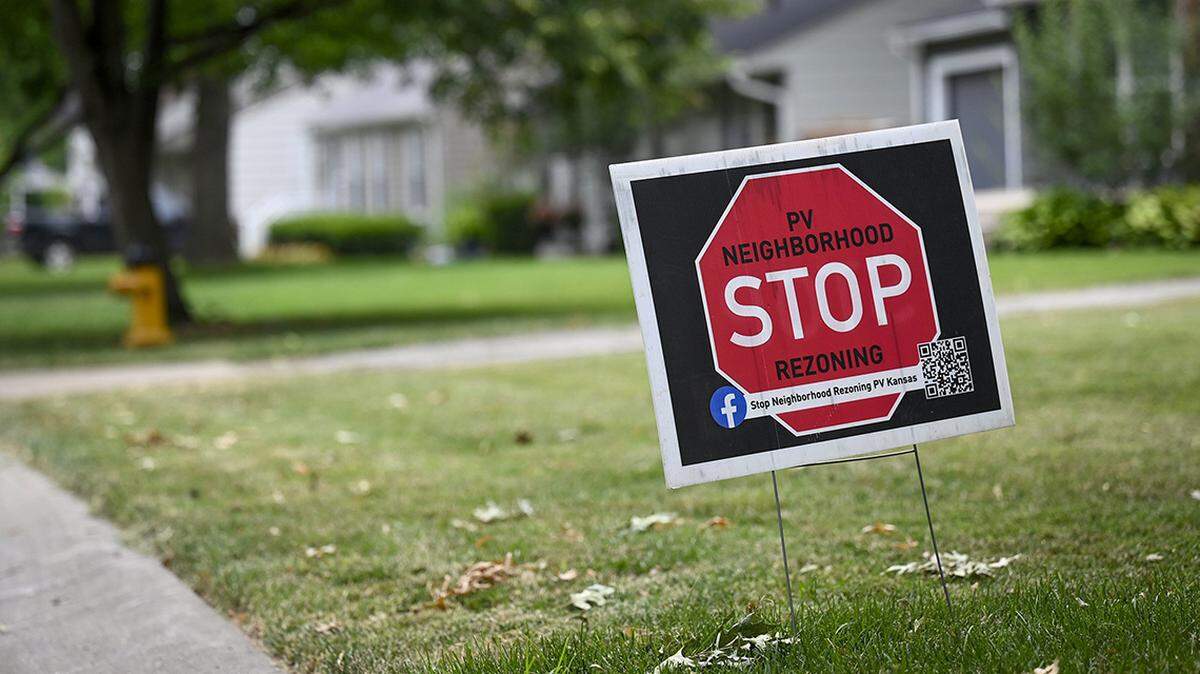
The Nov. 7 election comes as the city considers ways the pricey suburb could allow more affordable housing, a conversation that has sharply divided the community. The debate has transformed into a deeper political battle, leading to two clear factions of candidates running for half of the City Council seats on Tuesday.
The city remains tied up in a legal battle with a group of residents who call themselves PV United — first formed to oppose any zoning changes aimed at allowing more affordable housing — that filed petitions this fall pushing to let residents vote on limiting mayoral powers and cutting the council in half. The idea was especially controversial because it would have resulted in ejecting six council members from their seats mid-term.
Citing legal issues with the petitions, the city took the issue to court, asking a judge to rule on whether they are valid. But that wasn’t resolved in time for any such initiative to be placed on the ballot next month. Now, both sides are appealing a judge’s ruling, which deemed two of the group’s three petitions invalid.
PV United supports a candidate in each of the six council races on the ballot Tuesday. They include write-in candidate Edward Boersma, and newcomers Lori Sharp, Tyler Agniel, Nicholas Reddell and Kelly Wyer.
“Prairie Village is one of the most desired communities in the country,” Agniel said. “The effective and efficient processes related to zoning have worked for years and I believe they should be protected. Prairie Village residents deserve preservation, progress and stability.”
The newcomers are challenging incumbents who say, as home prices and property taxes continue to climb, the city must take action to maintain an affordable housing stock for aging residents and working families. The incumbents are Inga Selders, Bonnie Limbird, Piper Reimer and Ian Graves. Newcomer Ciara Chaney, who is running against Reddell, also has supported continuing the housing discussion.
“Housing affordability is a concern that’s growing at an alarming rate. Long-time residents are being priced out of their homes and families looking to purchase a home in our community are finding it nearly impossible as the cost of even modest sized homes has skyrocketed,” said Selders, who is challenged by Mark Samuel on the ballot, although PV United supports the write-in candidate.
The election will send a clear message as to whether the majority of voters want to see the council prioritize solutions to the lack of affordable housing in Prairie Village, where average home prices topped $536,000 last year. Or whether voters want to see the city’s zoning laws stay the same, in hopes they’ll have more opportunities to voice their concerns before housing projects go through City Hall.
Polls are open from 7 a.m. to 7 p.m. in Johnson County on Tuesday.
Where candidates stand on housing
Political battles shadowing the city over the past year all started with the housing debate.
Officials argue the city needs more options for working families being priced out of the city. They’ve been exploring amending zoning codes that largely prohibit the construction of triplexes, small apartment buildings, row houses and courtyard housing — what developers call the “missing middle,” or anything other than single-family homes and large apartment complexes.
“I think it is appropriate to amend zoning laws where it makes since to do so. Our zoning laws for apartment, condo, mixed-use, and commercial zones need obvious updates to them that can induce the construction of additional units,” Graves, an incumbent, said in an email. “With more reasonable constraints on them than we have now (tight restrictions on housing unit-per-land-area), we can achieve new pathways to less expensive units in new apartment rebuilds.”
Some say it’s beyond time for Prairie Village to adopt more inclusive housing policies, pointing to the city’s history of being developed by J.C. Nichols, and like other northeast Johnson County suburbs, with racist housing covenants.
But the zoning debate was met with immediate and intense opposition from residents who worry the city is already built and too dense to add multi-unit housing they fear would change the character of their neighborhoods.
Selders said the city “has been engaged in a thoughtful and deliberative process” and continued to listen to resident concerns. That included the council agreeing to no longer consider allowing multi-family units in single-family neighborhoods.
But opponents, like Sharp, argue that “the current process works” and “facilitates and encourages neighbors to work with neighbors and I believe that is important to protect as a community.” She worries residents would lose opportunities to voice opinions on apartment proposals if they no longer need rezoning approval from the council.
Sharp’s husband, Rex Sharp, is the attorney representing PV United.
Push to restructure government
It was too late to get any ballot initiatives on the Nov. 7 ballot, but it’s possible the city could still discuss changing its form of government.
PV United pushed for petitions that would have abandoned the city’s mayor-council form of government, limited mayoral powers and cut the 12-member council in half. It’s unclear whether those efforts will continue beyond Tuesday’s election.
Chaney, a newcomer, said, “Dismantling the form of government that has served this community well for nearly 75 years is significant and disruptive, so any change like this should be done in a thoughtful, deliberate and transparent process. Only then can we put forward a thorough, legal proposal that our residents can read and understand before it’s put on a ballot.”
Reimer, an incumbent, acknowledged that Prairie Village does have a large City Council for its population size, with 12 members, the same number as Kansas City and Overland Park. She said if there is community support for restructuring the government, “then I think we should 100% be having that conversation.”
But she said she has a “hard time understanding why the community would choose to have less representation.”
Agniel said that “restructuring the city council is not high on my priority list,” but, “if residents continue to seek and ask for change I do think it is the responsibility of the council to heed those concerns and be willing to put it up for a vote.”
And Limbird, an incumbent, said she would be open to the discussion, but “not a full 50% reduction” on the council.
“That would not be fair representation for our residents,” she said in an email. “Keeping a 2 representatives-per-ward system would be key, and I’d be open to other ideas for discussion too. However, it’s important to note that it costs Prairie Village taxpayers nothing to have a larger council since we are not paid, and they get better response times, more experience and perspective ‘at the table,’ and more frequent opportunities to have their voice heard at the voting booth every 2 years instead of just every 4 years.”
Candidate rating retracted
An odd twist recently came ahead of the Prairie Village election when the Mainstream Coalition, a nonpartisan political organization, retracted its candidate rating for Sharp.
Mainstream scores local candidates based on how they respond to a survey and whether they align with the organization’s values. Candidate ratings, which are often touted by those who receive high scores, are automatically calculated using a scoring matrix based on answers to multiple choice questions, Executive Director Michael Poppa, mayor of Roeland Park, said.
Sharp received a 95% out of 100%, a score that was published on the organization’s website. But earlier this month, Mainstream announced that because leaders felt her score did not align with her campaign platform or values, they would retract her survey and rating.
“Her platform seeking to limit representation in government and overturn the will of voters is not consistent with Mainstream’s values,” Poppa said in a release.
He said the organization reserves the right to pull a rating when it does not correlate with a candidate’s public record.
Sharp said in an email to The Star that she stands by her answers that “have publicized for months. I answered the questions honestly. Mainstream accepted my answers for months. I never received so much as a phone call from them questioning anything about my answers or stances on issues.”
The survey largely asks candidates whether they agree with statements provided by the organization.
On the survey, Sharp answered “yes” to questions about whether local government should play a role in climate change, gun control and racial equity, for example. She agreed with the survey’s statement that, “Every Kansan has the right to pursue an authentic life free from oppression or discrimination on the basis of sexual orientation or gender identity/expression.”
She lost five points for disagreeing that the local governing body should play a role in securing access to health care.
According to the Shawnee Mission Post, Sharp mentioned her Mainstream rating in her campaign mailers, which also stated she is focused on nonpartisan leadership in Prairie Village and is “supported by key Democrat leaders.”
Sharp is supported by the Johnson County GOP on its candidate list. Her opponent, Limbird, is backed by Democrats.
You can see who has endorsed the rest of the candidates in The Star’s voter guide to the Johnson County municipal elections.
This story was originally published November 3, 2023 at 12:56 PM.