Is Johnson County affordable housing war about protecting cities or keeping people out?
Four attempts to recall the mayor. A drive to cut the city council in half. And a push to restructure the city government to limit mayoral powers.
That’s only the latest in what has been an escalating firestorm in Prairie Village — sparked by city leaders considering zoning changes to allow for more affordable housing. Officials have debated adjusting laws to pave the way for duplexes, small apartment buildings and other cheaper options for families struggling to buy a home in the city known for Cape Cod houses torn down to make way for McMansions.
But the idea has ignited fierce opposition from residents who argue the city of 23,000 people is already built out and too dense to welcome the multi-unit housing they fear would crowd the tree-lined suburb and take away its neighborhood feel. Red “Stop Rezoning” signs have been cropping up in front yards across the city, where average home prices topped $536,000 last year.
Homeowner Connie Link McKenzie said many residents want to stop the city from being “destroyed by the greed of outside developers.” She said they feel ignored, which has “eroded public trust in our mayor and city council.”
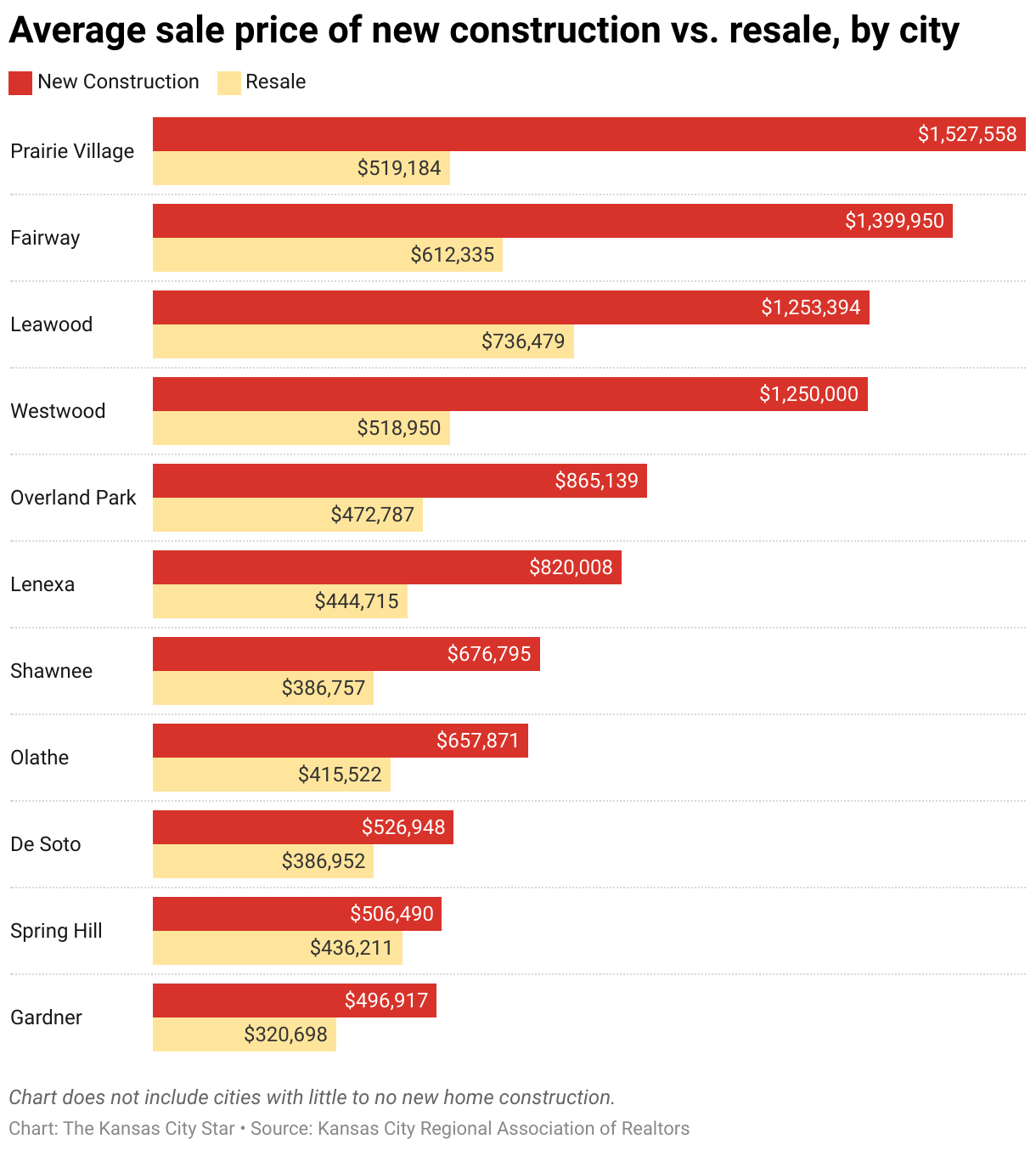
Prairie Village is the most recent and extreme example among a number of municipalities finally trying to address an affordable housing crisis. As home values skyrocket and average home sale prices countywide soar above $500,000, Johnson County has become increasingly out of reach for many working- and middle-class families.
But developers told The Star that neighborhood opposition remains the biggest hurdle to easing the crisis, in a county where even luxury-priced apartments are regularly protested over fears that such projects will bring crime, traffic and falling property values.
“After we got a loan approved from the Johnson County Commission, I got a ton of hate emails and phone calls,” said developer Jason Swords, who, with a $1 million loan from the county, is building a Shawnee apartment complex aimed at residents making about $60,000 a year. “I had people screaming at me, acting like I’m out there twirling my evil mustache.
“That’s the biggest problem, is people don’t realize that you’re really talking about housing for teachers, firefighters, police officers, restaurant workers, hotel workers.”
In Olathe, neighbors are coming out in force this summer to oppose Habitat for Humanity’s proposal to build 14 single-family homes for lower income families. The project received nearly $1 million in federal COVID relief dollars from the county.
“I think there’s always going to be hesitation and caution when you talk about affordable housing,” Johnson County Commission Chairman Mike Kelly said. “But we’d be remiss, and I think disingenuous, if we didn’t address where some of those preexisting connotations come from. Johnson County, like other communities, has a history of redlining, and we still bear those scars today. We need to not be afraid of addressing that.”
In Prairie Village, the debate has morphed into an intense political battle. Johnson County District Attorney Steve Howe has rejected requests to recall Mayor Eric Mikkelson, partly because the mayor sits on the board of United Community Services, which promotes affordable housing solutions.
The “Stop” group is collecting signatures on petitions to limit rezoning, strip the mayor of powers and halve the 12-member council: The six members elected in 2021 would automatically lose their seats. They hope to get the initiatives on the November ballot.
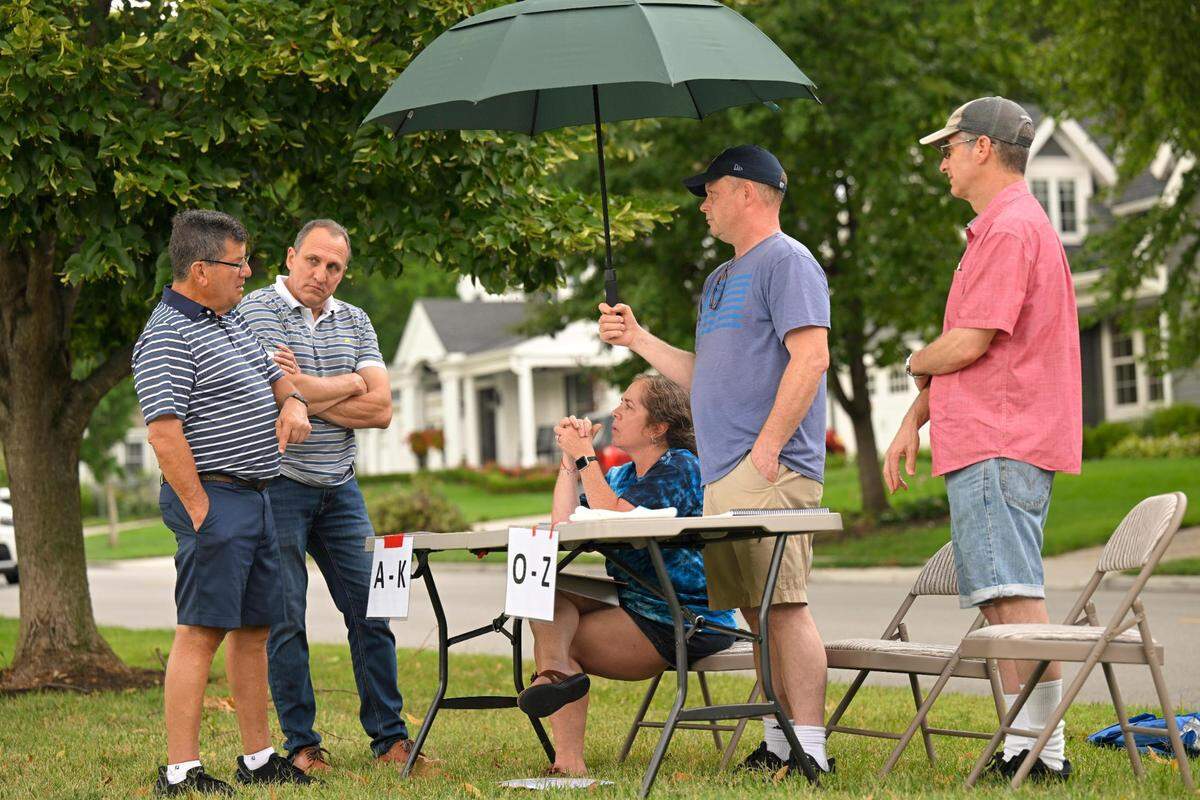
Council members argue they’ve bent over backwards to hear the group’s concerns, and a rival faction of residents, Prairie Village for All, has organized to support the city’s plans.
“This clearly is about a lot more than housing. You use housing as the veil,” Councilman Cole Robinson told the “Stop” group at a council meeting this month. He is one of the six members who would lose their seats if the council was slashed, which he called “unconstitutional. It’s undemocratic. And it’s very radical that you would seek to, on this ballot, overturn the election from two years ago.”
More county and city leaders are showing greater interest in addressing the problem. Johnson County has hired its first-ever housing coordinator, launched new incentives for developers and allocated thousands of dollars to affordable housing projects. And officials are finally making progress on a permanent homeless shelter.

More cities are offering property tax rebate programs for low-income residents, or at least considering doing so. And along with Prairie Village, other cities like Lenexa, Leawood and Overland Park are exploring updating city codes to allow for a wider variety of housing. Some officials anticipate they’ll see similar backlash.
The work is a start, but still only a drop in the bucket, officials admit. The high price of land, construction costs and fees, rising property taxes and restrictive zoning laws often stop developers from taking on small, multifamily and affordable housing projects. And that’s not counting any neighborhood opposition.
At its core, the conflict gets at what Kansas’ most affluent and increasingly diverse county will become. In Prairie Village, elected officials and residents acknowledge the city won’t be affordable for everyone. And developers aren’t exactly walking into City Hall with ideas for affordable housing projects in the city where the only way to build is to redevelop existing property, officials say.
There and throughout Johnson County, leaders are debating whether their cities will become more exclusive and continue to price out many who work and live there. Or can they accept change and work to be attainable for families starting out and retired homeowners aging in place?
As the question causes upheaval among Prairie Village residents wanting to overhaul their city government in a tense prologue to the November election, Councilman Dave Robinson summed it up this way at a recent meeting:
“This job has too much damn drama.”
Johnson County home prices soar
Jadie Veatch, a 28-year-old technical writer who rents in Stilwell in south Johnson County, has been struggling to buy a home in the county for two years.
“I love the area. I grew up here,” she said. “There’s a level of comfort to it.”
At first Veatch hoped to find a home with two or three bedrooms and a yard for about $200,000.
“Those houses, at least in Johnson County, are pretty well non-existent,” she said.
As prices and interest rates increased, she started saving more and raising her price range. Recently, she was looking at a 1959 Overland Park three-bedroom, two-bathroom home in need of updates. It was priced at $300,000 — but sold in 48 hours for $325,000.
Realtors say the inventory remains tight on just about anything priced under half a million dollars.
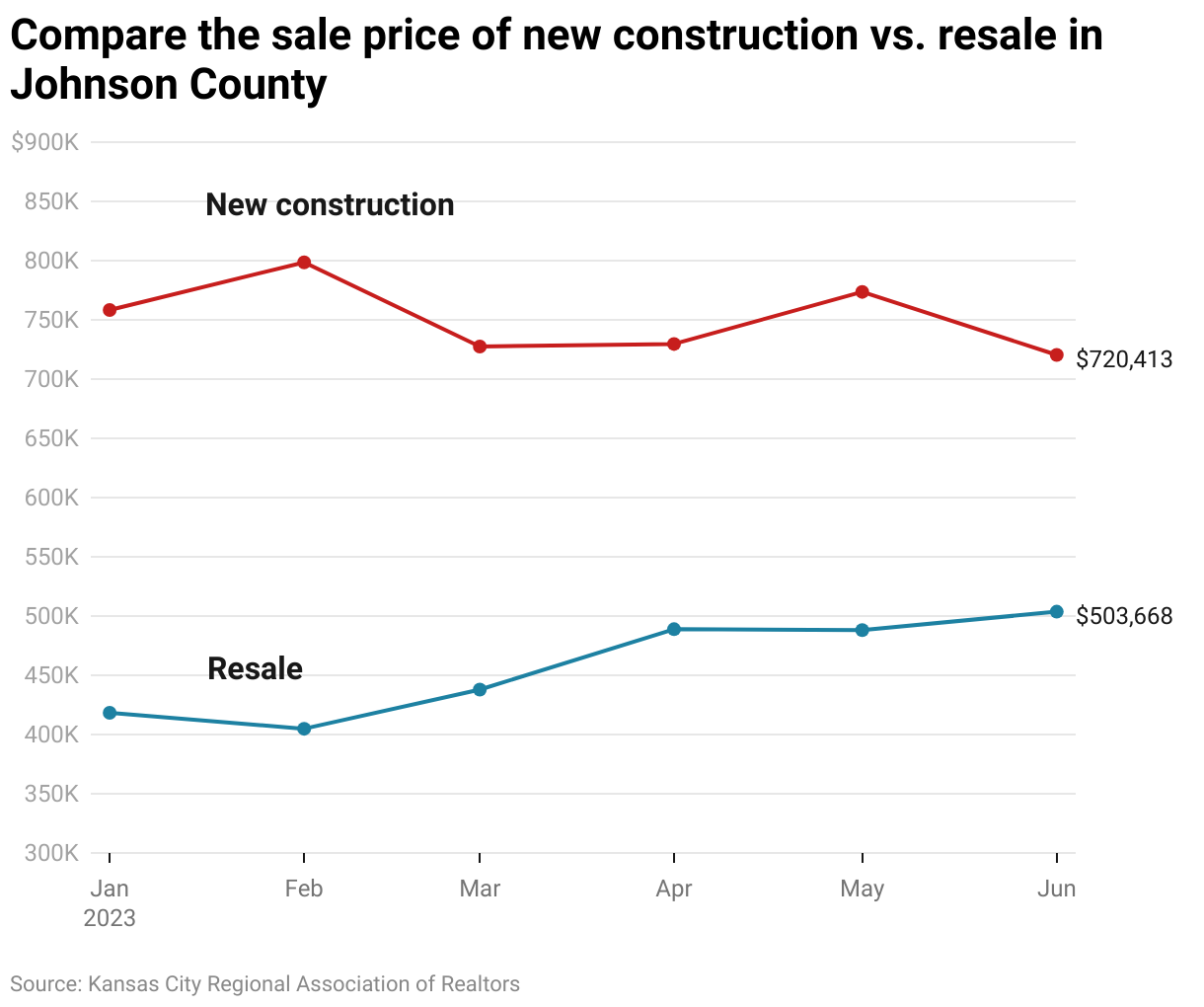
The average home sale price has hovered around $500,000 in Johnson County for the past year, according to the Kansas City Regional Association of Realtors.
“That’s just not a plausible reality for a lot of people, especially like me, working one full-time job and three different side jobs,” said Overland Park activist and renter Jae Moyer. “I don’t see myself being able to buy a house any time in the future.”
Of the 1,021 homes sold in Johnson County in June, just 72 sold for $256,000 or less, the price the National Association of Realtors deems affordable for middle-income buyers.
Realtor Majid Ghavami called the lack of inventory in Johnson County “dreadful.”
“You have basically 24 hours to decide,” he said. And that decision often involves bidding thousands over the asking price, waiving a home inspection, and buying the house as-is.
Meanwhile, the county is drawing new jobs paying working-class and middle-class wages in the service industry, retail, offices and manufacturing. Panasonic alone is expected to employ 4,000 workers in De Soto.
Olathe will welcome a Walmart beef processing plant — with more than 600 employees and factory wages starting at $35,000 — as well as a Heartland Coca-Cola bottling plant, in the city where the median income is more than $85,000.
United Community Services estimates that in Johnson County, which has seen rising homelessness, nearly 40% of renters and nearly 20% of homeowners are burdened with housing costs, meaning they pay more than 30% of their income on housing.
And while some affordable housing projects are popping up, they don’t come close to meeting the growing demand.
“We’re moving jobs and services closer to suburban areas and diversifying the income in those areas, but we haven’t diversified housing and haven’t addressed transportation needs,” said Julie Brewer, former executive director of United Community Services. “Those factors fuel people becoming highly vulnerable in an ecosystem where you’re earning an income that does not meet the cost of where you’re at.”
Upheaval in Prairie Village
Outside of the clubhouse at Meadowbrook Park in Prairie Village, homeowners passed out “Stop Rezoning” stickers and collected signatures as residents walked into the city’s housing forum.
For the past year, the group, with support from some former elected officials and council candidates, has packed meetings, planted yard signs and circulated petitions to oppose the city’s attempt at addressing its lack of affordable housing.
This year, the average home in Prairie Village was appraised at $496,424 — 16.5% more than last year, higher than the 12% average increase countywide.
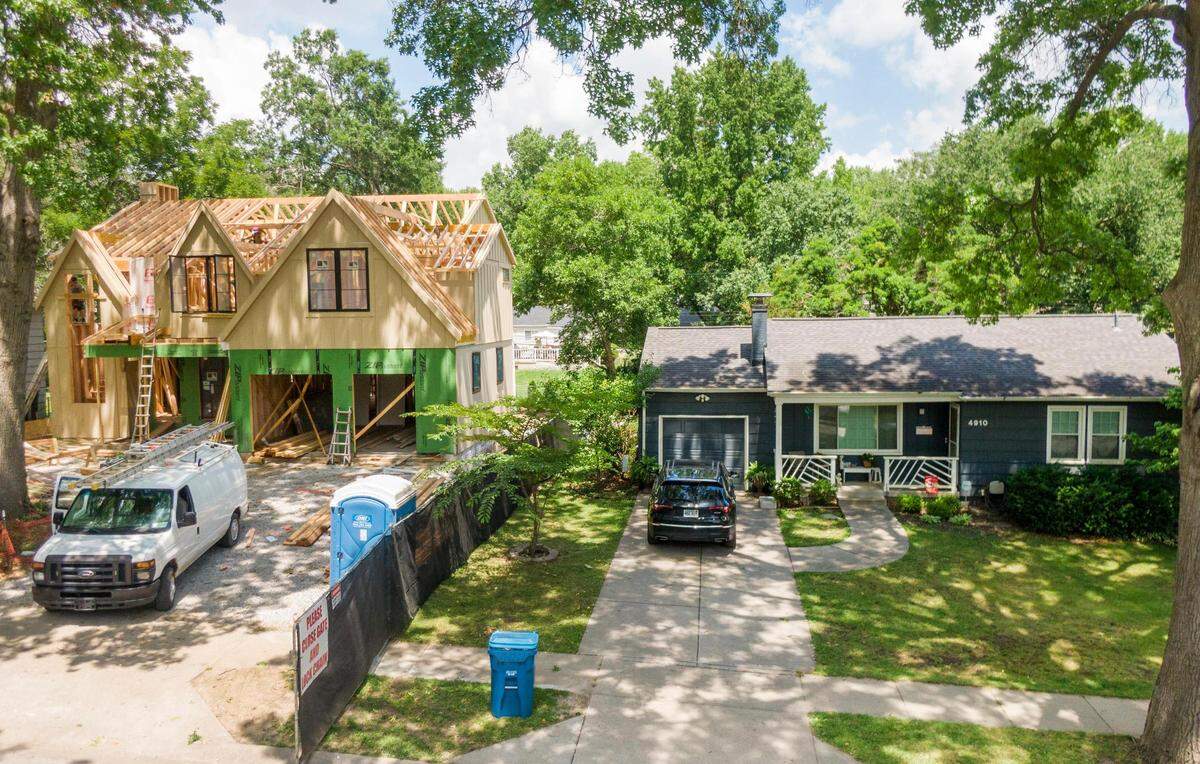
Officials argue the city needs more options for a variety of income levels. Zoning codes largely prohibit the construction of triplexes, small apartment buildings, row houses and courtyard housing — what developers call the “missing middle,” or anything other than single-family homes and large apartment complexes.
“What can we do to maintain attainable housing for middle-income working families who, historically, have made our community their home? The teachers and firefighters. The nurses and police officers. What options can we offer while enhancing all the things we love about Prairie Village, like excellent and safe neighborhoods, schools, parks and streets?” the mayor, Mikkelson, said in a statement to The Star.
In the fall of 2021, the mayor formed a housing committee to tackle the issue. And last summer, the council voted to explore the committee’s recommendations, which included amending zoning regulations.
“It was really after that date that caused this outcry in the community, once the council passed these recommendations,” said Deputy City Administrator Nickie Lee. “One community narrative became that the council was saying, ‘go do these things.’ But really the council was instructing staff to look into these ideas further. It was always going to be a long-term project.”
Many homeowners oppose amending zoning rules, worried that by the city making it easier for such projects to get done, they will lose their chance to raise concerns as projects move through City Hall. The “Stop” group’s website says they are against “high-rise, high density,” saying, “Imagine downtown OP in your own neighborhood!”
“Attempting to crowd more population into our defined boundaries would lead to overcrowding in schools, parking issues, increased drainage problems, and strains on our infrastructure and utilities which aren’t set up to handle additional density,” McKenzie said. “Not to mention the negative impact it would have on our environment and quality of life due to decreased green space and mature tree canopy, and increased noise from ongoing construction and additional traffic.”
Others have organized to support the council’s efforts, pushing back on stereotypes that denser housing brings crime and lower property values. They say it’s beyond time for Prairie Village to adopt more inclusive housing policies, pointing to the city’s history of being developed by J.C. Nichols, and like other northeast Johnson County suburbs, with racist housing covenants.
Lauren Martin, who is helping lead Prairie Village for All, said the group formed after watching, “angry person after angry person stand up in front of council and start screaming about housing. Some of it was incredibly racist and horrifying.
“It was very eye-opening for me because maybe Prairie Village wasn’t as progressive as I thought. And I needed to do something,” said Martin, who also worked as a consultant on the mayor’s reelection campaign last year. “We kept watching as people showed up to every meeting and made accusations that the city was going to tear down houses to build apartments, which wasn’t part of the council recommendations. We quickly realized we needed to make sure our voice is heard.”
City leaders say they’ve slowed down the process to address concerns. Earlier this year, the council voted to put off changing single-family zoning and focus only on areas with multi-family and commercial space.
“While I don’t agree with the Stop Rezoning group’s arguments or their tactics, Council has listened to their feedback and voted several times to modify our recommendations based on that feedback,” Councilwoman Bonnie Limbird, who is running for reelection, said in an email to The Star. “It may not have happened on their timeline or exactly the way they wanted, but Council has made good faith compromises to address their most urgent concerns at the time.”
But the “Stop” group hasn’t backed down. Lori Sharp, a supporter of the “Stop” group who is challenging Limbird in the Aug. 1 primary, argued the city already has a variety of housing and is too dense to allow more.
“There are other communities nearby with greater landmass to take on these issues,” Sharp said in an email to The Star. “The council originally said ‘affordable housing’ then it was ‘attainable’ then they talked about diversity of people and now it’s diversity of housing, so frankly it’s a challenge to keep up with their vernacular. Finally, the market drives the price. Anything new is not going to be affordable.”
The debate has transformed into a battle over how the city government is run.
The “Stop” group has been circulating petitions to put on the ballot initiatives that would abandon Prairie Village’s “strong mayor” form of government, plus cut the number of council seats in half. Prairie Village does have a large City Council for its population size, with 12 members, the same number as Kansas City and Overland Park.
“I support the people deciding on the council number and the form of government. These are not radical ideas, they are common and mainstream,” Sharp said. “Almost all councils, in the state of Kansas, have smaller, more efficient councils. These changes, if the residents vote on them, would move Prairie village back within normal limits of other Kansas cities. I have talked to hundreds of Prairie village residents. They are engaged, educated and understand the concepts. I trust the people.”
But the plan would mean ejecting current council members from their seats midterm, which others argue is not about making the city run more effectively, but ensuring zoning changes don’t go through.
“Our City works very well the way that it is, and our citizens have come to expect the level of representation they receive with two council members per ward,” Limbird said. “Reducing the council size, but maintaining the current wards, would effectively reduce representation for residents, overload the remaining council members with committee assignments, and disenfranchise the voters from 2021 who voted overwhelmingly for their current council people.”
Another petition aims to limit rezoning that would allow for “granny flats” or other “dwellings for more than one family to reside” on a single-family lot. Lee said those “granny flats” for now must be attached to the main house and follow other strict regulations. The city of Shawnee is facing a lawsuit over its controversial co-living ban, which limits how many unrelated people can live together.
The City Council would need to agree to place any of the initiatives on the November ballot, making it a long shot for the “Stop” group. Any ballot language would need to be decided on by Sept. 1, according to Johnson County Election Commissioner Fred Sherman.
Habitat for Humanity in Olathe
Last month, dozens of Olathe residents packed the standing-room-only Johnson County Board of Commissioners meeting to oppose a new Habitat for Humanity project.
The week before in early June, commissioners voted unanimously to spend $950,000 in federal COVID-19 relief dollars on street and infrastructure improvements for the development. Habitat is partnering with Rev. Kevin Schutte and Pathway Community Church, which owns the land, to build 14 affordable single-family homes near 159th Street and Black Bob Road.
It would be the first project like this for Habitat for Humanity of Kansas City, President and CEO Lindsay Hicks said. Residents will purchase the three- to five-bedroom homes, ranging from 1,400 to 2,400 square feet, in a land trust, ensuring they stay affordable. Families will qualify if their income is between 30% and 80% of the area median income — a maximum of $62,000 for a two-person household — and if they meet several other requirements.
“When we moved here in 2000, I never saw anybody asking for money,” said Schutte, who has aimed to launch such a project with his church for several years. “But now you go down to the corner of 151st and Black Bob Road, and I have seen and offered assistance to young moms and their kids asking for food.”
At the June meeting, a county staff member misspoke and said the project already had received city approval. And Commissioner Charlotte O’Hara raised concerns about neighbors not yet being informed of it. O’Hara called it a “horrible, horrible misstep” and unsuccessfully moved for the county’s action to be rescinded.
Neighbors, saying they felt blindsided and criticizing county officials for a lack of transparency, came out in force to argue the funding should not have been granted before city approval, or at all.
“Are we going to be compensated for the loss in our property values? You’re putting houses that are specifically going to be held on the lower income and lower valuations next to neighbors well over $500,000,” resident Jacob Osborn told commissioners.
“This will not impact residents’ home values,” Hicks said.
The homes, which Hicks hopes will be priced at about $250,000, will be appraised within the land trust and will have no effect on other homes.
Project leaders said they’ve been flooded with messages, many of which carry negative stereotypes about low-income residents, such as: “Those children will always be those children.”
On the other end, Hicks said, “One person reached out to us and said, ‘I’m honestly in tears that I might be able to afford to live in Johnson County and the place that I work. These are people that we stand alongside all the time. We just don’t want them to live here? It’s just heartbreaking.”
Despite the pushback, many feel Johnson County is finally seeing more interest and political will toward addressing the affordable housing gap.
Along with funding for the Habitat project, Johnson County commissioners approved three other housing initiatives in June, including a $200,000 program offering incentives to landlords who will rent units to low-income tenants with housing vouchers. They also voted to put $50,000 toward reimbursing landlords for damages or lost rent. And they agreed to study establishing a housing trust fund, where money would go toward preserving and increasing affordable housing.
The month before, more than 1,000 people gathered at the United Methodist Church of the Resurrection in Leawood to advocate for affordable housing solutions at an event hosted by The Good Faith Network, an interfaith coalition of 27 local congregations.
In the past few years, more city and county candidates have campaigned on addressing the housing crisis. And a couple of years ago, municipalities supported a countywide housing study with United Community Services, providing recommendations that are starting to make their way on agendas. It’s the most progress seen on the issue since similar talks stalled around the 2008 recession, Brewer said.
Johnson County formed a housing committee, which led to the recently approved programs, as well as the creation of a new housing coordinator position. Megan Foreman started in the role in January, to find ways to address homelessness, preserve existing housing and attract affordable housing.
The county also approved the $1 million loan for the Shawnee apartment complex, as well as $1 million in federal funding for the development of 76 townhomes in Gardner, with 60 low-income, two- and three-bedroom units.
“These programs in and of themselves are insufficient to fix the affordable housing challenges in Johnson County. But doing nothing doesn’t solve it, and frankly it allows it to get worse,” Kelly said.
A countywide effort
Cities, too, are taking more steps to attract affordable housing than ever before.
Five cities — Mission, Roeland Park, Prairie Village, Shawnee and Merriam — now offer property tax rebate programs for low-income residents, and Lenexa, Olathe and Overland Park are considering doing the same. Johnson County also plans to launch a pilot program next year that would offer property tax assistance to residents over the age of 65 and disabled veterans.
Leawood, one of the county’s most expensive cities with homes appraised on average at $757,381 this year — has made housing a top priority this year. The council has discussed reviewing its city code regulating the size of single-family lots, questioning whether smaller lot sizes could help lower home prices and diversify the housing stock.
And like Prairie Village, both Overland Park and Lenexa are discussing whether to update their zoning regulations to make it easier to build duplexes and other cheaper housing options.
Lenexa, notably, has a mayoral candidate, Councilman Joe Karlin, who is helping spearhead a study on finally building a permanent homeless shelter in Johnson County. That’s in the same city that was sued a few years ago after denying a church the right to house a temporary winter shelter.
Earlier this summer, Olathe minister Lee Jost and Karlin announced an early-stage proposal for a 50-bed shelter, where homeless adults would have access to several support services, as well as 20 transitional, affordable apartments. In December, county commissioners approved using nearly $4 million in federal dollars for establishing a shelter.
“As I’ve talked to people throughout Lenexa and Johnson County, housing is probably one of the biggest … and most important topics to people because they see housing has become unaffordable,” Karlin said.
His mayoral challenger, Councilwoman Julie Sayers, said Lenexa has developed good strategies to diversify housing and should build on that work.
“Our attitude is, generally, if it meets the comprehensive plan, if we can show that it’s not negatively going to impact residents, we want those multifamily, multi-use developments because we know that that variety ends up making our community stronger,” Sayers said. “(It’s) the reason why ultimately people feel like it’s a good place to live, because there’s space for everyone.”

In some cities, officials say they are watching the drama unfold in Prairie Village, readying for similar opposition as they try to push through affordable housing initiatives.
“Good, healthy communication and conversation goes a long way toward solving some of these problems and addressing some of the concerns people have,” Kelly said. “I think Prairie Village is now doing a better job of addressing the communication gap and some of the misinformation that’s spread there. We’ll continue to combat misinformation about affordable housing projects the county has funded.
“Honest and transparent communication will go a long way.”
This story was originally published July 30, 2023 at 5:30 AM.