Missouri could curtail direct democracy in August. How would that reshape the state?
AI-generated summary reviewed by our newsroom.
- Amendment 4 would require a statewide majority and all eight districts to approve.
- Current initiative petitions pass by a simple majority of 50% plus one vote statewide.
- Opponents say Amendment 4 adds bans already illegal under Missouri law.
A historic vote that legalized abortion rights. The expansion of legal marijuana and sports betting. Increases to the state’s minimum wage and limits on tax increases.
For more than a century, voters across Missouri have used direct democracy to enact new policies at the ballot box. That process could be severely limited if voters approve Amendment 4 on Aug. 4.
The proposed constitutional amendment, placed on the ballot by Republican state lawmakers, would sharply curtail the state’s main form of direct democracy, called the initiative petition process. It comes as Republicans have been angered by a series of progressive votes in recent years.
Right now, citizen-driven amendments need a simple majority to pass (50% of the vote plus one). Under Amendment 4, those amendments would need to win both a statewide majority and every one of the state’s eight congressional districts, a change that would hand voters in one district remarkable sway over statewide ballot measures.
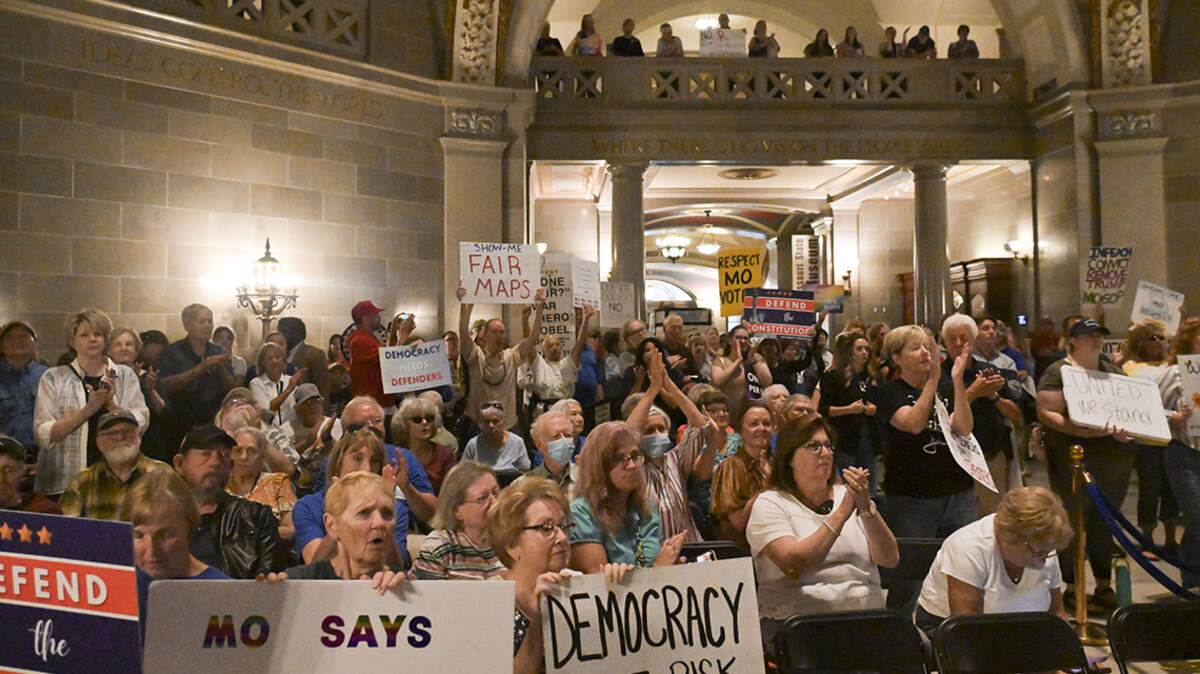
“It changes the fundamental foundational law, allowing and permitting citizens of Missouri to step up and go, wait a minute, this is clearly overreach into something that we care deeply about,” Tim Bowers, a Lee’s Summit resident, said at an event hosted by the left-leaning Progress MO last week.
“What (Amendment 4) basically is going to do is strip away majority rule.”
The same state that’s elected Republican supermajorities to the legislature since 2012 has also spited them on key policies enacted in the Show-Me-State. Through citizen-led signature gathering and elections, Missouri voters have legalized marijuana, abortion and sports betting.
They’ve also opted into a federal program to expand Medicaid, increased the state minimum wage and guaranteed paid sick leave through the process.
“There’s a kind of a libertarian streak in the state,” said Matt Harris, a political science professor at Park University in Parkville. “You combine those voters with the liberals, and they’ve had an avenue through initiative petitions amending the state constitution in that manner to get some more liberal things passed.”
Initiative petition wins
The success of left-leaning causes like recreational marijuana, abortion rights and employee protections has irked Republican and conservative leaders.
“When you put it all together, we have disrespected our constitution. Gambling, riverboat casinos, sports betting, marijuana, all of these things are not constitutional level issues,” said Byron Keelin, president of Freedom Principle Missouri, a conservative advocacy group in support of Amendment 4.
The process has increasingly been used since 2020 and has achieved several high-profile victories.
“There’s absolutely an increase in how people are using direct democracy. I think we’ve seen it kind of accelerate since the fall of the Roe (v. Wade) decision,” said Quintin Savwoir, director of programs and strategy at the Ballot Initiative Strategy Center.
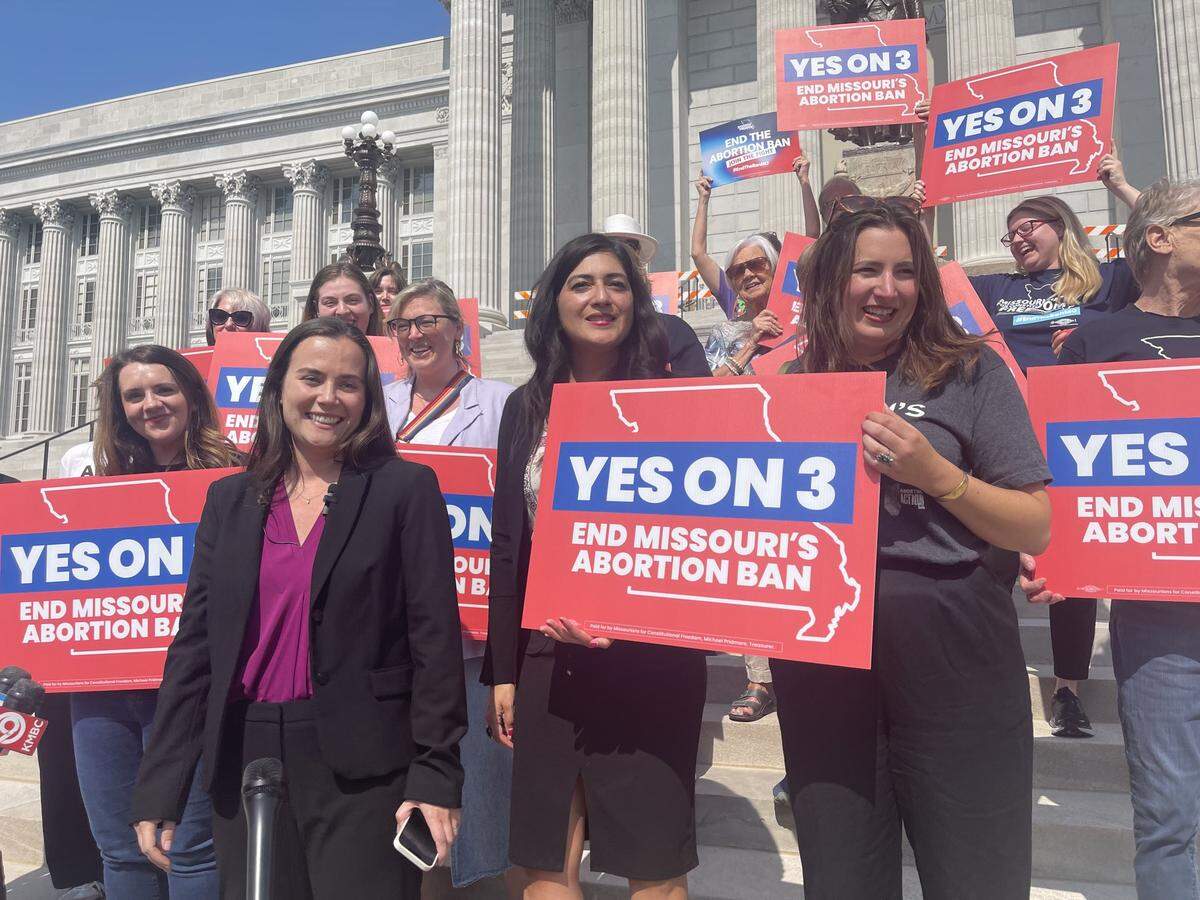
Amendment 4 only applies to citizen-led initiative petitions to amend Missouri’s Constitution. Constitutional amendments proposed by state lawmakers would still only need a simple majority to pass.
“Given that the initiative process would be greatly constrained, it would sort of change the nature of Missouri politics,” said Peverill Squire, a political science professor at the University of Missouri. “It would leave that legislature essentially unconstrained in terms of its policy preferences.”
Democracy or Republic?
Amendment 4 supporters have often bristled at the state’s form of direct democracy, arguing that the state’s form of government is instead a constitutional republic — a type of representative democracy.
Supporters argue that Missouri’s cities are dictating the entire state’s policies by running up the scoreboard in urban and suburban districts.
“We live in a very big state in the middle of the country, very diverse people in different sections of state have very different values from each other,” said Andy Bakker, executive director of Liberty Alliance, a conservative advocacy group in support of Amendment 4.
However, opponents say that the argument undercuts the principle that each person’s vote should matter the same in elections and Amendment 4 would provide unequal representation based on a person’s congressional district.
Supporters also say the process can be abused by moneyed interests that write themselves sweetheart deals. Keelin said marijuana legalization and sports betting set up a limit on licenses, guaranteeing a favorable environment for special interest groups.
“I really don’t even call these citizen initiative petitions. These are corporate special interest initiative petitions,” Keelin said. “These are special interest groups that are coming in from out of state, and pushing these on the agenda.”
However, defenders of the process argue that an increase in citizen-driven initiative petitions is a sign that lawmakers are not focused on policies that voters want. For example, the recent statewide votes on marijuana and sports betting came after lawmakers failed to agree on both policies.
Progressive groups have had success in the initiative petition process, but that hasn’t always been the case. The process was used to implement the Hancock Amendment, which requires voter approval for major tax increases, a freeze on taxes on any currently untaxed service in 2016 and a ban on taxing the buying and selling of homes.
“You go back to the 80s and 90s, it was Republicans that were using the initiative process to get measures through the Democratic legislature,” Squire said.
Scott Charton, a spokesperson for the campaign against Amendment 4, said that since its inception, the process has been used to address issues lawmakers ignored.
“The citizen initiative process has led to progress, economic growth, and cleaning up corruption in Missouri,” Charton said. “I shudder to think about where we would be if citizens had not had the courage as well as the power to stand up to corruption back in those days.”
What would have passed?
Under Amendment 4’s framework, every statewide ballot measure placed on the ballot through the initiative petition process since 2020 would have failed. The state wouldn’t have legalized abortion, marijuana and sports betting, or have expanded Medicaid and increased the minimum wage.
Keelin said that some recent measures may have cleared the high bar set by Amendment 4. Clean Missouri, a 2018 anti-corruption constitutional amendment, received 62% of the vote and would have passed under Amendment 4.
Amendment 4 would have also sunk more conservative constitutional amendments. A 2016 campaign banning new taxes on services would’ve been sunk by Missouri’s 1st District in St. Louis, despite passing with 57% of the vote, according to an analysis by the Missouri Independent.
Dueling amendments
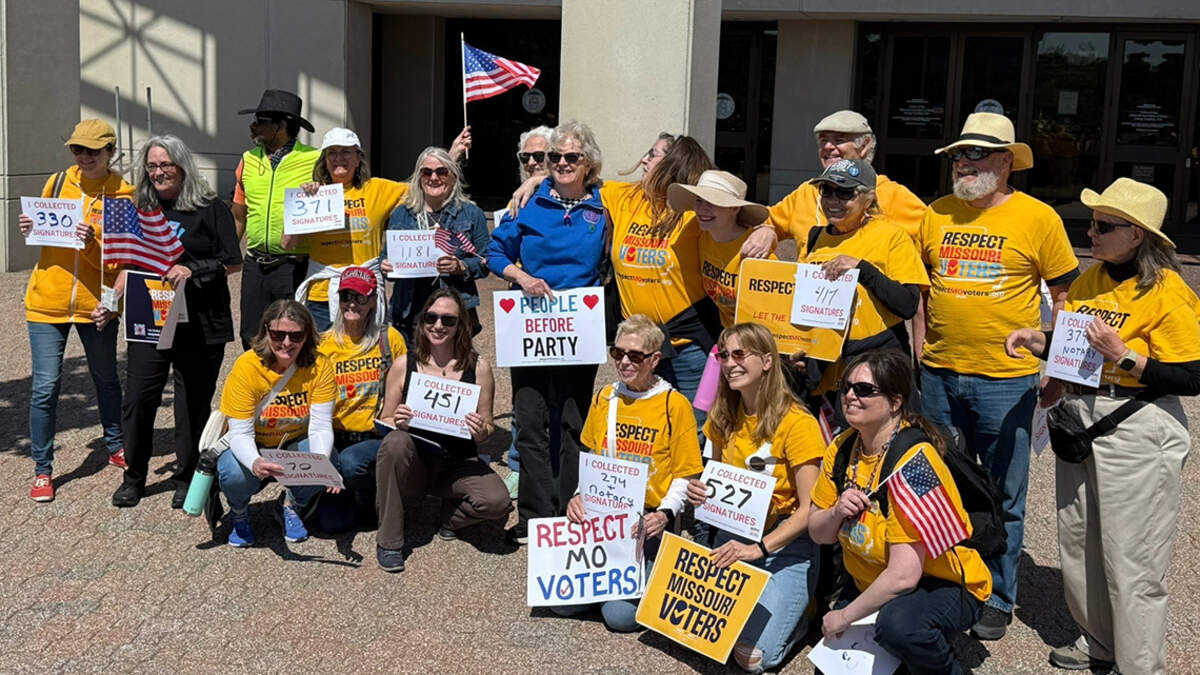
As Amendment 4 seeks to curtail the initiative petition process, another campaign is seeking to empower it. Respect MO Voters, a citizen-led initiative petition, would make it harder for politicians to roll back laws passed by initiative petition and place limits on “ballot candy,” uncontroversial proposals that are included in ballot questions.
Last week, the campaign reached a milestone of obtaining 367,000 signatures, which campaigners say gives an ample buffer for any ineligible signatures. Republican Secretary of State Denny Hoskins’ office has until August to certify it for the November ballot.
Benjamin Singer, campaign director of Respect MO Voters, said Amendment 4 uses the same “ballot candy” his campaign is seeking to prohibit. The amendment includes constitutional provisions prohibiting foreign nationals from financially supporting ballot measures and penalties for ballot initiative signature fraud, both of which are already illegal under Missouri statutes.
“A lot of it is ballot candy and is stuff that’s already basically in law,” Singer said. “It’s all designed to sound good, but to hide the real intent, which is tricking voters into voting away their own power.”
But Amendment 4 supporters argue that Respect MO Voters’ high bar to overturn legislation passed via direct democracy could backfire if a law doesn’t have the expected effects. Some have argued that Missouri should “end direct democracy” or go as far as claiming that Missouri is not a democracy at all.
“It is enshrining direct democracy, which we’re not a democracy, into the Missouri Constitution,” Keelin said.