Missouri lawmakers didn’t act on data centers; they’re toxic in local politics
AI-generated summary reviewed by our newsroom.
- At least four data center bills were introduced; only one received a hearing.
- Local governments near Kansas City faced protests and electoral backlash over data.
- Missouri offers tax exemptions for data centers, and has some regulations on energy costs.
Missouri lawmakers didn’t pass any new regulations on data centers this year, maintaining a status quo of local decisions that frequently draw protests from nearby residents.
Lawmakers introduced at least four bills tackling data center regulations, but none were able to make it across the finish line when lawmakers adjourned last month. Data centers have been around for decades to store, process and distribute the computing power of cloud computing and everyday online services.
But data center construction has surged since 2022, driven by demand for artificial intelligence.
“I noticed this last session it just didn’t seem like there was much appetite in the legislature to do much at all,” Sen. Joe Nicola, a Grain Valley Republican, said. “Everything is so new and developing so rapidly. Many legislators are hesitant to do anything because they don’t want to mess things up.”
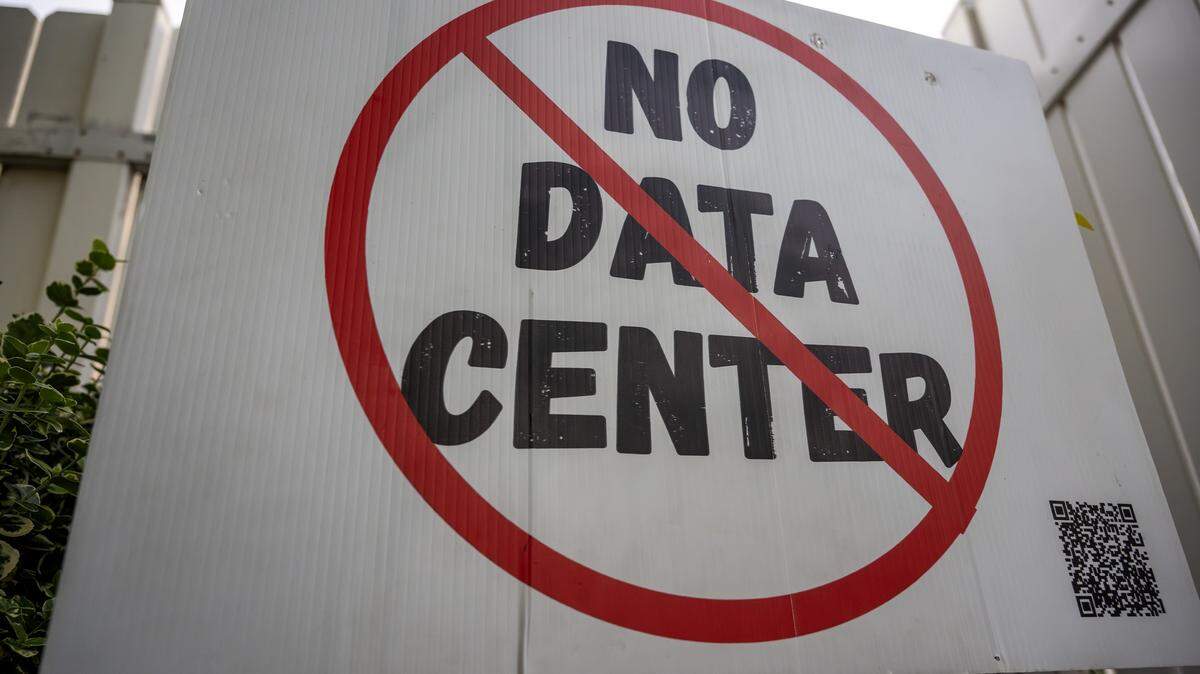
Local governments around Kansas City have faced backlash from residents when data centers are built. In Independence, the approval of a massive data center was a key issue for campaigns that ousted incumbent city council members.
The Jackson County Legislature is considering a 180-day moratorium on new data center construction. The Kansas City Council passed legislation last year limiting where data centers can be built and requiring special use permits and city council approval.
A Gallup poll found that 70% of Americans oppose the construction of an A.I. data center in their community, and opposition groups have butted heads with local politicians who usher in the projects.
“There’s a really strong localized component to this,” said Matthew Harris, a political science professor at Park University. “It’s something that’s come up relatively quickly in the last couple of years. And so municipalities are trying to figure things out.”
Local opposition often transcends party politics and has been opposed by urban areas that typically support Democrats and rural areas that favor Republicans.
“Depending on your politics, you can get upset about some things more than others. Some people might focus on environmental issues, some people might focus on tax issues,” said Katie Currid, who runs a blog called Kansas City Data Center Watchdog.
Nicola said at the state level that he’d be open to a one-year moratorium on data centers at the state level so the general assembly could study the effects on the environment and energy consumptions.
Support for data centers
But people more favorable to data centers are worried that overregulation could kill the industry. While not new, there’s been a wave of data center construction across the state to accommodate the growing use of artificial intelligence.
They have been embraced by trade groups seeking to support construction jobs, local governments seeking a source of property taxes and tech companies in the A.I. race.
“Data centers can be helpful to communities in a lot of ways,” said Wade Kiefer, political director for the International Brotherhood of Electrical Workers Local 124 in Kansas City.
He pointed to support for local construction jobs, funding for public schools and potentially lower mill levies for residents in the future.
Sen. Doug Beck, a St. Louis Democrat and president of the Missouri State Building and Construction Trades Council, said he personally would not like to see the state intervene in data center construction.
“I think the local community should try to get the best deal they can,” Beck said, emphasizing he spoke for himself and not Senate Democrats. “I don’t want the state to really put down regulations and kind of force these things on local areas and local municipalities and counties.”
Several people on both sides of the issue said that residents’ concerns about noise, pollution and power generation are often based on outdated information.
“If you talk to a pipefitter or a mechanical contractor, they’ll tell you all these technologies change about every eight months, and they get more efficient, they get cleaner,” Kiefer said.
What does the state do for data centers?
Missouri’s data center regulations are sparse.
Last year it passed a bill requiring heavy users of electricity, like data centers, to foot the bill for increasing demand on power generation and electrical grid infrastructure. But environmental groups said there are loopholes that will continue to allow costs to be pushed onto consumers.
The state has also made pushes to incentivize data center construction. The Missouri Department of Economic Development offers sales and use tax exemptions for the construction or expansion of data center facilities.
“All these tax abatements and pilots and tax incentives that these billion-dollar companies are getting, and I think that needs to be looked at and scaled back,” Nicola said.
Only one bill on data center regulations received a hearing this year. Rep. Colin Wellenkamp, a St. Charles Republican, sponsored a bill that would require utility companies to create specific rates for high-demand users so water and electricity costs aren’t shifted onto other users.
It would also have created a permitting process for heavy users of water that could answer residents’ questions before it becomes a local controversy.
“Everyone is looking for a definable, more certain process where the players feel like we all know the rules,” Wellenkamp said. “Missourians are demanding that the state take action around AI infrastructure, and we should.”