Kansas congresswoman demands explanation for delays in tornado warning system
AI-generated summary reviewed by our newsroom.
- Rep. Sharice Davids demanded answers from federal leaders about NWS warning delays.
- Davids said missing morning balloon data on April 13 may have reduced forecast accuracy.
- She asked about April 13 launches, twice‑daily launch policy, and staffing vacancies.
U.S. Rep. Sharice Davids is demanding answers from top federal officials about what caused delays in the National Weather Service’s warning system last week in the hours before a string of tornadoes ripped through northeast Kansas, leaving three people injured.
Residents checking the weather on April 13 might have been surprised by the sudden burst of tornadic activity in and around Ottawa, about an hour southwest of Kansas City. That’s because the day’s forecast originally made no mention of the twister risk.
“While I am grateful there were no fatalities, that outcome should not obscure a more serious reality: Kansans were put at risk by failures in forecasting and warning systems that are meant to protect them,” Davids wrote in a Wednesday letter to Commerce Secretary Howard Lutnick and the heads of NWS and the National Oceanic and Atmospheric Administration.
Davids, a Democrat whose district includes part of Wyandotte County and all of Johnson County, Anderson County, Franklin County and Miami County, went on to outline her concerns about potential operational deficiencies that contributed to the sluggish alert times.
“Reporting indicates that on the morning of these storms, multiple NWS offices in the region did not conduct standard 7:00 a.m. weather balloon launches — a critical input for forecasting severe weather,” Davids wrote.
“Just hours before tornadoes touched down, the Storm Prediction Center identified no tornado threat in northeast Kansas. And the tornado watch for impacted areas was issued far later than normal — within an hour of touchdown,” she continued.
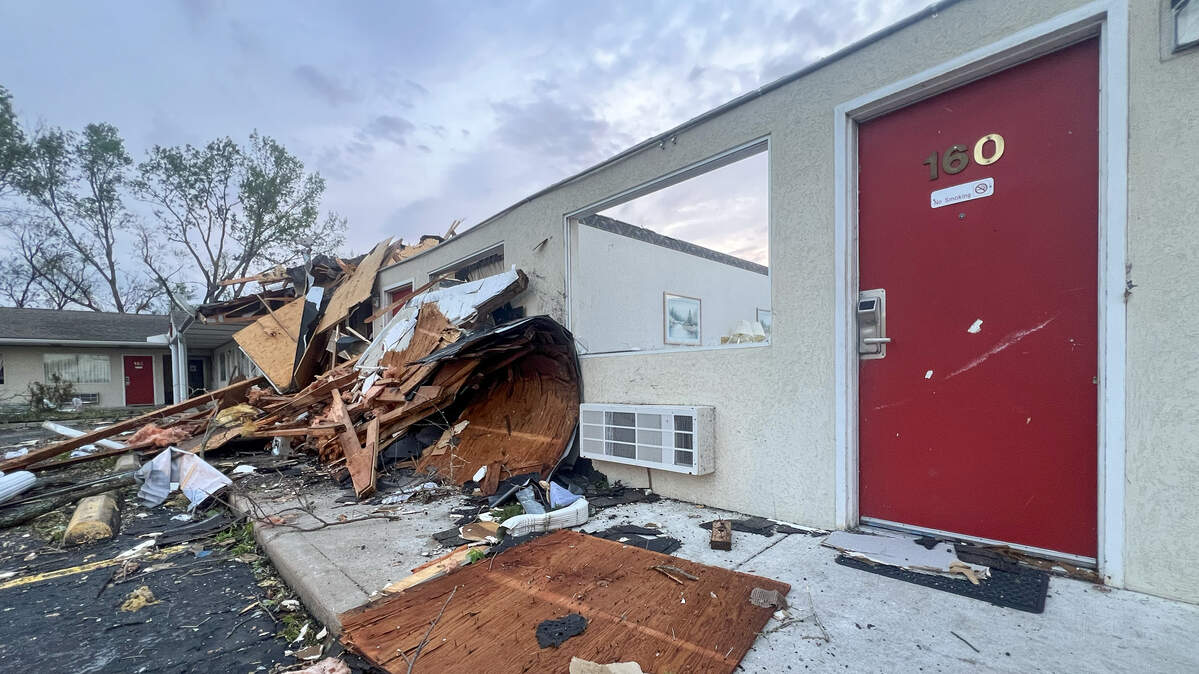
NWS later confirmed that an EF-2 tornado with wind speeds of up to 125 mph touched down around 7:30 p.m. just west of Ottawa before entering the southern side of the city and causing significant damage to homes and businesses. No one was injured in a confirmed EF-0 tornado that touched down briefly about 15 miles west of town in Osage County.
NWS staffing and operational challenges
It’s not the first time Davids has sounded the alarm about troubling developments at NWS. Last June, she sent Lutnick a letter deriding “indiscriminate” staffing cuts at the agency under President Donald Trump’s administration.
Senator Jerry Moran, a Republican, announced at the time that he had secured an exemption to a federal government-wide hiring freeze for the NWS to hire forecasters.
That came weeks after one NWS field office in Goodland that serves 80,000 people in Kansas, Colorado and Nebraska was forced to stop operating around the clock due to a chronic staffing shortage just days before an EF-3 tornado touched down in western Kansas.
In addition to staffing cuts, CBS reported last May that about 13% of NWS weather balloon launch sites were eliminated in the early months of the second Trump administration.
Chris Vagasky, a meteorologist and research manager at the Wisconsin Environmental Mesonet, a statewide network of weather monitoring stations, said in an interview last week that staggered balloon launches on April 13 might have contributed to forecasts not being as precise as they could have been.
“The models that we use, they are very data hungry,” Vagasky told The Star. “They are always looking to have as much information fed into them so that you can get a very accurate picture.”
In her letter, Davids reiterated that balloon data is essential to understanding atmospheric conditions in real time. That’s especially true during fast-changing storm systems like those that produced tornadoes in northeast Kansas last week.
“When that data is missing — whether due to staffing shortages or operational decisions — forecasting accuracy suffers,” Davids said. “When forecasting accuracy suffers, warning times shrink. And when warning times shrink, families are put in danger.
“The fact that Kansans avoided catastrophic loss in this instance does not excuse these breakdowns — it underscores how close we came, and what could happen if these failures continue,” she added.
She asked Lutnick and the other officials to provide a response to a series of questions, including whether stations in and around Kansas failed to launch weather balloons on the morning of April 13 and, if so, why?
She also asked whether NWS is implementing permanent changes to twice-a-day weather balloon launches and how often NWS launches supplemental midday balloons.
Additionally, Davids requested data on current staff vacancies at NWS field offices in Pleasant Hill, Topeka, Wichita, Springfield, Dodge City, Goodland and Hastings.
The Star’s Ben Wheeler contributed reporting