Schools, cities across KC metro scramble to comply with Kansas bathroom law
AI-generated summary reviewed by our newsroom.
- Law requires restroom use by sex assigned at birth; IDs must be changed.
- Counties and school districts are reviewing facilities and complaint processes.
- Law sets fines, jail time and $1,000 private-complaint payouts; challenges expected.
As of Thursday, anyone using the restroom in a government-owned building in Kansas must do so in accordance with their sex assigned at birth or risk legal penalties under a new state law that targets transgender people.
The law, which also requires trans Kansans to surrender and replace their driver’s licenses and birth certificates, puts Kansas at the forefront of policing transgender identity. It is expected to face legal challenges.
Local governments in Johnson and Wyandotte counties, including school boards and cities, told The Star this week that they are still reviewing the new law and establishing procedures to ensure compliance in all of their facilities, from libraries to police departments.
“We are working to determine what steps, if any, the school district needs to take. At this point, it would be premature to offer much comment beyond that,” said Kristin Babcock, a spokesperson for Shawnee Mission School District, in an email statement.
Lisa Thurber, a spokesperson for Johnson County, said the government is committed to ensuring that its restrooms and other multi-occupancy private facilities, including locker rooms and showers, conform to the new law. The law does not prohibit single-stall unisex restrooms.
“The county also is reviewing its existing processes for when it receives complaints about legal violations to see if any additional steps are needed for this specific law,” Thurber said in an email.
A spokesperson for the Unified Government of Wyandotte County and Kansas City, Kansas, did not respond to a request for comment this week.
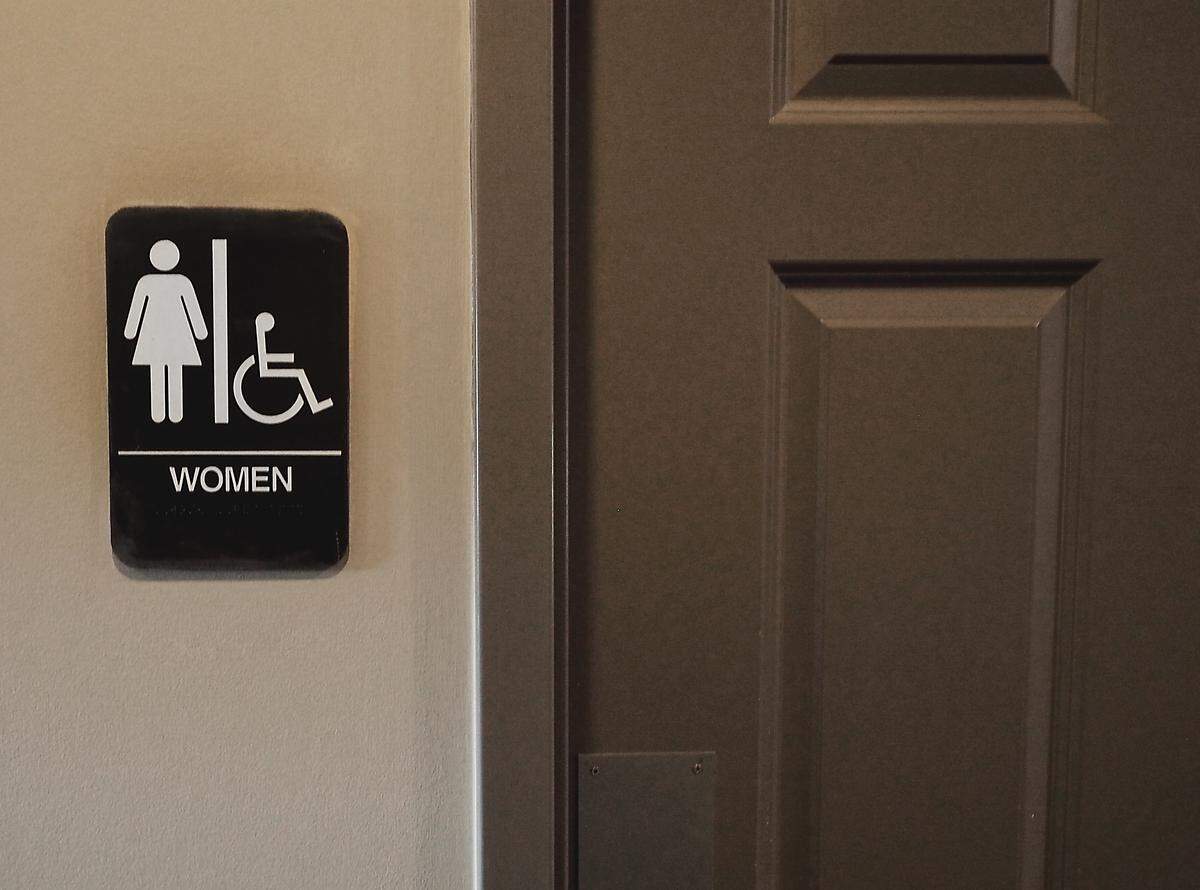
Violations of Kansas bathroom law
Senate Bill 244 became law on Thursday after Republican supermajorities overrode Democratic Gov. Laura Kelly’s veto last week.
The statute outlines steep financial penalties for local governments that the attorney general’s office determines to be out of compliance. Government entities that fail to clearly designate facilities as either male or female could face a $25,000 fine for a first violation and a $125,000 fine for subsequent violations.
There are also escalating penalties for individuals who don’t use facilities in accordance with their sex assigned at birth.
Anyone found to have improperly used a restroom or other private space in a government building would face a written warning for a first violation. A second violation would carry a $1,000 fine, and each subsequent violation would be a misdemeanor offense punishable by another fine and up to six months in jail.
Anyone who believes someone used the wrong restroom, as defined by the law, in their presence, could file a complaint seeking $1,000. LGBTQ+ rights groups and Democrats have described the provision as a “bounty.”
“Shameful policies like this are part and parcel of a national right-wing anti-LGBTQ+ campaign, and they don’t make anyone safer,” Human Rights Campaign President Kelley Robinson said in a statement earlier this month. “They green-light harassment and violence targeting transgender people while opening the door to invasive gender policing that affects everyone.”
Bathroom policing in practice
Riley Long, a transgender man who lives in Shawnee, said he has been bracing for implementation since GOP lawmakers fast-tracked the bill in January without providing an opportunity for public comment in late January.
“It’s been talked about so many times that I feel like I’ve prepared myself for it to happen,” Long said in an interview on Thursday. “It feels terrible, but I know who I am and I’m not going to let that kind of thing bring me down too much.”
He said he has a friend whose elementary school daughter attends public school in Johnson County and has always used the girls’ restroom. Her mother recently received a message from the principal saying she no longer could, Long said.
“Ever since she’s started school, you know, she’s gone to the bathroom with her friends or just done whatever elementary students do, and now she’s going to have to use a restroom that’s outside of her norms,” he said.
School districts that responded to The Star’s request for comment said they don’t expect to have to remodel any existing restrooms or other facilities to comply with the new law.
“All of our buildings are already in compliance with the legislation in question,” said Scott Peavey, a spokesperson for the Spring Hill district. “If any complaints were to arise, we would handle them the same as we would with any similar report; we would investigate thoroughly and then act accordingly based upon the results of the investigation.”
Lauren Aiello, a spokesperson for the Turner school district, said the district will follow the law “as written.”
“We respect the right for all students to receive an education in our schools and will continue to support students while following all applicable local, state, and federal legal requirements,” Aiello said in an email.
A spokesperson for Kansas City, Kansas, Public Schools did not respond to a request for comment.
Local control
City, county and school board officials contacted by The Star were hesitant to speak on the record about what implementing the anti-trans law will mean in their communities.
Some cities issued statements through their communications departments.
“The City of Olathe is developing an implementation and rollout plan in advance of the effective date to ensure consistent application through city facilities, consistent with its approach to any new statutory change,” spokesperson Cody Kennedy said in a Monday email. He provided no specifics.
Robyn Fulks, a spokesperson for Mission, said the city has completed a “preliminary review” of its facilities that could be impacted.
“We are actively assessing impacts and aligning our processes to ensure compliance,” she said.
Gardner spokesperson Daneeka Marshall-Oquendo said in an email that the city’s bathrooms and private spaces are “designated by biological sex,” and that officials don’t have any pressing questions about enforcement of the new law.
Meg Ralph, a spokesperson for the city of Overland Park, noted the sweeping effect that the new law will have on local government operations.
“We support the full control and authority over those matters which are granted to municipalities by the Home Rule Amendment of the Kansas Constitution as approved by voters in 1960, including control over our facilities, personnel and civil rights matters,” Ralph said in an email.
“The City also opposes discrimination against all groups of people.”