KC moves forward with Royals stadium. Now all eyes are on Missouri
After Kansas City officials on Thursday passed a key funding plan aimed at securing a new Kansas City Royals stadium near downtown, attention now turns to the Missouri Capitol.
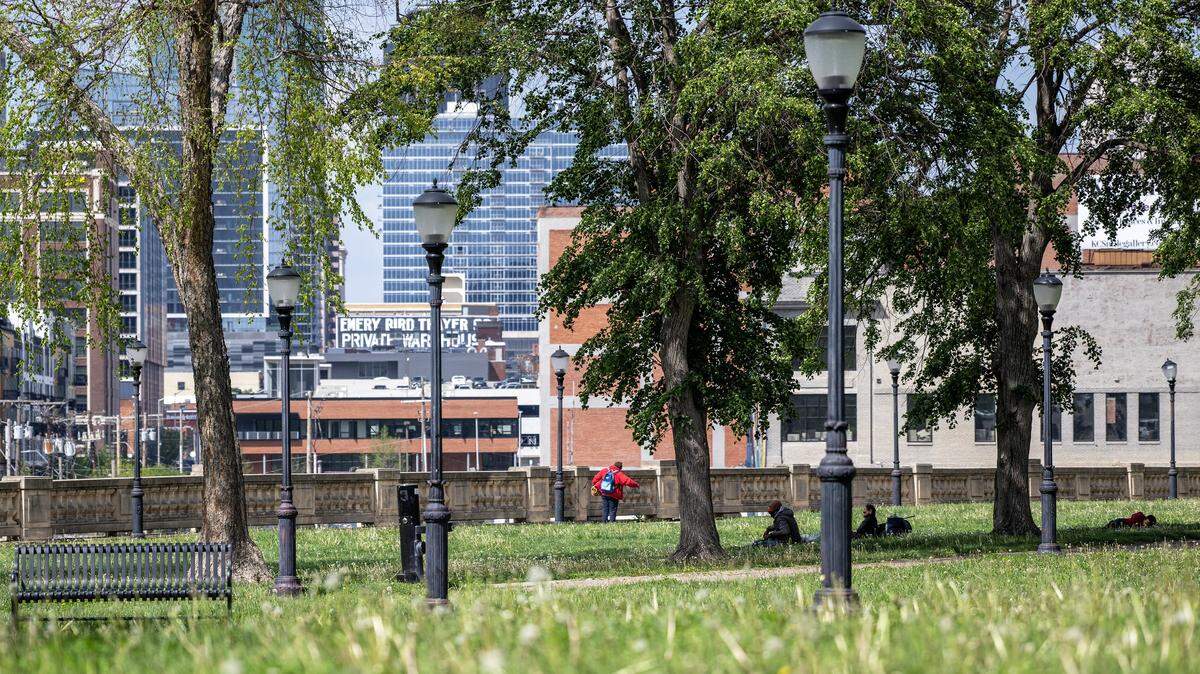
Gov. Mike Kehoe, a Republican, last summer signed into law a massive funding package in the hopes of halting the team from moving to neighboring Kansas. Ten months later, Kehoe’s administration now faces the crucial task of deciding how much money Missouri will contribute to a new stadium at Washington Square Park near Crown Center.
That decision could prove pivotal to whether the Royals decide to throw their full support behind the city’s plan and move a roughly 15-minute drive west from their current home at Kauffman Stadium. The team still had not publicly announced a decision as of Thursday.
City Council members on Thursday approved an ordinance authorizing City Manager Mario Vasquez to negotiate with the Royals a deal up to $600 million for a $1.9 million new stadium near downtown, a major vote that officially put the city’s offer on the table.
Now, the spotlight swings back to Jefferson City as the Royals weigh their decision and the state grapples with a major budget shortfall. The Royals and city officials are hoping the state will chip in money for the cost of the stadium, which is expected to be 60% publicly funded and 40% privately funded, according to preliminary documents obtained by The Star.
Kansas City’s ordinance authorizes Vasquez to apply for state financial support from the package Kehoe signed last summer. The law, called the “Show-Me Sports Investment Act,” allows Missouri to pay for up to 50% of a new stadium for the team, but the exact dollar figure is still unclear.
Kehoe confirmed on Thursday that city officials were working alongside his administration and the Royals on the stadium plan, saying in a statement to The Star that he appreciated the partnership. But the statement provided no details about Missouri’s potential financial contribution.
“Local funding is critical to eligibility for state incentives, so this downtown stadium proposal is a strong step forward in securing the future of the Royals in Missouri,” the Republican governor said. “We look forward to continuing our partnership to ensure this project delivers lasting benefits for the entire region.”
Missouri cannot offer the team a blank check for a new stadium under the funding package. The city and team now must prove to one of Kehoe’s appointees, Michelle Hataway, the director of the Missouri Department of Economic Development, that the project qualifies for state money.
Inside state funding
The project unveiled by city leaders would almost certainly qualify. Missouri’s incentives package sets a minimum project cost of $500 million and stadiums must have a seating capacity of more than 30,000, two requirements already outlined in the city’s proposal.
Total state dollars cannot exceed 50% of total project costs, according to the state law. The program benefit won’t last longer than 30 years and contributions from local governments are also required. Under the bill, state incentives would be clawed back if a team relocates its stadium, headquarters or training facility outside of Missouri.
The decision from Kehoe’s administration will center on how much the state will actually contribute. Once Vasquez applies for funding, Hataway’s department will determine the state’s contribution based on the amount of withholding tax, sales tax and athlete and entertainer tax revenues generated by the team last year, a Kehoe spokesperson previously told The Star.
Any state funding would later be subject to annual approval from state lawmakers during their budgeting process, a scarcely-discussed line in state law. That appropriation would be to repay bonds issued for the stadium — and failure to pay off those bonds each year would put the state at risk of defaulting and plummeting its credit rating.
While lawmakers could refuse to pay, the consequences of that decision are “so severe that there’s no realistic possibility of that happening,” Missouri House Minority Leader Ashley Aune told The Star on Thursday.
“Unless,” said Aune, a Kansas City Democrat, “Republicans succeed in eliminating the state income tax, but fail to adequately replace that revenue and end up bankrupting the state.”
Republican lawmakers are pursuing an extraordinary plan to replace the state’s income tax with expanded sales taxes, a top priority for Kehoe that has alarmed local officials who fear the effort will force drastic cuts to government services and higher sales taxes on residents.
At the same time, Kehoe and other state officials have warned about the state’s more grim financial reality after years of being propped up by federal pandemic aid. Kehoe, for example, has recommended lawmakers cut more than $600 million from the state’s operating budget this year.
Missouri and Kansas City officials will also have to contend with the financial reality of publicly-funded stadium deals. Decades of academic research have found that stadiums are not major drivers of economic development, but local and state leaders have over the past week championed the plan as a boost to the city’s downtown landscape.
In addition to funds from Missouri’s incentives package, Kansas City’s plan also authorizes City Vasquez to apply for up to $50 million in state tax credits from the Missouri Development Finance Board.
Mayor confident
State funding approval, coupled with a public announcement from the Royals, would mark the culmination of a yearslong fight over the team’s future home. That fight ratcheted up in December when the Kansas City Chiefs announced their plans to move to Kansas, a decision that galvanized local and state leaders around keeping the Royals.
Mayor Quinton Lucas, who unveiled the city’s plan earlier this week, expressed confidence about a partnership with state officials in an interview with The Star on Tuesday. He pointed to lawmakers’ approval of the funding package, which required a fiery special session and hours of closed-door negotiations between Kehoe and legislators last summer.
“I know there are changed feelings, particularly as it relates to the Chiefs,” said Lucas. “But I think that all of the state actors I’ve talked to — and I’ve talked to quite a few, including Missouri state senators on the Republican side, not from the Kansas City area — believe that this is a positive for the state of Missouri and it’s a positive for downtown.”
The fight over the Royals has ramped up in the months after Jackson County voters in 2024 soundly rejected a stadium sales tax for a Royals stadium in the Crossroads District and renovations to Arrowhead Stadium for the Chiefs.
Two years after that vote, Jackson County’s role in a future Royals stadium near downtown remains unclear. Jackson County Executive Phil LeVota previously told The Star that he’s been in talks with the Royals and local leaders, including Lucas.
He added that “any proposal must be transparent, accountable and make sense for taxpayers. We’re ready to be at the table and to make sure this is done the right way.”
But county officials had not agreed to any contribution or funding source. The leader of the county’s legislature went a step further, telling The Star he would not support helping to fund the stadium absent a public vote.
After Thursday’s vote, a spokesperson for the Royals said the team was “grateful for the work and attention of local leaders” and referenced the presentation of a term sheet with the city that would outline “a long-term vision that we expect to include one of the largest private investments in Kansas City history.”
“As always, our motivation is to find the best solution for our team, our fans, and our community. We’re excited by the possibilities this opportunity presents for our hometown,” the statement said.
This story was originally published April 16, 2026 at 3:33 PM.