ICE detention center can open in Leavenworth after private prison wins long fight
AI-generated summary reviewed by our newsroom.
- City commission approves CoreCivic zoning permit to reopen ICE detention center.
- CoreCivic agrees to staffing ratio, $1.5M fee, $400K/yr and task force.
- Facility’s violent history and numerous lawsuits fuel sustained local opposition.
Within days, immigrants arrested by federal authorities could find themselves locked inside CoreCivic’s razor wire-ringed concrete prison on the outskirts of Leavenworth.
A multi-year campaign to reopen the shuttered facility as an ICE detention center culminated Tuesday evening in a 4-1 vote of the Leavenworth City Commission to approve CoreCivic’s zoning permit.
Since 2023, America’s largest private prison chain has attempted to cajole residents into supporting ICE detention at its rebranded Midwest Regional Reception Center through promises of job creation and economic vitality.
In the end, CoreCivic won over city leaders despite the emphatic opposition of outspoken residents and a year-long legal battle in which the company repeatedly argued that it should be allowed to reopen without a zoning permit.
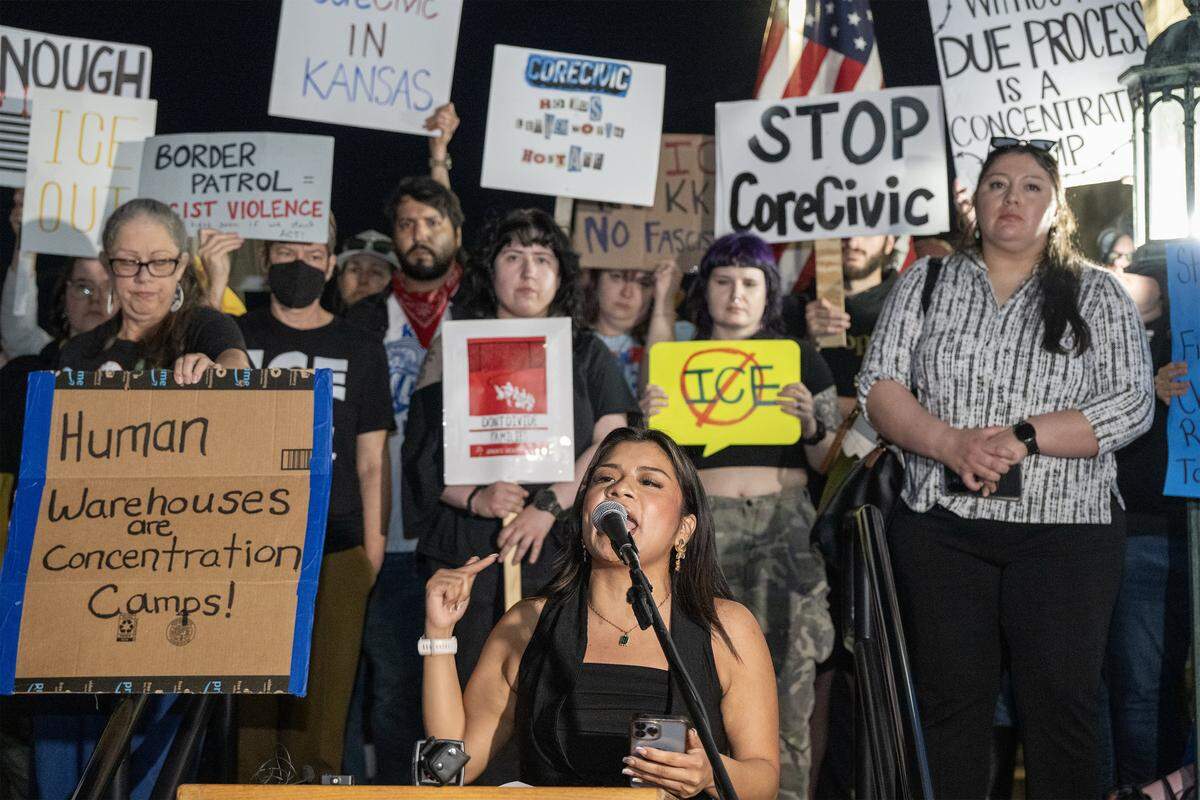
CoreCivic entered into a $60 million-a-year contract with ICE last September and argued that the city’s objections to immediate reopening amounted to interfering with the federal government’s ability to enforce immigration laws.
“Over the past year, this process has been contentious. It has been political. And it has been very, very personal,” said Commissioner Holly Pittman, who voted to approve the zoning permit, but added that her vote “does not mean that the conduct that we saw over the past years from CoreCivic . . . was acceptable.”
“Through this process, the city has secured stronger oversight, clearer guardrails and a significant financial concession that protects our taxpayers moving forward,” Pittman said.
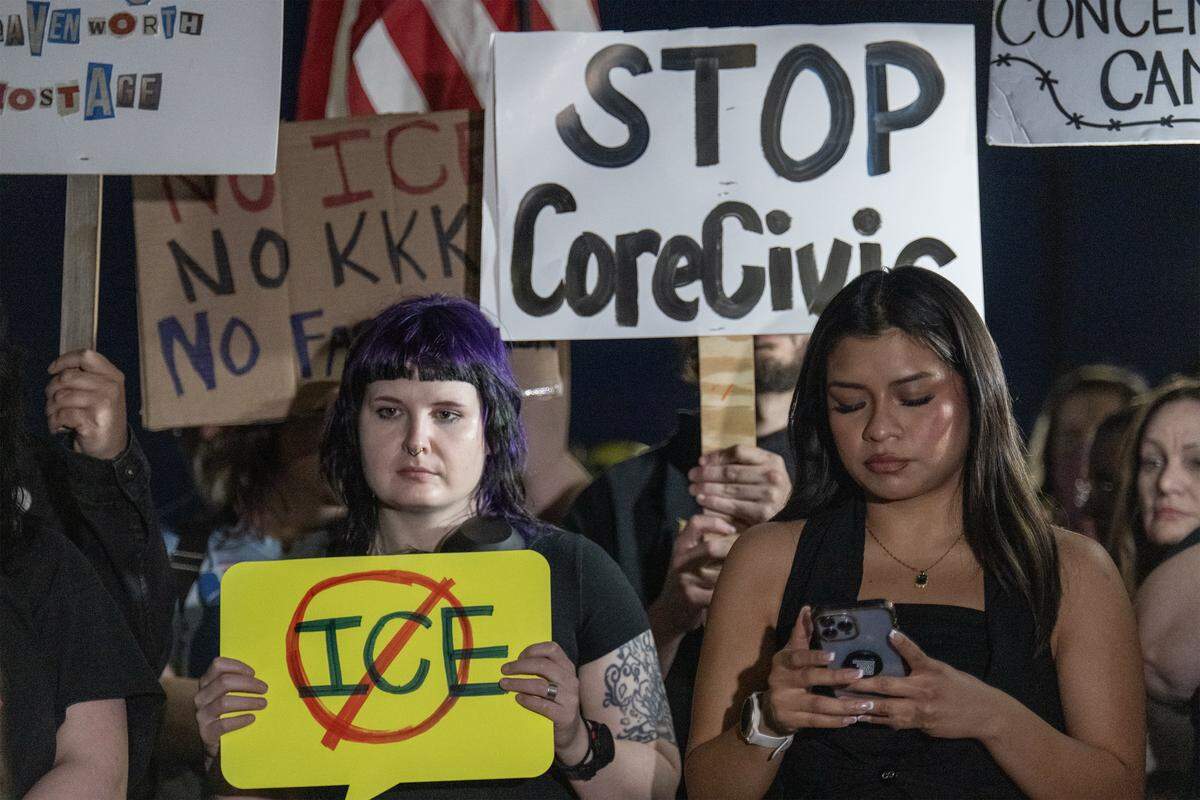
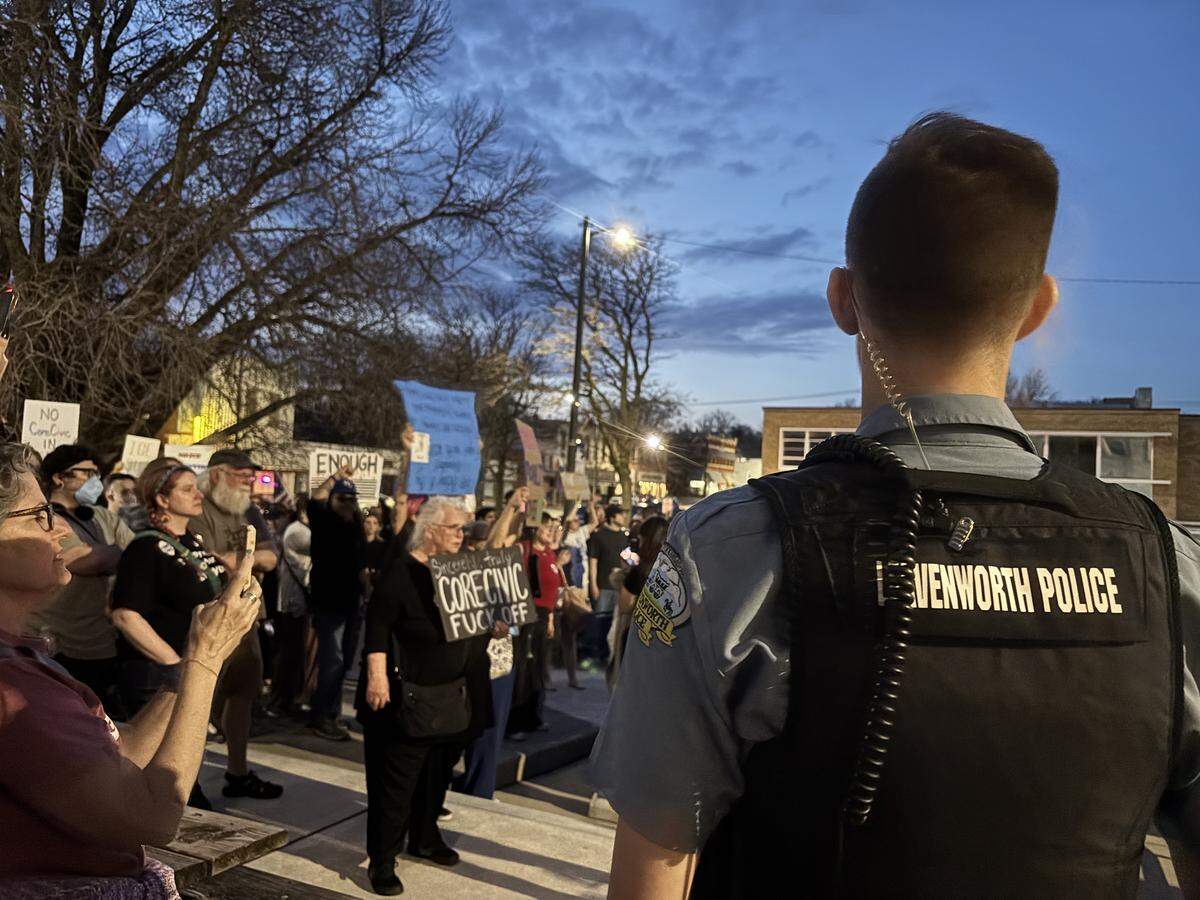
On Monday night, faith leaders from across the Kansas City metro held a vigil near the prison, denouncing the Trump administration’s mass deportation strategy and CoreCivic’s human rights record. On Tuesday, city officials limited the public comment time to one hour, but demonstrators gathered early at City Hall and stayed late protesting outside.
“Giving CoreCivic an opportunity to open their facility in Leavenworth endangers us all,” said Noah Baker, a student at Leavenworth High School, during the public hearing. “If they are allowed to violate human rights and break laws and get away with it and get away with it, that is dangerous. Because what is stopping them from detaining and abusing people if not you here today?”

CoreCivic says the prison can accommodate 1,033 incarcerated adults and that it has already hired approximately 280 of the 300 workers it plans to employ there. The company has agreed to pay the city a one-time impact fee of $1.5 million on top of $400,000 in annual payments to account for additional police resources and general administrative costs associated with the prison’s operation.
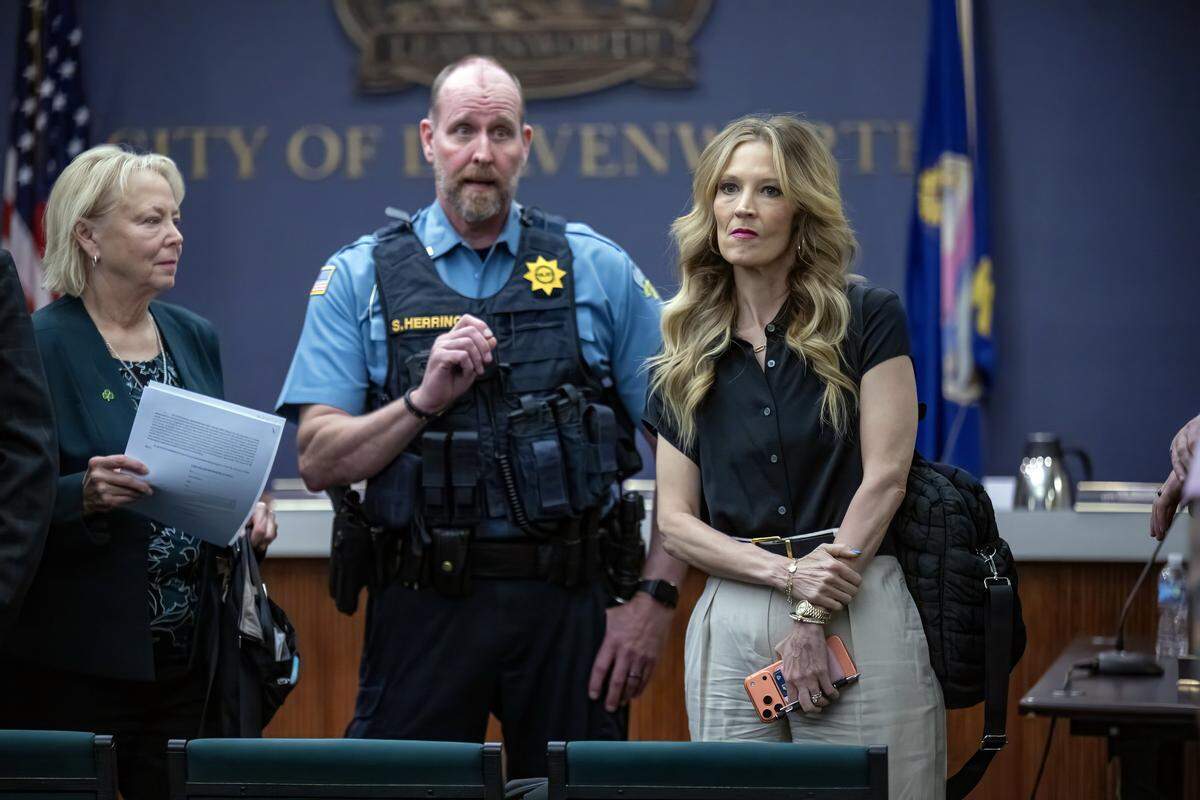
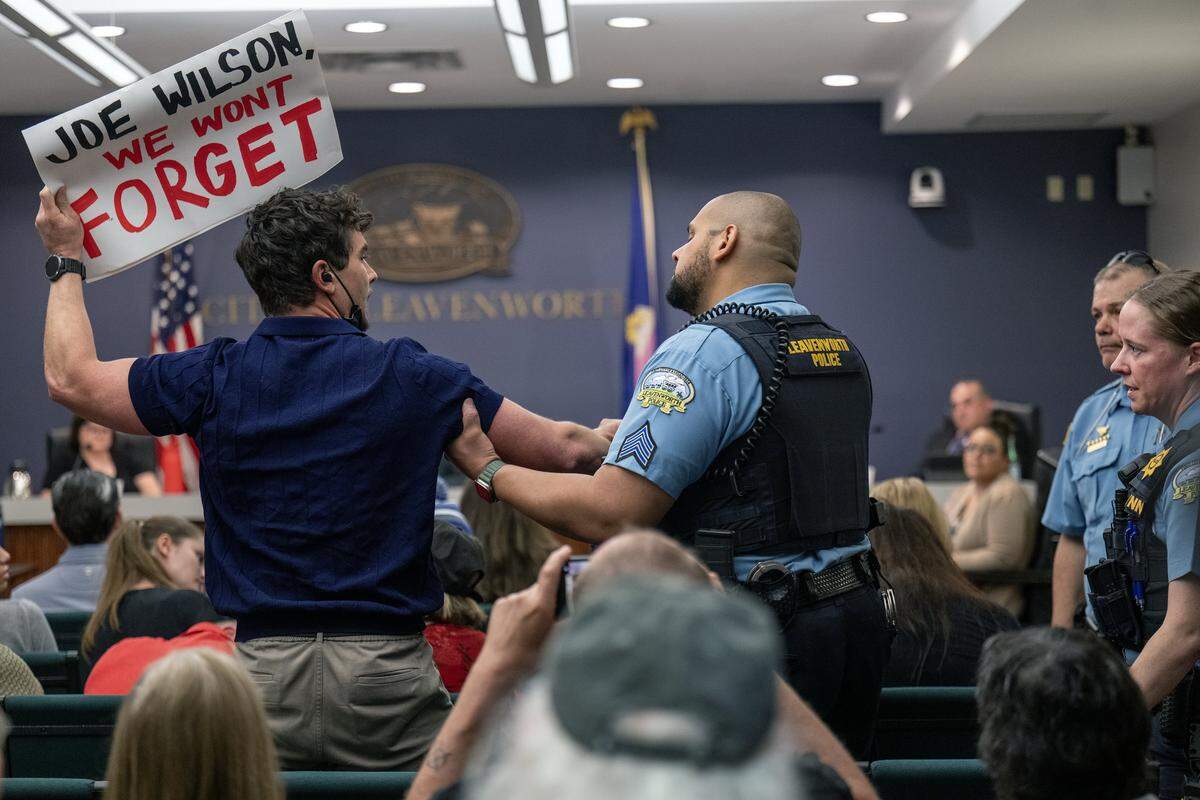
The mood was tense throughout the meeting as more than a dozen law enforcement officers surveyed the action within the packed commission chamber, the overfill room and outside City Hall. Two people were arrested for disrupting the meeting with anti-CoreCivic interjections.
Nineteen-year-old Jalen Brown and 33-year-old Adam Meysing were taken to the county jail and held on unspecified charges at $250 cash bail, sheriff’s office records show. They were both released after the meeting ended, when fellow protesters showed up at the jail to post their bail.
Misgivings in a prison community
CoreCivic’s correctional facility is one of five in Leavenworth County, along with FCI Leavenworth, Lansing State Prison, the U.S. Disciplinary Barracks at Fort Leavenworth and a day reporting center owned by another private prison company, GEO Group.
An unspecified number of non-citizen detainees are already being held at FCI Leavenworth under a 2025 agreement between ICE and the Federal Bureau of Prisons.
But CoreCivic’s detention center has stood empty since the end of 2021, when its contract with the U.S. Marshals Service lapsed under a Joe Biden executive order barring the Department of Justice from contracting with private prisons.
In the months before its closure, as chronic understaffing and the stockpiling of weapons and drugs threatened inmate and employee safety, the prison earned a scathing assessment from U.S. District Judge Julie Robinson, who called it “an absolute hell hole” during a sentencing hearing in September 2021.
Attorneys representing inmates there said the facility’s culture of violence and inattentiveness led to two suicides and at least 10 severe beatings and stabbings in its final year of operation.
“Where our current prisons make community, CoreCivic makes profit,” Leavenworth resident Alida Kress said during public comments. “Leavenworth has welcomed them before and been betrayed by them before. When they operated here, they cut costs, they lied, they understaffed, they neglected their inmates. They created an environment that fostered violence.”
From the outset, CoreCivic’s attempts to rebrand the facility it first opened in 1992 as an ICE detention center roiled the community.
In 2023, local officials short-circuited negotiations when loud opposition from residents prompted the county to stop serving as an intermediary between the company and ICE. A renewed effort in 2024 was met with similar resistance, from concerns over the prison’s history of violence to fears that immigrants brought to Leavenworth might take up permanent residence there.
The agreement approved by the City Commission on Tuesday prohibits immigrant detainees from being released into Leavenworth unless they were arrested there or if a court specifically orders it. Otherwise, detainees being released or deported would be taken to Kansas City International Airport.
CoreCivic will be required to maintain a staffing level of at least 0.29 full-time employees for every one detainee that it houses.
The city and company agreed to the establishment of a community task force designed to hold CoreCivic accountable for any violations of the agreement, including provisions requiring it to grant access to the premises within two business days upon the request of law enforcement or city inspectors.
In an email statement on Wednesday, CoreCivic spokesperson Brian Todd said it will be up to the federal government to decide when detainments should begin at the freshly approved detention center.
“The placement of detainees at MRRC is entirely at the discretion of our government partners at ICE, but the facility and our staff are ready to provide safe, humane care,” Todd said.
CoreCivic’s other ICE prisons
The Brentwood, Tennessee-based prison chain has capitalized on a fraught moment in American history, positioning itself as an indispensable government partner in President Donald Trump’s quest to deport millions of noncitizens during his second term.
“Our business is perfectly aligned with the demands of this moment,” CoreCivic former CEO Damon Hininger said during an August 2025 earnings call. The company posted record revenue last year.
It’s unclear exactly how many ICE detention centers the company currently operates. Last March, a company representative told The Star it had 14 active ICE facilities.
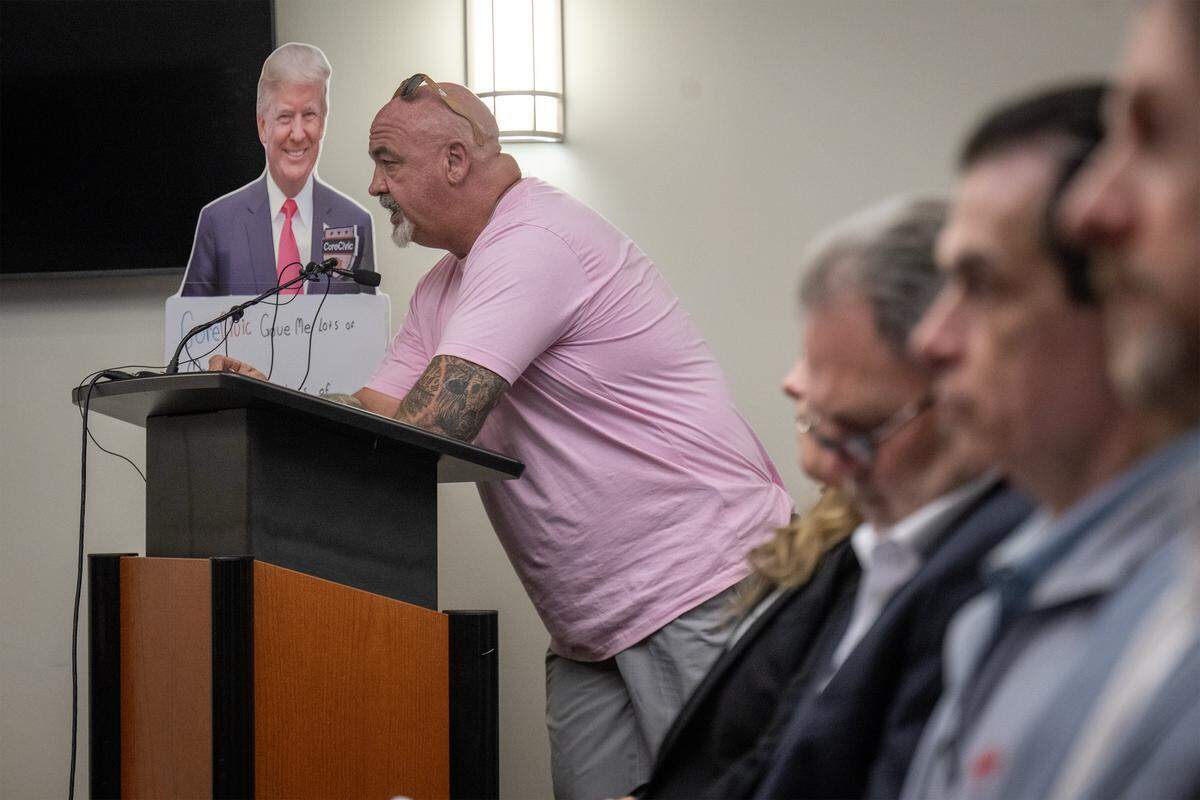
CoreCivic has faced a slew of lawsuits that include accusations of medical neglect and falsifying records to cover up unsafe conditions in its facilities. Roughly 100 lawsuits had already been filed against the company, its wardens, officers and medical staff in 2025 by August, Nashville Scene reported.
“These suits allege a host of human rights abuses, including civil rights violations, physical and sexual assault, and failure to protect inmates from harm,” the National Immigration Law Center says on its website.
One such lawsuit, filed by people detained at CoreCivic’s California City Immigration Processing Center, describes conditions there as “decrepit” and “punishing.” Medical neglect, bug infestations, inadequate counsel and a lack of access to legal counsel are among the allegations outlined in the complaint.
“In their haste to warehouse hundreds of men and women in this isolated facility, Defendants have failed to provide for the basic human needs of the people for whose lives and wellbeing they are legally responsible,” the lawsuit says.
CoreCivic has denied wrongdoing and insists it provides adequate accommodations for inmates.
“In facilities where CoreCivic provides medical care, licensed doctors, nurses and mental health professionals are on-site around the clock. Every detainee has daily access to medical services, and we coordinate with local hospitals for specialized care,” Steve Owen, CoreCivic’s vice president of communications, wrote in a recent Star guest commentary.

This story was originally published March 10, 2026 at 7:47 PM.