Kansas ICE prison still can’t open without permit, Court of Appeals rules
AI-generated summary reviewed by our newsroom.
- Court of Appeals upheld district court’s temporary injunction blocking detainees.
- Judges found possibility of imminent harm if CoreCivic reopens without zoning permit
- City commission could approve the permit, potentially rendering the ruling moot.
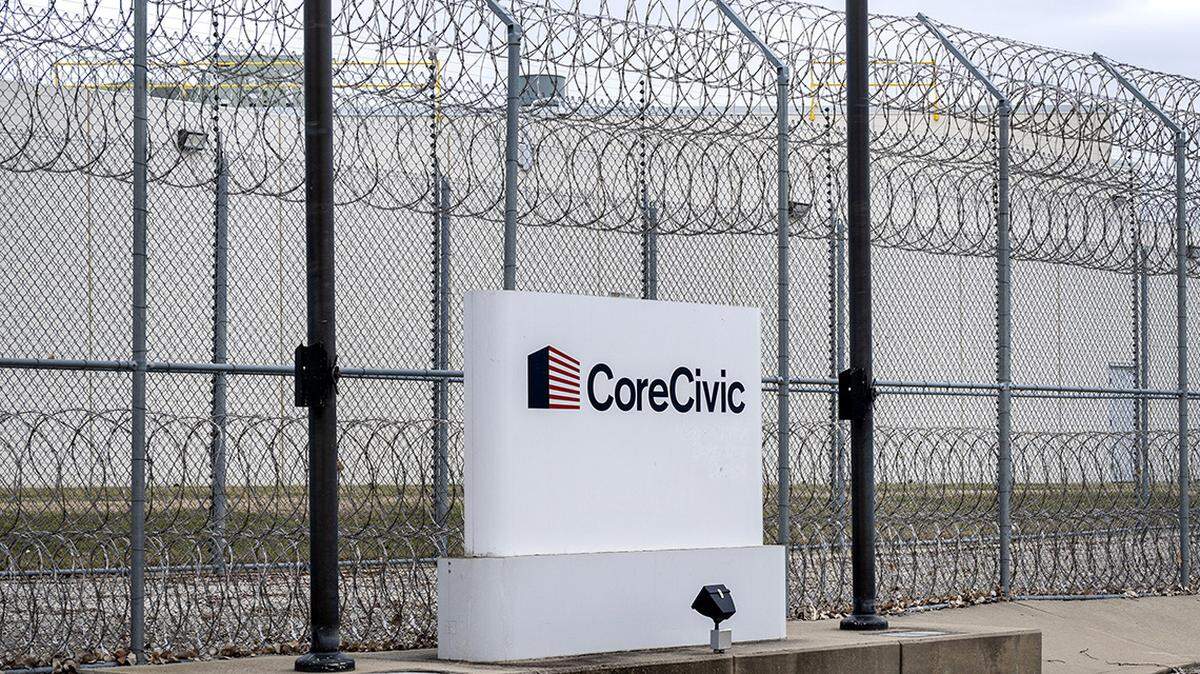
The Kansas Court of Appeals handed CoreCivic its latest in a string of legal defeats, rejecting the private prison company’s argument that it should be allowed to reopen its Leavenworth facility as an immigrant detention center before securing a local zoning permit.
The latest rebuke came in the form of a 22-page opinion published Friday, three days after the Leavenworth City Commission reviewed CoreCivic’s special use permit application and voted 4-1 to advance it to final consideration on March 10.
Approval of the zoning permit could render the Court of Appeals ruling moot in a matter of days.
Chief Judge Sarah Warner and Judges Thomas Malone and Stephen Hill upheld a Leavenworth County District Court judge’s temporary injunction that has so far blocked CoreCivic from accepting detainees under its contract with U.S. Immigration and Customs Enforcement.
“We have more than evidence of ‘past harms’ to support the City’s request for a temporary injunction,” the opinion says. “CoreCivic’s actions demonstrate a very real and imminent harm; it intends to operate a detention facility, regardless of whether it has received a special use permit from the City.”
CoreCivic failed to convince the judges that it had been treated unfairly by the city of Leavenworth, which maintained that the company could no longer operate its detention facility without a permit after it had stood empty for more than 12 months. The rebranded Midwest Regional Reception Center hasn’t held inmates since 2021.
“CoreCivic argues the City is ‘specifically targeting CoreCivic and regulating it unfavorably based on its partnership with ICE.’ But it provides no evidence to support its position,” the judges wrote.
CoreCivic opened its Leavenworth facility in 1992. Under a 2012 city ordinance, all jail and prison operators within city limits must obtain a special use permit before opening. But the law waives the permit requirement for facilities that opened before 2012, provided they haven’t ceased operations.
“Under CoreCivic’s argument, the City would be powerless to rescind a property’s special use, no matter how long the property owner discontinued the use. Such an interpretation would be an unreasonable result,” the opinion says.
Can CoreCivic reopen safely?
CoreCivic’s 2021 closure came amid deep community concerns over chronic violence, drug abuse and understaffing at the facility.
The judges cited Leavenworth officials’ sworn testimony as compelling evidence that CoreCivic should not be allowed to reopen without guarantees that conditions would be safer for inmates and employees than in the past.
“Patrick Kitchens, the City’s Chief of Police, offered sworn testimony about CoreCivic’s operation of the MRRC that is, to put it mildly, somewhat alarming,” the opinion reads.
“He testified that ‘(i)n one instance in November 2018, CoreCivic failed to report a death of an inmate to City Police for six days.’ He added that ‘(o)n three separate occasions, I recall receiving a voicemail from the warden following a sexual assault allegation’ but it was clear CoreCivic ‘did not want any police investigation to occur.’”
The terms of the zoning agreement under consideration by the city commission would require CoreCivic to allow law enforcement and city inspectors timely access to the detention center.
The agreement would also require the company to replace a grinder pump that repeatedly malfunctioned and discharged large pieces of debris into the city’s sewer system, requiring costly repairs.
The prospect of CoreCivic’s Leavenworth facility being used to detain as many as 1,033 noncitizens arrested by ICE has roiled the Leavenworth community. Protesters have repeatedly organized demonstrations at City Hall in recent months, calling for officials to deny the zoning permit that CoreCivic applied for in December after previously refusing to do so.
Local officials have also heard from people who moved to Leavenworth to work for CoreCivic and are frustrated that the facility has not yet been allowed to open.
In an email statement, CoreCivic spokesperson Ryan Gustin declined to say whether the company will appeal the adverse ruling to the Kansas Supreme Court before the city commission makes its final decision. If local officials reject the zoning application, CoreCivic can legally appeal the decision in district court.
“While we maintain our legal position related to the need for a special use permit (SUP), we have been and will continue working collaboratively with city staff to address concerns raised by the community as part of the SUP process, and we are grateful for that collaboration,” Gustin said.