Is Missouri GOP dragging out redistricting cases? ‘Delay works in our favor’
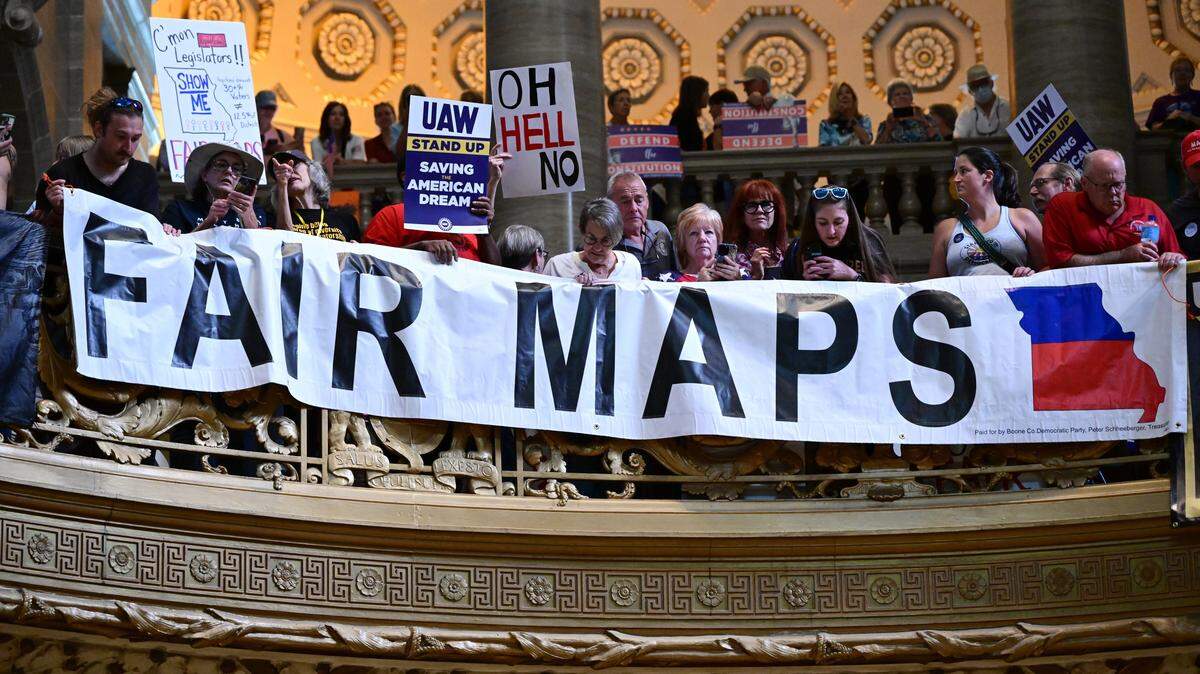
A Missouri judge on Thursday allowed a political action committee backed by national Republicans to join a key redistricting case, another roadblock that could decide whether the state’s gerrymandered congressional map will be in effect ahead of the 2026 election.
The ruling from Cole County Circuit Judge Brian Stumpe allowed Put Missouri First, a PAC supporting the new map, to intervene in the case. The ruling marks the second time the PAC, which has raked in roughly $3 million from national GOP and dark money groups, has stepped into a case over the future of Kansas City’s congressional representation.
Attorneys for the ACLU of Missouri, which sued to block the map, argued on Thursday that the PAC’s intervention was a delay tactic designed to keep it in effect. They pointed to the fact that the PAC recently won a delay in a separate redistricting case shortly after joining.
The courtroom dispute centered on a lawsuit from the ACLU that alleges Missouri illegally enacted the map in violation of decades of court rulings and precedent. The suit seeks to strike the state’s decision to allow the map to take effect even though a campaign turned in more than 300,000 signatures to force a statewide vote on it next year.
Republican state lawmakers approved the map last September in an unprecedented special session under pressure from the Trump administration. It carves Kansas City voters into three GOP-leaning districts in the hopes of pushing Democratic U.S. Rep. Emanuel Cleaver out of office.
The alleged delay tactics come just weeks before the candidate filing period opens for the 2026 elections on Feb. 24. Opponents argue that Attorney General Catherine Hanaway and Secretary of State Denny Hoskins, both Republicans, are engaged in a “transparent ploy” to drag out court action and signature certification until it’s too late to change the map before the election.
Tori Schafer, an attorney with the ACLU, told The Star on Thursday that the looming candidate filing period was “extraordinarily important,” pointing to the fact that candidates needed to know which map they would be filing under.
“The citizens have done everything possible. They’ve turned in more than double the amount of signatures required,” Schafer said. “Now, the ball is in the secretary of state’s court and he’s the one delaying.”
Missouri Solicitor General Louis Capozzi, who defended the state, on Thursday pushed back on the allegation that state officials were dragging out courtroom actions, saying “the state’s goal is not to delay.”
However, Hanaway, the attorney general and Capozzi’s boss, appeared to undercut his argument in a talk radio interview a day before Thursday’s hearing.
“As long as the status quo is the new maps, delay works in our favor,” Hanaway said in the interview, referring to her manuevers over the map.
Marc Ellinger, an attorney for Put Missouri First, told The Star on Thursday that his goal in joining the case is to make sure the congressional map approved by lawmakers takes effect.
“We believe that the Missouri First Map is the appropriate map,” Ellinger said, referring to the name of the map coined by Republicans, “and that the referendum is a misguided and inappropriate attempt to take away what I think is a better map.”
When pressed on Hanaway’s radio comments about delays in the process, Ellinger said he had not listened to the interview and could not speak on her position on the issue.
Thursday’s hearing between the ACLU and attorneys for Missouri marked another salvo in a drawn-out fight over the state’s congressional districts. In addition to the referendum campaign, opponents have filed a bevy of lawsuits to block the map from taking effect ahead of the 2026 election.
The issue has thrust Missouri into a national gerrymandering fight spearheaded by Trump, who wants to maintain GOP control of Congress.