Missouri House passes GOP plan to overhaul direct democracy. What next?
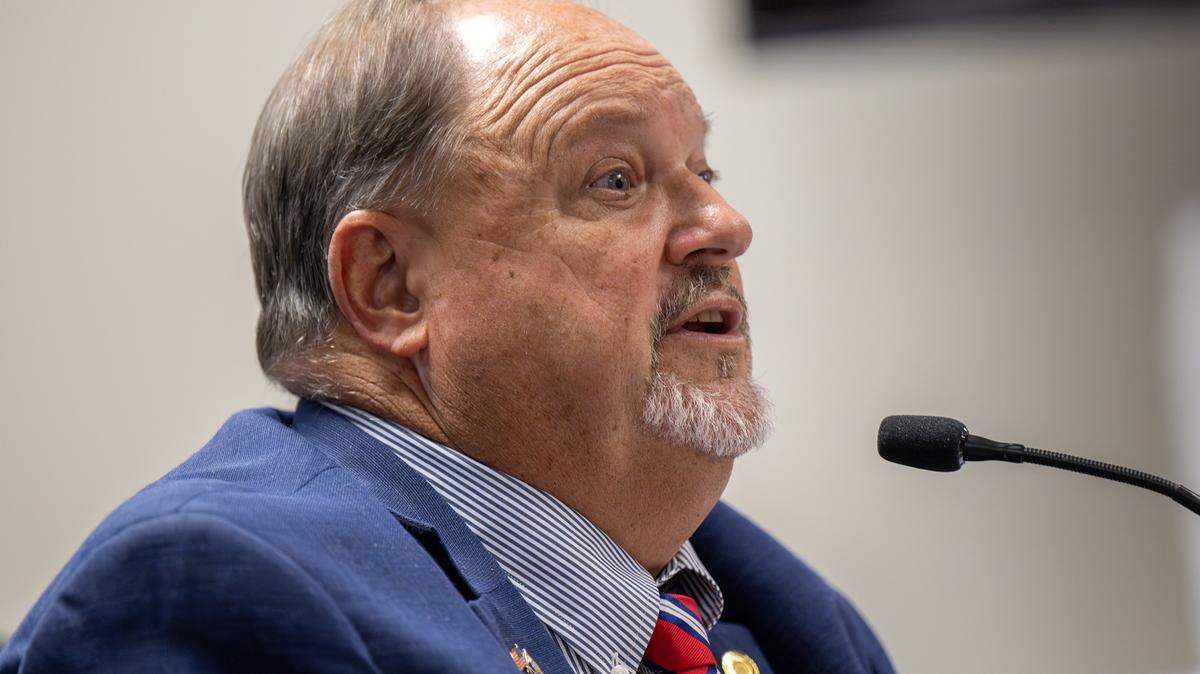
The Missouri House on Tuesday approved a Republican plan to overhaul the state’s most visible form of direct democracy by making it harder for voters to amend the Missouri Constitution.
The legislation, filed by Rep. Ed Lewis, a Moberly Republican, would weaken the state’s initiative petition process as part of a special session called by Republican Gov. Mike Kehoe.
The initiative process has allowed voters to overturn an abortion ban, raise the minimum wage, legalize marijuana, expand Medicaid and legalize sports betting in recent years. Currently, initiatives need a simple majority (50% plus one) in order to pass.
Lewis’ legislation would require citizen-led constitutional amendments to receive both majority support statewide and a majority in each of the state’s eight congressional districts to pass.
The House approved the legislation in a 98 to 58 vote largely along party lines. The legislation now heads to the Senate. If approved by both chambers, voters would have to approve the new threshold on a future ballot measure in 2026.
“There should be a broad consensus across the state,” Lewis said on Tuesday. “A broad consensus means that you would have to get a majority of voters in each of the congressional districts.”
The Republican criticism comes as voters have used the process to pass policies seen as progressive. They argue that outside interest groups have used initiatives to influence elections.
Political experts contend that the increased threshold would make it virtually impossible for most measures to pass. It would give voters in just one congressional district the power to veto an amendment, no matter how popular the measure is statewide.
Missouri would be the only state in the country with such a requirement, called a concurrent majority, according to a review of state ballot measure rules compiled by the National Conference of State Legislatures.
The higher threshold would also not apply to state lawmakers. Amendments placed on the ballot by the General Assembly would still only have to receive a simple majority statewide in order to pass.
The legislation faced sharp criticism from House Democrats, who framed the overhaul as an attack on democracy. Citizens from across the state also denounced the changes during heated hearings last week.
During a floor debate on Monday, Rep. Eric Woods, a Kansas City Democrat, excoriated a Republican argument that rural voters don’t have enough say in statewide votes. He pointed to recent Republican votes to overturn voter-approved policies, such as abortion rights and paid sick leave.
“You know what you’re doing here,” Woods said. “You are taking power away from the citizens. You are diluting their votes. It’s the same song and dance that we have heard every time, every year that I’ve been in this chamber.”
While the vast majority of Republicans voted in favor of the proposal, the chamber’s most powerful leader voted against it.
House Speaker Jonathan Patterson, a Lee’s Summit Republican, told The Star that he does not believe voters will approve the initiative petition overhaul at the ballot box.
“I don’t think that measure has a lot of support within my district,” Patterson said. “I think it puts a pretty large discrepancy between citizen-initiated amendments versus legislatively-offered amendments, and ultimately, I don’t think people are going to vote for it.”
In addition to the petition overhaul, the ballot question would also ask voters to ban foreign adversaries from contributing to or opposing ballot measures, an act that is already illegal under state law.
Democrats have attacked the language of the proposal as “ballot candy” or an attempt to mislead voters into overhauling the initiative petition process.
After passing the initiative petition overhaul, the House is poised to approve a plan to gerrymander the state’s congressional map later on Tuesday.
This story was originally published September 9, 2025 at 10:45 AM.