Why Kansas-Missouri economic ‘border war’ truce could collapse by August
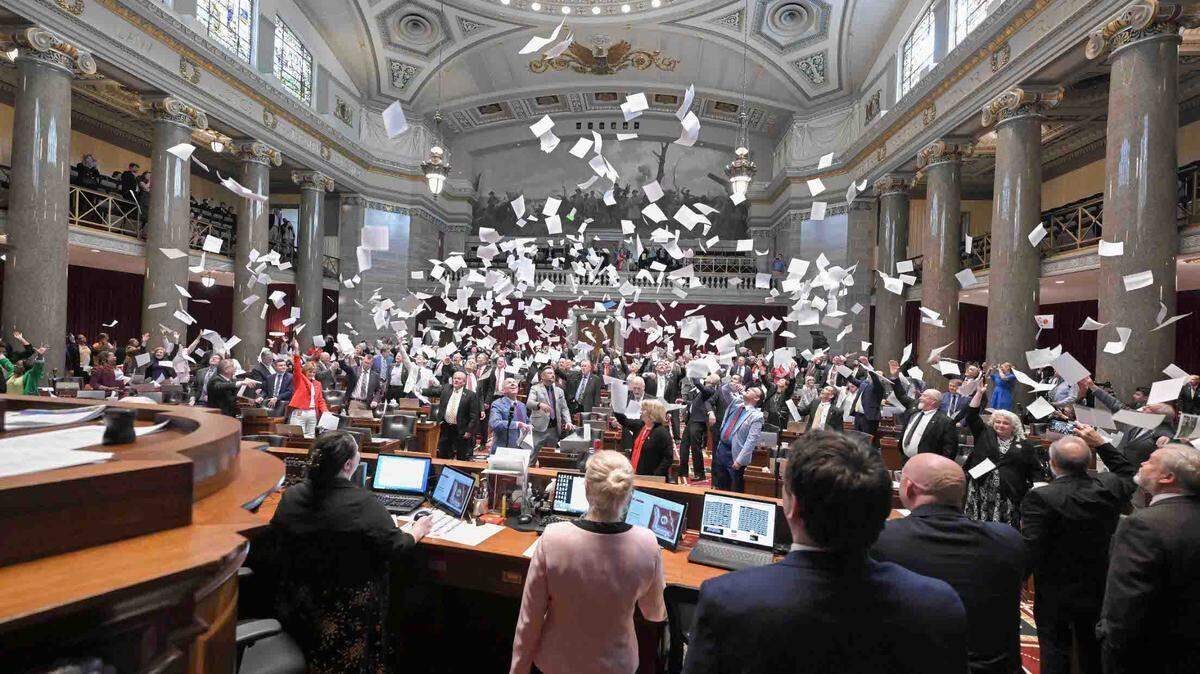
The landmark Kansas-Missouri agreement that largely stopped the two states from poaching Kansas City metro businesses from one another risks collapsing in August, after Missouri lawmakers failed to pass an extension.
The agreement’s imminent expiration sets the stage for a possible new era of cross-border poaching that comes as the two states vie for perhaps the biggest prize of all – the Kansas City Chiefs and Royals.
Both states want to win the teams with incentive packages worth hundreds of millions, echoing the era before the economic “border war” truce when they lavished businesses with tax credits and other perks to cross State Line Road. Kansas City civic and business leaders worked for years to put a stop to the practice, warning that the competition yielded little economic benefit.
In 2019, Kansas Democratic Gov. Laura Kelly and Missouri’s governor at the time, Republican Mike Parson, struck a deal to limit the use of state-level incentives to encourage business border hopping within the metro. While Kelly enforced Kansas’ side of the truce through an executive order, in Missouri, lawmakers codified it in a state law that will sunset on Aug. 28.
The Missouri General Assembly ended its annual session last Thursday without passing legislation to extend the agreement amid acrimony over a failed budget bill. Republican votes to force abortion rights back on the statewide ballot and repeal sick leave protections approved by voters last fall strained relationships as well.
Lawmakers were also swept up into an 11th-hour drama over the Chiefs and Royals as Gov. Mike Kehoe mounted a sudden push to pass a stadiums funding package that ran aground in the state Senate. Kehoe has said he will call a special session, likely in early June, focused on stadiums and potentially other topics – leaving open the possibility lawmakers will have one last chance to extend the “border war” truce before it expires.
But some Kansas City area leaders warn the fight over the Chiefs and Royals has already sounded the agreement’s death knell, even if it remains legally in force. In their telling, the decision by Kansas lawmakers to approve a super-charged bonding plan a year ago to entice one or both teams, with the promise of up to 70% public financing for new stadiums, violated the agreement in spirit and perhaps in letter.
“The Border War truce was a fine piece of legislation that has appeared to be abandoned during multi-state and multi-county discussions on sports investments,” Kansas City Mayor Quinton Lucas said in a statement.
“If there are legislative exceptions to the truce for whatever a body finds unique, interesting, or fun, then it seems there is no truce at all. Kansas City will center its advocacy on the sports and entertainment bill,” he said, referring to Kehoe’s stadiums package.
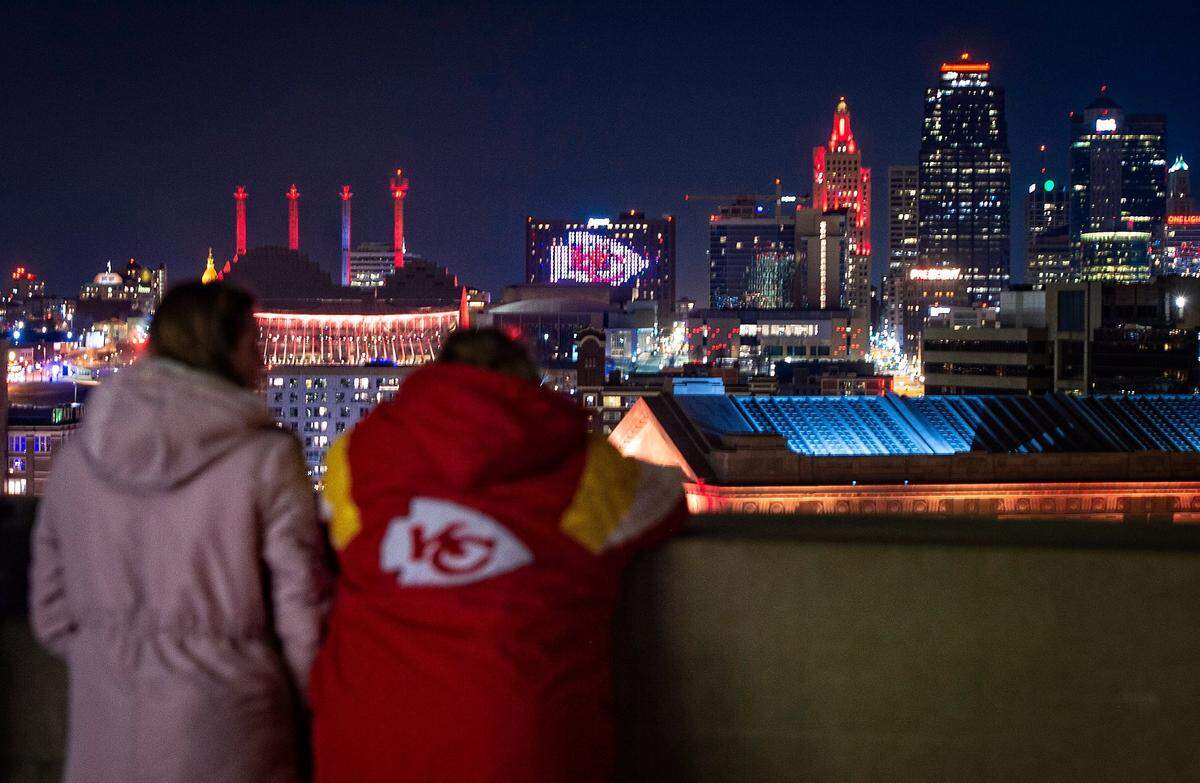
For her part, Kelly signaled as early as March 2022 that her administration viewed the teams as beyond the scope of the agreement. “When I signed the border war truce with Missouri, it didn’t include the Chiefs,” she told reporters at the time, amid the first rumblings that the team was weighing a move to Kansas.
Kansas Senate President Ty Masterson, an Andover Republican widely expected to run for governor, also remarked last year, “I didn’t sign anything” when asked about the agreement.
On Wednesday, Kelly spokesperson Grace Hoge said in a statement that the economic ceasefire had been a proven success for Kansas and the Kansas City region. The agreement, Hoge said, shifted the focus of both states away from “stealing jobs” to recruiting net new jobs for the region.
“This helped bring about record-setting years of economic development in Kansas,” Hoge said. “It is regrettable the Missouri General Assembly did not pass the border war truce extension and we will continue to monitor the situation closely.”
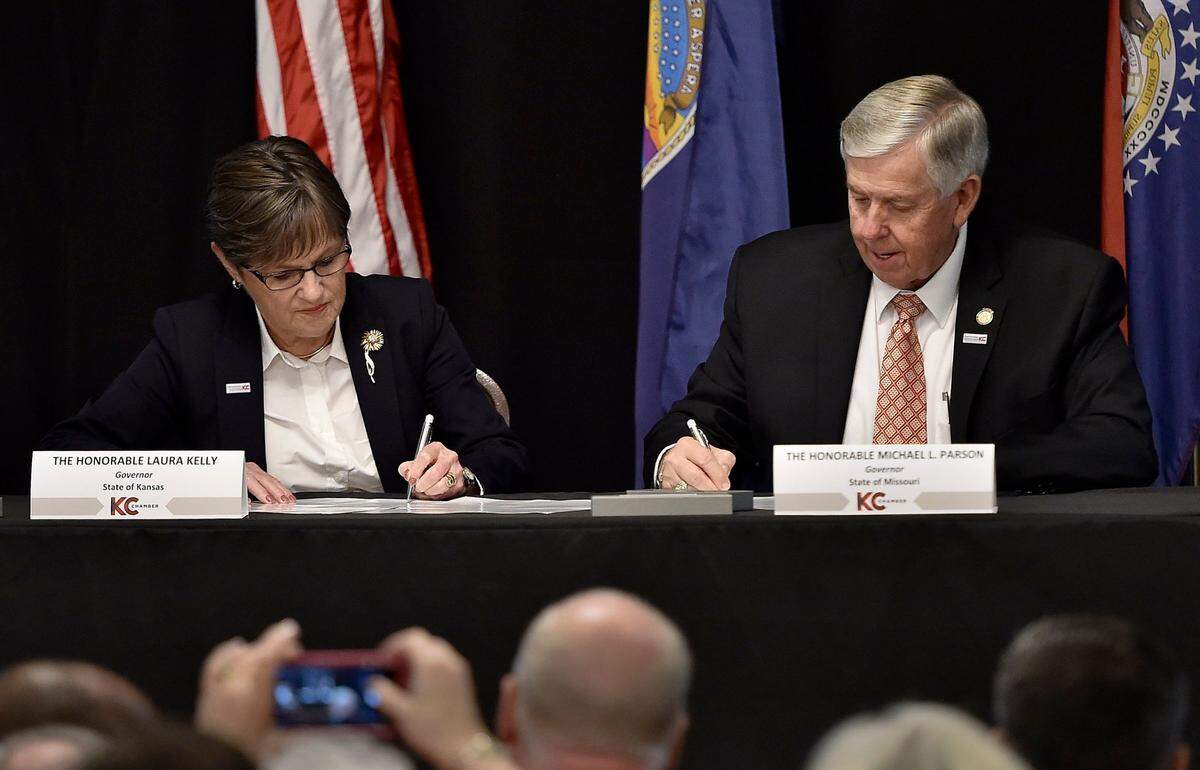
‘Landmark’ economic ceasefire
The agreement severely limits Kansas and Missouri lawmakers — and the states’ governors — from using incentives for companies in the core of the Kansas City metro. That’s Jackson, Clay, Platte and Cass counties in Missouri and Johnson, Wyandotte and Miami counties in Kansas.
Kansas limits its use of the PEAK (Promoting Employment Across Kansas) program, the Kansas Industrial Training and Retraining program, the Job Creation Fund, state loan funds and other state-administered discretionary incentive programs.
Missouri limits use of the Missouri Works program, the BUILD (Building Use Incentives for Large-Scale Development) program and the new or expanded business facility tax credit, along with other state discretionary programs.
Greg LeRoy, executive director of Good Jobs First, a Washington, D.C.-based organization that advocates against what it views as wasteful subsidies, called the looming expiration of the agreement “sad news.”
“That precedent, which stood from August 2019 until this coming August, is a landmark in U.S. history. It really deserves that term,” LeRoy said. “It’s the only time in U.S. history two states have entered a legally-binding agreement to not waste taxpayer money driving jobs across the state line in the same labor market. There is no other precedent.”
In one of the biggest examples of poaching prior to the truce, AMC Entertainment, a top movie theater chain, moved its headquarters from Kansas City to Leawood and received tens of millions in incentives.
Kansas also authorized $3 million in tax breaks to move about 60 jobs at HCA Midwest Health four miles from Kansas City to Overland Park. ServiceMaster DSI relocated roughly 100 employees from Illinois and Kansas City-area offices to a new Shawnee headquarters – and got $1 million in incentives to do it.
The Hall Family Foundation, a major supporter of ending the economic border war, previously published research estimating both states spent some $300 million luring companies back and forth across the state line with few new jobs created.
But since the agreement, the Kansas City region became a national example of a truce that could work and encourage regional cooperation, LeRoy said. He fears the area could eventually slip back into old habits if the agreement expires.
“History tells us that only a legal restriction works,” LeRoy said. “There’s just too many examples of handshakes and press releases blowing up.”
Special session option?
Others hold a more sanguine view about a future without an agreement.
Frank Lenk, an economist at the Mid-America Regional Council, said he doesn’t think anyone wants to go back to the pre-agreement approach, especially local governments in the metro. Even if the agreement expires in August, Missouri lawmakers could still revive it next year, he said.
“I don’t expect that they would suddenly reverse course and say it’s open season, especially since there’s a chance it could be revived,” Lenk said.
Whether Missouri lawmakers have a final shot at extending the agreement before August rests with Kehoe. As governor, he will call the special session on stadiums and will decide what subjects it will include.
The session will center on a proposal to authorize Missouri officials to negotiate incentive packages for the Chiefs and Royals that could cover up to 50% of the cost of new or upgraded stadiums for the two teams. Kehoe and other supporters of the plan want to move quickly because Kansas’ proposal expires at the end of June unless top lawmakers vote to extend it.
The first-term chief executive has already signaled he’s open to including other topics in the special session as he seeks to secure the votes to pass the plan.
Public discussion has mostly centered on whether Kehoe would allow the General Assembly to consider funding projects across the state that were included in a budget bill that House Republican leaders refused to bring to a vote. The bill would have provided $48.2 million for a mental health hospital in Kansas City, among other priorities.
“I think it’s fair to say everything is on the table of what that special session might look like,” Kehoe said at a news conference on Friday.
Kehoe’s office didn’t respond to questions for this story.
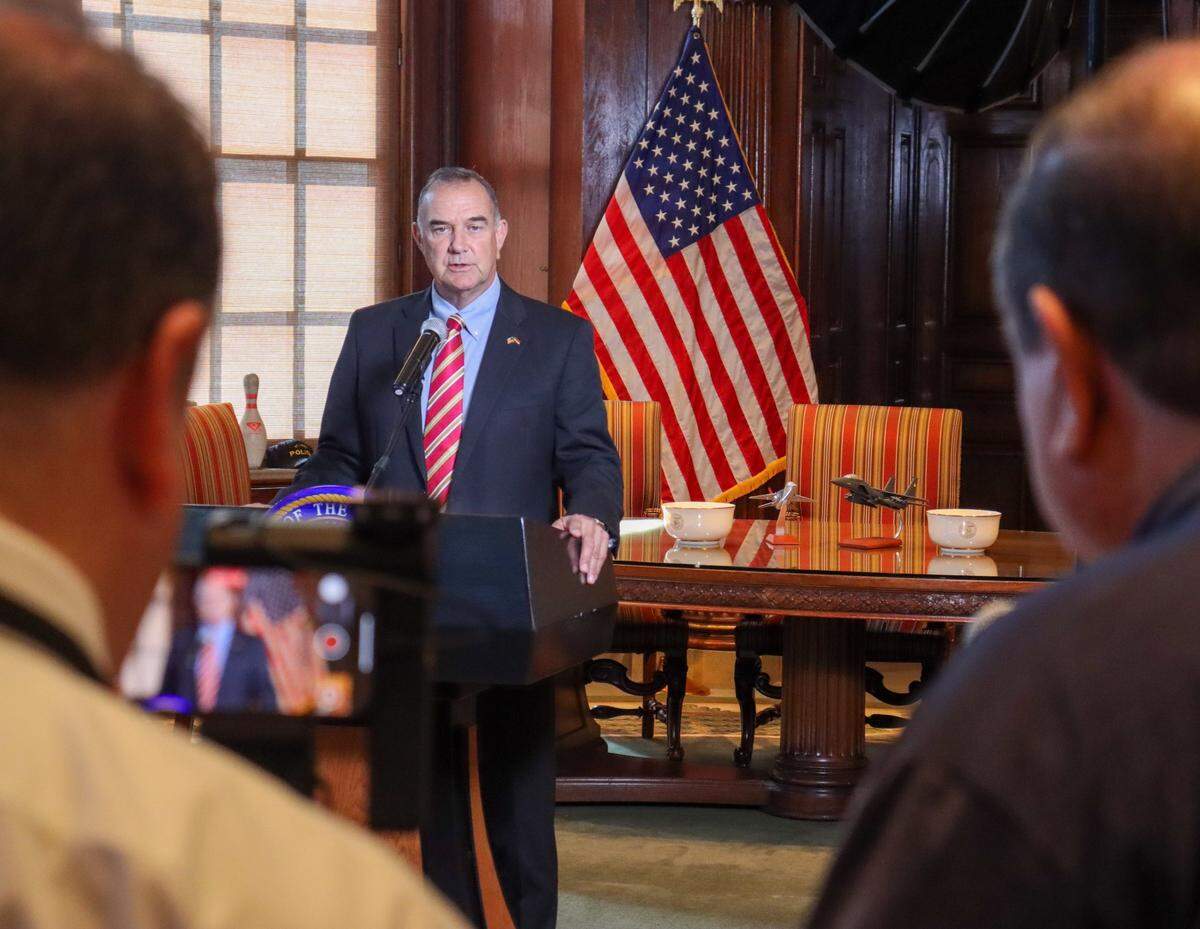
Missouri state Sen. Mike Cierpiot, a Lee’s Summit Republican who filed legislation to extend the agreement, said he would support expanding the special session call to include an agreement extension, calling that a “wonderful idea.”
Cierpiot downplayed the idea that the stadiums fight could complicate efforts to keep the truce alive, saying the tool used by Kansas – called Sales Tax and Revenue, or STAR, bonds – isn’t covered by the agreement, “and so I haven’t heard much blowback about that.”
STAR bonds aren’t explicitly mentioned in the 2019 agreement but would appear to count as a discretionary incentive program. Either way, Cierpiot indicated he won’t give up on efforts to keep the truce in place.
“I’m assuming, as long as Kansas is abiding by it, we will too,” Cierpiot said, “And I will certainly refile it next year.”
Truce ‘may be over’
The extension came close to passing this spring before falling victim to political maneuvering.
The provision was included in Senate Bill 10, a sprawling bill that adjusted deadlines throughout state law, including for numerous economic development programs. It also would have made permanent Missouri’s ban on gender-affirming care for minors.
The bill died in the House. State Sen. Lincoln Hough, a Springfield Republican and the Senate Appropriations Committee chairman, sponsored the legislation. In the final days of the session, Hough strongly condemned House leadership’s decision to not vote on the budget bill with funding for projects across the state.
“It’s unfortunate,” Hough said of the bill’s failure. “The House just didn’t get a lot of things done that I think they should have gotten done.’
The bill’s failure also means Missouri’s gender-affirming care ban remains set to expire in August 2027. Last week, Republican lawmakers voted to place a constitutional amendment before voters next year that would again largely ban abortion in the state. The amendment would also make the gender-affirming care ban permanent – a major talking point for supporters that would have been undercut if SB 10 had passed.
Missouri House Speaker Jonathan Patterson, a Lee’s Summit Republican, has voiced support for keeping the “border war” agreement in place. He told reporters last week that the extension is something the legislature needs to accomplish.
“We weren’t able to get that done,” Patterson said. “We’ll have to see about getting it done in the future, whether there’s a special session, whether that’s part of it.
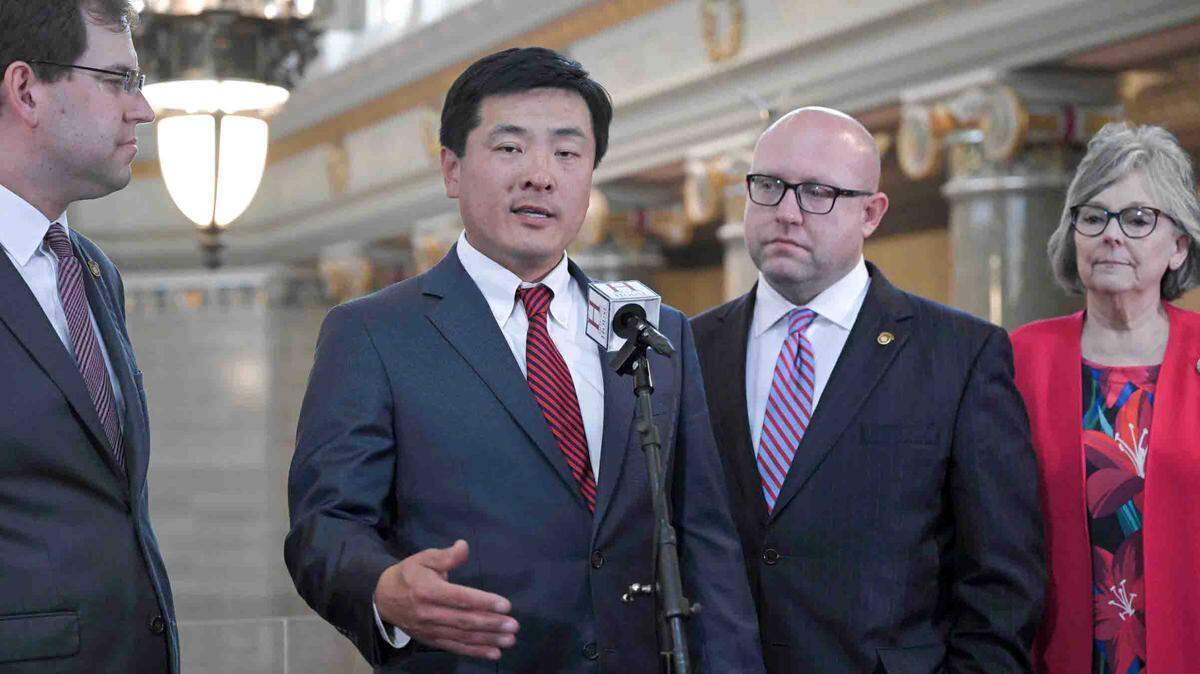
But other Missouri lawmakers aren’t as willing to sign off on an extension. Like Lucas, the Kansas City mayor, they view the Kansas STAR bonds plan as a flagrant violation of the truce.
“If they had that executive order on the books, why in the world did they pass those STAR bonds last year?” Missouri state Sen. Kurtis Gregory, a Marshall Republican, said. “I would have said that they were the first ones to break the agreement.”
Missouri state Rep. Mark Sharp, a Kansas City Democrat, said Kehoe shouldn’t include the truce in the special session. He predicted lawmakers wouldn’t have much appetite to approve an extension anymore, though he acknowledged he could be wrong.
Sharp suggested that once the Chiefs commit to staying in Missouri, lawmakers may have more interest in revisiting the truce.
“But I’m not sure,” Sharp said. “The days of the border war truce may be over.”
The Star’s Matthew Kelly contributed reporting
This story was originally published May 22, 2025 at 5:30 AM.