Strawberry Hill, KCK neighborhoods choked off by bridge closures: ‘Just everywhere’
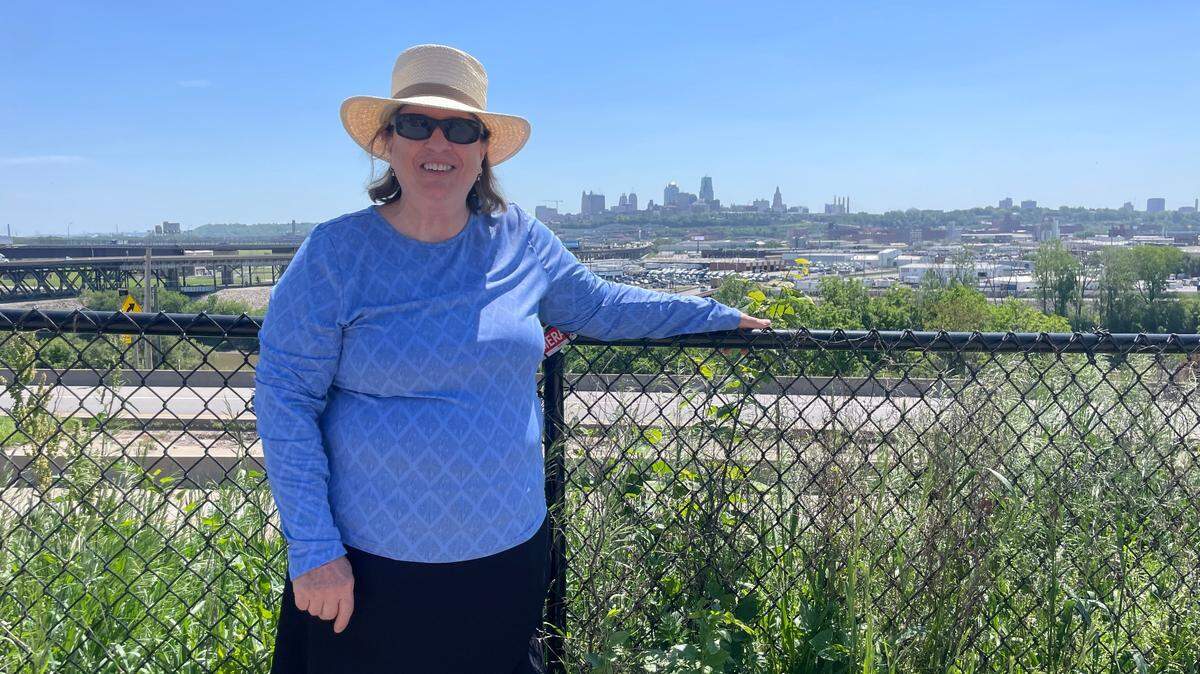
Rose Eilts, president of the Strawberry Hill Neighborhood Association in Kansas City, Kansas, is fed up with bridge closures.
Her vibrant community is increasingly starting to feel like an island, she said.
“We’re pretty much surrounded by bridges and the lack thereof,” Eilts told The Star.
As work kicks into high gear across the Kansas City metro to address aging infrastructure ahead of next year’s World Cup, KCK residents increasingly find themselves cut off from the nearby communities they’re used to traveling freely between.
“It increases everybody’s commute time, makes it inconvenient, and it keeps people from visiting us and our businesses and keeps us from getting out to our work and other places,” Eilts said.
The Kansas Department of Transportation is now managing six bridge projects in Wyandotte County associated with four complete closures, several partial closures and additional lane restrictions.
The Central Avenue Bridge spanning the Kansas River between KCK and Kansas City has been closed since early 2021. Repair work on the crucial connector between the two cities just got underway last month, along with the nearby Interstate 670 Bridge.
“The south end of our neighborhood relied on the Central Avenue Bridge to get over to the West Bottoms, the businesses down there, and to get up to downtown KCMO. It’s just a real convenient route,” Eilts said.
When the Lewis and Clark Viaduct Bridge closed abruptly for several months over the winter, Strawberry Hill residents received an influx of confused motorists on their narrow streets, including semi-truck drivers who needed help backing out, Eilts said.
“These are businesses that rely on being able to get their trucks out to the interstate,” she said.
Detours have been an endless source of frustration for Shawn Hensley, a regional operations manager at trucking company Dana, which owns two yards and a rail transfer facility in KCK.
“One of my yards is directly across the river off the Central bridge, so it used to be a two-minute drive, and now they’ve got to go all the way around I-70, come down James Street,” he said.
Hensley, who fights traffic every day to get to work from his home in Blue Springs, said he’s just waiting for the James Street Bridge to be put out of service because of all the extra traffic it’s taken on.
“You add fifteen minutes to every trip and then the day’s over before you even get started, it seems like,” Hensley said.
Frustration for drivers
Wendy Christ lives in KCK’s Rosedale neighborhood but worships and works as an administrative assistant at St. John the Baptist Catholic Church in Strawberry Hill.
She said if the Central Avenue Bridge was the only closure in the area, it wouldn’t be so bad.
“Everywhere I go, there’s a closure somewhere,” Christ said. “There’s a closure on (Interstate) 435. There’s a closure on (Interstate) 670. There’s a closure on 18th Street. It’s just everywhere, it’s crazy. Like, why did they do it all at once?”
Another major artery connecting the two states, the Kansas Avenue Bridge, remains blocked off indefinitely while local officials work to secure funding for its repair or replacement.
And the much-anticipated opening of the Rock Island Bridge between Armourdale and the West Bottoms — a separate project being managed by private developers — has been delayed from spring to fall of 2025.
In February, KDOT fully closed the 18th Street Bridge, disrupting north-south traffic that would otherwise flow seamlessly through the heart of KCK.
The Turner Diagonal Freeway remains closed to both eastbound and westbound commuters during replacement, which is expected to be completed next May.
And KDOT is just getting started on a K-5 bridge deck replacement with corresponding closures to all northbound and southbound lanes between 10th Street and Sunshine Road. The bridge is projected to reopen in December.
Christ said her normal commute between work and home has never been more nerve-racking.
“We have rush hour on Seventh Street. We’ve never had rush hour on Seventh Street,” Christ said, adding that all the extra cars are taking a toll on the road, which has required structural repairs.
And the closure of the 18th Street Bridge has rerouted vehicles to I-635, which Christ described as “already a parking lot with 18th Street open.”
“Now we’ve got more traffic on 635 and people are driving like idiots, I’ve noticed,” she said. “Seriously, people are more aggressively driving because of the time that they’ve had to add going all the way around to get from one place to another.”
The timing could hardly be worse, Christ said.
“We want these roads fixed. We want things to be improved. But I don’t understand why they did such major ones all at the same time, you know?”
Navigating KCK detours
Philip Harris, a KDOT spokesperson, said the agency does its best to complete projects in a timely manner.
“The logistics of project delivery are complicated and KDOT acknowledges the potential for frustration,” said Harris, noting that the agency is in regular contact with the Unified Government about the status of its projects.
Projects managed by other entities, including the railroads and the U.S. Army Corps of Engineers, can compound those challenges, he said.
Some residents are skeptical about whether the overlapping layers of government are doing everything they can to coordinate — especially when multiple nearby bridges are closed at once.
“That’s the frustrating part — thinking that the agencies with this much expertise on transportation and infrastructure would have their act together,” said Jim Schneweis, a retired high school teacher who lives in the Cathedral neighborhood.
Schneweis said he’s attended every meeting the Unified Government has hosted for residents to weigh in on construction projects. He said it feels like officials nod and listen but never change their plans based on the concerns that are brought forward.
Eilts, the Strawberry Hill Neighborhood Association president, echoed his concerns, saying not enough is being done to minimize the disruption on the roads.
“One entity doesn’t seem to know what another one is doing, like the Unified Government will have to close the James Street Bridge, which gets way too much traffic for as old as it is, and the Kansas Department of Transportation — they don’t seem to talk to each other at all, so they’ll have multiple avenues closed at the same time and you can’t get in and out of town,” Eilts said.
The UG did not respond to questions about the impact of closures and whether local transportation officials regularly coordinate with KDOT before closing municipal roads for maintenance.
In response to questions about emergency response times, a spokesperson for the Kansas City, Kansas Fire Department said advanced planning and real-time adjustments help minimize delays.
“Road closures and construction can be inconvenient and sometimes complicate how we respond to emergencies. Fortunately, we have enough resources to adjust quickly,” assistant fire chief Scott Schaunaman said in an email.
Every morning, crews communicate construction updates through emails, Zoom calls and in-person briefings, Schaunaman said. If something comes up unexpectedly, like a train blocking a route, dispatch can send another crew from the other side.
KCKFD falls short of national standards that recommend departments send out four firefighters per truck and meet a four-minute travel time between the station and response scene during at least 90% of incidents called in.