Measles will inevitably hit KC, leaders say. These ZIP codes have higher risk
Kansas City health leaders are bracing for the arrival of measles in the metro, an outcome described as inevitable, as they plead with parents to vaccinate their children.
Health officials held a large news conference on Tuesday to deliver urgent warnings about the dangers of the disease and how quickly it can spread. The scene evoked the early days of the COVID-19 pandemic as local leaders sought to prepare the city for an approaching public health threat.
But unlike the fearful days of March 2020, Kansas City health leaders possess a powerful weapon against measles – a long-proven and highly-effective vaccine. Whether they can convince enough people to get it to prevent any serious hospitalizations or deaths remains an open question.
K-12 schools in three Kansas City ZIP codes currently have measles vaccination rates among their student populations that fall below the 95% rate generally required to achieve herd immunity. In one ZIP code – 64155 in the Northland – the rate is just 84%.
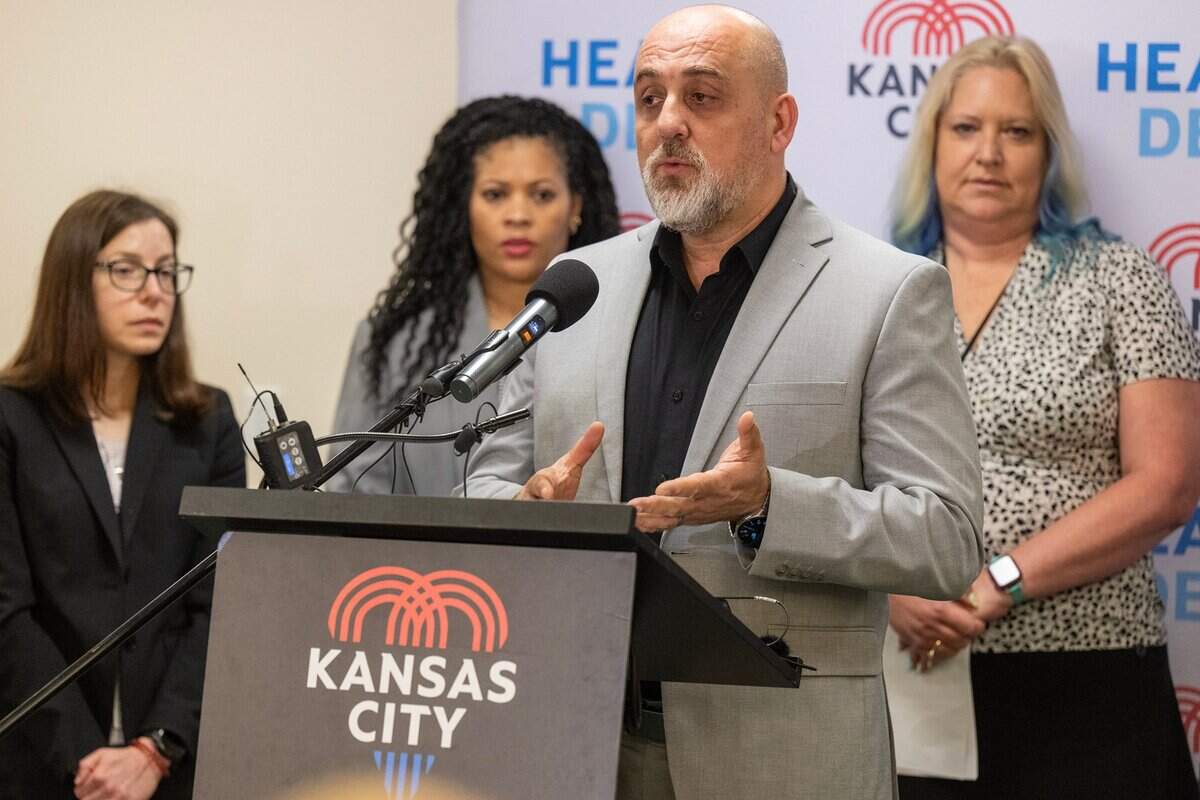
“It’s a matter of not if we get cases here in Kansas City, it’s when we get cases in Kansas City,” said Naser Jouhari, deputy director of the Kansas City Health Department.
The quickening pace of preparations in Kansas City comes amid a growing number of measles cases nationally. Nearly 900 confirmed cases have been reported across dozens of states, and an outbreak in southwest Kansas has become the third-largest in the country at 37 cases.
The United States in 2000 effectively ended endemic measles, a virus that can produce fever, rash and in some instances brain inflammation that can be fatal or cause lasting neurological damage. The measles vaccine was first deployed in the 1960s, dramatically curtailing infections and fatalities.
While occasional cases and outbreaks have continued to emerge over the years, the current resurgence comes amid falling vaccination rates and growing vaccine hesitancy. The skepticism is driven in part by mistrust of public health authorities during the pandemic and discredited theories linking vaccines to autism.
Robert F. Kennedy Jr., who has long sought to undercut confidence in vaccines, now leads the U.S. Department of Health and Human Services. In that role, he has voiced support for the measles vaccine but has falsely asserted that immunity from the measles vaccine wanes quickly; in fact, two doses remain highly effective over a lifetime.
Kennedy has also cut public health grants, including in Kansas City, that were helping to aid measles preparations. Kansas City and a handful of other municipal governments filed a federal lawsuit last week over the grant terminations.
“There is so much going on right now, that’s an understatement,” Kansas City Health Department director Marvia Jones said when asked whether federal health leadership was helping or harming preparations. “The news hits us every day, every week, there’s something different. I will tell you what has kept us grounded is trying to focus on Kansas City.”
Jones said the local health department tries not to get lost in developments in Washington, D.C., “and what the leadership is doing.”
“We’re trying to take care of home,” Jones said. “We want to make sure we do whatever we need to do.”
Vaccinations urged
The Kansas City Health Department, along with University Health and Children’s Mercy, have all urged individuals who suspect they may have measles – or parents of children who they believe may have measles – to call ahead to their health care providers before coming into a clinic or doctor’s office where they could spread the virus.
The Kansas City Health Department in mid-May will begin staying open until 7 p.m. on Wednesdays to provide additional vaccination opportunities, in addition to opening on Saturdays from 8 a.m. to noon.
Children should be vaccinated at 12-15 months of age and again at 4-6 years old. Two doses are recommended for adults who weren’t vaccinated as children or who are unsure of their vaccination history. Adults born before 1957 are generally considered to have immunity, however.
Nine staff members are currently assigned to the department’s vaccination clinic, Jouhari said, but three more are being added. He said the department is also reaching out to child care facilities and school districts to provide educational material. He also invited facilities interested in vaccinations on-site to contact the department.
Across all of Jackson County, 89% of kindergarteners are vaccinated against measles, according to data from the Missouri Department of Health and Senior Services. While that’s an improvement from 86.7% in the 2021-2022 school year, it’s still under the near-herd immunity threshold the county achieved as recently as 2019-2020.
Clay County’s rate also sits lower than health officials would prefer, at nearly 92%. Platte County has reached 95.2%, a more comfortable rate. The statewide rate is 90.9%.
Across the border in Kansas, public school districts in Johnson and Wyandotte counties reported immunization rates between 88% and 94% for the 2023-24 school year, the most recent year with available data – with one exception. USD 500 reported that only 55.8% of all incoming kindergarteners had received all of their required immunizations.
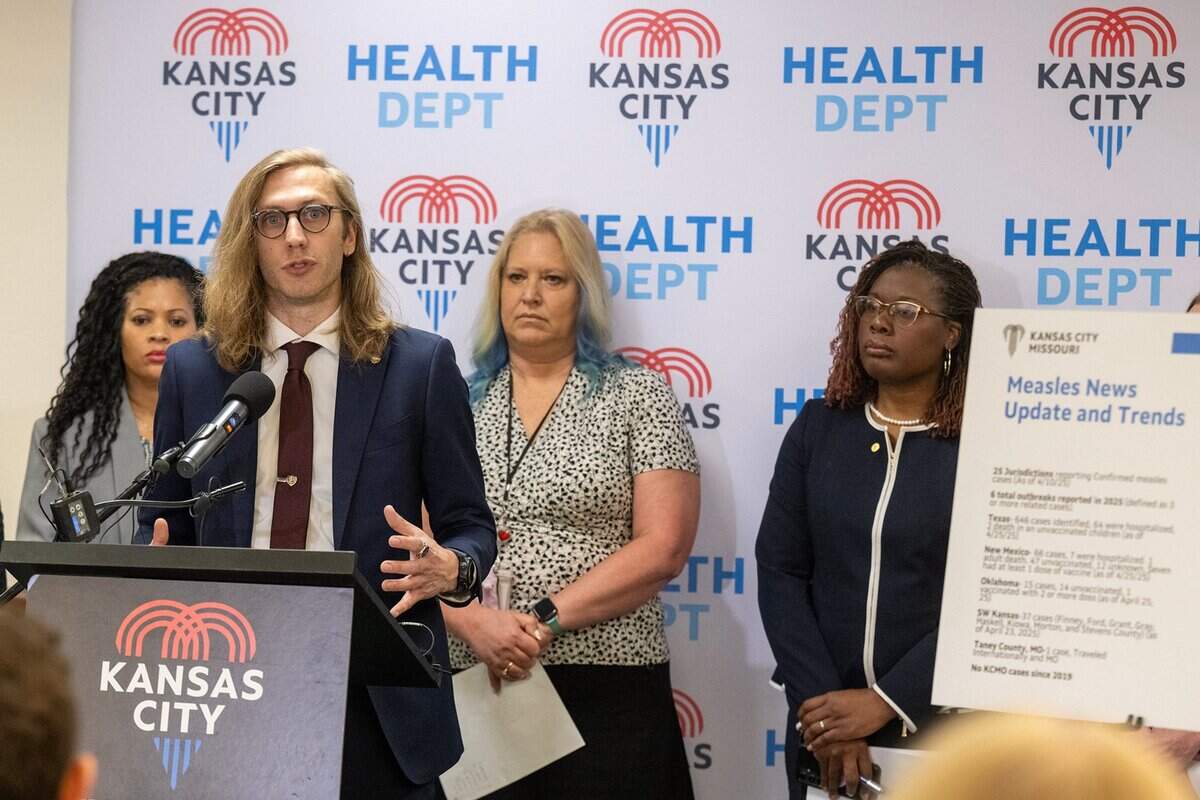
Alex Francisco, the Kansas City Health Department’s chief science officer, listed three Kansas City, Missouri, ZIP codes where he said schools hadn’t reached herd immunity:
- 64114, a sliver along the Kansas border that spans Gregory Boulevard south to West Minor Drive
- 64151, a rough rectangle that includes Platte Woods and runs from Northwest Barry Road south to Missouri 9 highway
- 64155, which runs from Northeast Cookingham Drive south to NE Barry Road.
The Kansas City Health Department is planning community conversations for individuals in North Kansas City Schools to address vaccine concerns, Francisco said. He said that he tries to show empathy toward those with vaccine hesitancy.
“They’re not coming from a place, typically, of hatred. They’re coming from a place of concern for their children. That is a very understandable place to be making a decision from,” Francisco said.
The current outbreaks across the United States constitute a “wake up call,” said Susanne Luedtke, an infectious disease specialist at University Health.
“Protecting your child, your school and your community – you need to vaccinate your child,” Luedtke said.
This story was originally published April 29, 2025 at 3:07 PM.