Missouri voters narrowly pass Amendment 2, legalizing betting on major sporting events
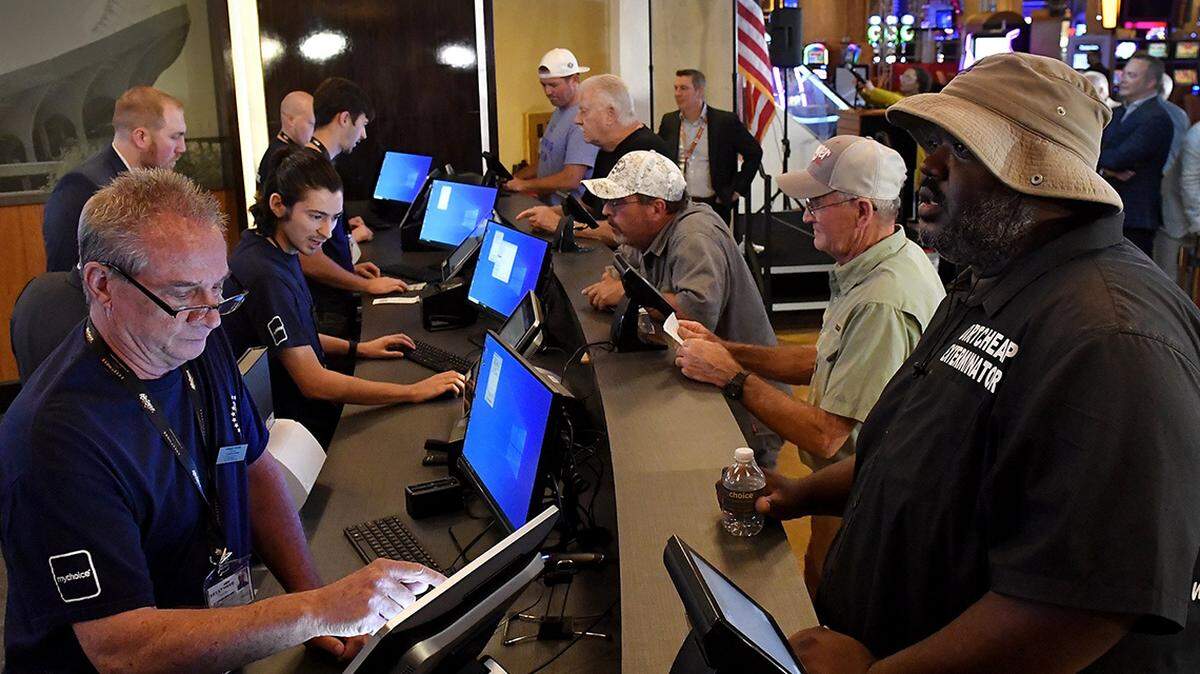
Missourians narrowly voted to legalize sports betting on Tuesday, allowing Missouri to become the latest state to allow gambling on major sporting events.
The passage of an amendment to the Missouri Constitution, called Amendment 2, opens the door for the state’s professional sports teams and casinos to offer sports betting just two years after sports gambling became legal in neighboring Kansas.
The Associated Press had not called the election as of 7:45 a.m. However, “yes” votes defeated “no” votes 50.1% to 49.9% with all precincts reporting, according to unofficial results from the Missouri Secretary of State’s Office.
The major campaign supporting the amendment, called Winning for Missouri Education, was backed by every major professional sports team in Missouri and has raised more than $40 million, including significant donations from the biggest mobile sports betting operators, FanDuel and DraftKings.
The effort came after Missouri lawmakers had tried, and failed, to pass similar legislation amid bitter infighting among Senate Republicans. The coalition of sports teams, led by the St. Louis Cardinals, collected more than 340,000 signatures to place the measure on the ballot.
The amendment will take effect 30 days after Tuesday’s vote. It requires that sports betting be allowed in the state no later than Dec. 1, 2025.
“Missouri has some of the best sports fans in the world and they showed up big for their favorite teams on Election Day,” Bill DeWitt III, the president of the St. Louis Cardinals, said in a statement Wednesday morning. “On behalf of all six of Missouri’s professional sports franchises, we want to thank the Missouri voters who made their voices heard by approving Amendment 2.”
Under the measure, the Kansas City Chiefs, Kansas City Royals, Kansas City Current, St. Louis Blues, St. Louis Cardinals and St. Louis City SC, will have a license to receive bets on games and other outcomes.
It also allows the state’s casino operators to be eligible for a license as well as two online betting platforms.
Missouri will tax sports betting at 10% with revenue first going to the Missouri Gaming Commission to pay for expenses to regulate sports gambling and $5 million allocated to a fund intended to help prevent compulsive gambling.
The remaining money “shall be appropriated for institutions of elementary, secondary, and higher education in this state,” the amendment says.
The amendment’s potential benefit to public education was the central focus for both supporters and opponents, of legalized sports betting. In TV ads, social media posts and public statements, the campaign almost entirely centered on how sports betting would help schools.
But whether, and how much, the amendment would actually benefit education has been up for debate. Critics have questioned whether sports betting will drive significant revenue to the state and whether state lawmakers will be able to divert money away from schools — two arguments brushed off by supporters.
Peverill Squire, a professor of political science at the University of Missouri-Columbia, argued that the amendment did little to stop state lawmakers from reallocating money to negate any additional revenue directed to education. He called it a “good marketing strategy.”
“But my guess is that anyone who thinks sports betting is going to generate large sums of new funds for education will be disappointed,” Squire said before the vote.
However, the sports betting campaign had rejected those arguments in a legal memo drafted by Alixandra Cossette, a Jefferson City-based attorney who filed the ballot measure.
“Any actions to direct these monies elsewhere would be a violation of the will of the people and of the language of the Missouri Constitution,” Cossette wrote in the memo, saying that the amendment requires lawmakers to “appropriate funds directly to educational institutions.”
A fiscal note attached to the measure estimated that the state revenue generated from legalized sports betting would range from nothing to $28.9 million each year. But the campaign argued those figures would be much higher.
House Majority Leader Jonathan Patterson, a Lee’s Summit Republican, acknowledged fears among some voters that lawmakers would divert money away from education if the amendment passed.
“What would stop it is citizens keeping an eye on their elected officials,” said Patterson, who is poised to be the next House speaker. “Everybody I know from House members, senators, leadership, we all want to fund education. So I don’t see that happening, but that’s always a concern.”
Sports betting supporters have argued that Missouri had missed out on millions in revenue, especially after Kansas launched legal wagering in 2022. Missourians have crossed state lines into neighboring Kansas and Illinois to place their bets.
But legalized sports betting still has its detractors.
In 2022, The New York Times published an investigation into the gambling industry, finding that the sports betting industry had devised ways to persuade people to keep betting even after they lose money. The newspaper also reported that tools to make it easier to quit — some run by gambling companies, others by states — did not always work.
However, the legislative debate in Missouri did not center on those philosophically opposed to gambling. Legislation to legalize sports betting had instead been bogged down by a dispute over video lottery terminals.
The casino-like slot machines have spread across the state in recent years at gas stations, truck stops, and fraternal organizations and exist in a legal gray area. Lawmakers have disagreed about whether a sports betting bill should also regulate and tax the gas station slots.
The constitutional amendment only legalizes sports betting and does not address the gas station slots.
This story was originally published November 6, 2024 at 12:23 AM.