Will Missouri’s sports betting amendment actually help fund Kansas City-area schools?
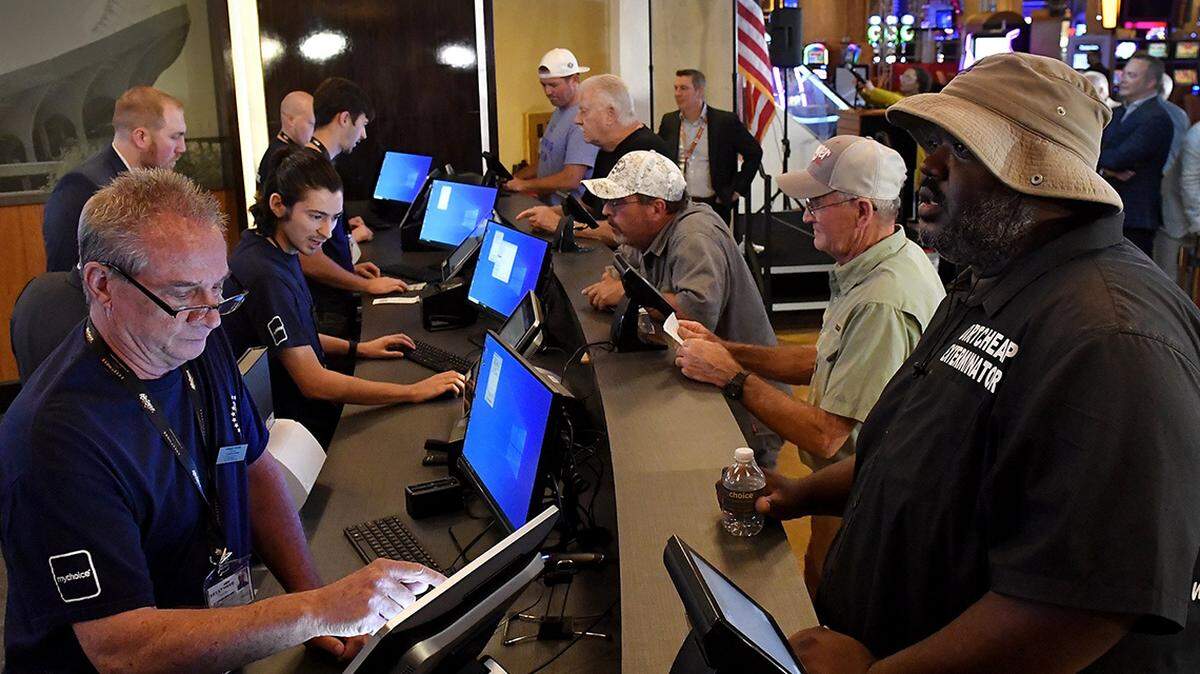
When a campaign to legalize sports betting in Missouri launched its first TV ad last month, it centered on a former first-grade teacher who said the constitutional amendment would send millions of dollars to help schools.
“Legalizing sports betting will generate tens of millions of dollars every year for our classrooms, helping increase teacher pay,” Susan Wolk, the former St. Louis-area teacher, said in the ad. “Amendment 2 has a constitutional guarantee that ensures the money from sports betting goes to our schools.”
Ahead of the Nov. 5 election, that’s largely been the focus for supporters of the ballot measure, called Amendment 2, which would legalize sports betting in the state. The major campaign supporting the amendment is called Winning for Missouri Education.
But whether the measure would actually help schools, including in the Kansas City area, has been up for debate. The constitutional amendment includes a requirement that state lawmakers allocate revenue generated from a 10% tax on sports betting to schools, but it does not mention a fund specifically tied to education.
That lack of specificity implies that the tax revenue generated from sports betting could go to the state’s general revenue fund, which lawmakers could use for other government services, according to the Missouri School Boards’ Association, which has not taken an official stance on the measure.
“Money deposited into the state’s General Revenue fund can be used to fund any function of state government, further casting doubt on the claim that this measure would generate money for education,” the association wrote in a fact sheet given to school districts.
In response, the sports betting campaign on Wednesday sent The Star a memo drafted by Alixandra Cossette, a Jefferson City-based attorney who filed the ballot measure, that rejected concerns that lawmakers could redirect the tax revenue to government functions other than schools.
“Any actions to direct these monies elsewhere would be a violation of the will of the people and of the language of the Missouri Constitution,” Cossette wrote in the memo, saying that amendment requires lawmakers to “appropriate funds directly to educational institutions.”
Cossette said the amendment would create “a substantial revenue stream for educational institutions in Missouri,” adding that the state Auditor’s Office would be required to ensure that the funds from the tax are spent on education.
The actual revenue the state could generate from sports betting is also a source of debate. A fiscal analysis from Republican Auditor Scott Fitzpatrick’s office estimated the tax revenue could range anywhere from nothing to $28.9 million a year. However, the campaign argues the estimated revenue would be much higher.
Even if the state generates the maximum estimated amount of $28.9 million each year, that would make up less than 0.7% of the $4.1 billion that state lawmakers allocated to Missouri schools last year, according to the school board association.
The association also pointed out that the amendment does not specify that revenue would go to public schools, raising concerns about money potentially going to private schools as Missouri lawmakers push to expand a scholarship program for students to attend private or charter schools.
Kansas City schools remain silent
Kansas City-area school districts, from Kansas City Public Schools to Raytown, have largely remained silent on the potential impact of the measure. Most contacted by The Star either declined to comment or did not respond for this story.
Talia Evans, a spokesperson for the Lee’s Summit R-7 School District, said in an email that “all our district has seen is the estimate mentioned in the ballot language.”
“No one from the state has reached out to LSR7 to indicate or discuss what the estimated individual impact on the district would be,” Evans said.
Dallas Ackerman, a spokesperson for Liberty Public Schools, said that his district had not taken a stance on the sports betting measure.
“We also do not know what kind of a financial impact this may have,” he said.
But while Kansas City-area schools aren’t weighing in on the issue, the sports betting measure’s potential benefit to schools has remained the central focus of the campaign, which has raised millions of dollars, including high-dollar donations from sportsbook operators.
An August study paid for by Winning for Missouri Education pushes back on Missouri’s financial estimates. It estimates that the state could generate $134.4 million in tax revenue from sports betting over five years, with $105 million going to schools during that same period.
In year five, the study estimates, Missouri could receive $38.7 million in tax revenue, a higher estimate than Missouri’s $28.9 million.
The campaign said the analysis differed from Missouri’s projections because it used data from states such as Ohio and Maryland, arguing that Missouri was using outdated data that was also impacted by the COVID-19 pandemic.
“The great thing about Missouri being the 39th state to legalize sports betting is that there is plenty of data to model and plenty of best practices to implement,” Jack Cardetti, a spokesperson for the campaign, said in an email.
Cardetti pushed back on arguments that the measure would not help schools, saying that because “this will be in the Missouri Constitution, the money is guaranteed to go to Missouri schools.”
When neighboring Kansas legalized sports betting in 2022, the state faced criticism for not collecting taxes when sportsbooks offered promotional free plays to bettors. In response, under the Missouri amendment, those promotional plays would be taxed if they are more than 25% of “all cash and cash equivalents received” by the sportsbook.
There was roughly $250 million in settled wagers in Kansas last month, according to the Kansas Lottery. That generated around $18 million in revenue but only $1.8 million went to Kansas.
Unlike the Missouri proposal, the Kansas sports betting law earmarks most of the revenue for a fund that will be used to attract professional sports teams to Kansas, after the first $750,000 raised will go toward investigating white-collar crimes related to gambling.
“We know thousands of Missourians are already betting on sports, but unfortunately Missouri isn’t getting a penny of benefit,” Cardetti said. “Many Missourians, especially in the Kansas City area, are crossing over into Kansas to place bets and help Kansas generate revenue.”
Cardetti also pointed to the state’s low rankings for teacher pay and reading and math scores.
The major campaign opposing the measure, called Missourians Against the Deceptive Online Gambling Amendment, has framed the sports betting campaign as misleading. The group, on its website, argues that there’s “no guarantee that a single penny would go to the State to fund schools.”
“And, any money that could possibly be raised from sports gambling would give politicians a ‘blank check’ to spend the money however they want, with no accountability,” said the group, which has raised more than $14 million, including large donations from casino operators.
‘Good marketing strategy’
The upcoming ballot measure, which Missourians will vote on Nov. 5, comes as state lawmakers have tried and failed to pass similar legislation. The hold up in the General Assembly had largely centered on a fight over whether to regulate and tax gas station slot machines.
Peverill Squire, a political science professor at the University of Missouri-Columbia, said the amendment represented a failure by state lawmakers. A legislative proposal would likely have generated more revenue for the state, Squire said in an email.
“Because lawmakers never agreed on a bill to legalize sports betting, gambling and major sports interests seized the opportunity to get their own measure on the ballot,” Squire said, arguing that the proposal is more favorable to gambling and sports interests than the state.
The amendment is unlikely to generate a large windfall for education and does little to stop state lawmakers from reallocating money to negate any additional revenue directed to education, he said.
“Tying Amendment 2 to education is a good marketing strategy because most Missourians would be happy to see more money going into public education,” Squire said. “Sports betting seems to be a fun, harmless way to do that. But my guess is that anyone who thinks sports betting is going to generate large sums of new funds for education will be disappointed.”
While the campaign’s focus has been on education, the overall result of the measure would center on legalized sports betting.
Under the amendment, the Kansas City Chiefs, Kansas City Royals, Kansas City Current, St. Louis Blues, St. Louis Cardinals and St. Louis City SC, would have a license to receive bets on games and other outcomes.
It would also allow the state’s casino operators to be eligible for a license as well as two online betting platforms. Missouri would tax sports betting at 10% under the proposal with revenue first going to the Missouri Gaming Commission to pay for expenses to regulate sports gambling and $5 million allocated to a fund intended to help prevent compulsive gambling.
The remaining money “shall be appropriated for institutions of elementary, secondary, and higher education in this state,” the amendment says.
A majority of Missourians appear to support legalized sports betting. Polling released in March found that 60% of likely voters believe that betting on professional sports should be legalized while 25% were opposed. The remaining 14% said they were not sure.
Sports betting supporters have regularly pointed to the fact that Missouri has missed out on millions in revenue, especially after Kansas launched legal wagering in 2022. Missourians have crossed state lines into neighboring Kansas and Illinois to place their bets.
But legalized sports betting still has its detractors. A separate poll released last year had cast doubt on the popularity of sports gambling statewide. In 2022, the New York Times published an investigation into the gambling industry, finding that the sports betting industry had devised ways to persuade people to keep betting even after they lose money.