‘A wake up call’: Failed Kansas plan to attract Chiefs, Royals gets Missouri’s attention
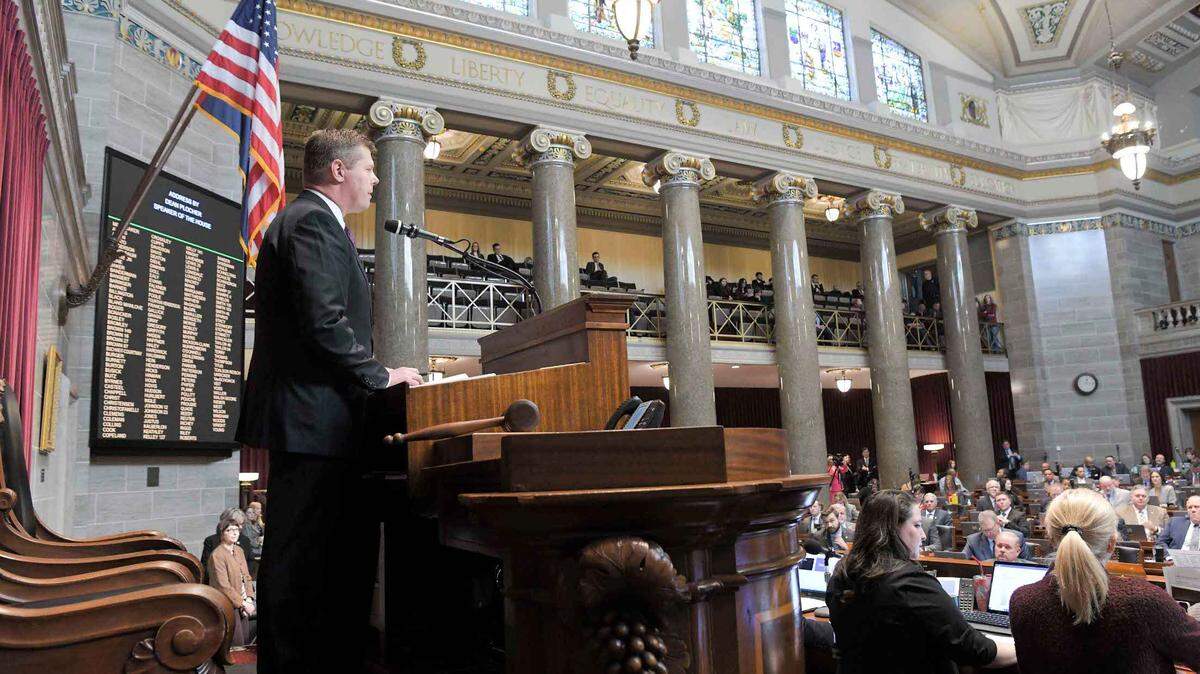
When Kansas state Rep. Sean Tarwater gathered together a group of legislative negotiators on Monday, he began by apologizing before outlining an extraordinary plan to attract the Kansas City Chiefs and Royals across state lines.
“Sorry for the short notice,” the Stilwell Republican said.
Everyone is on notice now.
The Kansas lawmakers on Wednesday morning adjourned without debating a measure put forward by Tarwater that would have authorized a supercharged version of Kansas’ Sales Tax and Revenue (STAR) bond program to potentially fully finance new stadiums for the teams.
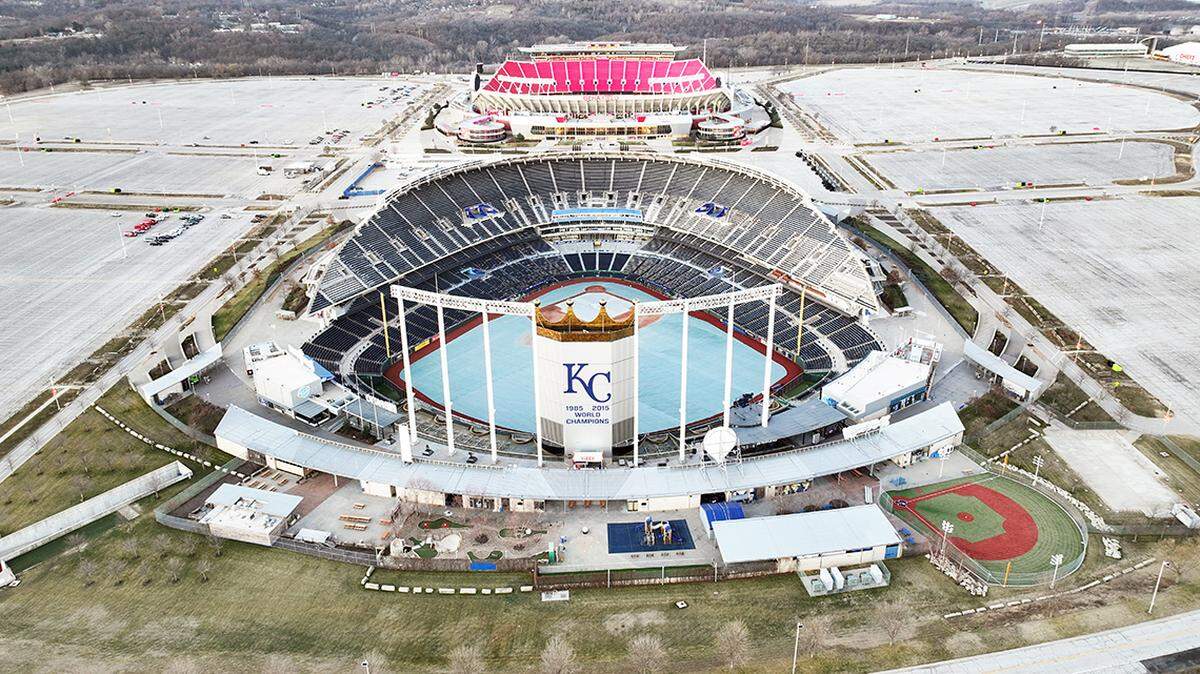
While the bill’s failure means the Kansas Legislature ended its annual session without passing an incentive program to attract the teams, the attempt immediately caught the attention of Missouri lawmakers. The Chiefs and Royals’ future in Kansas City is in question after Jackson County voters rejected a stadiums sales tax in early April.
Both states will likely spend the next several months weighing what kind of incentives – essentially economic weapons – it will take to win over one or both teams.
“I think this is certainly going to serve as a wake up call for our community to come together and make serious decisions about keeping the Royals and the Chiefs in Missouri,” Missouri House Majority Leader Jonathan Patterson, a Lee’s Summit Republican, said.
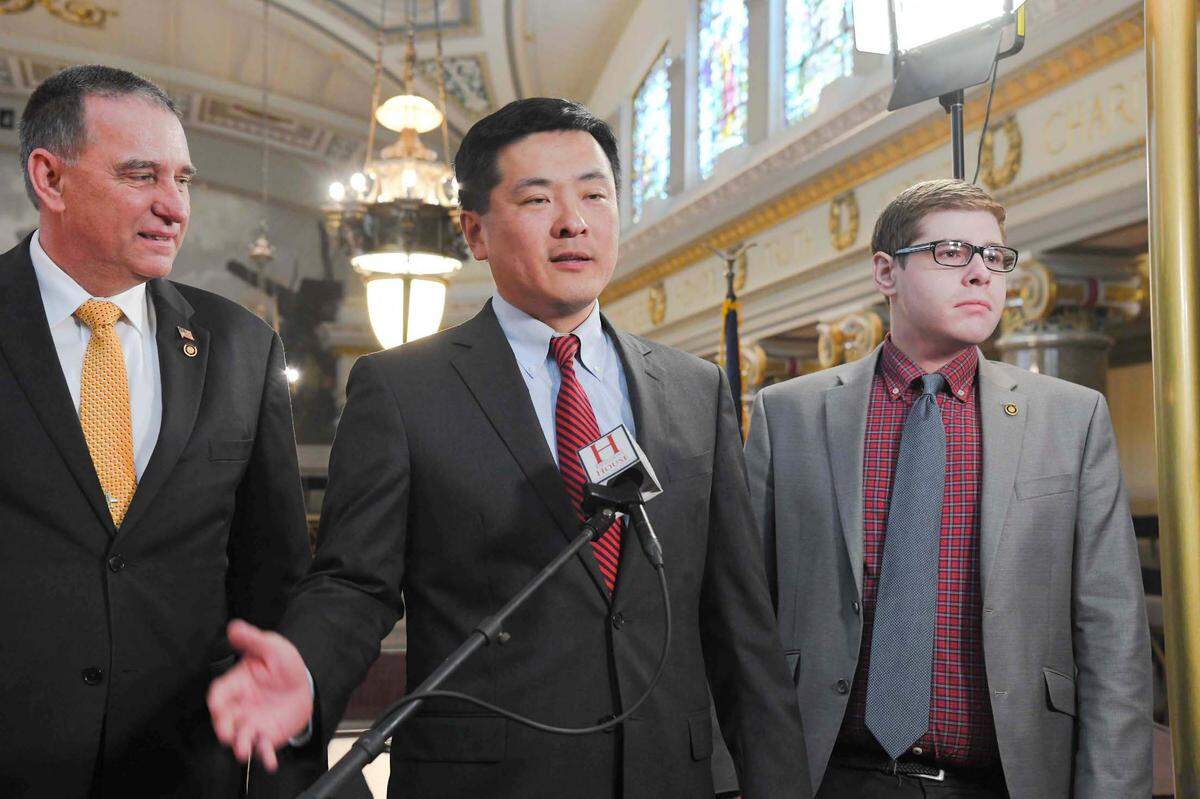
The STAR bonds proposal could soon reemerge because Kansas Gov. Laura Kelly is expected to call a special legislative session that may begin within weeks. While the session is expected to focus on tax policy, lawmakers could pass any type of legislation. Lawmakers could also take up the proposal again in 2025.
STAR bonds have a controversial history in Kansas and have never been used on the scale contemplated by the legislation, which would have allowed bond proceeds to pay for 100% of stadium project costs – an amount that would total billions of dollars. The bonds would be paid back by future sales tax revenue from within the stadium and surrounding retail development over 30 years.
The Kansas plan would have required a $1 billion minimum investment to qualify, with at least 30,000 seats required in a stadium. A new Chiefs stadium would likely cost upwards of $3 billion, for example.
Local governments would not have had to pledge their share of sales tax revenue within the STAR bond district toward repaying the bond, a sharp break with typical STAR bond districts. Taxes on the sales of alcohol would also go toward repaying the bond.
“As great a concept it would be to bring that kind of commerce to Kansas, the ultimate goal is to keep those two teams in the metroplex. So if Missouri can figure it out, more power to them,” Tarwater said.
The failed plan has now given Missouri a look at the kind of state support Kansas may be willing to offer in the future.
“I tend not to feed the freak out, but I will note that the Missouri Legislature, which is still in session, can match (or outdo) whatever tools are to be considered in Kansas, particularly sales tax redirection from the stadiums and surrounds (which are in essence STAR bonds),” Kansas City Mayor Quinton Lucas posted on social media on Monday night.
Missouri Gov. Mike Parson, a Republican, told KMBC on Tuesday that “we have to compete with every state” every day to attract businesses.
“They are big business, and we want to do everything we can to keep them here because it’ll have a huge impact on our state,” Parson said.
Missouri lawmakers on Tuesday appeared willing to offer incentives, but several cautioned that immediate action is unlikely with less than three weeks remaining in the legislative session. The failure of the Kansas package may also alleviate the pressure on lawmakers for quick action.
Missouri state Rep. Bill Allen, a Kansas City Republican, said in a statement that he agreed with Lucas’ comments. He said he would introduce legislation next year that would allow Missouri to have STAR bonds similar to Kansas, but pointed to the Missouri General Assembly’s tight deadline this session.
Infighting among Republicans in the Missouri Senate already threatens to derail the end of the session. A must-pass measure renewing a tax critical to funding the state’s Medicaid program is mired in a filibuster led by a contingent of hard-right senators.
“The pending budget is a mess in the Senate, we all think we are heading for a special session, and I have no idea how many billions the Senate has added on,” Allen said. “And I’m pretty sure that currently no money was added for Chiefs/Royals.”
Some experts who have studied stadium financing question a move by either state to offer sweeping financing for a new stadium, especially without requiring the teams to guarantee some level of private investment.
Michael Leeds, a professor of economics at Temple University in Philadelphia, likened having a professional sports team to “chocolate cake” – something that is fine to have but should not be expected to be an economic boon to an area. He called full public financing of a stadium risky.
“We’re going to take the extra money that comes in and use that and it’s going to be so great, so sustained, that we’re going to be able to pay for everything,” Leeds said. “And if you believe that, I have a bridge I want to sell you.”
Defaults possible
STAR bonds were used to develop the Kansas Speedway in Wyandotte County, a project generally seen as a model use of the program, that helped spur the development of the Legends. Not every project has been as successful, however. In late 2023, the Prairiefire development in southern Overland Park defaulted on its STAR bond debt.
The 60-acre development — a combination of restaurants, shopping, and a museum at 135th Street between Lamar and Nall avenues — has struggled to meet lofty sales projections set when Overland Park and Kansas approved the state incentives. Bondholders were told in December that Prairiefire could not pay off $15 million in debt by its maturity date, the first slice of $65 million in STAR bonds issued in 2012.
But Overland Park did not guarantee the debt on the Prairiefire project, meaning taxpayers aren’t on the hook. The developer also isn’t responsible for payment of the STAR bonds.
Proponents of STAR bonds say that lack of risk is a crucial feature, with bondholders taking the chance that projects may default. “That’s the beauty of the STAR bond district is that it’s the investors that are on the hook,” Tarwater said.
Still, the bonds can take decades to pay off – meaning state and local governments may not benefit from the additional sales tax revenue generated by the project and surrounding development until far into the future.
In 2021, Kansas state auditors estimated that at a minimum it would take Prairiefire until 2046 and the Hutchinson Salt Museum until 2057 to break even on the sales tax revenue the projects gave up through STAR bonds. The Wichita Sports Forum could break even as early as 2030.
Greg Kindle, president of the Wyandotte Economic Development Council, expects attracting one of the teams would require an “aggressive” state and local incentive package similar to the one that built the Kansas Speedway.
Kindle supports keeping the teams in the region and says the right equation will involve what makes good sense for the teams and the community they reside in. Something to consider, he added, is how much should be put toward having the teams jump the state line.
“I don’t think it’s appropriate for all of the revenue to the local community or the state to be given away forever,” Kindle said, adding that a benefit offered ought to be good for the region.
“If they’re successful, everybody should be successful. And that for me is just good state policy,” Kindle said. “This won’t feel good if all of the money is given away.”