Kansas Democrats want to break Republican supermajority in 2024. Johnson County is key
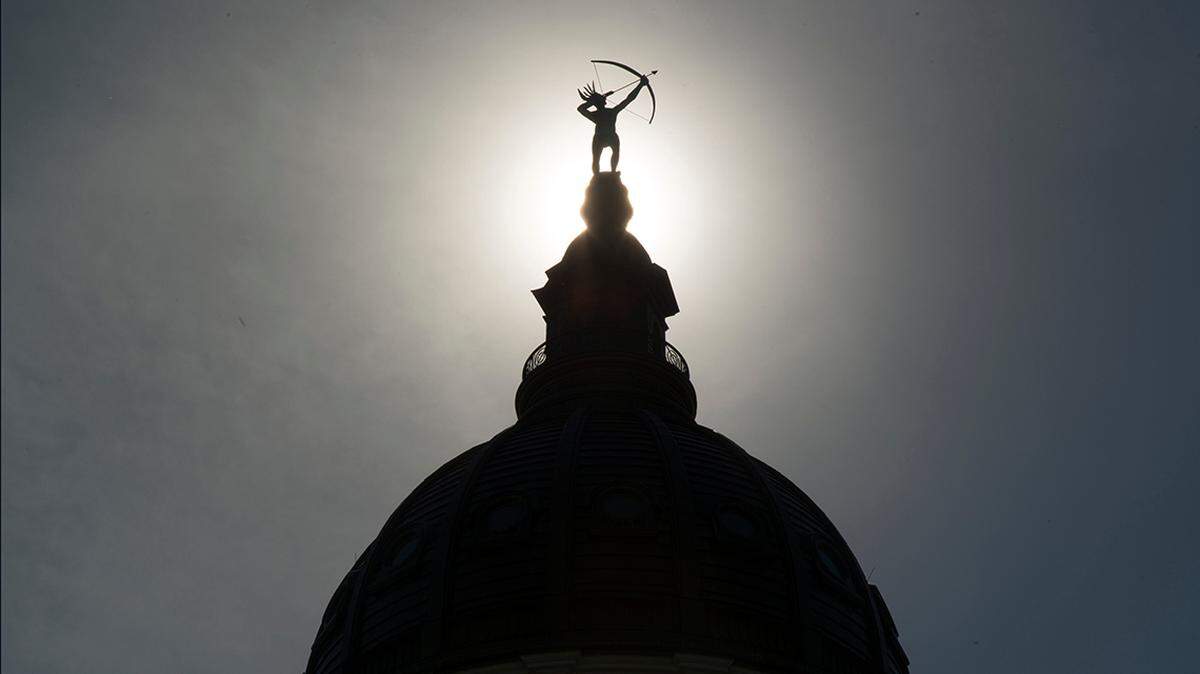
In 2013 Democrats held just two of Johnson County’s seats in the Kansas House. Over more than a decade that dynamic has changed dramatically as 16 of the county’s 26 state representatives are now Democrats.
Republicans have held supermajorities in the state House and Senate for more than a decade, but Democrats now see a path to breaking the veto-proof control in 2024 that runs through Johnson County. It begins when lawmakers return to Topeka for the annual legislative session on Monday.
It’s the last session before every legislative seat is up for grabs in the November election — first time every seat is up for election since Democratic Gov. Laura Kelly won reelection in 2022.
“Johnson County is our number one area of interest,” Abhi Rahman, a spokesperson for the Democratic Legislative Campaign Committee, said in a statement.
Kansas is a top priority state for the national organization, which works to elect Democrats in state legislative races. The DLCC sees a potential roadmap in the 2022 elections that saw Kelly reelected and the right to abortion preserved in the state constitution.
The current supermajorities allow Republican leaders to wield near-total control over the legislative process. If they remain united, GOP lawmakers can pass conservative priorities over Kelly’s veto. Take that away and the Democratic governor’s veto becomes more powerful, giving top Republicans more incentive to negotiate.
To get there, Democrats will need to hang on to all their existing seats and pick up two more seats in the House and three more in the Senate. In 2022 seven House races in Johnson County were decided by fewer than 300 votes. Four of those were won by Democrats while three were won by Republicans.
The 2024 legislative session is likely to be marked by political posturing as lawmakers, especially those in close Johnson County seats, become increasingly mindful that every vote could be used against them in a primary or general election.
Kelly has made it clear she will push for Medicaid expansion to be a key campaign issue if lawmakers do not approve it this year. Kelly has long pushed for expansion, which would extend health coverage to more than 150,000 Kansans.
Rahman said the DLCC is preparing messages on social issues including abortion and gun rights focused on the idea that “Democrats are fighting to protect fundamental freedoms.”
“I’ve also got the PAC that we put together that will ensure that we’ll have the resources to make this the number one issue,” Kelly said last month, referencing a “middle of the road” PAC she formed to support moderate lawmakers.
Meanwhile, GOP leadership anticipates a session focused on income and property taxes, as well as a separate push to restrict hormone therapy and gender-affirming surgery for transgender minors.
“Inflation is affecting the government but the people that are paying for that government are being affected twice by that. They’re being affected personally and by their tax dollars,” said House Majority Leader Chris Croft, an Overland Park Republican.
Bob Beatty, a political scientist at Washburn University, said a session truly focused on taxes and economics issues will be helpful to Democratic and Republican incumbents. However, he said, a swing toward social issues like abortion or transgender rights will make campaigning harder for Republicans in close districts.
“Those culture war issues may not be helpful in 2024, which, when you look at it, makes you think that’s why 2023 was their big anti-woke session,” Beatty said, referring to a string of bills Republicans pushed last year regulating the lives of transgender Kansans by barring trans athletes from girls and women’s sports and defining gender in state statute by sex assigned at birth.
With Kelly in the governor’s mansion, Beatty said, 2024 is a “vital year” if Democrats want to break the supermajority. Kelly will help Democrats campaign and she told The Star her “middle of the road” PAC would primarily be used to support Democrats.
Rep. Stephanie Clayton, an Overland Park Democrat who joined the Legislature as a Republican, said that in addition to using Kelly’s veto to stave off conservative policies, a smaller majority would have a moderating effect on legislation and open the door to proposals like Medicaid expansion.
“If you have a safer space for our moderate Republican allies to join us when it comes to Medicaid expansion then you’ll see some things opened up to some of the senators who might have been a little bit cagey,” Clayton said.
But eliminating the supermajority in either chamber may still be a tall order for Democrats.
Democrats have seen openings to break the supermajority in the past but haven’t been able to deliver. In 2020 the party gained seats in Johnson County but lost seats in other parts of the state.
“I think that people realize that our policies and the things that we want are the things that they want,” said House Speaker Dan Hawkins, a Wichita Republican, referencing economic development, school funding and workforce development.
After progressive candidates won decisively in Johnson County’s local and school board elections in the fall, Senate President Ty Masterson, an Andover Republican, said he wasn’t yet sure what approach Republicans would take toward campaigning in the county this year.
“I don’t know that these local elections have a great effect on what our state elections look like. I think what’s going on federally has more of an impact on us,” he said.
Hawkins said he wasn’t worried about Medicaid expansion as a campaign issue and predicted that Republicans would finish 2024 with a larger majority than they currently have. While Republicans have vulnerable incumbents in Johnson County, Hawkins contends Democrats are vulnerable as well.
“I think they’ve made about as much progress as they’re going to,” Rep. Bill Sutton, a Gardner Republican, said of Johnson County Democrats. “I think we’re gonna start seeing some wins on our side in Johnson County.”
Though Croft acknowledged Johnson County Republicans are often under pressure when voting to consider possible primary and opponents and general elections, he said the best approach for lawmakers would be to focus on legislative work, and not the next election.
“If we focus on good legislation, good things for the people, good things are gonna happen,” Croft said.
This story was originally published January 8, 2024 at 5:00 AM.