Republicans are likely to win the House. What does that mean for KC area Democrats?
Rep. Emanuel Cleaver, a Democrat from Kansas City, has been in Congress for nearly two decades.
He entered the House in 2005, as a member of the Democratic minority and has watched control of the chamber change hands three times. Next year, he’ll likely see his fourth swap as Republicans appear on the verge to take the 218 seats necessary for a majority.
Should the Republicans win, he thinks some of the Democrats who were elected after 2018 and only know a Democratic majority are going to have a hard time.
“Many of us who have been around for a while have talked about how difficult it’s gonna be for some of our colleagues when they get up every morning and go over to the Capitol to lose every vote,” said Cleaver, who has spent 12 years in the minority and eight years in the majority during his tenure.
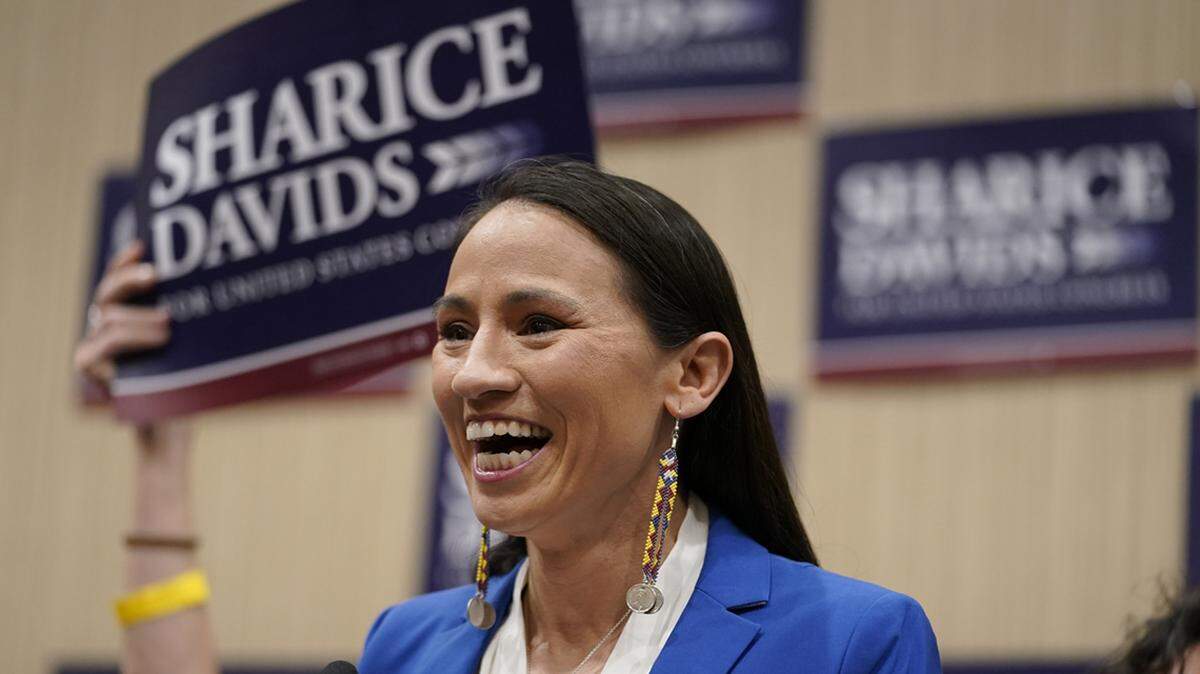
He doesn’t think Democratic Rep. Sharice Davids will be among them.
“She’ll have a much easier time and probably will have the opportunity to work with moderate members on the Republican side, because she that’s the kind of person she is,” Cleaver said.
Davids is set to enter her third term in Congress after running a campaign that heavily emphasized her bipartisan credentials. They’re about to be put to the test.
While votes are still being counted, Republicans appear poised to take win a narrow majority in the House, after four years of Democratic control. Republicans have won 211 seats to the Democrats’ 196, as of 4 p.m. Central on Friday, according to The New York Times. Republicans need just seven more seats to control the House.
“I’ve served under two different Administrations, one Republican and one Democratic, and I’ve been able to get things passed in a bipartisan way under both,” Davids said in a written statement. “There are things that need to get done regardless of who is in the majority, like addressing inflation and hammering out the must-pass Farm Bill, so I look forward to continuing to put my head down and getting to work on those.”
Still, Davids will have to find a way to make an impact in a U.S. House that increasingly places members of the minority party — particularly those who lack seniority — on the sidelines.
“The House is an incredibly hierarchical body that privileges the majority party to the near and sometimes total exclusion of the minority party,” said Laura Blessing, a political science professor at Georgetown University. “She’s going to be shut out from legislating.”
If they win, the Republicans majority will likely be narrow. That presents a difficult task for current House Minority Leader Kevin McCarthy, should the California Republican be elected speaker. In order to pass the party’s agenda he’ll have to keep his caucus united.
If Republicans win, several members of their caucus, like Kansas Reps. Jake LaTurner and Tracey Mann, who were elected in 2020, will be experiencing Congress as a member of the majority for the first time. Others, like Missouri Republican Rep. Sam Graves will ascend to posts they’ve been working towards for years. In Graves’ case, he’s poised to be chairman of the House Transportation Committee.
The Republican majority will likely be narrow. That presents a difficult task for current House Minority Leader Kevin McCarthy, should the California Republican be elected speaker. In order to pass the party’s agenda he’ll have to keep his caucus united.
Patrick Miller, a political science professor at the University of Kansas, said Congress doesn’t operate the way it did in the 1980s, under people like former House Speaker Tip O’Neil, a Democrat from Massachusetts. Because of increased political polarization, it’s rare to find a speaker who uses votes from members of the opposition party to get legislation through the House.
Instead power in Congress has shifted so that major bills — legislation that addresses issues like climate change, infrastructure or healthcare — typically isn’t brought up for a vote unless it has the enough support from the majority party to pass.
“He wouldn’t last very long as speaker if he were to try to run Congress in the way that Tip O’Neill did, or even Newt Gingrich tried to do at certain points in time,” Miller said. “So that makes Congress a harder place to be for a moderate in either party.”
This isn’t a new dynamic. Democrats hold a narrow majority in the current Congress and House Speaker Nancy Pelosi and had a difficult time managing the different factions of the party, from the progressives to the moderate candidates who faced tough reelection bids.
This year, as moderates clamored to pass the widely popular infrastructure funding law, its passage was delayed by the progressive caucus, who were using it as leverage for a larger spending bill that would accomplish many of the party’s priorities.
Eventually, the infrastructure law passed without the spending bill, but some of the most vocal members of the progressive caucus voted against it.
McCarthy will likely be in a similar position and will have to manage conservative firebrands like Rep. Marjorie Taylor Greene from Georgia or Rep. Thomas Massie from Kentucky.
“Everyone’s got to be in a position of willingness to work together,” said former Rep. Kevin Yoder. “Otherwise, they’ll not get anything done. And there’s a little bit of internal pressure, sort of conference peer pressure that will have to occur with from colleague to colleague. In order for everyone to achieve their goals, everyone’s gonna have to help each other.”
Yoder, a Republican, represented Kansas’ 3rd Congressional District between 2011 and 2019, when Republicans had a majority. He said the narrow majority might make it easier for McCarthy because there will be a stronger emphasis on unity.
“Certainly factions can have additional opportunities for leverage over the process,” Yoder said. “But I think that remains true even in large majorities.”
During her campaign, Davids talked about her support for bipartisan laws like infrastructure funding and another that attempted to resolve issues with the supply chain by spurring domestic manufacturing. But those bills were sponsored by Democrats and had enough Democratic votes alone to pass the House.
Only 13 Republicans supported the infrastructure law, fewer than the 19 Republican votes it got in the Senate, which has fewer members.
While it appears likely that Republicans will win the House, Democrats appear likely to control the Senate. That will create the kind of divided Congress that, if it passes any legislation, will give Davids an opportunity to vote on bipartisan bills and potentially get some of her agenda into amendments and spending bills.
But it’s unlikely that it will produce either party’s legislative priorities.
“I think for the Republicans in our delegation it’s also going to be a frustrating place to be because, if you’re if you’re someone like Rep. Jake LaTurner, your party agenda may be able to get through the House, but it’s dead on arrival in the Senate,” Miller said.
This story was originally published November 11, 2022 at 4:22 PM.