‘An embarrassment’: How Derek Schmidt’s prosecution of Schlitterbahn water slide death failed
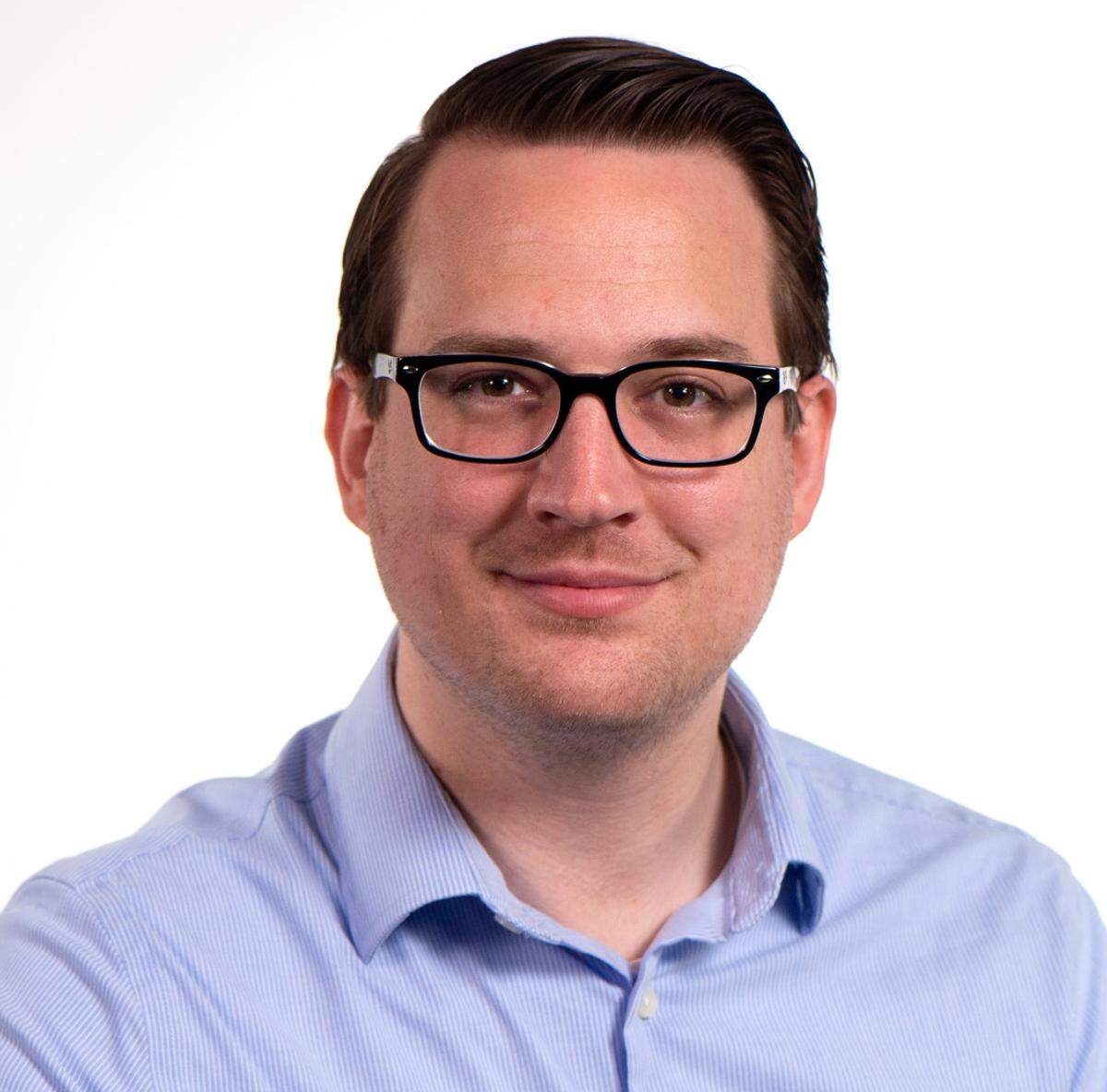
After 10-year-old Caleb Schwab was killed in August 2016 while riding the towering Verrückt slide at Schlitterbahn, Kansas Attorney General Derek Schmidt launched an intense push to hold the water park, the slide’s designers and others criminally responsible.
The prosecutors spearheading the effort had a punchy nickname for their boss: “The General.”
But Schmidt did not lead them to victory.
Schmidt, now the Republican nominee for governor, attempted to prosecute more than half a dozen individuals and businesses in connection with the death of Caleb, the son of Scott Schwab, who was a GOP state legislator at the time and is now the Kansas secretary of state.
The cases imploded in spectacular fashion. Unusual decisions, prosecutorial misconduct and basic mistakes compounded until the entire project ended in failure.
Schmidt’s decision to take the cases at all was highly unusual when local prosecutors would have typically handled the situation. Schmidt alleged two slide designers had committed murder and that the water park’s director of operations had committed manslaughter, allegations some legal experts said amounted to prosecutorial overreach.
Schmidt also decided to use a grand jury, an unusual choice in Kansas that allowed his prosecutors to present evidence without a judge or defense attorney present. A judge later threw out a number of indictments, finding Schmidt’s prosecutors had abused the grand jury process with testimony that violated due process protections for defendants.
Of the seven cases total, only two defendants went to trial. Prosecutors alleged two maintenance workers lied to investigators — a relatively low-level charge. Both were acquitted by a jury, at least partly because prosecutors likely forgot, or didn’t notice, the location of a key investigative interview.
“It was dumb. They were caught with their pants down. That was just an embarrassment. There’s no other way to put it,” said Chris Joseph, an attorney who represented one of the workers.
The Star spoke with more than a dozen people for this story, including attorneys who worked on both sides of the cases. The Star interviewed Schmidt’s lead prosecutor on the cases and one of the acquitted maintenance workers, both of whom had previously declined to speak to any media outlet in the aftermath of the cases.
The worker, David Hughes, said prosecutors had sought unsuccessfully to flip him to provide information against water park higher-ups — information which he said he didn’t have.
“It was scary as hell,” Hughes said from the front door of his home in his first public comments since his acquittal.
The Star also reviewed dozens of court records and public documents for new and overlooked information, including that one of Schmidt’s top prosecutors — an Army National Guard major general — was deployed overseas in the lead-up to the indictments.
The Schlitterbahn debacle has not featured prominently in the race for governor between Schmidt and Democratic Gov. Laura Kelly ahead of the Nov. 8 election. But as Schmidt campaigns in part by emphasizing crime and public safety, the episode stands out as the biggest prosecutorial failure of his 12 years as state attorney general.
As Schmidt asks voters to allow him to lead Kansas, the defeat illustrates how the attorney general made the critical decision to pursue an ambitious case that grabbed headlines and produced a big public spectacle – but then fell apart when it came time for his team to actually prosecute.
Schmidt has never re-filed the charges that were thrown out, despite having the option to try again.
“They took over a prosecution, they grandstanded in the newspapers and on television, and then they failed to put in the hard work necessary to obtain convictions. Now that is a comment on Derek Schmidt’s fitness to become governor,” said Rep. John Carmichael, a Wichita Democrat and an attorney.
To some, Schmidt’s handling of the cases suggested an attempt to balance competing desires to be both aggressive and cautious in a way that ultimately proved unsustainable.
Stephen McAllister, who worked as the Kansas solicitor general under Schmidt and served as the U.S. attorney for the District of Kansas under President Donald Trump, said using a grand jury may have been “political” in the sense that it allowed Schmidt to protect himself by having citizens, instead of himself, make the final call about whether to indict.
“That I can see as very Derek,” said McAllister, who has endorsed Kelly for re-election.
Six years after Caleb’s death, and more than three years after the cases collapsed, Schmidt has largely avoided a public reckoning over the situation. Research turns up virtually no public remarks grappling with how he and his office handled the prosecutions.
When a reporter attempted to question Schmidt after a campaign event on Sunday, the attorney general kept walking without talking. His campaign manager said Schmidt, who was on a bus tour with other Republican candidates, wasn’t giving interviews. Schmidt’s campaign also didn’t respond to written questions.
John Milburn, a spokesman for Schmidt’s office, largely declined to answer The Star’s questions, saying the “case remains open” and that Schmidt and the Kansas Attorney General’s Office are bound by the Kansas Rules of Professional Conduct.
Milburn said the office doesn’t comment on questions that “speak to prosecutorial decisions and litigation strategy.”
But as Schmidt’s time as state attorney general winds down and he seeks higher office, legal experts are highly suspicious that new charges will ever be brought.
“I think they wanted to save face by leaving open that possibility. But with the lapse of three years in a case like this, there is no chance – you never say never because they did dumb things before – it is almost inconceivable that a case would be brought,” said Blaine LeCesne, a law professor at the Loyola University New Orleans.
Case hand-off unusual
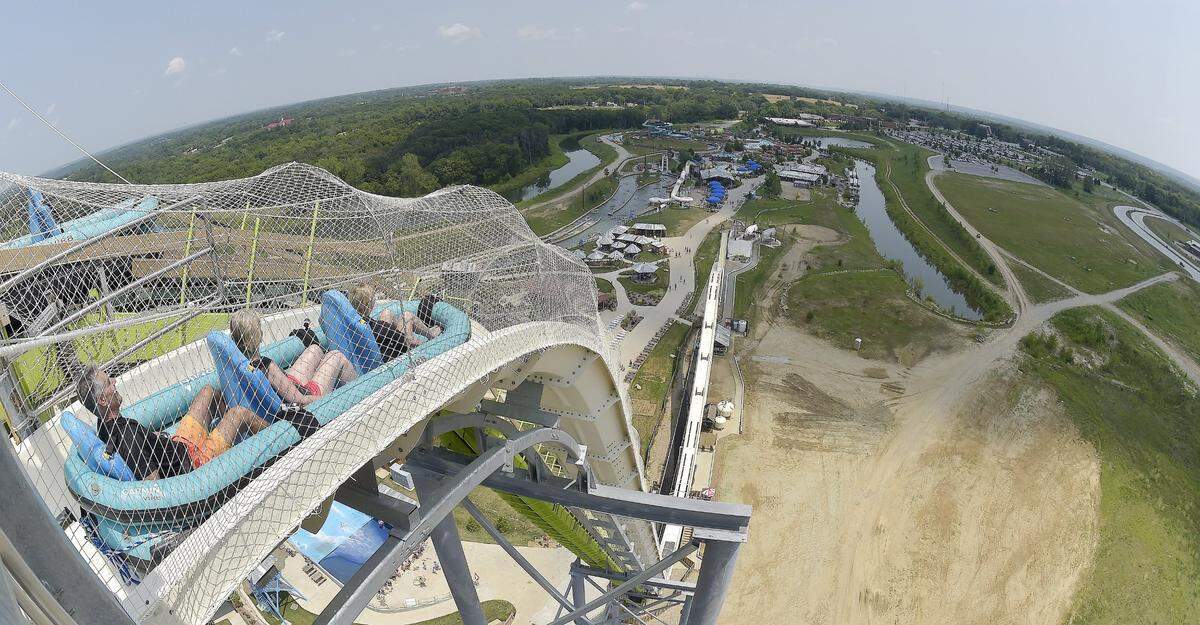
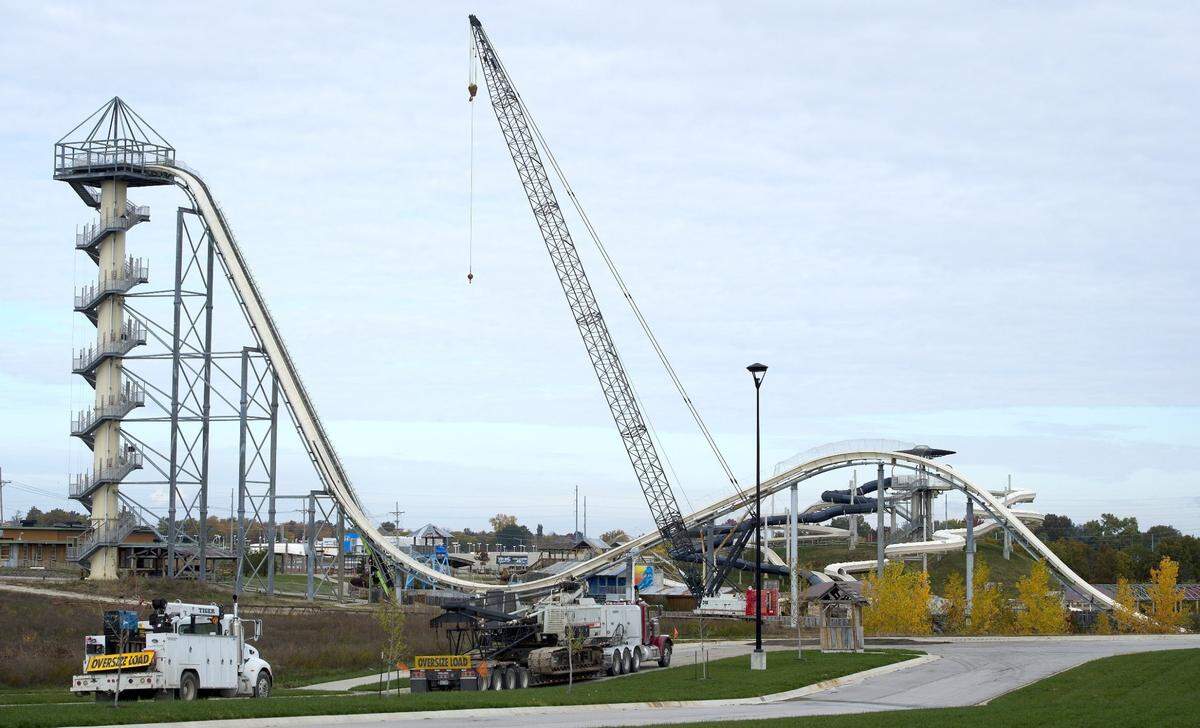
When the Verrückt — German for “crazy”— opened in July 2014, it soared 17 stories above the Schlitterbahn water park. Designed by Jeff Henry and John Schooley, it was instantly a marquee attraction — the tallest water slide on Earth.
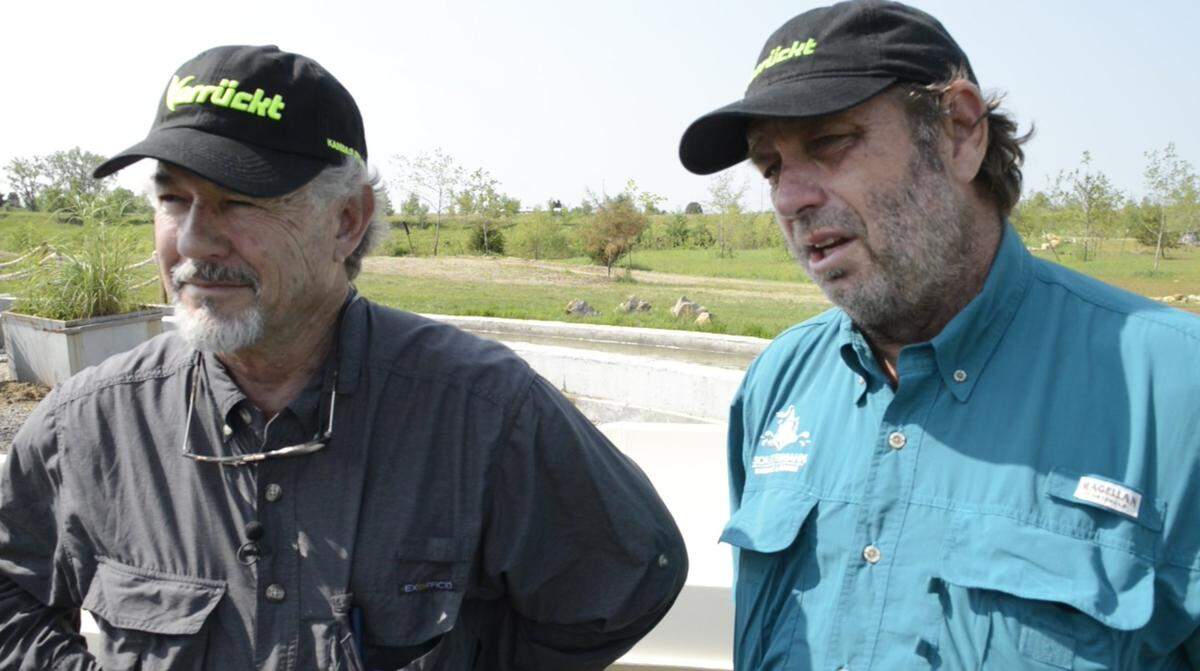
Schooley and Henry, a Schlitterbahn co-owner, had promoted the ride on the Travel Channel show Xtreme Waterparks. Republican Gov. Sam Brownback in 2014 even visited the park to promote its Guinness World Record for tallest water slide.
The ride’s allure was shattered on Aug. 7, 2016, when Caleb’s raft went airborne and collided with overhead hoops and netting that encircled the slide. Caleb was killed — a horrendous incident that instantly attracted worldwide attention.
Less than a week earlier, Jerry Gorman, the Wyandotte County district attorney who had been in office since 2005, was beaten in the Democratic primary by Mark Dupree. Gorman’s time as the county’s top prosecutor would end in a matter of months. With no Republican opponent, Dupree was assured to be the next district attorney.
Ordinarily, Gorman – or Dupree, his successor – would have made the call on filing charges in Caleb’s death. While the Kansas attorney general can, in some instances, initiate criminal prosecution, most cases are handled by local prosecutors.
About four months after Caleb’s death, however, Michael Rader, an attorney representing the Schwab family, in a letter asked Gorman to recuse himself. Schmidt was copied on the message, which argued that the Unified Government of Wyandotte County was a potential defendant in a civil lawsuit and that Gorman’s involvement posed a potential conflict of interest.
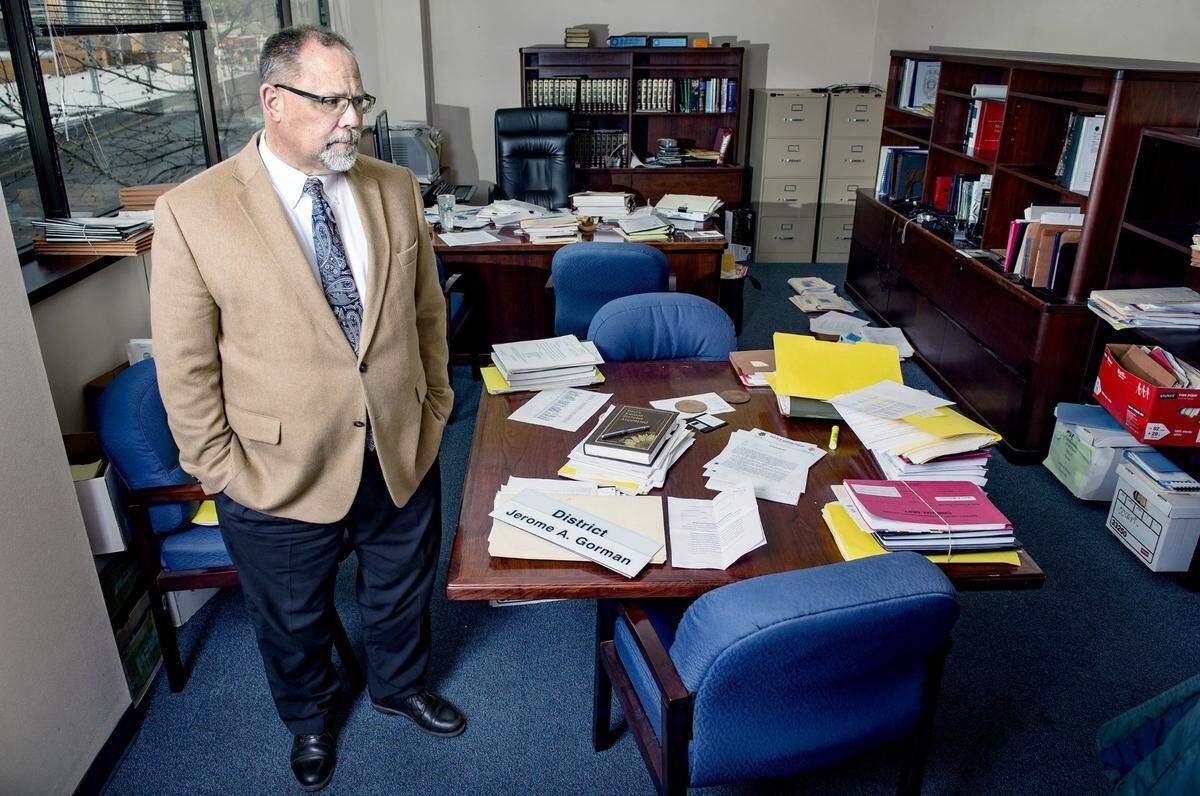
Gorman refused the request, but told The Star in 2019 that Schmidt later called him and asked about taking the case. In a recent interview, Gorman said he doesn’t remember why Schmidt was interested in the case. “I can’t say what any motivation of his would be,” said Gorman, who agreed to hand over the case.
Gorman described how some of his top lawyers were on their way out after his loss to Dupree. With senior staff heading for the exits, Gorman said his office at that time hadn’t made any decisions about the Verrückt incident.
“We hadn’t even received the full array of police reports at that point in time and there had been no charging decisions at that time,” Gorman said.
Rader has previously pushed back on any notion that politics played a role. Approached for comment for this story, Schwab’s campaign spokeswoman referred questions to Rader, who didn’t comment.
The initial handoff has led to long-running speculation that politics or personal relationships factored into Schmidt’s decision-making. At the very least, attorneys who have paid attention to the cases suspect the entire situation would have been handled differently if the victim hadn’t come from a well-known or politically prominent family.
“It probably had everything to do with it, frankly,” McAllister said.
Rich Callahan, a former U.S. attorney for the Eastern District of Missouri under President Barack Obama, said a state attorney general asking for a case from a local prosecutor “should be extremely unusual.”
Former Kansas Attorney General Carla Stovall, a Republican who was in office from 1995 to 2003, said she didn’t remember ever seeking to take a case from a local prosecutor. More common was county prosecutors who would approach her office for expertise and assistance.
“I certainly have no recollection that we ever took a case at the trial level – and at the charging level, really – from a county attorney,” Stovall said.
In response to questions, Schmidt’s office provided a Dec. 9, 2016, letter from Gorman to Schmidt asking that he take over the case and a Dec. 15, 2016, letter from Schmidt to Gorman accepting the case.
Gorman in his letter wrote that the two officials several weeks earlier had discussed the possibility of handing over the case to Schmidt. Gorman noted that his term would end on Jan. 8, 2017, and that it was “unlikely” his office would be able to resolve the matter before then.
Milburn, the Schmidt spokesman, said that after the August 2016 primary, even before Caleb’s death, “our office was in contact with the Wyandotte County District Attorney’s office regarding the pending transition in that office, which handles one of the highest volumes of prosecutions in the state.”
“Our office discussed several major cases then pending at the Wyandotte County DA’s office, including this one, and offered the assistance of our office, if requested pursuant to our established procedure,” Milburn said in a statement.
Dupree told The Star that he wasn’t consulted by Gorman on handing over the case, but that once he took office Dupree honored his predecessor’s agreement. He said Schmidt touched base to confirm he was aware of the arrangement.
Grand jury process abused
Schmidt’s office unveiled the first criminal charges in Caleb’s death on March 23, 2018.
Schlitterbahn and Tyler Austin Miles, a former director of operations at the water park, were accused of involuntary manslaughter.
Less than a week later, indictments were unsealed against more defendants. In the second round of indictments, Henry, Schooley and Henry & Sons Construction company, which helped design and build the slide, were accused of second-degree murder.
Prosecutors argued that Verrückt complied with few, if any, industry safety standards and that the ride’s designers and operators knew it posed a substantial death or severe injury. Indictments listed 11 individuals who had been injured prior to Caleb’s death.
The decision to pursue criminal charges, let alone murder, shocked some legal experts. Attorneys who spoke to The Star acknowledged Caleb’s death had clear civil implications. Indeed, Schwab’s family ultimately settled with Schlitterbahn for about $20 million.
But they questioned whether actions leading up to the death rose to the level of criminal behavior.
“There’s nothing about this case that remotely smacks of criminal behavior,” LeCesne said.
Callahan, acknowledging the pressure for justice that can follow horrendous incidents, said society should carefully weigh when negligence becomes criminal.
“Every time there’s a tragedy, it doesn’t necessarily mean criminal charges should be filed,” Callahan said.
Despite the high-profile nature of the cases, Schmidt had tapped Adam Zentner, a 2011 graduate of the University of Kansas School of Law, to head up the prosecution team. Zentner had been an assistant district attorney in Leavenworth County but was a relative newcomer to the Kansas Attorney General’s Office, having joined the office in 2016.
Vic Braden, a deputy attorney general with over two decades of prosecutorial experience who leads the office’s criminal litigation division, spent most of the year leading up to the indictments away from the office, a previously unreported detail.
Braden, a major general in the Army National Guard who was the commander of the 35th Infantry Division at Fort Leavenworth, was deployed to Kuwait from June 2017 to March 2018, according to a National Guard biography.
It isn’t clear how much involvement, if any, Braden had in the lead-up to the grand jury indictments or whether he had returned by the time the indictments were unsealed. An Army-produced news article from the time says the 35th Infantry Division handed over authority of Camp Arifjan in Kuwait on March 8, 2018.
Instead of filing a criminal complaint, in which prosecutors directly accuse individuals of a crime, Schmidt had gone to a grand jury for indictments. Although Schmidt’s office would prosecute the cases, the grand jury meant that formally a group of Wyandotte County citizens had accused the men and companies of breaking the law.
Grand juries are a fraught concept in Kansas.
In most cases, prosecutors file criminal complaints, which give defendants the right to a preliminary hearing, in which a judge decides whether there’s probable cause of a crime to move the case to trial.
By contrast, grand juries operate in secrecy. Prosecutors show evidence to grand juries before asking them whether there is probable cause to indict an individual with a crime. Judges are not present. The accused or their attorneys are not present. Witnesses are not cross-examined.
But the freedom prosecutors enjoy in front of grand juries also risks leading to mistakes.
Almost immediately after the indictments were unsealed, defense attorneys began objecting to what Schmidt’s prosecutors had done with the grand jury. The jurors had been shown video from the Travel Channel episode, a highly-dramatized portrayal of the ride that promoted its riskiness.
Edward Pribonic, an amusement ride expert, had testified to the grand jury, referring to industry standards outlined by the American Society of Testing and Materials even though Kansas law didn’t require ride-builders to follow those standards at the time the Verrückt was built.
Pribonic also testified about the 2013 death of a man at a Schlitterbahn water park in South Padre Island, Texas, and violations of federal workplace safety standards at the park – comments that wouldn’t have been allowed at trial.
Wyandotte County District Court Judge Robert Burns agreed with the defense attorneys and in February 2019 threw out the indictments.
“In conclusion, the Court has grave doubts as to whether the irregularities and improprieties influenced the grand jury and ultimately bolstered its decision to indict these defendants,” Burns wrote in his decision.
“Quite simply, these defendants were not afforded the due process protections and fundamental fairness Kansas law requires” under Kansas case law, he wrote.
Zentner, who has left the Kansas Attorney General’s Office and is now a criminal defense attorney, in his first interview about the case wouldn’t say why a grand jury had been used, but provided one reason why prosecutors might want to use one.
“I can’t comment on that case specifically, but in general one of the reasons (for) grand juries, it limits the number of times that minors, especially minors, would have to testify in open court,” Zentner said. “So it gives them a safe space so they’re able to discuss something, especially something traumatic in a situation where they’re not as on the spot.”
Zentner also said that nothing in Burns’ decision “suggested the information in the indictment was incorrect.”
Location mistake
Even before Burns handed Schmidt a significant blow by tossing several indictments, the state attorney general had already suffered an embarrassing courtroom defeat.
Six months earlier, a Wyandotte County jury acquitted John Zalsman and Hughes, the Schlitterbahn maintenance workers, of lying to investigators. They were accused of misleading investigators about the use of a brake mat on the Verrückt.
The workers went to trial, Hughes said, after they rebuffed entreaties from prosecutors to provide information about Henry, Schooley and Miles.
Speaking for the first time about the case, Hughes said at one point prosecutors offered to allow him to enter an “Alford Plea” – a type of guilty plea in which a defendant doesn’t admit to committing a crime but acknowledges enough evidence exists to lead to their conviction.
“They thought we had some kind of information that would let them prosecute them for murder somehow or another, which is insane,” Hughes said.
When the Kansas Bureau of Investigation approached Hughes for an interview, he spoke with them in June 2017 at his home in Basehor, located in Leavenworth County. The location would prove critical.
Hughes and Zalsman were tried together in October 2018. Jury instructions proposed in August 2018 by the Kansas Attorney General’s Office called for jurors to be told that in order to convict Hughes, the act of false reporting must have occurred in Wyandotte County.
Even after Hughes’ defense team disclosed the issue with the interview location, Zentner pushed forward. In closing arguments, Zentner acknowledged Hughes was interviewed in Leavenworth County “but all the rest of the investigation, all the other stuff is in Wyandotte County,” he said, according to court transcripts reviewed by The Star.
“You know, you can’t just step over the line and be able to say whatever you want, because, hey, I’m in Leavenworth now. That’s not how the law is,” Zentner told the jury.
Hughes’ attorney, Scott Toth, seized on the location, however.
“The officer is investigating a felony. Where is he investigating a felony? At Dave Hughes’s kitchen table in Leavenworth County. It doesn’t matter if it’s an investigation concerning the assassination of the president or Verrückt water slide or something down in Florida,” Toth said in his closing arguments.
Jurors told reporters after the trial that there had been a lack of supporting evidence in the cases and that, in Hughes’ case, they had no choice but to acquit him.
“The idea that these two guys, who were employees, who have no ownership or financial interest in the success of the park, would lie to the KBI to protect employers and owners is silly,” said Joseph, the attorney for Zalsman.
Two months after the verdicts, the Kansas Attorney General’s Office asked a judge to dismiss charges that Miles, a former director of operations at the water park, lied to authorities and concealed evidence from investigators. Prosecutors offered no explanation for the decision.
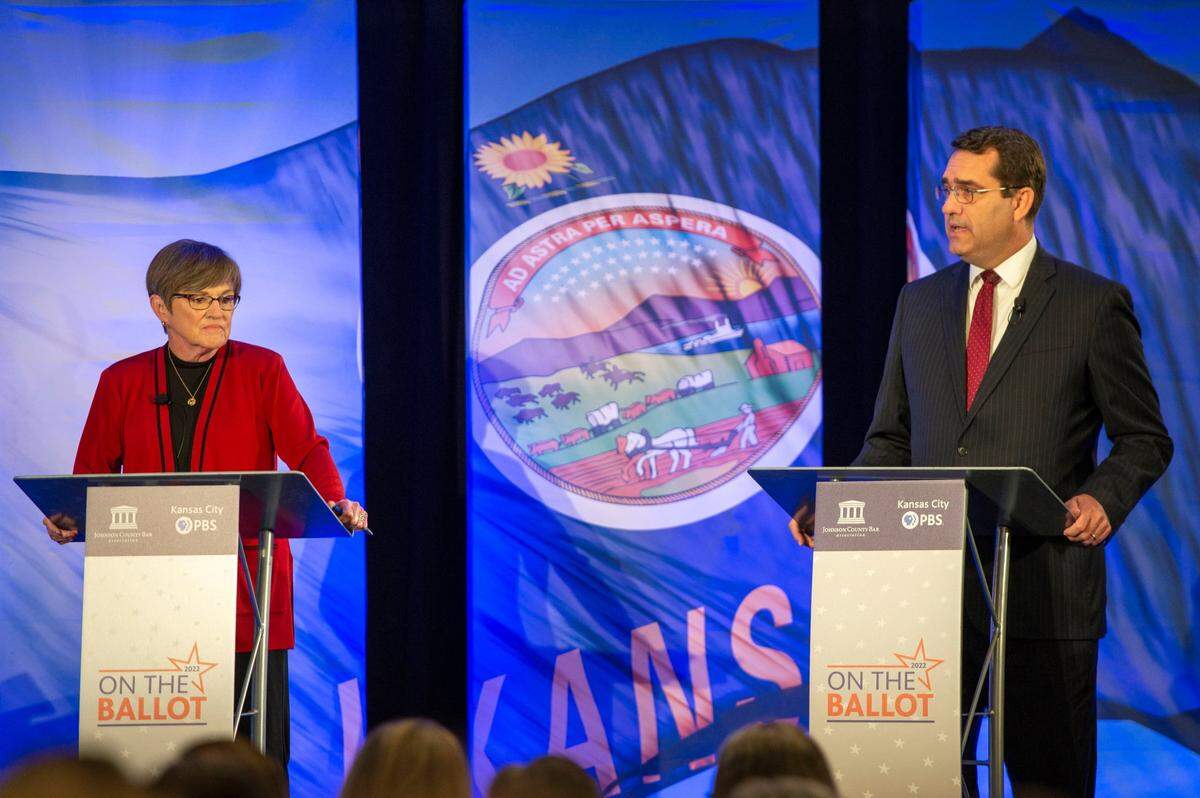
Years later, Schmidt stands at the edge of the governorship. With no public sign of any recent activity in the cases, the failed Verrückt prosecutions will be part of his legacy as state attorney general when he leaves the position in January.
“There are few things that are more morally repugnant and corrosive to our system of criminal justice than prosecutorial abuse and this is one of the worst cases I have ever seen,” LeCesne, the Loyola University professor, said of Schmidt’s handling of the case.
“I think they wanted to make a big public splash,” LeCesne said. “It basically blew up in their faces.”
The Star’s Katie Bernard contributed reporting