With multiple open seats, Wyandotte County poised for change in Kansas Legislature
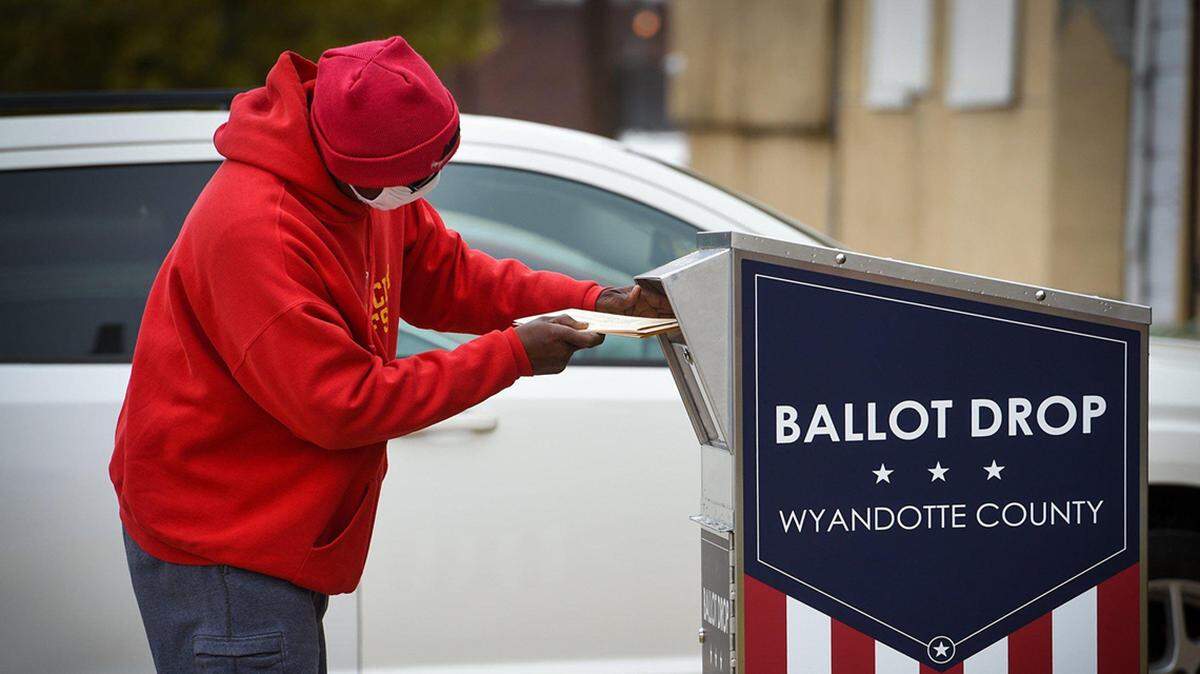
The lawmakers who represent Wyandotte County in the Kansas House currently have a combined 114 years of experience in the chamber.
That number will soon fall to 50, if not lower.
Four of Wyandotte County’s seven-member House delegation are either not running for re-election this year or face the very real possibility of losing re-election – meaning significant changes next year in who advocates in the Legislature for the state’s fourth-largest county.
Voters will likely replace the legislators, all Democrats, with other Democrats. But the turnover holds the potential to remake the delegation into a more vocally aggressive group, depending on who replaces them. Some officials caution against expecting a dramatically different tone, however.
Community activists have expressed frustration after a series of legislative setbacks this year to Wyandotte County that have left residents feeling that the strongly Democratic county has been targeted by Republicans.
The Republican-dominated Legislature split the county apart for the first time in 40 years during congressional redistricting. Republicans, with the help of Democratic Gov. Laura Kelly, also thwarted the county’s “Safe and Welcoming” ordinance designed to help undocumented immigrants.
Marcus Winn, an organizer in Kansas City, Kansas, with the Metro Organization for Racial and Economic Equity, or More2, said voters “are tired.”
“They have put up with a lot for a long time and there’s an expectation that there’s some level of results and that elections should have consequences,” Winn said.
The string of recent blows to the county from the Legislature will hang over the Aug. 2 primaries for the Kansas House.
“I feel like Wyandotte County is in 1955. We’ve got a lot of great things going on, but politically it’s still in the 1950s. It’s like we’re backwards,” said Faith Rivera, one of two candidates trying to defeat Rep. Aaron Coleman, a scandal-plagued first-term lawmaker, in the Democratic primary.
Melissa Oropeza, a nurse practitioner, is also running in the primary for the seat.
Coleman is a prime target for Democrats because of multiple allegations of abusive behavior toward women. He has also been arrested twice during his term.
He received diversion after being charged with misdemeanor domestic battery for allegedly kicking and pushing his brother during an argument. He was found guilty of one of two traffic infractions in Douglas County after he allegedly led state troopers on a brief pursuit on Interstate 70 and acted in an “erratic” manner after he was pulled over.
Coleman didn’t respond to a request for comment.
While Coleman is a freshman who may lose re-election, the three legislators not running again were all long-time veterans in the House. They remained, in some cases for decades, in a chamber where many come for two or four years before exiting the political scene.
Rep. Tom Burroughs, who was the House Democratic leader as recently as 2016, is leaving his seat in District 33 after 25 years. Rep. Broderick Henderson, a rank-and-file Democrat, served 27 years and is leaving his seat in District 35.
Taylor Dean, a construction worker, and Bill Hutton, an attorney, are both running for Burroughs’ seat. Nelson Gabriel, the CEO of a nonprofit focused on continuing education, and Marvin Robinson, a Navy veteran, are both running for Henderson’s seat.
And Rep. Kathy Wolf Moore is leaving her District 36 seat after 12 years. A close ally of Kelly, she helped lead efforts to pass Medicaid expansion, which Republican leaders have so far blocked during Kelly’s time in office. She is also the ranking Democrat on the powerful House Appropriations Committee, which crafts the state budget.
Lynn Melton and JoAnne Gilstrap are both running in the primary to replace her.
Democrats have limited power in the Legislature
Lawmakers drew new state legislative maps this year. Under that map, eight representatives total will represent Wyandotte County. However, one of those districts is currently held by Basehor Republican Rep. Tim Johnson and will only include 1% of the county’s population. Johnson is running unopposed, but the rest of the districts will likely remain under Democratic control.
Wolfe Moore said setbacks to Wyandotte County didn’t factor into her decision not to seek re-election. But she said it was frustrating being a Democrat in the Legislature controlled by a Republican supermajority.
“I’ve always had an election every other year and I’ve kind of realized it takes a huge bite out of your life to run elections every other summer, then go to Topeka January through May usually,” Wolfe Moore said. “Twelve years seems like enough and it’s maybe time for someone else.”
Burroughs echoed similar reasoning in explaining his decision to retire, explaining that serving in the House had gotten exhausting. The past year had been a brutal period to represent Wyandotte County, he said.
Wolfe Moore, Burroughs and Henderson are all examples of typical Kansas Democrats, who support mainstream Democratic policies, such as Medicaid expansion. Because of how thoroughly Republicans control the Legislature, however, the Wyandotte County legislators spend much of their time playing defense against Republicans on issues like guns and welfare.
Coleman styled himself an ardent progressive, but his own behavior severely undercut his effectiveness as a messenger for left-wing policies.
For some activists working in Wyandotte County, the overturning of its “Safe and Welcoming” ordinance this spring especially stung. Wyandotte County is one of the most racially and ethnically diverse areas in the state. Black, Hispanic and Latino people make up more than half of the population in the county, but only 18% of Kansas residents.
Kelly, who faces a tough re-election race, signed a bill invalidating major parts of the local law, which restricted police cooperation with federal immigration authorities. Kelly said immigration policy shouldn’t be decided at the municipal level.
Rep. Louis Ruiz, a Kansas City Democrat, said he’d advised the Kansas City, Kansas, Commission to wait until after the Legislature left Topeka to pass the ordinance to avoid making “low hanging fruit” for Derek Schmidt, the Republican attorney general of Kansas and Kelly’s general election opponent.
“What surprised me was the governor signed it,” Ruiz said. He said he advised Kelly’s chief of staff to let the bill go into effect without her signature in 10 days.
“That goes to show what kind of pull I have with the governor (as) a Latino from Wyandotte County.”
In May the Kansas Supreme Court upheld a new congressional map that divides the county into two districts, roughly along Interstate 70. The northern part of the county is now represented by Republican Rep. Jake LaTurner and the southern portion continues to be represented by Democratic Rep. Sharice Davids. Both are up for re-election in November.
In April, Winn said he had never seen “this amount of frustration on the ground and at a grassroots level” – and that was before the Supreme Court decision. Last week, Winn said that while he couldn’t speak for why legislators are retiring, a trend exists toward having higher expectations of elected officials, even those in the minority party.
“I think constituents recognize there’s some major limitations in that dynamic, but that’s not an excuse to simply get nothing done, which I’m not accusing any of those three of,” Winn said of the retiring legislators.
Rebuilding Wyandotte County’s influence
Wyandotte County has long been one of the few reliably Democratic strongholds in Republican-leaning Kansas. In the county, 47% of registered voters are Democrats, compared to just 26% statewide. Republicans make up only 18% of registered voters in the county, compared to 44% of voters statewide.
In most legislative races, Democratic primaries reliably determine who wins the general election. Republicans don’t even contest every seat every election. Democratic Rep. Pam Curtis is running unopposed this year, for example.
That kind of electoral strength has allowed some Democratic lawmakers to stay in office for many years. They’ve been able to build seniority, influence and trust over time – tools that are not only crucial to being effective in a chamber controlled by Republicans, but also give Wyandotte County a bigger voice within the Democratic caucus as well.
House Minority Leader Tom Sawyer, a Wichita Democrat, said the retirements are a “huge loss for the caucus and the county.” However, Democrats have high-quality candidates running, he said.
Sawyer indicated he doesn’t expect a new delegation that pushes Democrats leftward, but that it depends on who is ultimately elected.
The primary contestants in Wyandotte County offered varied responses to The Star’s voter guide questionnaire. Many touted traditional Kansas Democratic policies — like expanding Medicaid and supporting better gun safety programs.
Marvin Robinson, running for Henderson’s seat, focused on addressing economic inequality and restoring the Old Quindaro Cemetery. Taylor Dean, running for Burroughs’ seat, described himself as an active labor advocate telling The Star “introduce legislation to protect public employees’ collective bargaining rights and the right to stop work.”
Wyandotte County is about to lose much of its seniority at a moment when Johnson County is becoming a bigger power in Democratic politics. Johnson County is in a long-term trend away from Republicans and has been electing more Democrats over the past decade, including legislators who were previously moderate Republicans.
Wyandotte County lawmakers currently hold none of the six top Democratic leadership positions in the House. Three of the top House Democratic leadership posts are held by Johnson County Democrats.
Next year, the longest-serving Wyandotte County representative will be Rep. Valdenia Winn, a professor at Kansas City, Kansas, Community College. She’s been in the House since 2001.
Whoever replaces the retiring Wyandotte County legislators – all three open seats have competitive Democratic primaries – will be entering the Legislature at a daunting time, said Sen. David Haley, a Kansas City Democrat who has been in the Legislature since 1995.
“With three novices, it will take some time for them to hit their stride and benefit other constituencies,” Haley said.
Ruiz said he expected to devote time to training the new members before he looked toward retiring in two or four years.
Success as a member of the super-minority party depends on an ability to work well across the aisle and understand the inner workings of the Capitol, he said.
“The power and the strength of us being engaged and what we bring to the table as far as in leadership positions like that strengthens the way Wyandotte County is looked at,” Ruiz said. “Now we’ve got to rebuild.”
The Star’s Sarah Ritter contributed to this report.
This story was originally published July 26, 2022 at 5:00 AM.