‘You can take the state’: Why Southwest Missouri plays a big role in the GOP Senate race
When John F. Kennedy won Missouri and the presidency in 1960, voters in southwest Missouri ousted their Democratic incumbent congressman and instead elected Republican Durward G. Hall, a physician who earned the nickname “Dr. No” for his opposition to spending bills.
They’ve been sending Republicans to Congress ever since.
For decades, Springfield and southwest Missouri have been a GOP stronghold and one of the biggest concentrations of reliable GOP voters in the whole state. A libertarian spirit fostered by the forested Ozarks, a “buckle of the Bible Belt” reputation and a lack of racial and ethnic diversity have helped make the region an enduring bastion of conservatism.
The area is now set to play a crucial role in the Republican primary for U.S. Senate. The decision by Sen. Roy Blunt, who launched his political career in Springfield, not to run for re-election produced a large GOP field of would-be successors. Half a dozen candidates are mounting competitive campaigns for the nomination as the race enters the final two months before the Aug. 2 election.
As candidates frantically search for support, Springfield and the surrounding counties that make up the 7th Congressional District will be key to victory.
“If you can win the 7th District by a certain margin, you can take the state,” said Mavis Busiek, a long-time Springfield Republican. Busiek, who emigrated from Canada in the 1970s, is currently managing the congressional campaign of former state Sen. Jay Wasson.
The Star spent three days in Springfield and southwest Missouri speaking with voters, candidates, party leaders and local officials about the region’s role in the upcoming primary. What emerged is a portrait of an area that knows the outsize role it plays in Republican politics.
The same region where Blunt got his start is also drifting in a harder-edged direction. Blunt, the No. 4 Senate Republican, mostly avoided Fox News-driven bomb throwing and embraced his role as an establishment Republican who unapologetically used his clout to funnel money back to Missouri, including Springfield.
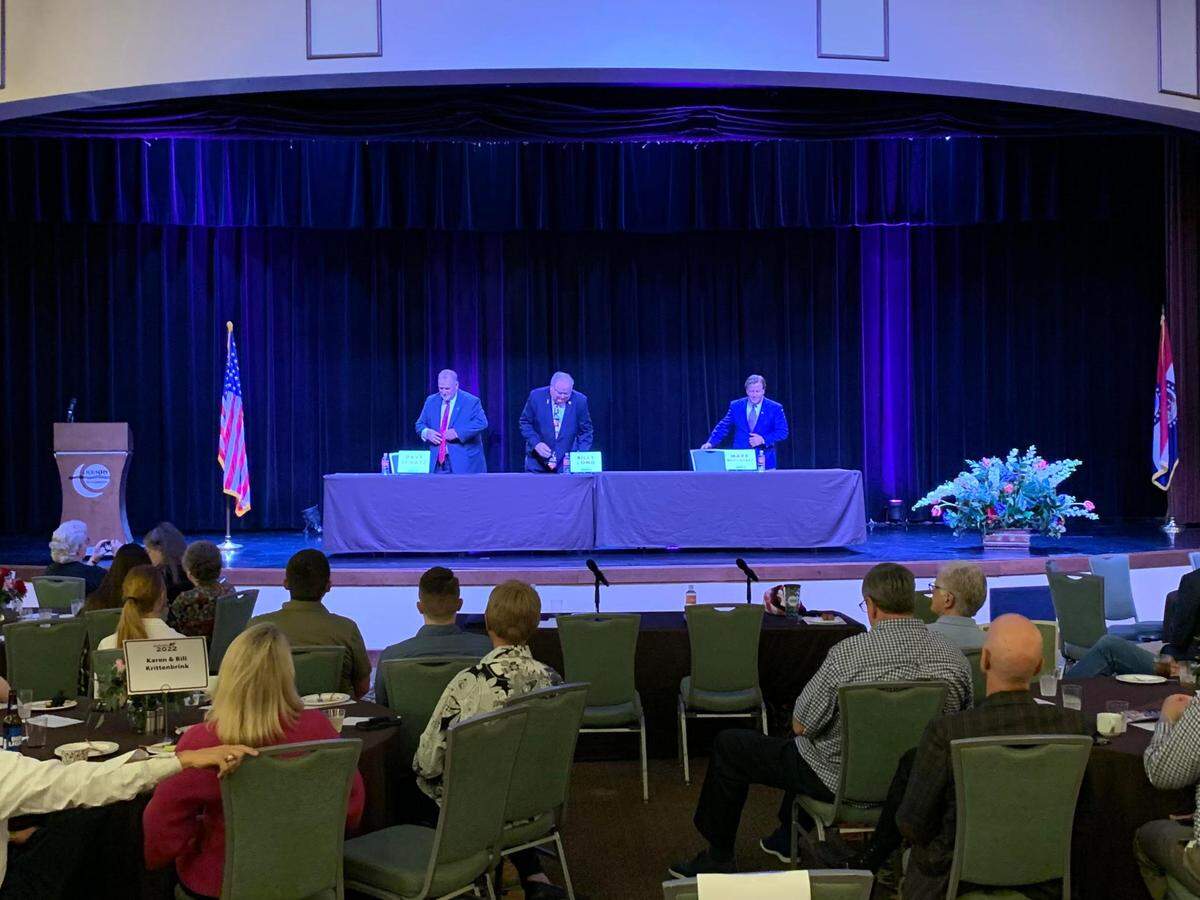
However, candidates are selling a much different vision today as they campaign in the area. A debate last week that featured three lower-polling candidates included extreme rhetoric designed to shock and entertain – the kind of comments Blunt would never utter publicly.
At one point, Rep. Billy Long said the best way to fix immigration was for Vice President Kamala Harris to resign, President Joe Biden to appoint Donald Trump as vice president and then resign, making Trump president again. At another point, St. Louis lawyer Mark McCloskey said a student loan forgiveness proposal under consideration is “like the abortion of school.”
Party activists and other close observers of local GOP politics express uncertainty over who will ultimately win the region with eight weeks to go. Still, residents are mostly in agreement that Long, who has deep Springfield roots, and Rep. Vicky Hartzler, who holds the adjacent 4th District, have developed the strongest on-the-ground presence.
It’s a much different race than in 2018, when Josh Hawley, then Missouri attorney general, handily won the Republican primary for Senate with 59% of the vote.
“He had grassroots everywhere. It was very well known, but we’re not seeing that publicly yet. They’re still searching,” Danette Proctor, chair of the Greene County Republican Central Committee, said.
“There’s still time but these candidates need to be everywhere they can and they’ve got to be strategic about it because it’s a whole-state thing,” she said. “But southwest Missouri is very important.”
Voters undecided on Senate race in southwest Missouri
Springfield and southwest Missouri’s importance for Republicans comes down to simple electoral math, local residents say.
Beyond the area’s decades-long support of conservatives, the Springfield metro is rapidly growing. The population of Greene County, which includes Springfield, grew nearly 9% between 2010 and 2020, according to the Census. Missouri as a whole expanded less than 3%.
At a basic level, votes from the southwest can offset votes from Democratic-leaning Kansas City and St. Louis areas, Proctor said.
Six candidates are mounting significant campaigns – former Gov. Eric Greitens, Missouri Attorney General Eric Schmitt and Missouri Senate President Pro Tem Dave Schatz, in addition to Long, Hartzler and McCloskey. Of those, Greitens, Schmitt and McCloskey all hail from the St. Louis area, while Hartzler is from Harrisonville on the outer edge of the Kansas City metro.
“Some people really have not made up their mind yet,” said Terri West McQueary, president of the Greene County GOP’s TARGET Committee – The Association of Republicans Getting Everyone Together.
A statewide poll from the Trafalgar Group conducted in mid-May found about 17% of likely Republican primary voters remain undecided.
While few people told The Star that they think southwest Missouri voters will support or oppose a candidate based on where they’re from, most acknowledged Long will likely receive some kind of hometown bump. Long has tremendous name recognition in the area, McQueary said.
“I’ve never heard anything negative. Does he have an advantage? Possibly a little bit, but I still think the voters are going to look at all the candidates,” McQueary said.

Long first won election to Congress in 2010, part of a Tea Party wave of new Republicans. He succeeded Blunt, who joined the Senate. While there was never any real question that the 7th District would elect a Republican, Long stood out as a kind of anti-politician in the GOP primary that year.
He was first and foremost known around Springfield as an auctioneer and had also hosted a local radio show. A large man, Long has often said he was told by consultants at the time that he was too fat to appear in close up TV ads.
Since winning an eight-way primary race in 2010 with 37% of the vote, Long has maintained an easy grip of the district. He’s won every general election with at least 63% of the vote.
In an interview, Long noted that in 2020 he received the most votes ever in his career, saying he was proud of that given that “nobody likes their congressman.” He also touted the constituent services he provides.
“It’s going to decide who wins the election,” Long said of southwest Missouri. “The 7th District of Missouri, anyone tells you you’re gonna win statewide, you’ve got to really run for your numbers in the 7th.”
Long, who is polling fourth in the race, has focused on winning Trump’s endorsement. The former president earlier this year sent a supportive statement that fell short of an endorsement.
Checking Republican boxes
Trump’s nod, combined with a strong showing in southwest Missouri, could give Long a possible path to victory.
Still, a significant minority of Republican voters in the area have expressed dissatisfaction with Long in the past. When running for re-election, he has never won more than 66% of the Republican primary vote. Hartzler, by contrast, has always won at least 72% of the primary vote in her district when running for re-election.
Marshall Works came the closest of any primary challenger to Long since he was elected, winning 38% of the vote in 2014. He raised just $1,200 and while he ran a campaign critical of Long’s privately-funded travel while in office, he concedes many of the votes he received were almost certainly because he was a name other than Long.
In the Senate race – and in other races, too – candidates are spending a lot of time trying to “out-conservative” each other, Works, now retired from the insurance industry, said as he sat outside his Kimberling City house overlooking Table Rock Lake.
“I think the more boxes that a candidate can check that are on the Republican platform, that’s who they’re going to vote for,” Works said of primary voters.
Works said he plans to support Hartzler, in part because of her TV ad about University of Pennsylvania swimmer Lia Thomas. In the ad, Hartzler implies Thomas, who is transgender, underwent gender transition therapy in order to gain a competitive edge.
Hartzler skipped last week’s debate in Springfield, but has been a regular presence in southwest Missouri. In late May, in Springfield last week for an event with Pastor David Barton at Life360 Chesterfield Church.
Barton is a prominent conservative Christian who gained a following for his books, essays and speeches fusing Christianity with American history and civic life, which some academics call Christian nationalism. Professional historians are critical of Barton’s work and a bestselling book he wrote about Thomas Jefferson was pulled out of circulation by his publisher in 2012 after several reports of inaccurate and unverified claims.
Barton has a history of homophobic comments. In a radio show in 2010, Barton called for regulating homosexuality and suggested that permissive attitudes around gay sex cause nations to deteriorate. He has claimed HIV is God’s punishment for being gay and has compared LGBTQ-rights activists to Nazis.
Hartzler’s appearance with Barton comes as she’s trying to pick up support in the Republican primary for U.S. Senate. Polls have shown her trailing Greitens, who is attempting to mount a political comeback after resigning as governor in 2018 amid accusations of sexual assault and blackmail.
Conservative Christian base
Springfield – and southwest Missouri more broadly – is a strong base of evangelicalism and politically conservative Christianity. The Assemblies of God, the world’s largest Pentecostal denomination, has its American headquarters in Springfield. James River Church, an Assemblies of God megachurch south of Springfield, reported attendance of more than 11,000 as of 2017.
The conservatism in southwest Missouri ultimately in some ways traces back to evangelicalism, said Daniel Ponder, a political science professor at Drury University in Springfield.
“I think the root of it is an evangelical strain of the Republican Party,” Ponder said.
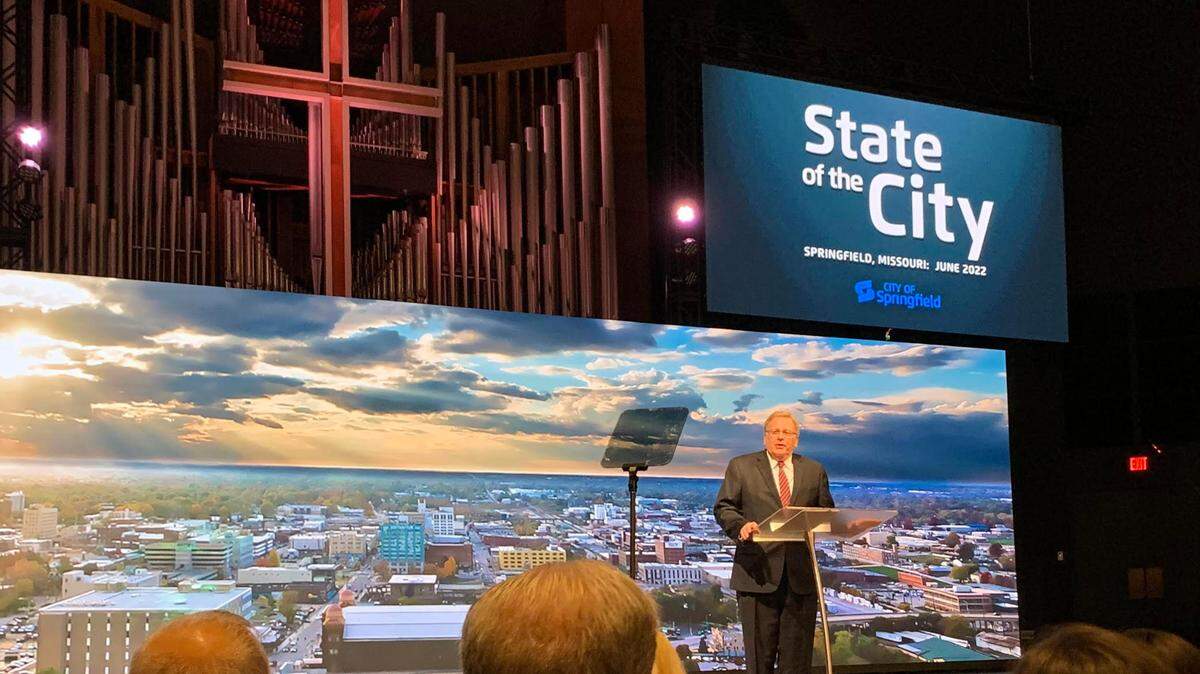
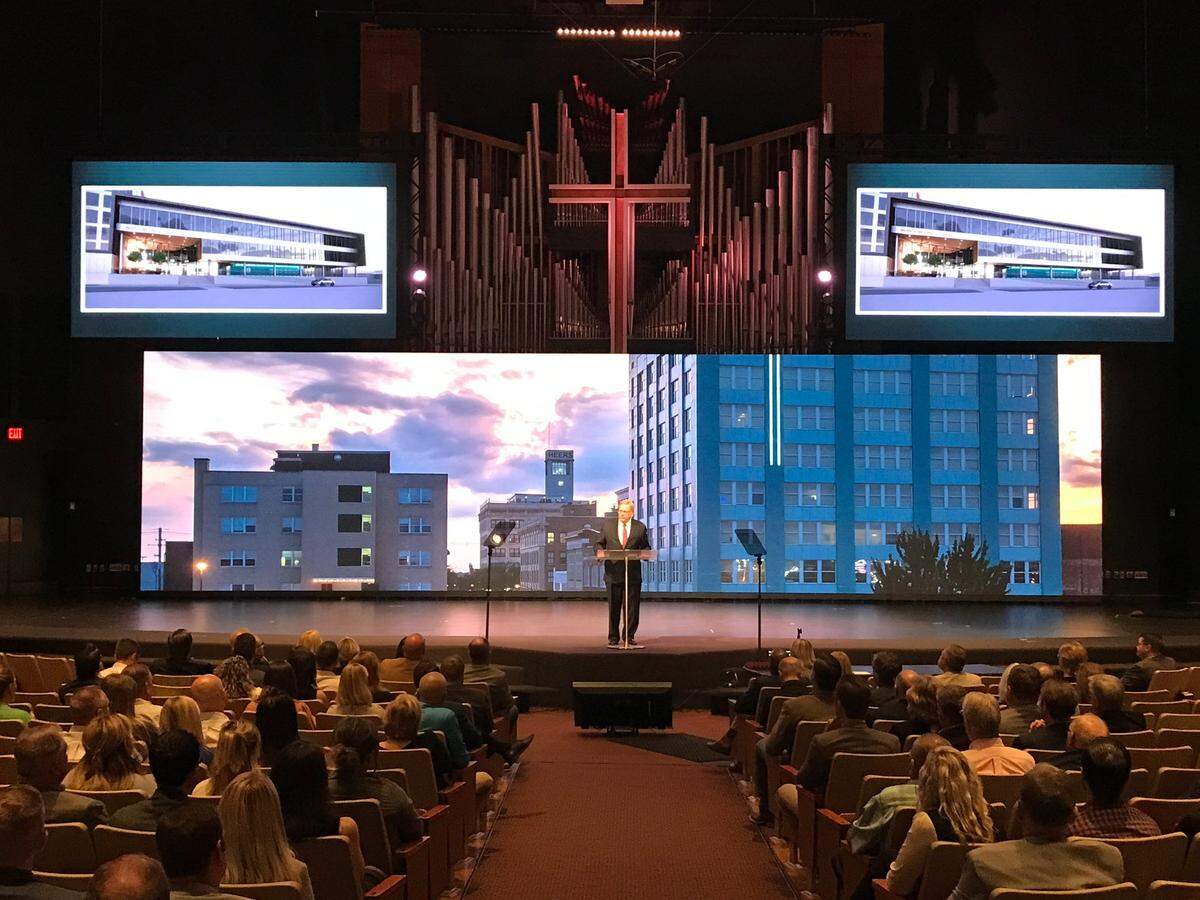
When Springfield Mayor Ken McClure delivered his annual State of the City address on Thursday, he spoke from an auditorium on the campus of Evangel University, a private university affiliated with the Assemblies of God. A cross and pipe organ – along with a massive video screen – lent a sermon-like air to the proceedings.
While most of the speech centered on updates to city operations, the community’s pandemic response and economic development achievements, at one point McClure included a pastoral admonition.
Springfield, like other cities, has non-partisan local elections, he said.
“Past few local elections, however, we as a community have suffered toxic effects from divisive and ugly political campaigns and tactics,” McClure said. “There is no room for that at the local level.”
The latest local flashpoint came during school board races this spring. Two conservative candidates won and unseated an incumbent after conservative groups pumped tens of thousands into ads – an unusually high amount of spending for a local race.
Voters cited critical race theory and book bans – as well as more traditional topics like teacher pay – in Election-Day interviews with the Springfield News-Leader. In November, Schmitt’s office sued Springfield Public Schools, alleging the district violated the Missouri Sunshine Law related to the office’s request for documents on CRT.
In an interview in his office after the speech, McClure said “this environment is so toxic,” calling for a return to civil discussion.
“In the pandemic, we had some hellacious council meetings, people come in – I thought one lady was going to crawl over the podium one time and kind of attack us,” he said.
Asked whether voters are looking for a senator in the mold of Blunt, McClure’s answer in so many words was basically: no.
“Let me put it this way: Sen. Blunt gets a lot of criticism for being pragmatic, and that’s unfortunate,” said McClure, who was chief of staff to former Gov. Matt Blunt, Sen. Blunt’s son.
“Compromise is how you get things done,” McClure said. “And compromise is a bad word.”
The Star’s Daniel Desrochers contributed reporting
This story was originally published June 6, 2022 at 5:00 AM.