
What did Kansas lawmakers do for the last three months? And what’s still on the agenda?
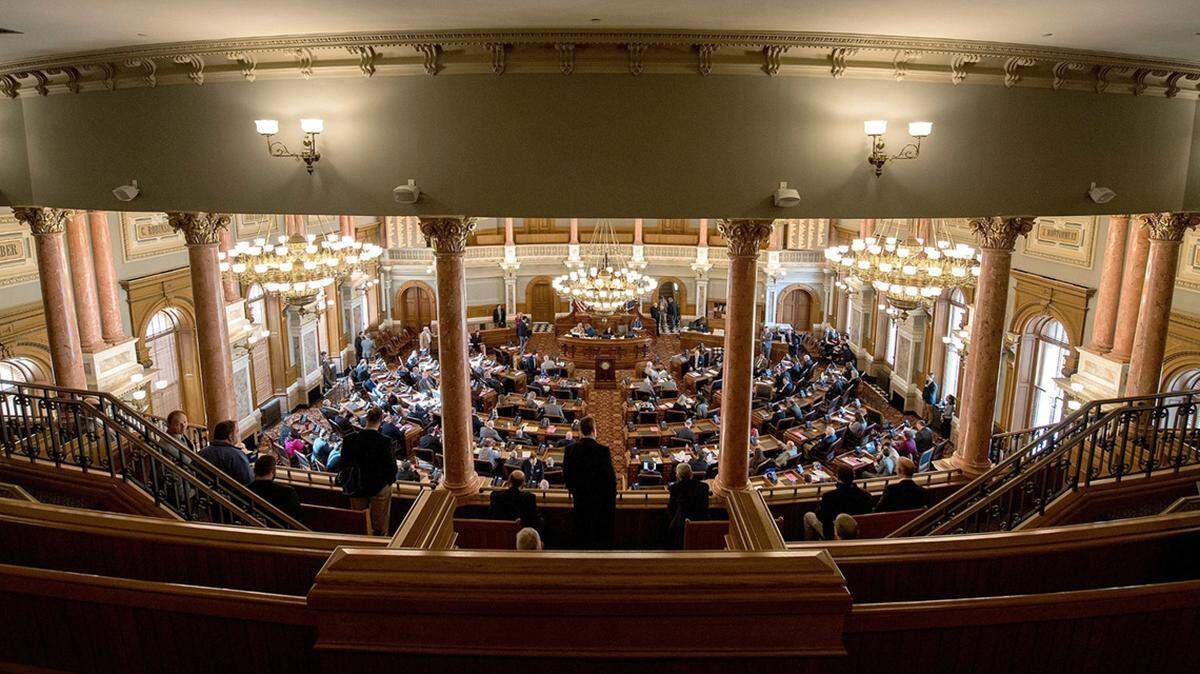
Kansas lawmakers passed some major legislation but left many significant measures on the table before they ended their regular session early Saturday morning.
They will return April 25 for what’s called “veto session.” That is time usually set aside to write the final budget and consider overrides of any gubernatorial vetoes. In recent years, however, it has been used to wrap up any unfinished business.
Here’s a recap of what was passed and what is still to come:
Redistricting
The GOP-led House and Senate sparked multiple lawsuits when they passed a redrawn congressional map that splits Wyandotte County, the state’s most diverse county, along I-70. It would place the northern half in the 2nd Congressional District. The southern portion would remain in the 3rd, currently represented by Democratic Rep. Sharice Davids.
The map, based on population shifts reported by the 2020 Census, also sweeps Lawrence into the vast 1st District, meaning that the left-leaning college town would be combined with conservative western and central rural Kansas.
Gov. Laura Kelly vetoed the map when it reached her desk in February, but her rejection was quickly overridden by the House.
A trial over whether the new map was unconstitutionally gerrymandered opened Monday in Wyandotte County District Court. Sen. Ethan Corson, a Fairway Democrat, testified Monday that the legislature pushed through the map in a “thuggish way.”
Lawmakers sent a package of state Legislative and state Board of Education maps to Kelly’s desk last week. They were approved with some bipartisan support.
‘Parents Bill of Rights’
Passed by both chambers in the last hours of the regular session, it is driven by parental anger over COVID-19 restrictions in schools and conservative allegations that race and sexual orientation are being taught in ways harmful to children.
The “bill of rights” would allow parents to challenge any classroom content. Kansas joined several Republican-controlled legislatures that passed similar measures.
It requires schools to have processes in place for parents to request access to teaching materials, submit complaints about classroom content and to ask for its removal.
Opponents said the bill would interfere with classroom discussions of sensitive topics. But supporters said it would increase parental involvement in their children’s education.
“As an educator I don’t see this as an attack I see it as placing clearly out there that in Kansas in our schools in our communities these are rights as well as responsibilities for parents and these are rights as well as responsibilities for our schools,” said Sen. Molly Baumgardner, a Louisburg Republican.
The measure passed without a veto-proof majority in either chamber. It will now head to Kelly’s desk, who has signaled she will likely veto the bill.
COVID-19
Objecting to what they view as government overreach during the pandemic, Republican legislators moved to limit the authority of health care officials in future public health emergencies. They passed a bill that would ban hospitals from discriminating based on a patient’s COVID-19 vaccine status. Senate Republicans insisted on adding the language to an existing bill strengthening liability protections to healthcare workers.
The bill passed both the House and Senate on the last day of the session.
Senate leaders have said they plan to continue seeking changes to public health law that would prevent a return of the mandates and closures seen during the COVID-19 pandemic.
‘Fairness in Women’s Sports Act’
The House and Senate approved a ban on transgender athletes in K-12 and college women’s sports, a bill nearly identical to one that passed last year but did not survive Kelly’s veto.
Kansas was one of several states this year to push through legislation supporters call the “Fairness in Women’s Sports Act.” Proponents say it would eliminate an unfair competitive advantage that transgender women have over cisgender women.
It is headed to Kelly’s desk, where she is sure to once again veto the legislation opponents say attacks transgender children for political gain. Neither chamber passed the bill with a veto-proof majority.
Sanctuary cities
After the Unified Government of Wyandotte County passed an ordinance in February limiting local law enforcement cooperation with federal immigration officials, state lawmakers moved to reverse it. Attorney General Derek Schmidt asked for the measure contending that the county was “asking police to turn a blind eye to particular illegal activity.”
Dubbed the “safe and welcoming” ordinance by supporters, it would protect community members of color in Wyandotte County from law enforcement inquiries into immigration status.
The House and Senate approved a bill that would nullify portions of the ordinance, prohibiting local governments from taking action to prevent law enforcement from working with federal immigration authorities. It passed both chambers with a veto-proof majority.
The Wyandotte County ordinance established a municipal identification card for individuals in Wyandotte County. The bill would still allow for such cards, but would bar their use for any official state purpose like voting.
What’s to Come
Lawmakers left several major items on the table when they adjourned for three weeks. Here is what they will come back to at the end of April:
Food sales tax reduction
Both Kelly and Republican Schmidt, her presumptive November re-election opponent, have proposed to eliminate Kansas’ 6.5% food sales tax, one of the nation’s highest.
Senate and House Republicans reached a deal in conference committees last week on a bill that would eliminate the tax steadily over the course of three years but neither chamber voted on it.
The Senate had planned to take up the issue Saturday night, but left it to veto session when leadership learned the House had adjourned.
Elections
A few hours before adjourning Saturday, the Senate narrowly passed a bill that would limit the number of ballot drop boxes county election authorities could use.
The measure, which was approved with just 21 Senate votes, stems from unfounded claims of election fraud in 2020. Proponents say the restrictions would prevent tampering with the boxes. Under the proposed legislation, ballot boxes would be limited to one per every 30,000 people in a county.
The House did not vote on the bill before adjourning but can pick it up when they return for veto session. Opponents say would make voting especially hard in large rural counties, will be taken up during the veto session.
Sen. Molly Baumgardner, a Louisburg Republican, voted against the legislation citing concerns it would limit Miami County residents to one ballot box. Miami County is part of Baumgardner’s Senate district in eastern Kansas.
She also opposed the bill’s restrictions on mail-in voting, which would eliminate the grace period for mail ballots postmarked on or before Election Day that arrive up to three days late. The pace of mail delivery in rural communities would make submitting mail-in ballots by Election Day significantly harder, she said.
“And, again, when we’re talking about how do we serve rural communities and our state, one (ballot box) per county is not really addressing the needs from a proximity standpoint,” Baumgardner said.
Sports Betting
After years of negotiations, lawmakers are closer than ever legalizing sports betting in Kansas. The House passed the measure late Friday night, but the Senate did not debate it before adjourning.
The measure passed with just 63 votes in the House. It nearly failed due to frustration from lawmakers over an 11th hour provision funneling 80% of the betting revenue into a fund to attract professional sports teams to the state. The fund would be controlled by Kelly and Legislative leaders.
The bill would allow for betting on smartphone apps and at casinos.
The Senate is expected to revisit the issue at the end of April.
Education Funding
The Senate skipped voting on a K-12 education funding bill during the regular session because of disagreement over a House amendment that would open a scholarship program for career and technical training to out-of-state students.
Senate Republicans, including Senate Education Committee Chair Molly Baumgardner, opposed the amendment, calling it a potential “budget buster.”
Democrats opposed a series of provisions in the bill, including one that would allow out-of-district students to enroll in schools if there is space. The Senate will debate the new House changes in the veto session.
The Star’s Katie Bernard contributed reporting.
This story was originally published April 7, 2022 at 5:00 AM.