
What do school board members actually do? Here’s a guide before voting around KC on Tuesday
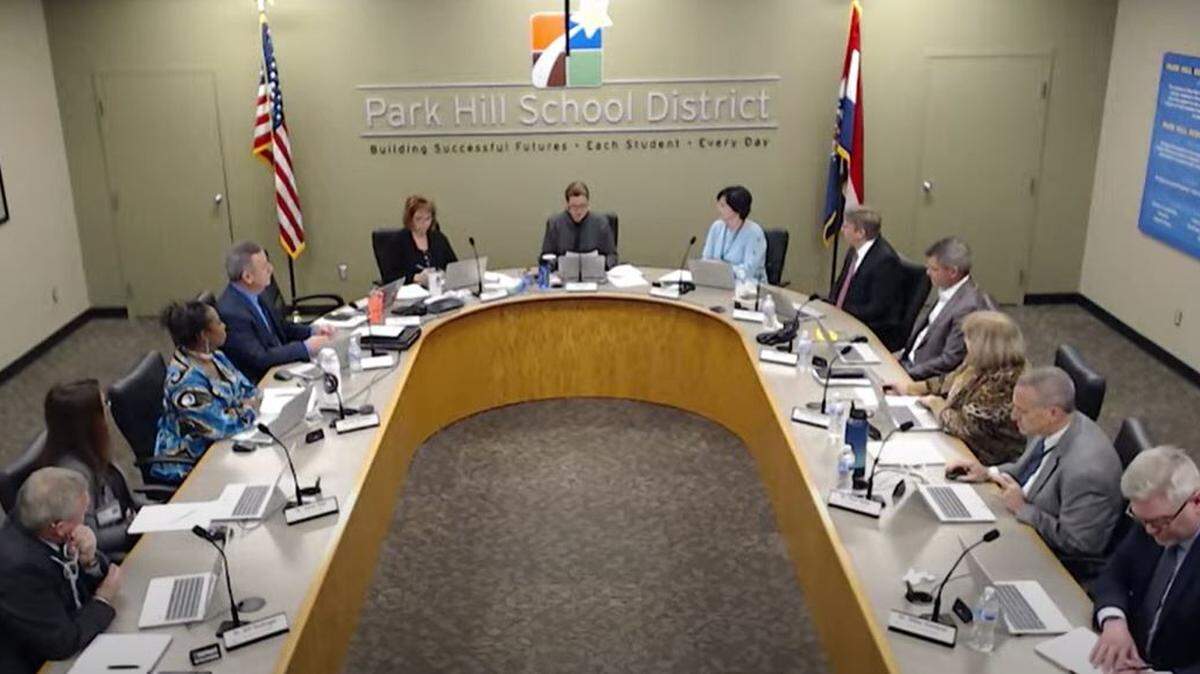
Local school boards have been in the news this year debating everything from school mask policies to banning books. There are 518 school districts with school boards in Missouri, and they all work to help govern local school districts. These board members represent communities and advocate for the education and achievement of young folks throughout Kansas City.
Before heading to the polls, here’s a refresher on what responsibilities and power school boards have and how they can impact your life.
What is a school board?
First, it’s important to understand that a school board (which is also known as a board of education) is a nonpartisan body of individuals who are elected to represent their community’s values and views for public schools in their school district, according to the National School Boards Association.
Folks who run for school board can be educators, business owners, parents or just community members who care about the local school district.
“The vast majority of school board members are not professional educators. So they come from all walks of life,” Missouri School Boards’ Association Deputy Executive Director Brent Ghan. MSBA is a non profit organization that supports school boards statewide through advocacy, policy support, legal help and general guidance.
In most Kansas City area school boards, members serve as volunteer representatives for a three-year term until it’s time for reelection. Once elected, first time school board members are required to go through 18.5 hours of training, where they learn about the roles and responsibilities of school board members, school finances, school laws and policy making, according to Ghan.
What are school boards responsible for?
According to the MSBA, the main objectives of a school board are to set goals for the district, develop and approve policies for the schools, hire, supervise and evaluate the superintendent and approve budgets set by the superintendent. School boards are not in charge of any actual school management or day-to-day operations. The policies they are in charge of can range from fiscal management to rules around student discipline.
“We recommend that they be very involved in advocacy work, that they be strong advocates for their local school districts,” Ghan said. “School board members need to be in close communication with legislators because the laws that they pass have a direct impact on our school district.”
Ultimately, the most important job of school boards is to ensure student achievement.
“That’s really the bottom line,” Ghan said. “We always say if school board members make their decisions based on what’s best for all the kids in their school district, they’re going to be on the right track.”
Ghan added that many school board members have no real say over day-to-day school life or what might go on in individual classrooms.
So why do they seem so controversial?
In Missouri, school boards are nonpartisan bodies but they can also be a forum for contentious debate.
In the Kansas City area, school boards have had to vote on issues that have brought a lot of attention to the function of school boards in our communities. Last week, the Blue Valley school board voted against banning two LGBTQ-themed books. Earlier this year, North Kansas City Board of Education heard parents and students passionately share their thoughts about critical race theory and mask mandates.
At the state level, multiple legislative bills have been circulating in Missouri’s state house that could make it harder to keep partisanship out of the school boards. One bill will require people running in political subdivisions, including school board candidates, to affiliate with a party and print their affiliation on the ballot.
Another bill being heard on the house floor would move school board elections to November, a move that Ghan warns could inject more partisan politics into school board elections.
“We think the focus of a school board candidate and a school board member needs to be not on a partisan political agenda, but on what’s best for all the students in the school district,” Ghan said. “So we’re kind of concerned about some of those issues.”
Ghan said that bringing more politics into school board races could lead to more conflict and divisiveness in districts, but Kansas University’s Political Science Professor Dr. Patrick Miller said that school boards have a long history of partisanship.
“School boards have always been political in different ways. I think it’s just the issues that come up that might draw them to our attention,” Miller said.
“If we were having this conversation in the 1950s, or 1960s, we would be talking about racial segregation…Out here in Kansas, school boards at that point in time were dealing with–Do you teach evolution? [And] some people were saying, well just don’t teach biology at all, at that time.”
Since public schools are one of the few spaces where people from all backgrounds have to work together to achieve, there will always be ideas that clash. Miller said that politics are likely unavoidable, but it’s important to have a body like the school board that can address issues as they come up.
“School Board’s arguably have more of an impact on your life as a citizen, more of a direct impact on your life as a citizen than Congress does or the President,” Miller said.
This story was originally published April 5, 2022 at 5:00 AM.