Parent wants some books banned in a Johnson County school district. Board says no
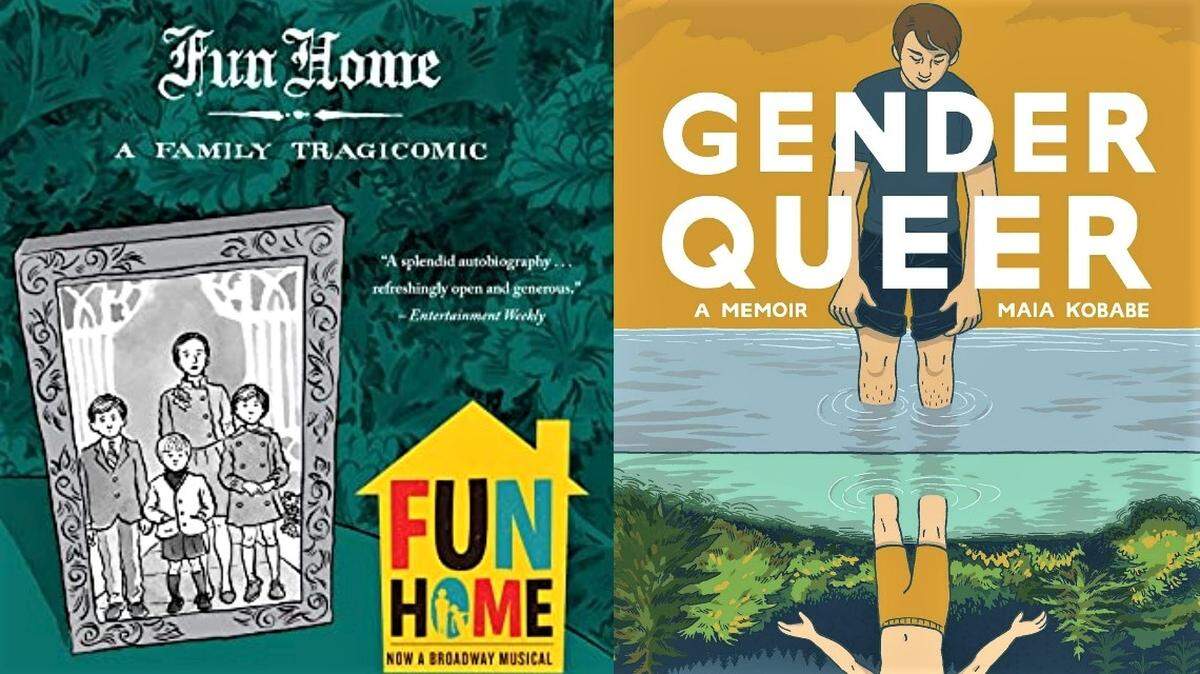
The Blue Valley school board on Thursday voted to keep two LGBTQ-themed books on high school library shelves, rejecting a challenge from a parent concerned about sexual content.
Parent Todd Farnsworth, who said he has two children in the district, asked for the removal of the comic-book-style graphic novels “Fun Home” and “Gender Queer.” After a district committee made up of parents, students and educators voted to keep the books, Farnsworth appealed the decision to the school board.
“This is not about sexual orientation or identity,” Farnsworth told the board. “If books about sexual orientation and identity are important to you to have in the libraries, find them that meet your policies. Replace these with books that make sense, that are age appropriate and not sexually explicit.”
The school board voted 5-2 to keep both books on library shelves, with the majority of members agreeing that the district followed its policy when approving them. Board members Kaety Bowers and Jim McMullen, both conservative newcomers who were elected in November, voted “no.”
Cristy Bolton, district library media coordinator, said officials reviewed the entirety of both books to determine whether they met district policy. She emphasized that both books are memoirs, and argued that the depictions of sex are crucial to the authors’ stories.
“We must ask ourselves if the entire work was written or drawn to be sexually explicit or intended to be gratuitous in nature,” Bolton said. “When one considers the author’s purpose and intent, they are not sharing this part of their life, nor did they draw these images to be sexually explicit. These scenes are described and drawn to convey the author’s truth. They were necessary and justified in sharing their truth.”
Bolton added that the books are “offering an opportunity for others to understand the journey of someone who identifies as LGBTQIA+, and an opportunity for others to learn about someone who may or may not be different than them. This author and their story represents some of our Blue Valley students who identify as LGBTQIA+.”
The meeting came amid a nationwide push by some parents and politicians to pull off of school library shelves certain books that deal with gender and sexual identity, as well as racial themes. Across the country and in the suburbs of the Kansas City metro, parents have been showing up to school board meetings in force, arguing for their districts to ban books that they deem inappropriate due to content they say is too graphic for students.
Many librarians, students, teachers and the American Civil Liberties Union have fought back, arguing that such book bans would violate students’ First Amendment rights. They also argue that all students should be able to see themselves reflected in the books available at schools.
In Blue Valley, one of the books being challenged was “Fun Home,” a memoir in graphic novel form by Alison Bechdel, about the author’s life growing up and her relationship with her gay father, which was later turned into a Tony Award-winning musical. The other was “Gender Queer,” another award-winning memoir, by cartoonist Maia Kobabe, which details the author’s journey of self-identity.
Farnsworth read excerpts and held up large printouts from both books with sexual content that he deemed inappropriate for high schoolers.
But Bolton argued for the school board to retain both novels, saying that librarians are experts in reading levels and determining what content is appropriate for students.
“Our library program and school district has always respected and supported a family or parent’s right to not want their child to read a specific book or material. Librarians work with those students to find materials that support their parent’s reading preferences,” she said. “We do not believe, however, that a parent’s right to control their child’s reading includes the right to restrict what other children read.”
Bolton said that since the district purchased “Fun Home” in 2016, it has placed four copies across high school libraries. The book has been checked out 17 times.
There are two copies of “Gender Queer” in the district, which have been checked out five times since they were bought in 2020, she said.
McMullen, who voted against retaining the books, argued that the school district is tasked with determining what content is appropriate for students overall. He asked the school board to consider requiring students under 18 to have parental consent to be able to check out the books.
“It isn’t like this is censorship across the board,” McMullen said. “It’s really not a big imposition to say that certain books are of a mature nature and we’re going to require a parent signature to be able to check it out. It’s really not a big imposition.”
School boards have long played host to such debates, but national experts say that the pace at which books have been challenged this past year, especially by conservative groups, has not been seen in decades.
There have been similar calls to ban LGBTQ-themed books across the Kansas City metro, including in the Shawnee Mission, Liberty and North Kansas City districts.
This past fall, North Kansas City temporarily removed two books — “Fun Home” and “All Boys Aren’t Blue,” a coming-of-age essay collection by George M. Johnson — from its four high schools after a parent objected. A leader of the Northland Parent Association, a group that has also sued districts over mask mandates, brought the challenge to the books, and the district put them under review.
But dozens of students pushed back, saying district leaders should not be swayed by attempts to censor reading that speaks to race and LGBTQ issues. More than 1,100 people signed a petition against the book bans.
Afterward, the district returned the books to library shelves.
“The First Amendment protects an individual’s freedom of speech, thought, and inquiry. It also encourages respect for the right of others to do the same, even if beliefs differ,” the district wrote in a letter to families.
The ACLU of Missouri has also fought for districts to reject attempts at banning library books.
“The Constitution prohibits community members or school officials from imposing their own personal views and concerns upon an entire school community. The Board has no basis for denying student access to a specific book based on the disagreement and discomfort of certain parents with the book’s content,” the ACLU wrote in a letter to the North Kansas City district.
This story was originally published March 24, 2022 at 8:23 PM.