Five takeaways from Kansas Gov. Kelly’s state of the state: What was said, what wasn’t
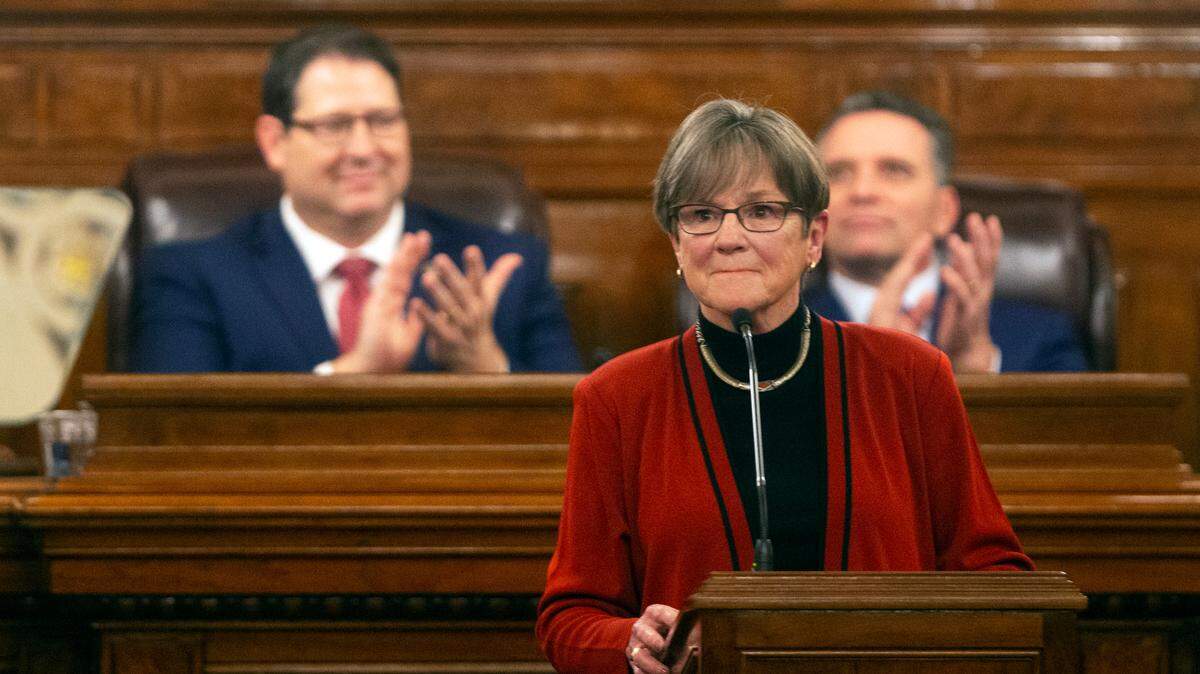
Annual “state of” speeches are an opportunity for leaders to take victory laps celebrating past performance and make promises of future results. Kansas Gov. Laura Kelly’s State of the State address on Tuesday evening featured some of both.
Kelly, a first-term Democrat who faces a tough re-election fight this year, laid out her case to voters. Here are five major takeaways:
College Tuition Freeze
What Kelly said: “Today I’m announcing that my budget includes a total freeze on college tuition increases. You heard that right. No tuition increases whatsoever. This virus took something from our students. And, we are going to give them something back.”
The details: Kelly is proposing to increase funding to state universities by $46 million to hold tuition flat next year. Budget officials say the increase will restore university funding to pre-pandemic levels
The context: Kansans have already enjoyed a pause on tuition increases for multiple years at most universities.
Tuition has been flat at the University of Kansas for three years. Emporia State University, Fort Hays State University, Kansas State University, Pittsburg State University and Wichita State University have all gone without increases in two of the past three years.
The Kansas Board of Regents, which typically sets tuition rates, did approve a 1.2% tuition rate increase at K-State in June.
Fiscal Responsibility
What Kelly said: With the budget crisis of the Brownback years in the past, she now believes Kansas to be the nation’s “most fiscally responsible state.”
The details: There’s no clear ranking of state fiscal responsibility to prove or disprove this claim.
The governor has pointed to the state’s $2.9 billion surplus, record business investment numbers and recognition as CNBC’s 2019 comeback state of the year.
The context: Budget surpluses, however, have been common nationwide this year as states benefit from the windfall of billions in federal stimulus funds.
Josh Goodman, a senior officer at Pew Research, said Kansas has shown middle-of-the-road rankings for fiscal health but that fiscal health and fiscal responsibility are not the same.
“It’s a lot harder to assess that you’re fiscally responsible,” Goodman said.
Fiscal responsibility, Goodman said, is less easily measured. Fiscally responsible states, Goodman said, will focus on a mix of sustainable long-term policies and short term investments while ensuring dollars are placed in reserve so the state can weather a financial cliff that is likely to come.
Many of those strategies are included in Kelly’s budget proposal.
Food Tax/Rebate
What Kelly said: She restated her two biggest tax cut proposals: total elimination of the state sales tax on food and a one-time income tax rebate for most Kansas taxpayers.
“For years, many of us, on both sides of the aisle, have been calling for an end to the state’s sales tax on food. Now, with this surplus in the bank and increased revenue because of our economic growth, we can finally, responsibly, afford to totally eliminate the grocery sales tax. I’ve called on the legislature to send a bill to my desk to end this tax, once and for all.”
The details: Kansas currently taxes food at 6.5%. Her proposal would eliminate the tax in one reduction, bringing the rate to zero. In most counties and cities, food would likely still have local sales taxes, however. Eliminating the tax would cost about $450 million a year.
Kelly also wants to provide a one-time $250 income tax rebate to Kansans ($500 for married couples filing jointly). The proposal would cost about $460 million.
The context: Both Republicans and Democrats in the past have voiced support for reducing or eliminating the tax on food, but efforts to curtail it have faltered. A bill last year that would have reduced the tax was attached to a larger measure that included breaks for corporations and was vetoed by Kelly.
She has called on lawmakers to eliminate the tax in a stand-alone bill, but Republicans have suggested they will seek other tax changes as well.
Fully Fund Water Policy
What Kelly said: “...my budget this year also restores full funding to the State Water Plan for the first time in 15 years. The water plan is a five-year blueprint for action that will ensure that we have a reliable, quality water supply to support not only the needs of Kansas communities, but a thriving farming economy.”
The details: Kelly’s budget calls for $8 million for the water plan, the first time since 2008 it will be fully funded. While it’s a small amount in the scope of the full budget, it would represent a roughly 40% increase in funding.
The context: The water plan guides how Kansas conserves and develops water resources. It includes a focus on insulating the water supply against severe weather events and ensuring the long-term availability of the water supply, both for human consumption and for agriculture.
Provisions in the water plan could include everything from additional monitoring of underground aquifers to dredging reservoirs to remove sediment.
What wasn’t said
What Kelly didn’t say: There was no mention of medical marijuana or past problems at the Department of Labor. And while she did urge passage of Medicaid expansion, she didn’t provide any details about how she might be successful in 2022 after attempts in previous years failed to clear the GOP-controlled legislature.
The details: While Kelly didn’t address medical marijuana or the Department of Labor, she did reiterate a case she’s made previously for Medicaid expansion, noting the closure of rural hospitals.
“Medicaid expansion is something we can do right now. It is well past time. Let’s get this done,” Kelly said.
The context: Kelly is on record supporting medical marijuana but during her time as governor she often hasn’t made it a significant priority, with the exception of last year, when she linked the issue with Medicaid expansion.
Kelly has tried each year she’s been in office to pass Medicaid expansion, which would likely extend health coverage to some 150,000 residents. But attempts to win the support of Republicans have faltered.
In 2020, Kelly negotiated a deal to expand Medicaid with then-Senate Republican Leader Jim Denning, but the effort fell apart as the pandemic forced a premature end to session and Denning got significant blowback from fellow Republicans.
In 2021, Kelly proposed paying for expansion through a medical marijuana program. The House ultimately passed a medical marijuana bill but expansion didn’t advance.
When it comes to the Department of Labor, the agency has experienced significant issues over the course of the pandemic amid a historic demand for unemployment benefits — most notably the extreme difficulty some Kansans had reaching an overwhelmed call center.
While the demand for unemployment has largely subsided as the economy has improved, the future of the agency is uncertain. A plan to overhaul unemployment processing to prevent similar problems in the future is still under consideration by lawmakers.
This story was originally published January 12, 2022 at 1:52 PM.