KC offers to underwrite cost of building affordable housing on East Side vacant lots
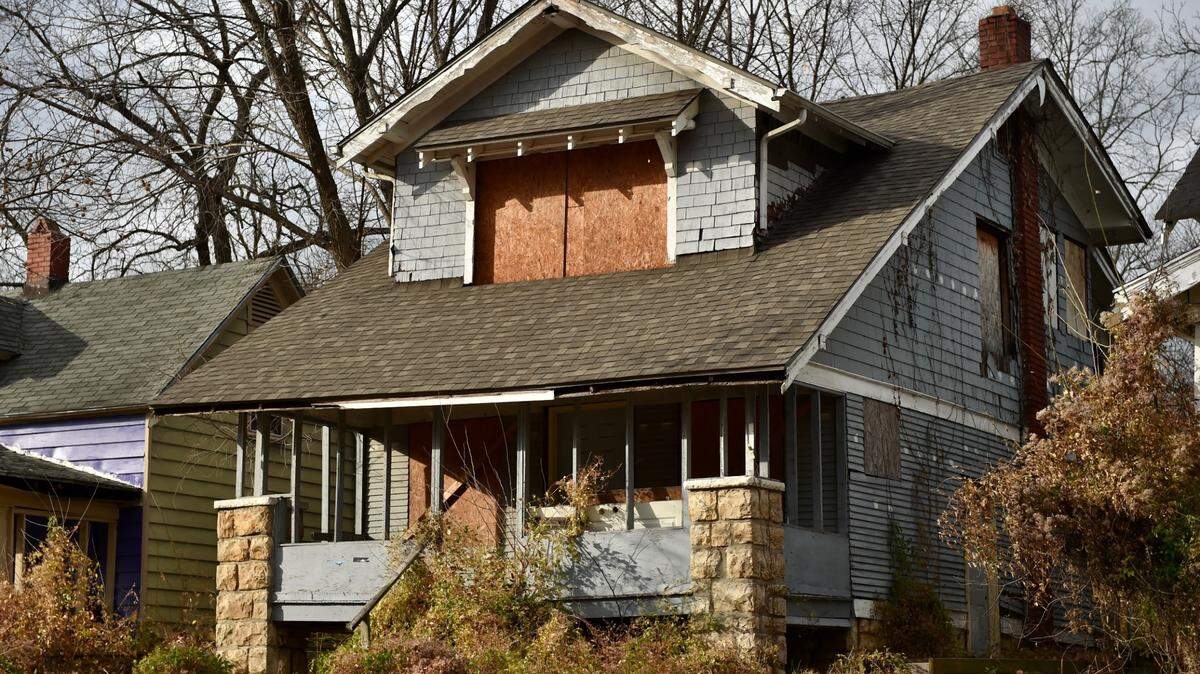
To make it more affordable for developers to build new housing east of Troost Avenue, Kansas City is offering to underwrite their costs to remove debris left behind on properties owned by the city’s Land Bank and Homesteading Authority.
And where environmental remediation isn’t needed, the city said in announcing the new program Wednesday, it will use federal COVID-19 aid dollars to subsidize other site preparation costs — up to $10,000 per housing unit created — to construct those homes on the nearly 3,000 vacant lots the two agencies have on their books.
That and a separate, complementary move to reclaim previously sold properties from buyers who failed to make promised improvements could help the Land Bank better fulfill its mission to return abandoned properties to productive use and back on the tax rolls.
A months-long investigation by The Kansas City Star showed that the agency has, for the most part, failed to do that in recent years by denying far more applications than it approved from people who wanted to buy its properties.
As a result, thousands of abandoned properties sit idle until buyers are willing to pay two thirds of what many critics say is their inflated value set by the county assessment department.
Many buyers balk at paying the asking prices due to the high cost of environmental remediation on those vacant lots.
Wrecking crews created miniature toxic waste dumps all across the East Side for generations when they demolished houses that had fallen into disrepair. All the smashed lumber, plaster and lath that wasn’t hauled to the dump ended up filling in the basements that were covered with dirt.
Some are already questioning whether $10,000 is enough help to remove the debris properly. Further details of the plan will be available when the request for proposals is released next month.
City Manager Brian Platt wants to more aggressively market the properties for the purposes of fulfilling the city’s goal of promoting construction or renovations of 10,000 housing units over five years.
In addition to the subsidy, if a buyer offers an acceptable plan to build affordable housing on a city-owned lot, they will get the lot for $1.
“Proposed development projects can be single-family or multi-family, lease or ownership models, require neighborhood approval and must integrate with the existing neighborhood fabric,” a city spokeswoman said.
The city will also provide funding to help with the cost of rehabbing the 100-plus, boarded up houses that the Land Bank owns.
A previous request for proposals from non-profit groups willing to renovate those houses failed to receive much interest because no financial assistance was promised to help cover the considerable cost of making those structures habitable.
The houses are in such disrepair that they require tens of thousands of dollars in improvements. And in addition to providing no guarantee of a subsidy, the request for proposals sent out last spring had strict requirements on the rent that could be charged.
The number of houses and vacant lots available under the new plan could increase, depending on how successful the Land Bank is in reclaiming properties from people who bought them but did not make good on their promises to improve them.
The sales of nearly all of the properties sold since the Land Bank started in 2013 have been contingent on the buyer fulfilling commitments set out in a document known as a deed of trust. That often means investing a set amount of money toward improvement within a certain amount of time.
If they don’t do that, the Land Bank has a right to reclaim the property through foreclosure. But that rarely happens because, in part, the Land Bank’s staff of five has never had the time to conduct inspections.
The city auditor faulted the agency in 2016 for failing to have written policies addressing how the deeds of trust would be enforced, and enforcement remains a concern.
That audit found that out of 10 randomly chosen projects, six had not completed their work within the allotted time frame to get it done. The other four either had property code violations, their taxes were delinquent or the improvement was not done in a timely manner.
And that remains a problem.
In July 2016, for example, a Blue Springs couple promised to make $42,000 in improvements to a boarded up house in the 3800 block of Chestnut Avenue after acquiring the property during a previous dollar sale of Land Bank properties.
Five years later and it’s still boarded up.
On the plus side, the last annual property tax bill was paid in January on a house valued at just $2,500, according to county records.
Taxes on other properties are delinquent, but the Land Bank doesn’t know how many. The staff doesn’t keep track.
Executive director Tracey Bryant Bryant told Land Bank commissioners recently that over the years some of the properties out of compliance have been resold, but the deeds of trust remain in force no matter who the current owner of record is.
Bryant said the Land Bank now intends to inspect the houses and vacant lots the agency sold. If the promised improvements haven’t been made, she said, the city will finally begin exercising the rights it has long had to reclaim those properties. Abandoned houses and vacant lots then can be put in the hands of people who can be counted on to push their projects forward.
This story was originally published December 16, 2021 at 5:00 AM.