Kansas Gov. Kelly will sign bill, championed by Republicans, fighting vaccine mandates
Kansas Gov. Laura Kelly said late Monday she will sign legislation aimed at making it easy for workers to avoid employer-issued COVID-19 vaccination mandates.
The Democratic governor’s promise came as the Republican-controlled Legislature approved a measure requiring businesses with mandates to respect an expansive religious and moral beliefs exemption that most Democratic lawmakers opposed.
Under the bill, employers are prohibited from investigating the sincerity of the beliefs of workers who claim an exemption. It broadly defines religious beliefs to include “non-theistic” convictions held with the strength of traditional religious views.
In effect, the measure seeks to create a no-questions-asked out for workers who want to evade mandates. But it remains uncertain whether the bill provides exemptions that can prevail against federal vaccination mandates and rules.
Workers fired for refusing to comply with COVID-19 vaccine mandates will also qualify for unemployment benefits. The proposal drew opposition from the business community, including the Kansas Chamber of Commerce.
Kelly issued a one-sentence statement indicating her support shortly before the Senate began voting. She offered no explanation of her decision.
“I will sign the CCR for HB 2001 when it reaches my desk,” Kelly said, using the bill’s full, formal name.
The Senate passed the bill 24-11. The House followed in a 77-34 vote.
The bill’s passage capped a lightning-fast special session that lasted a little over 13 hours. The special session, on Thanksgiving week, was historic, coming after every Republican lawmaker signed a petition demanding one. Never before in Kansas history had legislators summoned themselves back to Topeka by petition.
Republicans were eager to act in response to what they described as a groundswell of public anger at federal vaccination rules announced in September by the Biden administration. The regulations require most health care workers to be vaccinated, orders federal contractors to employ vaccinated workers and requires large employers to ensure their workers are vaccinated or regularly tested.
The Kansas legislation goes further, however, applying to employees at any workplace with a COVID-19 vaccine mandate, regardless of whether it was imposed in response to the federal effort.
“This allows Kansans to stay working,” House Speaker Ron Ryckman, an Olathe Republican, said.
‘Defending that liberty’
The federal regulations face multiple court challenges, including lawsuits filed by Kansas Attorney General Derek Schmidt, the presumptive Republican nominee for governor. In a statement, Schmidt called the legislation “a welcome companion to our ongoing legal efforts” and said he would sign it if he were governor.
If federal courts uphold some or all of the rules, workers in some businesses and industries could still end up legally required to get vaccinated, depending on whether the expansive exemptions in state law conflict with federal requirements.
Still, GOP lawmakers wanted to show they could swiftly deliver concrete action before the Legislature begins its regular session in January even as many predict the various federal regulations will be struck down in court.
Rep. John Barker, an Abilene Republican, acknowledged litigation could make the $65,000 single day special session for naught. “A lot of this that we do tonight may be a moot issue,” he said.
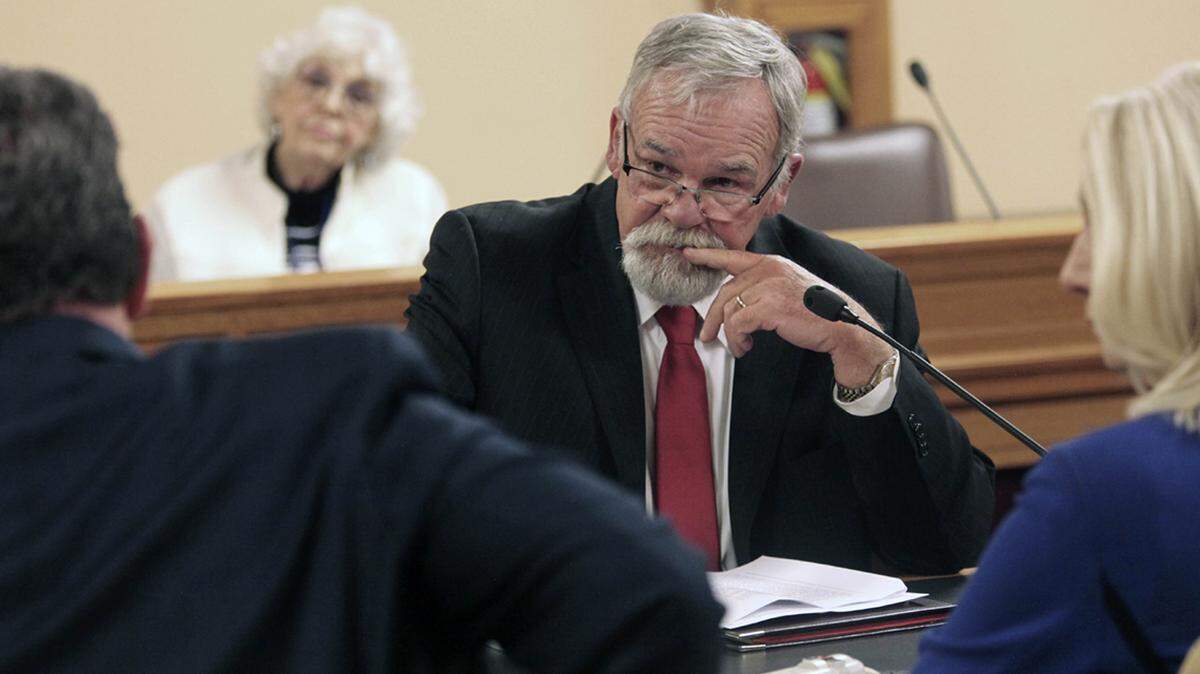
The session opened as mandate opponents — and those against vaccines generally — rallied at the Capitol, then packed the House and Senate galleries. Many Republicans delivered floor speeches thundering at what they condemned as government overreach and a trampling of individual liberty.
“There are people that do not want to take this vaccine, even at the expense of their own lives. So we’re here defending that liberty,” said Sen. Dennis Pyle, a Hiawatha Republican. “That liberty that says, ‘no, you as my employer are not my king, you are not my god.’”
Democrats, for the most part, opposed the legislation even after Kelly made public she would support the bill.
“It does not guarantee that you will have a job regardless of your personal health choices of religious beliefs. Instead, it provides a patina of support while putting Kansas businesses in an impossible position,” Senate Minority Leader Dinah Sykes, a Lenexa Democrat, said.
The governor, facing a tough re-election fight in 2022, broke sharply with Biden earlier this month and criticized the federal vaccination rules he championed, saying she didn’t believe “this directive is the correct, or the most effective, solution for Kansas.”
Kelly’s administration and other Democrats were unified, however, in viewing the special session itself as unnecessary.
Before the session had even started, House Minority Leader Tom Sawyer, a Wichita Democrat, decried it as a waste of time and money, saying the issue should be left to the courts. Kelly’s chief of staff, Will Lawrence, also told Senate Democrats: “We shouldn’t be in a special session but the Republicans put themselves here.”
Rep. Stephanie Clayton, an Overland Park Democrat, said the bill would harm businesses while accomplishing very little for Kansans as federal rules would supersede state law if there was a contradiction. Furthermore, she said the definition of religious liberty as theistic and not theistic values opened the door for a vaccine objector to claim anything as a religious belief.
“That actually insults people who are living their faith every day,” said Clayton.
One of the few vocal Republican skeptics of the legislation, Sen. Jeff Longbine of Emporia, voiced worries the measures would put businesses in a tough position, forced to choose between following state law and federal regulations.
Longbine, who said he opposes the federal mandates, suggested the Legislature should instead allow lawsuits against the rules to proceed.
“My biggest concern about the religious exemption is what kind of precedent does it set if you can come into my business as an employee and tell me that you have a religious exemption, sign a paper, I don’t get to check the validity of it, I don’t get to understand whether it is a true religious exemption,” Longbine said. “What do I do with employees that come in and say, ‘I have a religious exemption against working Wednesday mornings, so I’m not going to show up.’”
Misinformation minefield
Legislative leaders promised rank-and-file Republicans the session would stay narrowly focused on the federal mandates and in the end, that largely proved correct. But early in the day, it wasn’t clear whether the session would stay on track.
In a morning meeting of Senate Democrats, Sykes had framed the moment as an opportunity
“The crazier they sound, it actually helps us, in a way,” the Lenexa senator said. “It doesn’t help the state.”
The House and Senate debates at times edged into medical misinformation and conspiracy theories — echoing false information provided during public hearings earlier this month.
Sen. Rob Olson, an Olathe Republican, said he hasn’t been vaccinated against COVID-19. He said “a lot” of people had died from taking the vaccine around the world, though all of the vaccines approved in the United States are safe and effective and deaths or other serious reactions are extremely rare.
Of more than 440 million doses administered in the United States, just 0.0022% have resulted in reports of deaths, according to the Centers for Disease Control and Prevention. The chances of dying of COVID-19 are many times higher.
“I don’t believe no one should be able to force me to put a needle in my arm and take a vaccine that could hurt me,” Olson said.
Rep. Michael Houser, a Columbus Republican, argued the COVID-19 vaccines were not “true vaccines” while Rep. Randy Garber, a Sabetha Republican, said the shots were unsafe and promoted the use of unproven remedies Ivermectin and Hydroxychloroquine.
The Senate went as far as approving a bill banning employers from mandating COVID-19 vaccines without Legislative approval and barring discrimination against those who get an exemption. Both provisions were abandoned during negotiations with the House but Senate President Ty Masterson, an Andover Republican, said they would be likely topics of conversation in January.
Republican Sens. Alcia Straub, Mark Steffen and Mike Thompson introduced a wide ranging bill Monday that would ban vaccine requirements from businesses and block healthcare facilities, including nursing homes, from barring unvaccinated people from receiving treatment or visiting loved ones.
The bills stood no chance of advancing this week, but pointed to fights that lay ahead when lawmakers return in January.
“These next two months are going to be pivotal in what we end up doing in the next session as relates to this topic,” Rep. Stephen Owens, a Hesston Republican, said. “There will be conversations about going further. What does that look like and how can we further protect people? How can we contemplate banning mandates?”
This story was originally published November 22, 2021 at 11:53 PM.